


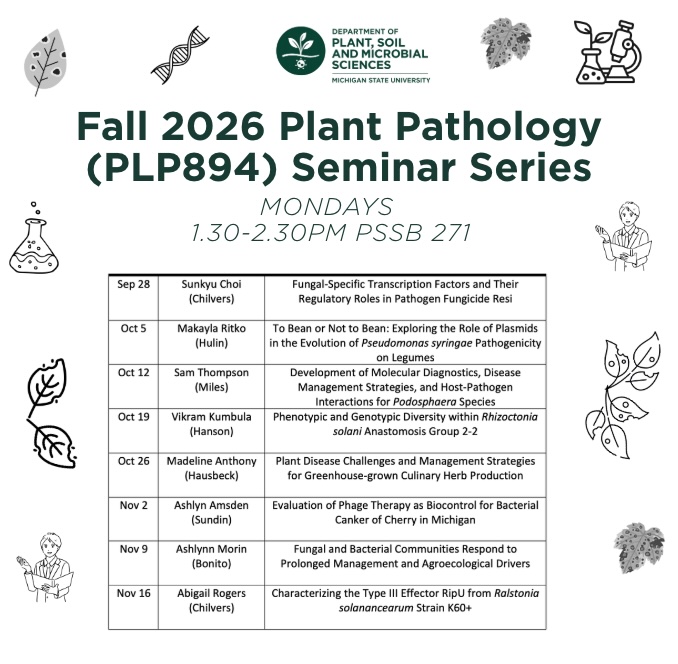
Fall 2026 Plant Pathology (PLP894) Seminar Series featuring Abbie Rogers
October 26, 2026 1:30PM - 2:30PM
This and every Monday in room 271 PSSB
Developing genetic sources of host resistance in agronomically important crops
Abstract:
Developing genetic sources of host resistance in agronomically important crops relies on understanding host-pathogen interactions to identify sources of host resistance and susceptibility. Proteinaceous virulence molecules known as effectors are used as molecular probes to assist in this identification and to clarify the molecular crosstalk between hosts and pathogens. In-depth characterization of the effector RipU from the bacterial wilt disease pathogen Ralstonia solanacearum revealed that this effector associates with and alters the organization of both the actin and microtubule cytoskeleton in plant cells. Deletion of RipU from wild type R. solanacearum reduced tomato plant disease symptoms and bacterial colonization. Expressing RipU in transgenic Arabidopsis thaliana led to phenotypes consistent with cytoskeleton disruption. In silico protein folding analysis coupled with in planta RipU mutant protein expression identified a region of RipU required for consistent microtubule localization. Collectively, these experiments suggest that cytoskeleton disruption is important for the virulence function of RipU, and thus for the virulence of an agriculturally significant bacterial plant pathogen.
 Print
 Email