Bridging disciplines to address invasive species and disease risks in the pet trade
 Print
Print Email
EmailMSU researchers collaborate with the pet trade to better understand invasive species and pathogen introductions, evaluate prevention strategies, and develop science-based recommendations that support ecosystems and responsible pet ownership.
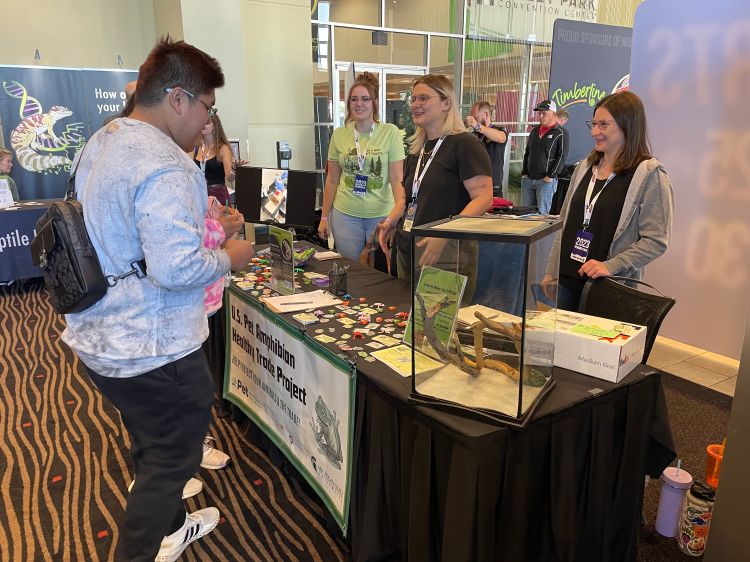
The global movement of exotic animals in the pet trade is multibillion-dollar industry and spans hundreds of countries. Unfortunately, trade can also facilitate the movement of invasive species and diseases that can result in biodiversity and economic losses, in addition to potential human disease transmission.
For example, in 2021, invasive zebra mussels were found in aquarium plants for sale at pet stores. The wildlife trade is also a key pathway for the spread of novel pathogens such as Batrachochytrium salamandrivorans (Bsal), a lethal skin fungus native to Asia. Although Bsal has not been detected in wild populations in the United States, it has caused widespread salamander die-offs in Europe, where it was likely introduced through the importation of pet salamanders from Asia.
Michigan State University faculty and MSU Extension educators have partnered with hobbyists, retailers, industry organizations, and government agencies at the state, national, and international levels to advance invasive species and disease prevention efforts within the pet trade.
Supporting smart choices in the pet and plant trades
Since 2014, MSU Extension has coordinated the Reduce Invasive Pet and Plant Escapes (RIPPLE) outreach program in partnership with Michigan Departments of Environment, Great Lakes and Energy; Natural Resources; and Agriculture and Rural Development. Through this program, free branded materials are provided to pet and garden retailers and other organizations to encourage responsible ownership and disposal practices that reduce the risk of non-native species introductions.
RIPPLE was informed by research of industry member attitudes, behaviors and current business practices, and was developed alongside leading industry members in Michigan. In addition, faculty from the MSU Department of Fisheries and Wildlife and MSU Extension have developed educational resources on invasive crayfish for pet retailers in the Great Lakes region.
Resources such as the Great Lakes Almanac to Invasive Crayfish, Crayfish Wise Retailer Factsheet, and Crayfish Regulations for Great Lakes States help pet retailers identify high-risk species, understand regulations, and promote responsible sales practices.
Working together to safeguard wild amphibians
MSU Department of Fisheries and Wildlife researchers have also partnered with pet industry stakeholders via a $2.75 million grant focused on reducing the risk of amphibian pathogen transmission from captive pet populations to wild amphibians. This work examines how pathogen dynamics and socio-economic decision-making interact within wildlife trade networks and collaborates with industry leaders to develop pathogen screening, reporting, and communication programs that support early detection and disease prevention.
One outcome of the project so far was development of a new non-profit partnership among industry and researchers, the Healthy Trade Institute. The recent detection of an unknown pathogen in 2025 on pet salamanders in the U.S. underscores the importance of planning and coordination to mitigate current and future disease threats at a global scale.
Creating a global framework for healthier trade practices
Building on existing programs, a new international initiative funded by the MSU College of Agriculture and Natural Resources Global Scholars Program will bring invasive species and disease disciplines together. The project will engage international partners and identify shared challenges, develop evidence-based best practices, and create adaptable outreach materials that address invasive species and disease prevention through a unified framework.
This integrated approach recognizes that invasive species and disease risks are often two outcomes of the pet trade, and that coordinated prevention strategies and communications between disciplines may be more effective than addressing each issue independently. Understanding the pet trade industry and best approaches on an international scale will result in more effective engagement and healthier trade practices.
To learn more about this initiative reach out Paige Filice, natural resources educator with MSU Extension, or Alexa Warwick, assistant professor, MSU Fisheries and Wildlife Department.