Building safety into the everyday rhythm of agricultural work
 Print
Print Email
EmailFarm safety resources to help farm owners, workers and families turn tragedy into practical steps for preventing serious injuries and deaths.
There is a rhythm to farm work with everyday activities being very familiar. However, familiar does not mean risk-free. Between the years 2022–2023, MSU’s Division of Occupational and Environmental Medicine (OEM) identified 35 deaths and 892 non-fatal injuries to individuals working on Michigan farm. Keeping safety at the forefront of daily farm work through planning, regular safety conversations and attention to changing hazards can help prevent injuries before they happen.
Case study: A routine feeding task turns fatal
The following incident is a powerful reminder that serious farm injuries can happen during routine tasks, especially when unsafe conditions or work practices become familiar over time.
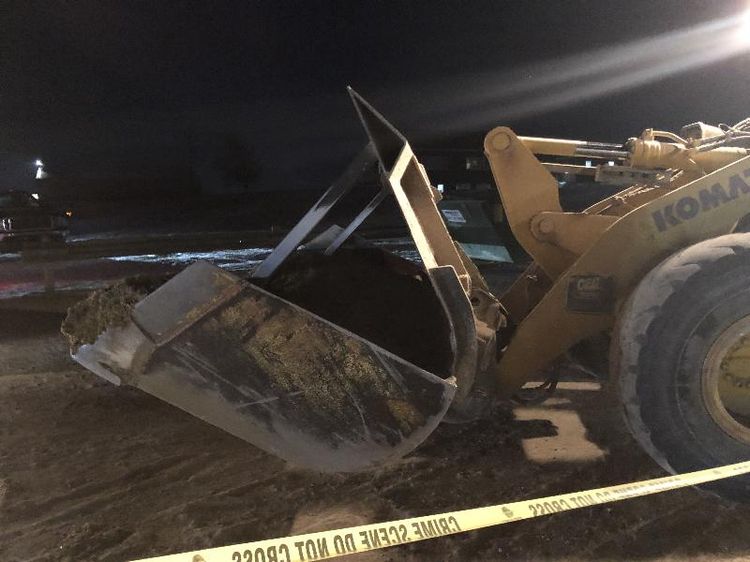
On a cold day early in the morning, a dairy head milker was walking on a driveway toward a barn while carrying a container of diesel fuel. He was wearing earmuff-style headphones and non-reflective clothing. His co-worker was nearby driving a wheel loader carrying a bucket of waste feed. While the loader’s four forward-facing headlights were on, they were obstructed by the bucket, which was raised about three feet off the ground. As the loader drove forward, it struck the head milker and he died.
Incidents like the one above are avoidable. Having a farm safety plan helps with prevention.
Turning routine tasks into safer routines
To protect your workers, family members and yourself, it is important to deliberately incorporate safety into the rhythm of your farm. The first step is to identify hazards. Walk through your farm and identify hazards by task, equipment and work area. Also think about the times when an injury could have occurred but didn’t (near miss) as well as past injuries that could have been a lot worse. Then decide which hazards need attention first and what changes could be made to reduce the risk. For instance, if a tractor can only be started while standing on the ground, then there is a strong possibility of being run over by the tractor.
After identifying hazards, the second step is to make changes and develop policies/procedures that make safety part of routine work. For example, repairing or replacing broken/worn equipment; retrofitting unguarded PTO drivelines; or when working alone establishing a check in procedure with another individual to ensure prompt emergency assistance.
Education and training, the third step, are important for reinforcing farm safety expectations and helping workers understand how to recognize hazards and use safe work practices. Longer trainings, such as sessions offered at meetings, MSU Extension programs or by employers, provide time to build knowledge and practice around broader safety topics. Day-of trainings, such as toolbox or tailgate talks (in Spanish), are equally important because they keep safety at the forefront of the specific tasks being performed that day. They also give workers an opportunity to discuss changing conditions, equipment concerns or other immediate hazards before work begins.
Finally, evaluation is essential to make sure the safety plan is working. Regularly review whether policies, procedures and training are being followed. Ask workers for feedback on procedures or training needs. Use near misses, injuries or changing work conditions to identify where additional improvements may be needed.
Find the right resource to help you
MSU OEM has created a bank of resources that can help farmers identify hazards, learn from past incidents, and make farm safety part of everyday work. Michigan farmers may find both agricultural and non-agricultural resources (e.g., construction) useful to identify hazards on the farm. MSU OEM resources come in the following three formats and are organized by industry and hazards.
- Hazard alerts: Topic-specific resources that describe a farm hazard, injury events to Michigan farmers involving that hazard, and practical recommendations for prevention. Examples of topics include:
- Farm-Related Machinery Entanglements in Michigan (English/Spanish)
- Safe Animal Handling to Prevent Farm-Related Injuries and Deaths (English/Spanish)
- Safe Use of Tractors Will Prevent Work-Related Deaths (English/Spanish)
- Farmers and Trees: Tasks That Can Kill (PDF)
- Work-Related Deaths from Falls Using Portable Ladders (English/Spanish)
- Work-Related Deaths from Skid Steer Loaders (English/Spanish)
- MIOSHA agricultural case summary reports: Brief summaries of work-related incidents where Michigan farmers died at work. Each resource summarizes what happened and the hazards that were present and the MIOSHA citation(s) issued. There are 42 different agricultural reports available.
- MIFACE investigation reports: Detailed investigations of individual work-related farm deaths. Each resource describes the sequence of events and contributing factors that lead to the death, including equipment involved and work practices; provides recommendations, and discusses how each recommendation could have prevented the event. There are 67 different agricultural reports available.
MSU OEM has also developed an Agriculture Respiratory Protection guide to help farmers understand respiratory protection program requirements, applicable regulations and how to select protection for pesticide and non-pesticide inhalation hazards. MSU OEM’s farm safety videos use real incidents to illustrate safe work practices. MSU Extension Farm Safety page provides additional resources.
Make the resources part of everyday farm safety
Farm safety resources are most useful when they become part of everyday work life. Talking about real injury events can make hazards more relevant and encourage conversations/actions to prevent serious incidents from happening on your farm. The goal is for everyone to come home to their loved ones at the end of the day’s work.
Additional Resources
Iowa Center for Agricultural Safety and Health (ICASH) – Farm Safety Planning Resources: https://icash.public-health.uiowa.edu/programs/seasonal-campaigns/farm-safety-planning/
Farm Hazard Analysis Tool: SaferFarm.org
OSHA Job Hazard Analysis Resource Guide: https://www.osha.gov/sites/default/files/resource_jha_guide.pdf
WorkSafe – Keep safe, keep farming toolkit: https://www.worksafe.govt.nz/topic-and-industry/agriculture/keep-safe-keep-farming-toolkit/
MSU OEM Farm-Related Injuries: https://oem.msu.edu/index.php/work-related-injuries/farm-related-injuries
Michigan State University Extension connects farmers with research-based information and education. MSU OEM’s farm safety resources provide another practical source of information farmers can use to recognize hazards, strengthen safety plans, train workers and help everyone working on the farm come home safe.