CANR honors 2026 Global Scholars in Research
 Print
Print Email
EmailThe CANR has named Mar Mancha-Cisneros, Ph.D., Asia Dowtin, Ph.D. and Mahsa Adib, Ph.D., as the 2026 Global Scholars in Research. The scholars will be honored during the CANR Faculty and Staff Awards reception on May 6.
The Michigan State University College of Agriculture and Natural Resources has named Mar Mancha-Cisneros, Ph.D., Asia Dowtin, Ph.D. and Mahsa Adib, Ph.D., as the 2026 Global Scholars in Research. The scholars will be honored during the CANR Faculty and Staff Awards reception on May 6.
The Global Scholars Program supports early-, mid- and established-career faculty members with seed funding and travel support over two years. Selected annually by the CANR World Agriculture Center (formerly CANR International Programs), global scholars work to strengthen and expand international linkages, research networks and collaborative programs that advance the college’s missions in research, education and outreach.
 Mar Mancha-Cisneros, Ph.D., is an assistant professor of global inland fisheries in the Department of Fisheries and Wildlife. Her research bridges natural and social sciences to examine how institutions, including policies, rules and norms, shape interactions between people and aquatic resources. Focusing on inland and small-scale fisheries, she studies governance systems that influence sustainability, food and nutrition security, and equity in aquatic food production. Using mixed methods that draw from ecology, economics and political science, Mancha-Cisneros works to inform fisheries policy and management through comparative, applied research. She collaborates closely with international organizations, including the United Nations Food and Agriculture Organization, and co-authored the 2023 Illuminating Hidden Harvests study, which highlighted the critical role of small-scale fisheries in global sustainable development and policy decision-making.
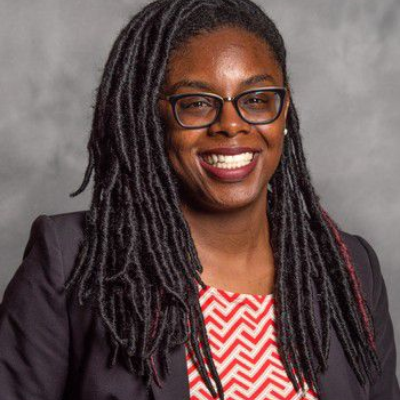 Asia Dowtin, Ph.D., is an assistant professor in the Department of Forestry whose research examines hydrologic and nutrient cycling in urban forests. Using in situ sampling and laboratory-based techniques, her work explores relationships between urban canopy structure, land use and plant-water interactions to better understand how urban forests function. A central goal of her research is to inform urban forest planning and management strategies that optimize ecosystem services such as water regulation and nutrient cycling. Her broader interests include regional water resource management and hazard mitigation, with an emphasis on applying science-based insights to support resilient urban landscapes and infrastructure.
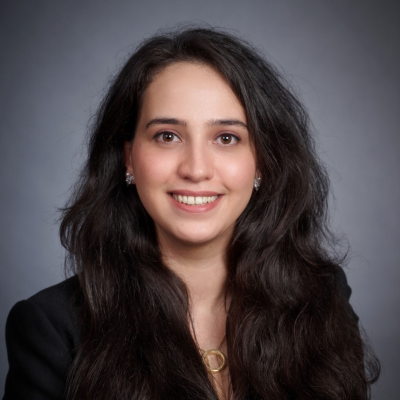 Mahsa Adib, Ph.D., is an assistant professor of landscape architecture in the School of Planning, Design and Construction. Her research addresses critical gaps related to green stormwater infrastructure, public education and community engagement, with a focus on understanding the social and psychological factors that influence adoption of sustainable design practices. Adib’s work evaluates real-world educational materials, explores hybrid engagement methods and examines how communities can build resilience to climate-related challenges. She has contributed to large interdisciplinary projects, including the U.S. Department of Energy-funded Baltimore Social-Environmental Collaborative, where she collaborated with researchers and local stakeholders to address urban flooding, infrastructure challenges and environmental inequities. Her research has been published in journals including Environment and Behavior, PLOS Water and Urban Climate, and her broader collaborations extend to prescribed fire management, thermal inequities and public perceptions of biodiverse landscapes.
The Global Scholars Program was launched in 2019 to support faculty development and expand CANR’s global footprint by fostering long-term international partnerships and collaborative research initiatives.