Early bloom in blueberries brings combined frost and thrips risks in west central Michigan
 Print
Print Email
EmailBlueberry fields are entering early bloom. A mild winter followed by early spring temperatures accelerated plant development and insect activity, creating a combination of abiotic (frost) and biotic (thrips) risks for growers.
Plant growth and development of small fruits like blueberries and strawberries are well under way in west central Michigan. In comparison with 2025, blueberry bud break and the bloom period are almost two weeks ahead. Temperatures in west central Michigan have remained low with some days presenting minimum temperatures in the upper 20s and maximum daily temperatures reaching the low 70s. Accordingly, observed temperatures during the past seven days around west central Michigan are characterized by minimum and maximum temperatures averaging 36 and 57 degrees Fahrenheit.
On May 2, a light frost occurred across much of west Michigan, with early morning temperatures ranging from 28 to 29 F from Ionia to Grand Junction. This event caused limited damage to fields that were just entering bloom. A second light frost event took place May 8-9, but the event was less severe in Van Buren and Allegan counties. In Ionia and Ottawa counties, nightly temperatures dropped to 30-31 F, causing limited frost damage to blueberry varieties that were in bloom.
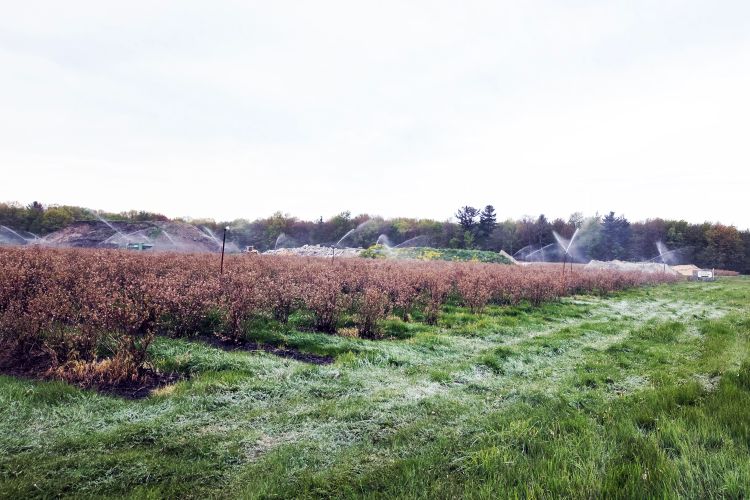
A third light frost event occurred on the morning of May 12 (Photo 1) in Ottawa, Allegan and Van Buren counties. Below freezing temperatures dropped to 29 and 31 F during the early morning hours. Growers started frost protecting fields early in the evening. We expect only a small, slight impact on fields already in bloom.
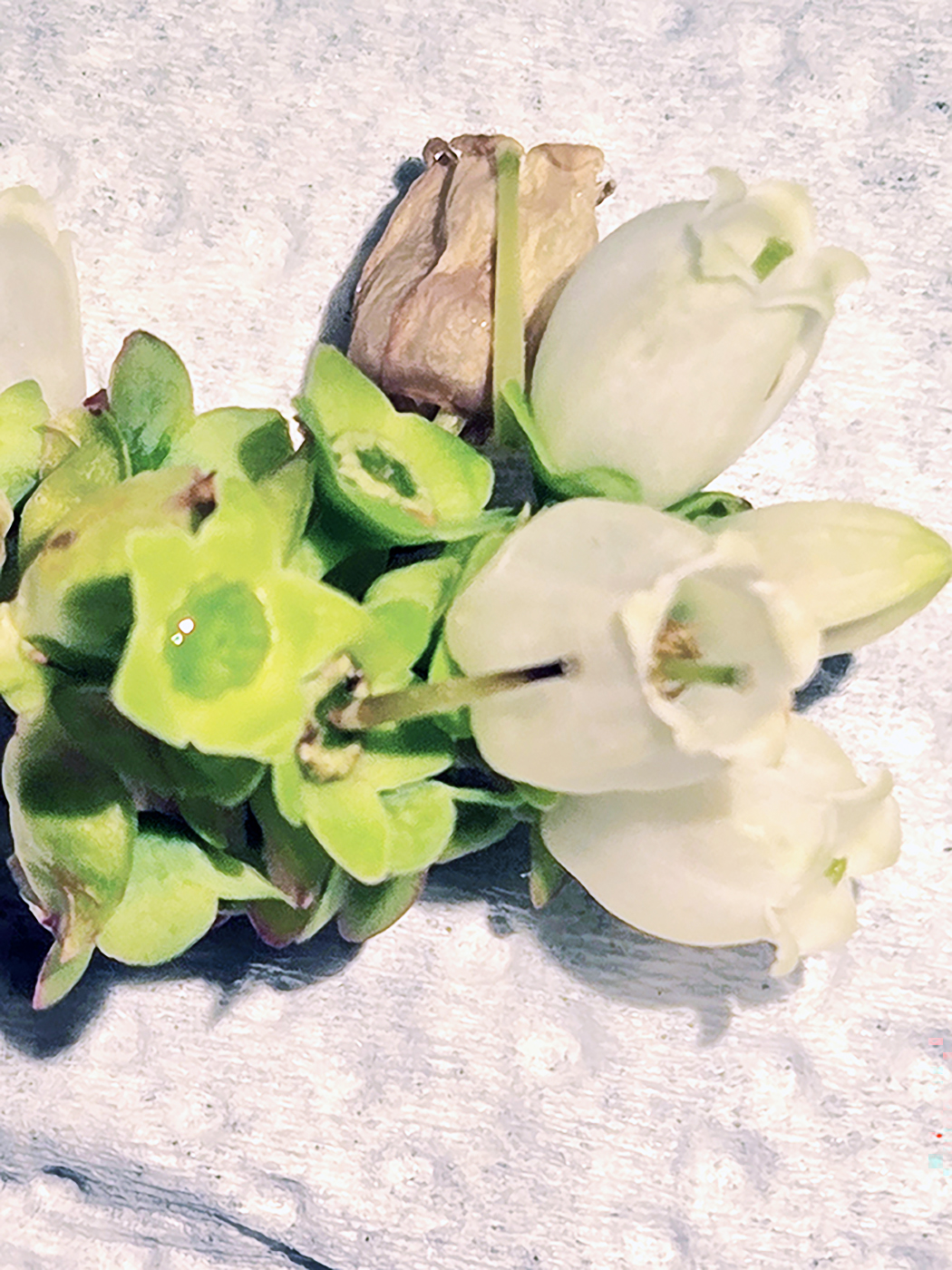
To evaluate the impact of the first two frost events on varieties already in bloom, we conducted two rounds of sampling on May 2 and May 4 in blueberry fields in Grand Junction and Belding. From each variety in the field, we collected 20 flower clusters. We checked each flower cluster at the Trevor Nichols Research Center for signs of frost damage with a microscope. Among the varieties evaluated, Bluetta showed 13–23% of open flowers damaged. In contrast, Bluecrop and Keepsake had few open flowers at the time, and observed damage ranged from 6–8% (Photo 2).
Early arrival of flower thrips
In addition to frost concerns, the early arrival of flower thrips represents a significantly emerging risk. Over the past five years, thrips have become increasingly problematic in Michigan blueberries. In 2025, damage associated with thrips caused yield losses that reached up to 30% in some early-season varieties. Growers will often attribute these losses to light frost injury. Therefore, prior to the frost events, our main concern was to detect the early arrival of flower thrips. For this purpose, after examining the same 20 flower clusters for frost damage, we submerged them in alcohol (65%) to extract flower thrips already presents in flowers. We filtered the liquid to recover the insects for counting and identification.
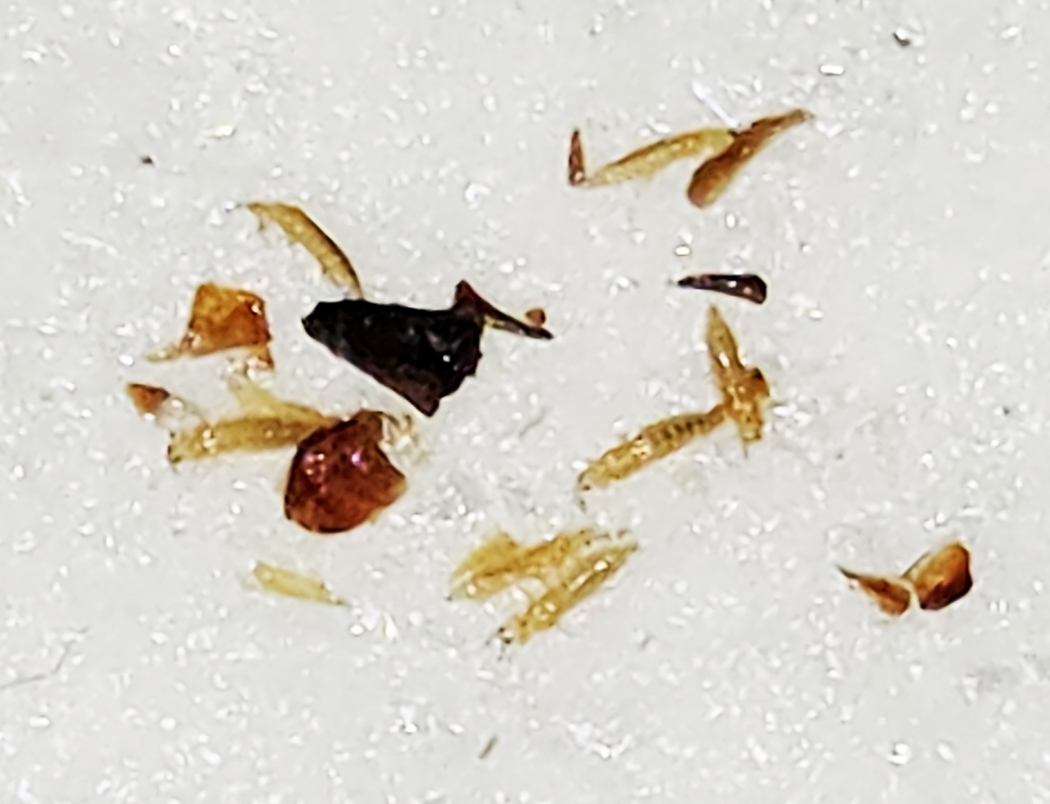
Sampling from both Grand Junction and Belding indicates that thrips are already present, with higher populations observed in Grand Junction. In Bluetta, counts averaged four thrips per flower cluster, while Bluecrop and Keepsake averaged fewer than one thrips per cluster (Photo 3).
The current intervention threshold for flower thrips is approximately five or more thrips per flower cluster. At this time, continue monitoring thrips populations closely and consider initiating control measures if populations exceed this threshold.
Because pollinators are active during this period, insecticide selection and application timing are critical. Prioritize reduced-risk materials such as Assail. Entrust can be applied but in a manner that minimizes exposure to bees, such as applications made at night when bees are not foraging.
Please let Michigan State University Extension know if you have any questions or would like assistance evaluating conditions in your fields. For assistance, call your nearest MSU Extension county office or email me at garcias4@msu.edu.
This work is supported by the Crop Protection and Pest Management Program [grant no 2024-70006-43569] from the USDA National Institute of Food and Agriculture. Any opinions, findings, conclusions, or recommendations expressed in this publication are those of the author(s) and do not necessarily reflect the view of the U.S. Department of Agriculture.