


Emerging leaf spot disease of corn under investigation in Michigan
 Print
Print Email
EmailA leaf spot resembling Phaeosphaeria leaf spot or maize white spot has been observed in multiple Michigan counties, and researchers are seeking samples to identify the causal organism.
Take-aways
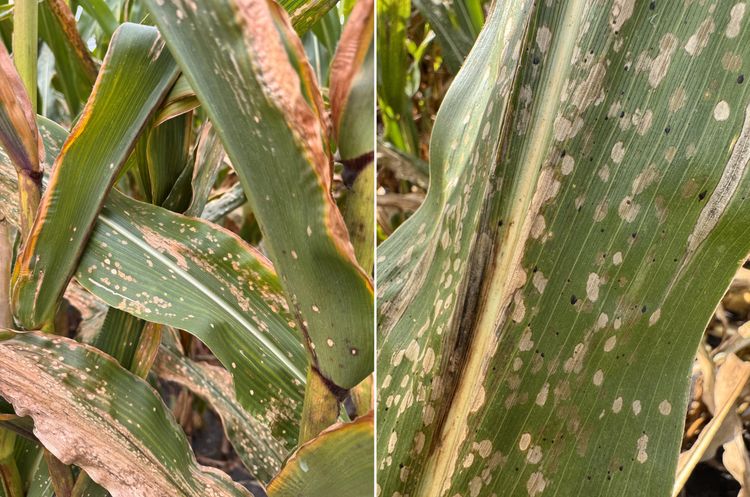
- An emerging corn leaf spot resembling the disease complex historically called Phaeosphaeria leaf spot or maize white spot has been observed in Michigan during the 2026 growing season. Symptoms appear similar to paraquat herbicide injury.
- The disease has been observed in approximately 14 Michigan counties, and colleagues have also reported similar symptoms in New York and Pennsylvania. A consistent phomoid fungus has been associated with symptomatic leaves, but the causal organism has not yet been resolved.
- MSU researchers are actively collecting samples to determine the identity and pathogenicity of the associated fungus and are seeking information about observed impact on quality and yield of seed production, corn silage, sweet corn and grain.
- Michigan growers, agronomists and crop consultants can help by reporting fields with similar symptoms and submitting representative samples, particularly from counties or areas not yet represented.
An emerging leaf spot disease in Michigan corn
During the 2026 growing season, researchers at Michigan State University received reports of a leaf spot disease in Michigan corn that resembles symptoms historically described as Phaeosphaeria leaf spot (PLS) or maize white spot (MWS). What initially appeared to be a localized problem has now been observed in approximately 14 Michigan counties, with additional reports from colleagues in New York and Pennsylvania. In affected fields, symptoms have occurred with notable incidence and severity.
There is an important caveat: we do not yet know exactly which fungal species is responsible.
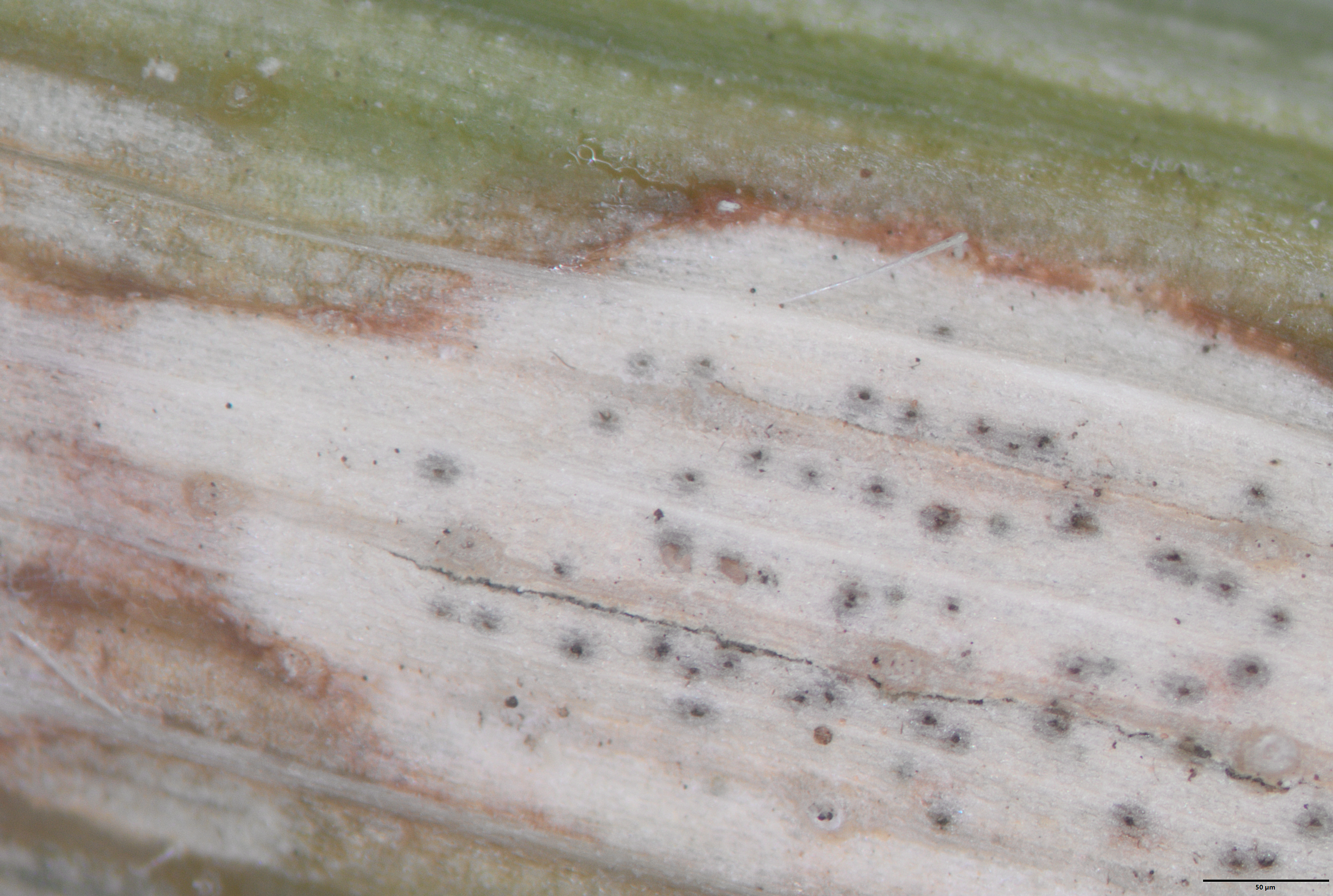
Historical literature has associated PLS/MWS with Phaeosphaeria maydis, but the identity and taxonomy of organisms referred to by that name remain unresolved. Recent examinations of Michigan samples have consistently recovered a phomoid fungus from symptomatic tissue, which are visible with magnification as little black spots within the lesions which are fungal fruiting structures (pycnidia). Preliminary DNA sequencing has not provided enough resolution for confident species identification.
Why are we asking for samples?
Before we can determine how widespread this disease is, we need to be confident about what organism we are tracking. Symptom appearance alone is not sufficient, and detecting a fungus repeatedly in symptomatic tissue does not by itself establish that it is the causal agent. Our current work is therefore focused on combining fungal isolation, morphology and DNA sequencing and pathogenicity testing to determine which organism is responsible for the observed leaf spots.
Identifying the causal agent is an important first step toward understanding and managing this disease. It will also allow us to develop a reliable diagnostic assay, which can be used to conduct broader surveys and better define the distribution and prevalence of the disease in Michigan and beyond.
Help us document the disease across Michigan
We would also appreciate any information on disease severity and potential yield or grain quality impacts observed in affected fields.
What samples are useful?
- Collect several representative symptomatic leaves, preferably with fresh or actively developing lesions.
- Record the county and general field location, hybrid, crop growth stage and any recent fungicide applications or other relevant disease-management information.
- If samples can’t be submitted immediately, dry them in a paper bag.
How to contact us
Please contact Martin (Marty) Chilvers at chilvers@msu.edu to report a potentially affected field or arrange a sample submission. Samples can be sent to the following address:
Martin Chilvers
578 Wilson Rd, CIPS104
Department of Plant, Soil and Microbial Sciences
East Lansing, MI 48824
Your observations and samples will help MSU researchers determine how widespread this disease is and, most importantly, identify the organism responsible so future diagnostic and epidemiological work can be built on a solid foundation.