From Beijing to Six Continents: Summer School Advances Telecoupling and Metacoupling Research
 Print
Print Email
EmailMore than 160 participants from six continents joined a hybrid program at Beijing Normal University to explore telecoupling, metacoupling, and global sustainability challenges.
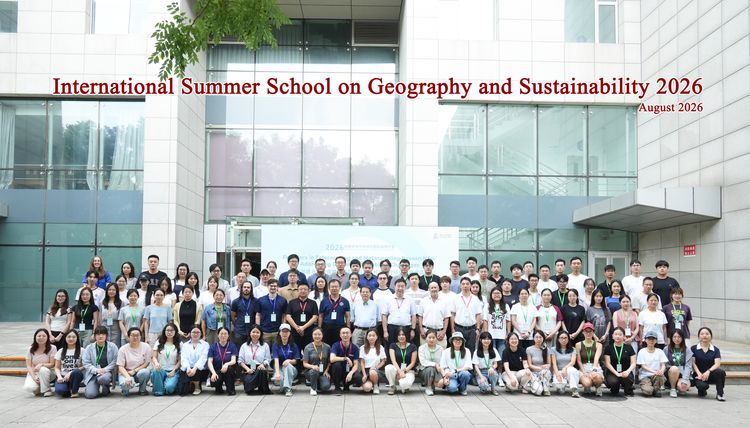
From its host site at Beijing Normal University (BNU) to participants joining across six continents, the 2026 International Summer School "Frontiers in Telecoupling and Metacoupling Research for Addressing Global Sustainability Challenges" was successfully held from August 9-16, 2026. The weeklong hybrid program brought together more than 160 students, postdoctoral researchers, faculty members, instructors, and facilitators for intensive learning, collaboration, and research development.
Approximately 100 participants attended in person in Beijing, while others joined online from around the world. Most participants were students and postdoctoral researchers, with additional participation from assistant, associate, and full professors. This broad representation across career stages, disciplines, and regions reflected growing international interest in telecoupling and metacoupling approaches for understanding human-nature interactions across space.
The Summer School opened with an introduction to the telecoupling and metacoupling frameworks by Jianguo "Jack" Liu. Participants then engaged in hands-on exercises to identify and interpret key framework components, including flows, systems, agents, causes, effects, feedbacks, and the three major types of couplings: intracoupling, pericoupling, and telecoupling. Liu, Rachel Carson Chair in Sustainability and University Distinguished Professor at Michigan State University, has led the development and worldwide application of the telecoupling and metacoupling frameworks.
Throughout the week, participants explored research frontiers and real-world applications of telecoupling and metacoupling frameworks. Topics included the metacoupled food-energy-water nexus, metacoupled city interactions, environmental impacts on importing countries, cascading impacts of shocks such as war, water transfer and Sustainable Development Goal tradeoffs, ecological restoration, national and international SDG synergies and tradeoffs, and the telecoupled impacts of global agricultural trade on nutrients.
The program also provided methodological training and practical research skills. Sessions covered causal inference, the Telecoupling Toolbox, network analysis, multiscale and connectivity analysis, sensitivity and uncertainty analysis, and team-based research projects. Through lectures, hands-on exercises, Think-Pair-Share activities, general Q&A, and evening team-based projects, participants moved from conceptual understanding to practical application and developed research ideas with feedback from instructors and facilitators.
The instruction team brought together scholars, editors, and facilitators with expertise in sustainability science, geography, ecology, conservation, causal inference, network analysis, scientific publishing, tool development, land-use change, social-ecological systems, and human-nature interactions. In addition to scientific and methodological training, the Summer School included sessions on writing high-quality papers, writing for and publishing in high-impact journals, and best practices for scientific review and editing.
The organizers from Beijing Normal University are gratefully acknowledged for hosting the Summer School and for their essential support in creating a welcoming, productive, and inclusive learning environment. BNU's support for the venues, organization, logistics, and hybrid arrangements helped make it possible for participants to engage both in person and online, and contributed significantly to the success of the program.
The Summer School concluded with research project presentations, panel discussions, a general discussion, and a closing ceremony. By connecting Beijing with a global community across six continents, the program provided participants with conceptual tools, methodological skills, collaborative experience, and professional development opportunities to advance telecoupling and metacoupling research for addressing global sustainability challenges.