Heavy rains in northwest Michigan have resulted in flooding
 Print
Print Email
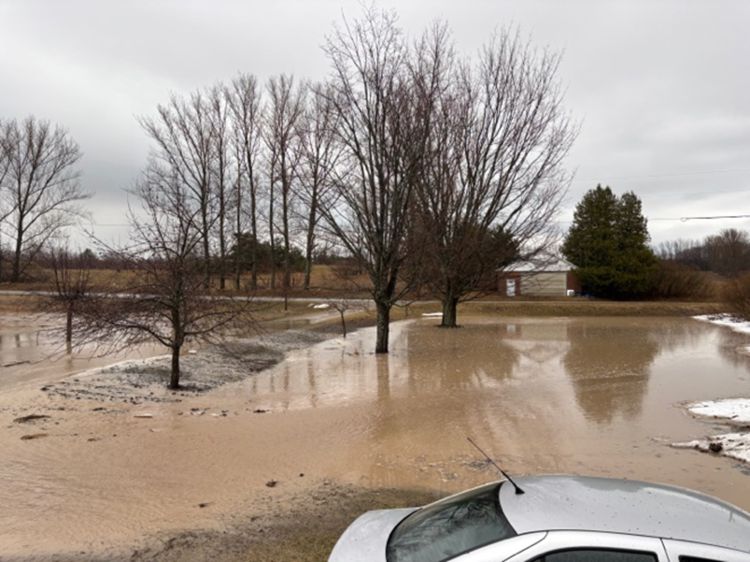
EmailMany orchards across northwest Michigan are impassable due to standing water in orchards. Growers are concerned about covering for early disease control with the excess water in the orchard.
Weather report
Northwest Michigan finally saw some warmer temperatures in the past week. We have not seen any summer-like conditions, but daytime highs have hit just over 60 degrees Fahrenheit for three days over the past week. Nighttime temperatures are still cool, but the forecast is predicting overnight temperatures to be in the 40s. Humidity is high, and we have extensive fog as a result of the melting snow piles around the orchards.
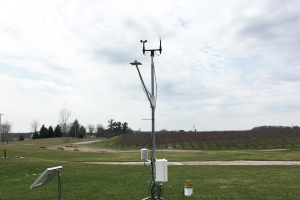
Jeff Andresen shared in his weekly weather report that the southern part of the state is about a week ahead of normal and the northern part of Michigan is a week behind. However, when we look at specific growing degree days (GDDs) for the Northwest Michigan Horticulture Research Center, we have accumulated 108 GDD base 42 this year, and our average is 97 GDD base 42—similar. The 50-degree base is similar: we have accumulated 34.9 GDD base 50 and our average is 35.4 GDD.
Rainfall is notable, and the research center has received 6.24 inches so far in April, with 3.75 inches over the past three days. Many orchards are flooded, and there are many “water over the road” signs across Leelanau County this morning, April 14. There are flash flood warnings for many locations across northern Michigan. In all my time at the research center, I have never seen so much standing water in orchards and fields as I have this week; rain plus the still melting snow have resulted in the flash flood warnings. We have sandy soils, so water typically drains quickly, so this standing water is noteworthy so far this season.
Andresen’s forecast is predicted to be variably cloudy and warmer on Tuesday, April 14. Storms will be developing tonight from west to east in the state. The forecast is predicting another night of strong storms and heavy rains this evening. Occasional showers and thunderstorms are in the forecast for Wednesday, Thursday and again on Saturday (April 15, 16 and 18). Sunday is predicted to be dry and cooler; these conditions will also continue into the week.
The southern part of state could see daytime highs in the 80s, but the temperatures in northern Michigan will top out in the lows 60s during the week and drop down to the 40s over the weekend. There are frost and freezing temperatures in the forecast for early next week. The medium range forecast is calling for warmer and wetter than normal for the next two weeks.
Crop report
We had cold weather for much of the spring, and almost like a light switch, it has become spring. Temperatures have warmed up and trees are going to start moving along quickly. There was a sense of a bit of panic that we are not ready for the season, but it is here and growers are gearing up for early season fungicide applications and dormant oils. The main concern is access to orchards for spraying due to standing water. Growers are getting sprayers out and ready to roll for the season. Growers are also concerned about entering the orchard to buck brush from winter prunings.
There are different reports about fruit crop development. In southwest Michigan, pears are at first white and growers are thinking about fire blight. There are no open apple blossoms. Many growers lost plums and apricots that were in bloom during frost last week. Peach bloom is starting, tarts are at tight cluster, and sweets have not moved much. The straw has been removed from strawberries and blueberries at tight cluster.
In west central Michigan, early apple varieties are green tip to half-inch green, and growers are spraying for apple scab and watching the weather. With the significant rains in west central Michigan, growers are struggling to spray on time as tissue grows quickly.
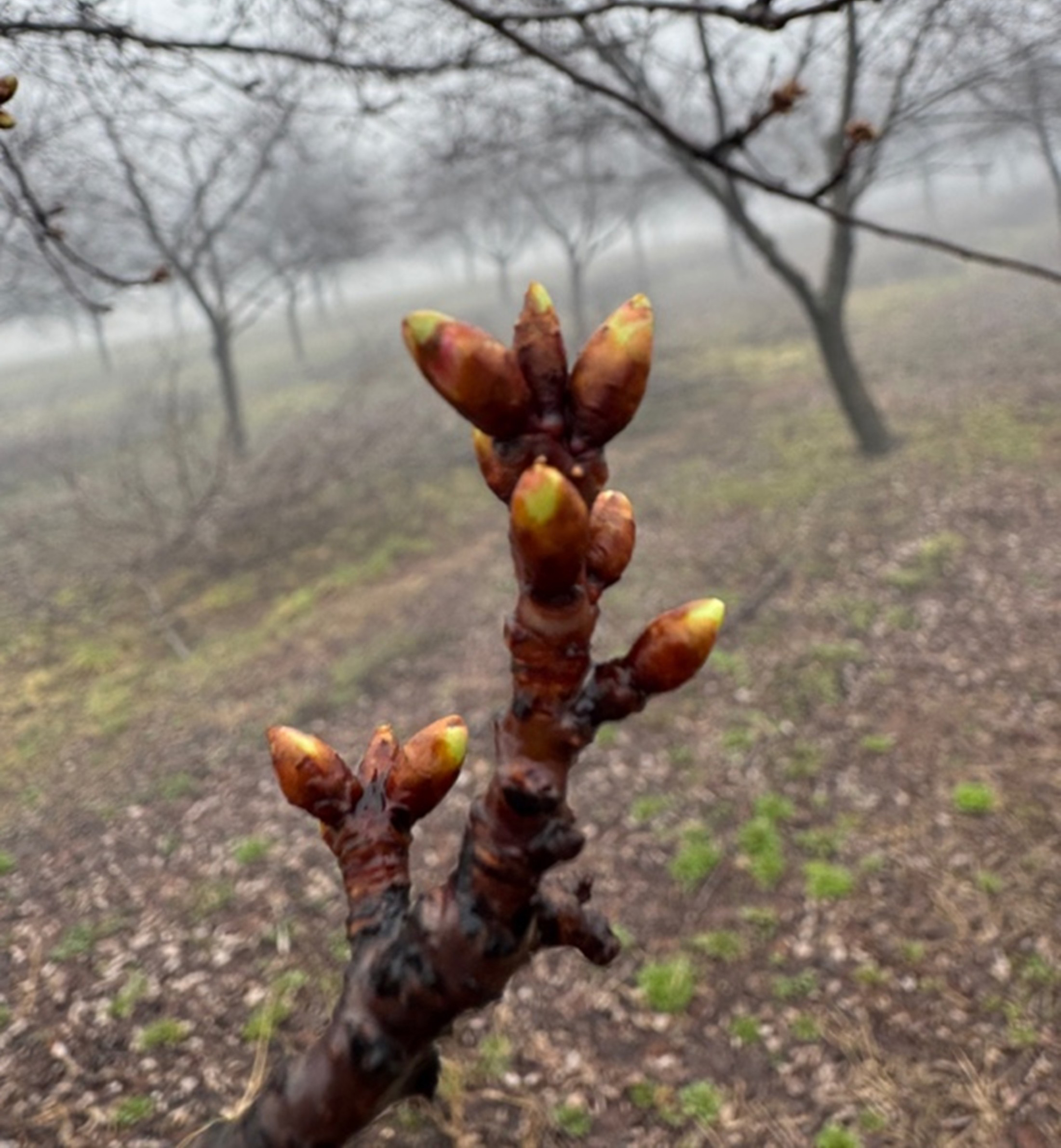
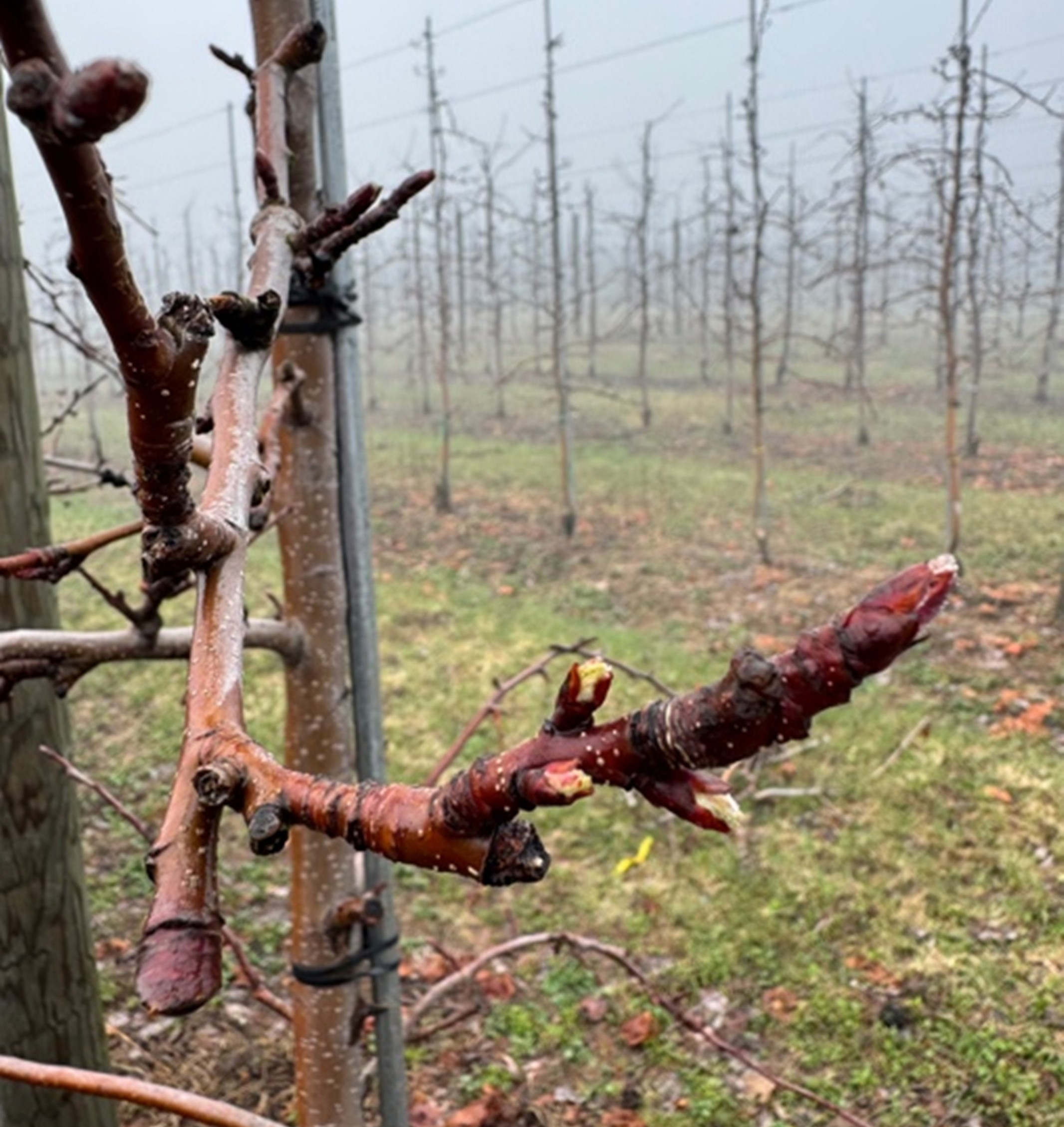
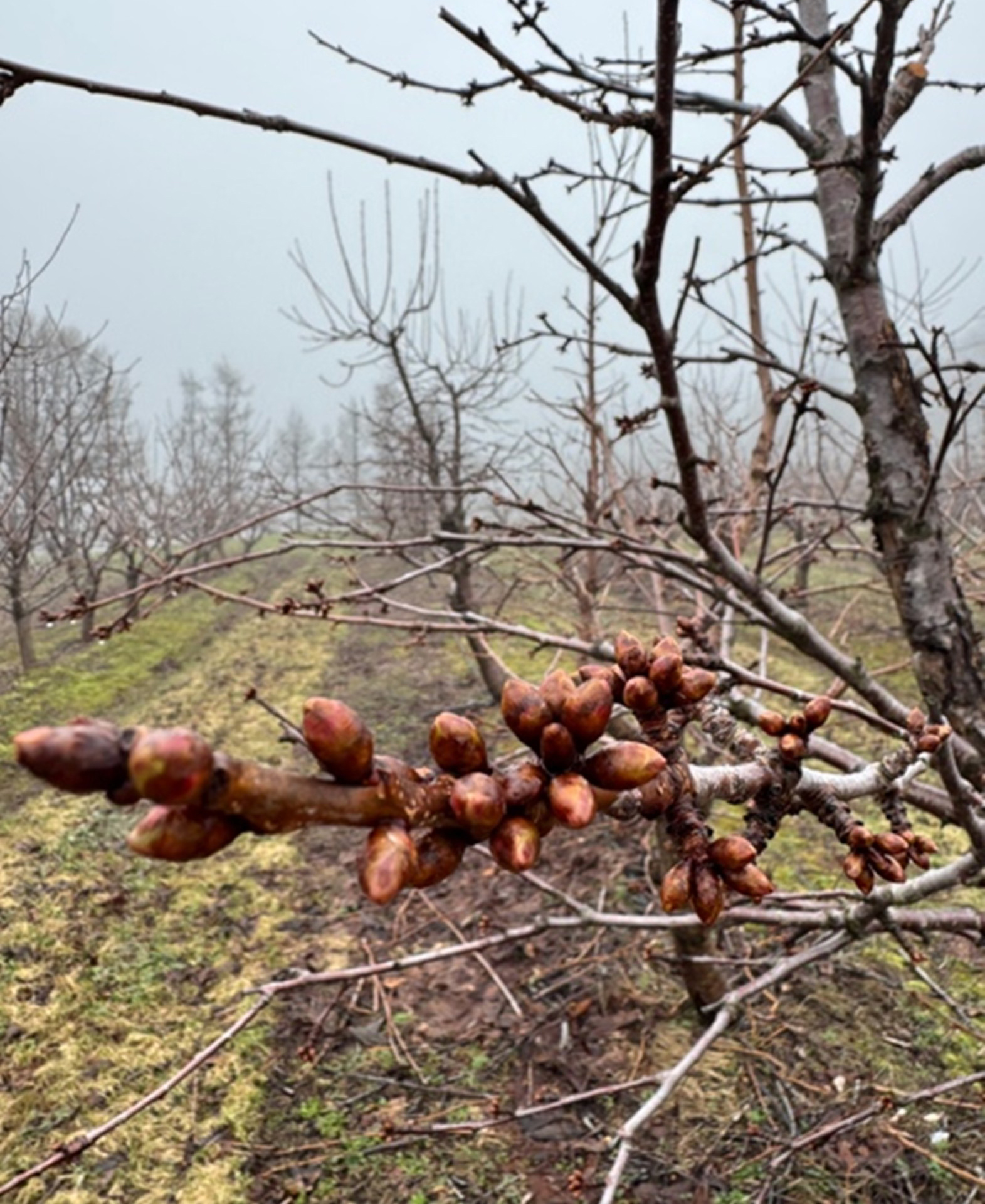
In northwest Michigan, we have not moved far, but we are just starting to see green tissue today (we even moved from yesterday!). We are at swollen bud in pear. We are just starting to see green tip in Balaton, but Montmorency was at swollen bud yesterday, April 13, but we are seeing green tip this morning. Gala was at silver tip yesterday, but we are starting to see some green on this apple variety. Honeycrisp are still dormant.
Disease report
We have had lots of questions about spraying for apple scab with all this rain and now fast-growing tissue. As mentioned above, we were dormant for a long time, then we had a few daytime highs in the 60s and are starting to see green tissue literally overnight. Now growers have a challenging situation: green tissue, more rain in the forecast, wet/flooded orchard floors, and high winds.
It will be difficult for growers to find a window to cover for apple scab with this scenario. George Sundin, Michigan State University tree fruit pathologist, recommends a mix of captan and mancozeb to be the best materials to spray now. If buds are not fully open, mix in Vanguard or Scala to get penetration. Sundin recommends protecting at this early time to reduce pressure from scab later in the season. Although it seems early, if there is green showing on your apples, you need to protect at this early timing.
Insect report
This early timing is also appropriate for targeting insects with a dormant oil application. San Jose scale and woolly apple aphid are two insects that benefit from early season oil applications. Early oil sprays targeting San Jose scale can be applied in apple and sweet cherry. Sweet cherries are susceptible to oils, so be sure to watch the green tissue before applying oil in cherry. “Early season reminders for key application timings of dormant and delayed-dormant fruit sprays” from Michigan State University Extension is a great article that guides growers through early oil sprays. Additionally, avoid applying sulfur or Captan within several days of oil application as this will also cause phytotoxicity.