How to assess the trees in your yard for oak wilt risk
 Print
Print Email
EmailLearn more about oak wilt risk factors and what time of year is best to prune oak trees.
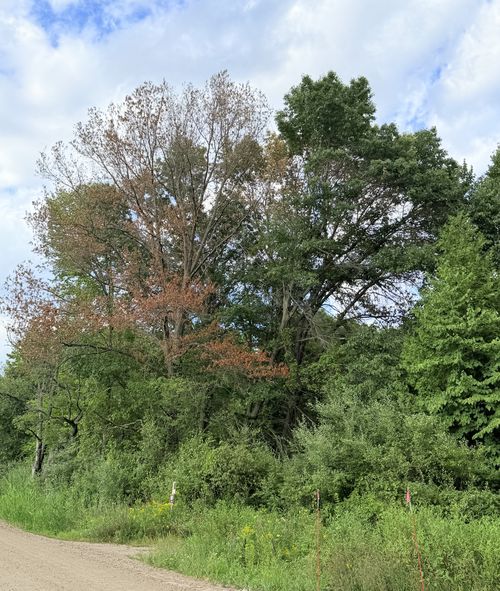
If you need to prune an oak tree and aren’t sure what time of year is best, then read on to learn about oak wilt risk factors from Michigan State University Extension.
Oak wilt spreads across the landscape with the help of tiny picnic beetles that feed on oak wilt spore mats; this insect is also immediately attracted to fresh wounds on oak trees, sometimes arriving within minutes. Spores picked up on the beetle’s body while feeding on a spore mat can infect the tree through the fresh wound.
The risk of oak wilt infection is greatest when both spore mats and sap beetles carrying the oak wilt fungus are most abundant. In a Michigan study, where sap beetles were trapped from April through October, nearly all the beetles carrying oak wilt spores were trapped in May and June. To account for year-to-year variability and location within the state, the high-risk infection period includes two weeks on either side.
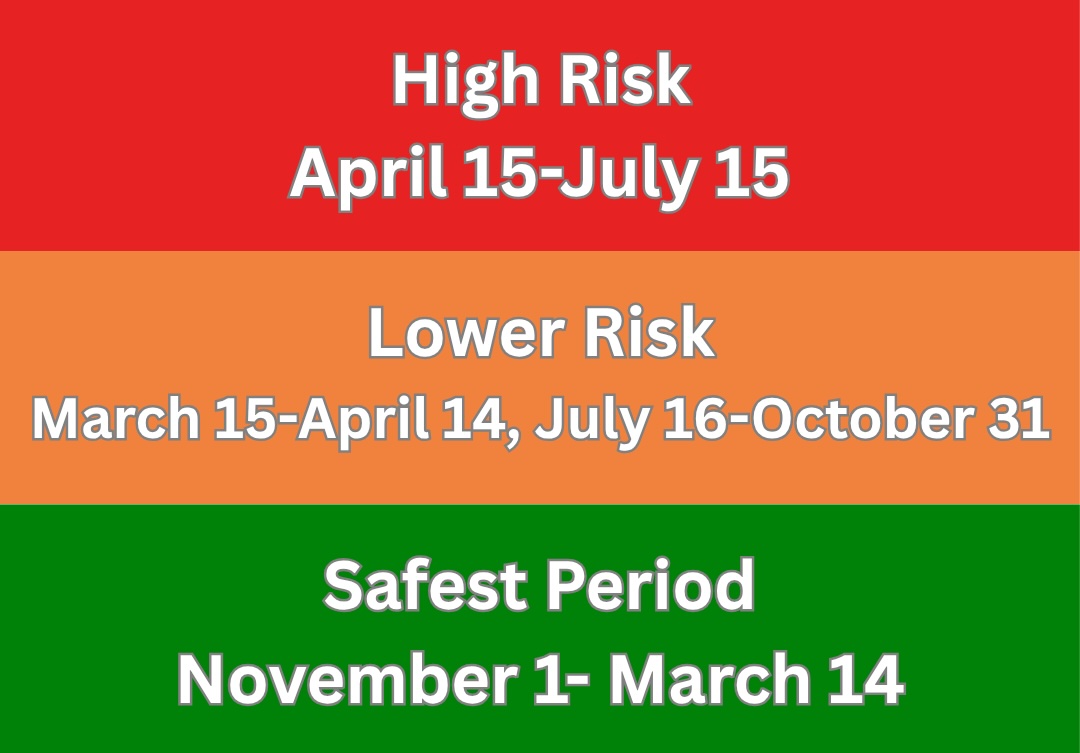
The high-risk period for oak wilt infections is April 15 – July 15.
Do not prune oaks between April 15 – July 15.
If pruning must occur during the high-risk period, or if an oak is accidentally wounded during this time, immediately paint any wounds with pruning sealant, or even latex paint. Consider the impacts of other activities that might incidentally wound, scuff, or break the branches of oak trees during this period (e.g., yard work, landscaping, construction, tree felling, etc.).
After June, beetle activity drops off, though some insects remain active through the fall season. Various conditions can influence when the risk of oak wilt is higher or lower, even outside of the April 15 to July 15 high-risk period. These conditions can also affect how much risk one is willing to take. Consider the factors below.
Factor #1: Assess local disease pressure
The closer your site is to infected trees or trees that have died from oak wilt, the higher the risk. Use the oak wilt viewer map which illustrates locations of confirmed cases. While a great resource, please note that it is under representative of oak wilt on the landscape.
If oak wilt is known to be locally prevalent, assume the local disease pressure is elevated and only prune high-value oaks when the tree is dormant, between November and March.
Learn more about local disease pressure through the following resources:
- Oak Wilt Qualified Specialists
- Forestry Assistance Program (FAP) Foresters
- Michigan Conservation Districts
- Local International Society of Arboriculture (ISA) Certified Arborists
Factor #2: There is no known cure for oak wilt once a tree begins to show symptoms of infection
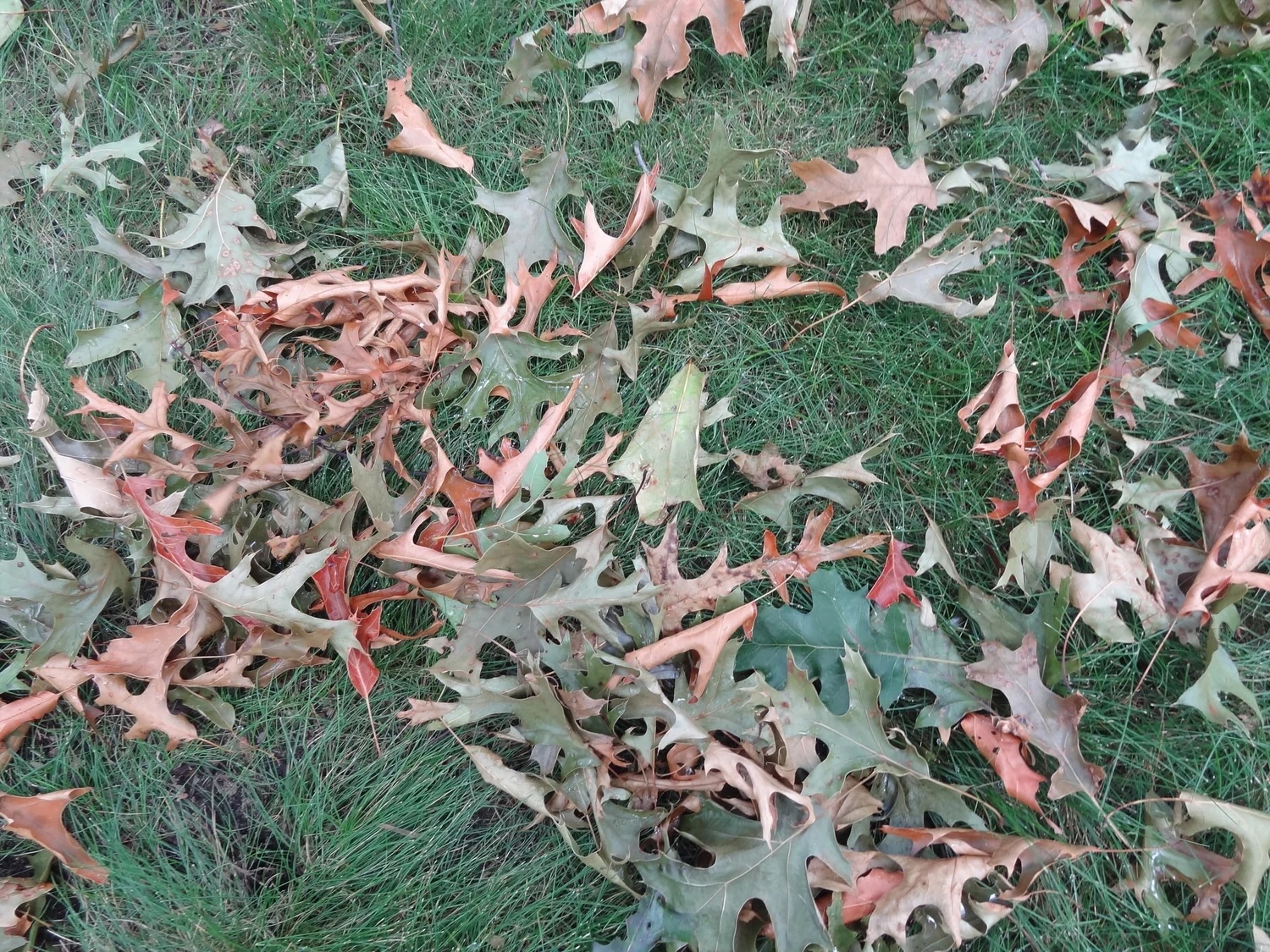
If your oak tree is part of the red oak family and becomes infected with oak wilt, it WILL die. Oaks in the red oak family (Northern red oak, black oak, Northern pin oak, pin oak and scarlet oak) infected with oak wilt during the high-risk period can die in as little as three to five weeks of becoming symptomatic and always die within the same growing season. Trees infected in late summer may die the following spring or summer.
Once oak wilt kills a tree, the fungus produces spore mats which can increase risk of overland spread by picnic beetles. Oak wilt can also spread underground through root grafts or connected roots to adjacent trees.
In fact, underground spread accounts for the majority of oak wilt mortality, and it means that additional oaks on your property — or your neighbor’s property — will likely become infected through root grafts and die without warning in the future.
Injections of fungistat may be administered to healthy trees adjacent to oak wilt infected or killed trees to suppress the fungal disease. This is a short-term solution and is not intended for long-term use. The cost of injections is calculated on a tree diameter-inch basis.
Factor #3: There are significant costs related to oak wilt management
Diagnosis, tree removals, site remediation, and monitoring are all components of oak wilt management and involve professional guidance and execution. Limitations to oak wilt management include the following:
- Access to site
- Utilities: On/below/above ground
- Property boundaries
- Infrastructure: Buildings, septic, paved area
- Tolerance for site disruption
- Topography
- Soil type
- Ecological considerations
- Archeological resources
- Land use type
- Other factors specific to site
When managing oak wilt, always work with an Oak Wilt Qualified Specialist or someone with substantial training in oak wilt management. Oak Wilt Qualified Specialists have gone through intensive classroom education, field training and testing processes, and are up to date on the latest research and treatment procedures.
When in doubt, whenever possible, wait until oak trees are dormant — between November and March — to prune branches.
To learn more about oak wilt, visit the following resources: