Improve your irrigation system efficiency with the Mobile Irrigation Lab
 Print
Print Email
EmailImprove water application uniformity, reduce energy costs, and optimize irrigation performance with a free on-farm system evaluation.
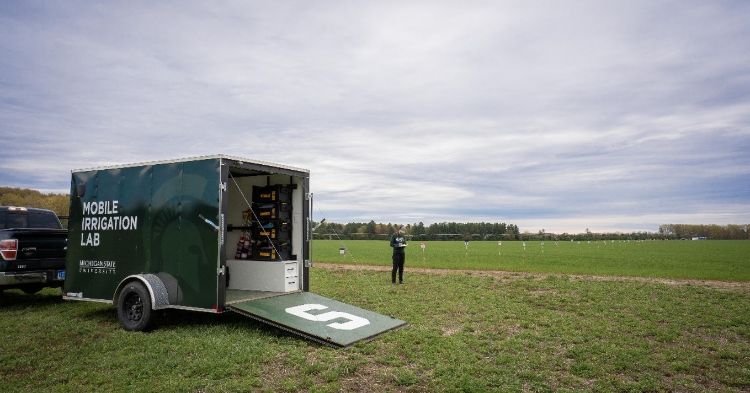
The MSU Mobile Irrigation Lab has had a busy inaugural season. The Mobile Irrigation Lab (MIL) program provides free center pivot irrigation system evaluations to farmers across Michigan to aid in water and energy use efficiency. The MIL team evaluates irrigation system uniformity by performing a catch-can test. If uniformity across the field is poor, this can cause over- or under-watering, which can impact yields and cause nutrient leaching.
In addition to checking system uniformity, MIL technicians check system pressure and flow rate and calculate a scheduling coefficient for the field; the scheduling coefficient is a run time multiplier that states the extra water needed to ensure the under watered areas of the field are getting sufficient water (e.g., if the scheduling coefficient is 1.38, which means 1.38 inches of irrigation needs to be applied in order for the dry areas of the field to receive 1 inch of water). If improvements to the irrigation system are recommended, the MIL program will provide cost-share funds to help cover a portion of the cost for new nozzles or sprinklers.
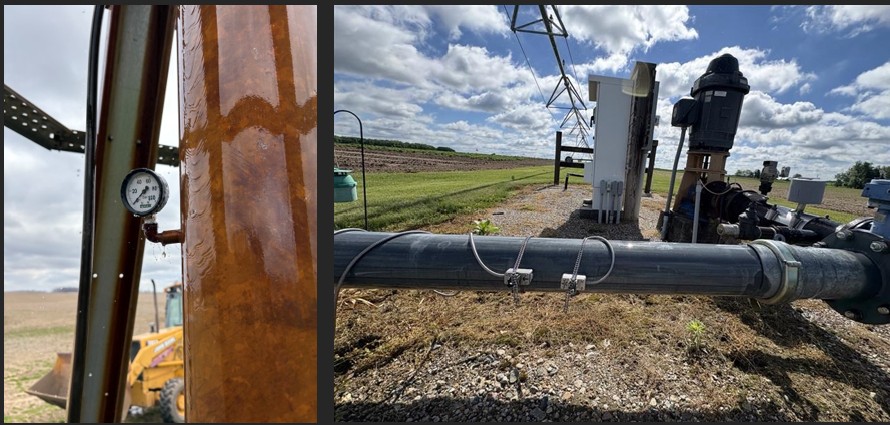
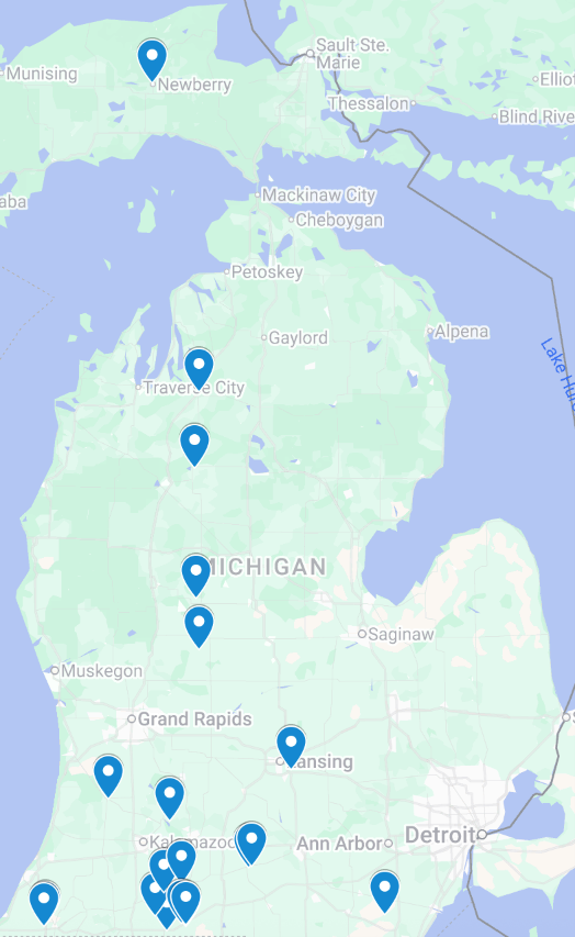
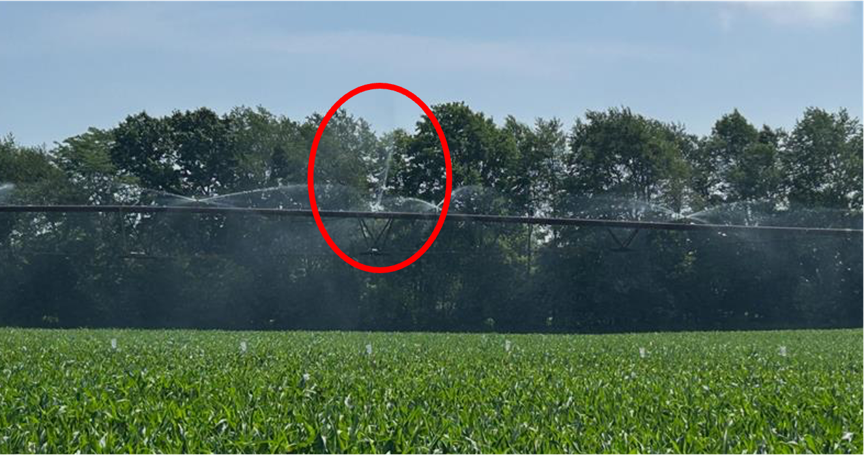
Over the past three months, the MIL has performed center pivot uniformity tests across a range of cropping systems, including kale, potatoes, Christmas trees and field crops. Members of the MIL team have performed over 20 irrigation system tests across nine counties (Figure 2). Sprinkler ages on the pivots tested ranged from 1-32 years, and the system uniformity has ranged from 30-92%. Commonly cited issues include malfunctioning sprinklers and their components (i.e., faulty pressure regulators, worn nozzles), improper system pressure and system leaks (Figure 3).
The MIL program provides farmers with a report detailing their irrigation system performance and provides recommendations based on the findings. If the farmers choose to make upgrades to the system, the MIL will perform a follow-up ‘post-test’ to document the impact of said upgrades.
For example, as recorded from one post-test evaluation after new sprinklers were installed, uniformity across the center pivot system improved by 12%, and based on improvements to the system’s scheduling coefficient, the MIL quantified potential water savings of 4.7 million gallons per year in addition to $950 in annual energy costs. These values will vary based on crop type, pump power source, etc., but safe to say improving irrigation system uniformity can make a big impact on water and energy use efficiency.
If you’re interested in enrolling your farm in the program, or you’d like more information, contact Riley Johnson at 517-432-8751 or mobileirrigationlab@msu.edu.