Integrated pest management resources at Michigan State University Extension
 Print
Print Email
EmailExplore MSU Extension resources and tools to help you make pest management decisions.

There are many valuable integrated pest management (IPM) resources and tools available to producers through Michigan State University Extension. Pest management is heavily reliant on real-time information and is complicated by evolving issues including invasive pests, pesticide resistance and challenging environmental conditions. Michigan State University (MSU) Extension is here to assist producers in addressing these challenges and maintaining an IPM program that supports economic and environmental sustainability.
Real-time information
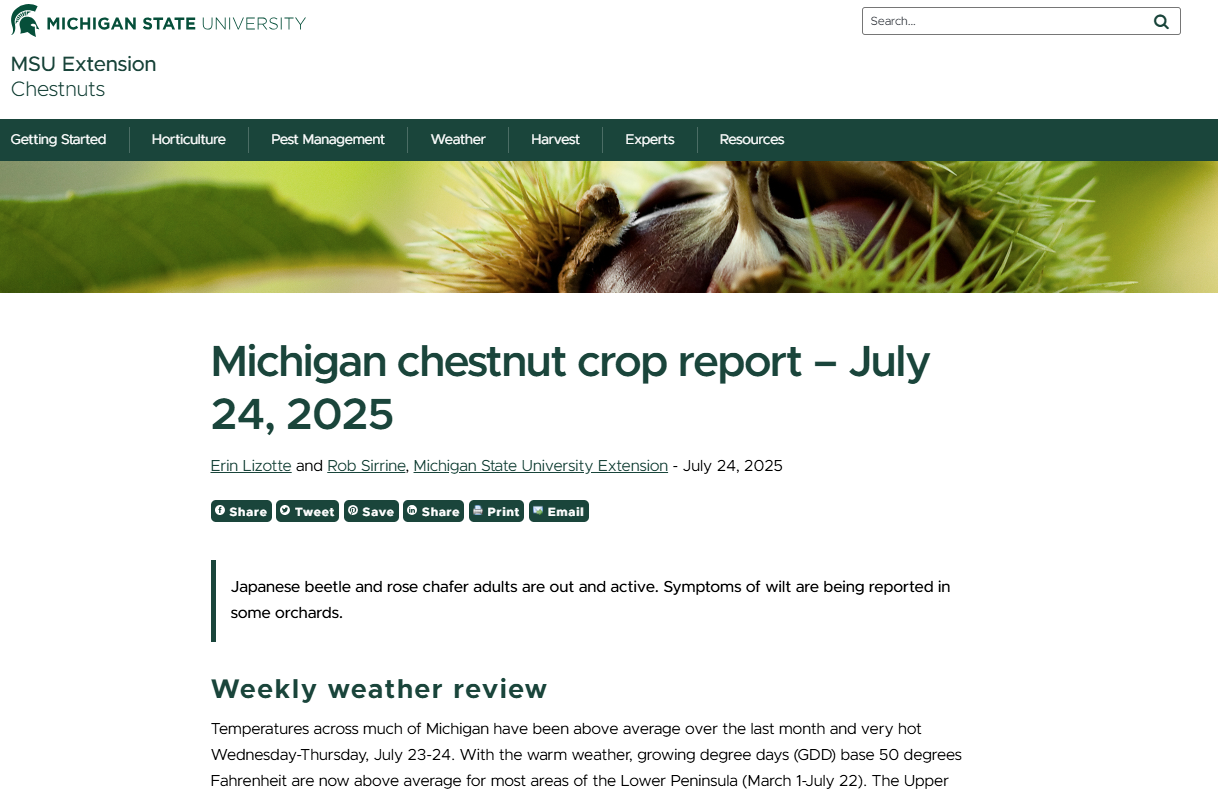
When it comes to keeping up with the latest developments that affect agriculture, MSU Extension is an excellent resource. MSU Extension News for Agriculture offers the expertise of MSU scientists and educators through online articles addressing pest management and provides scouting reports for many cropping systems. You can sign up to receive customized digests via email that address topics or cropping systems of interest to you.
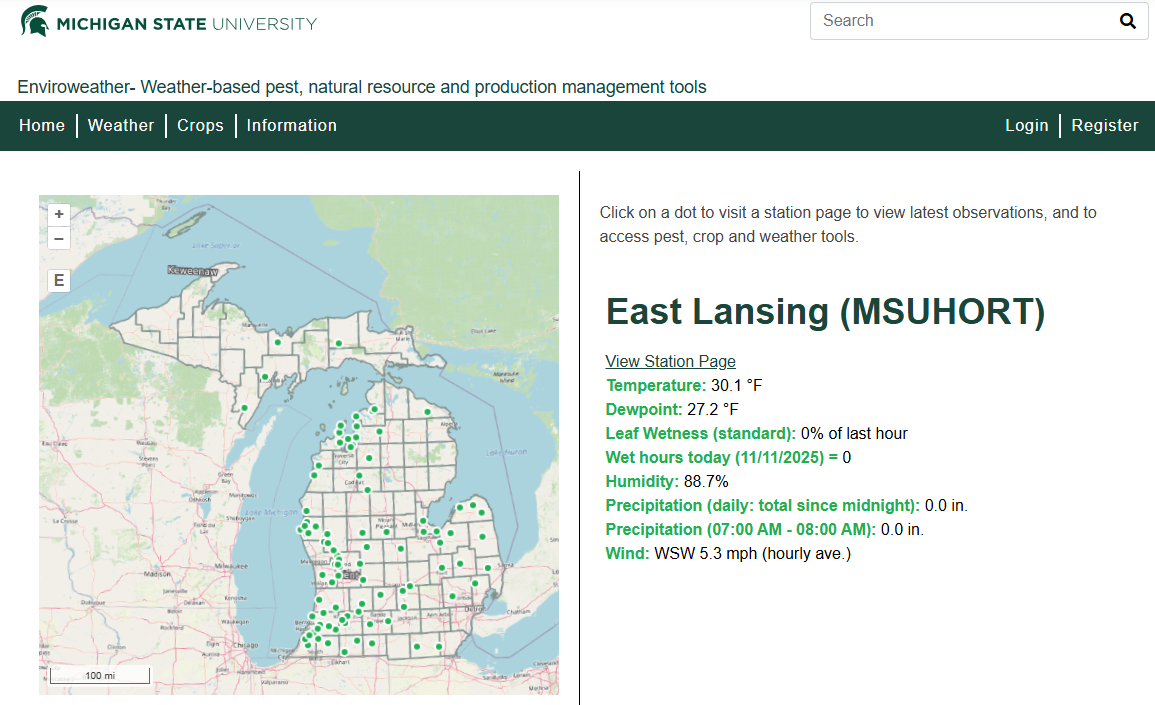
Keeping up with the latest weather developments is a critical component of every IPM program. The Enviroweather program at MSU is a sustainable, weather-based information system that helps users make pest, production and natural resource management decisions in Michigan. Enviroweather offers general weather information such as rainfall, temperature, degree-day accumulations, wind direction and wind speed.
Additionally, Enviroweather houses dozens of pest and disease models to help growers and home gardeners more accurately gauge pest pressure, development and optimal treatment timings throughout the season. Historical weather data is also available. Enviroweather also offers irrigation scheduling tools and evapotranspiration data.
The tools and models on the Enviroweather website use data collected by dozens of weather stations located around Michigan. Users can select the weather station closest to their site, increasing its relevance for individuals around the state.
Online resources

MSU offers a number of online resources including the IPM website, which acts as a repository of resources for IPM practitioners. Found at ipm.msu.edu, this page is your link to dozens of crop-specific IPM resources including pest identification, wildlife management and up-to-date invasive pest information. Please note that many cropping systems also have specialized websites that provide a plethora of crop production information. You can access these substantial resources via the MSU Extension Agriculture website.
The IPM website also links to the MSU Pesticide Safety Education Program for resources related to getting and retaining a pesticide applicator certification.
If your interests lie in native ecosystems and insects, check out MSU’s Native Plants and Ecosystem Services website. Interested in pollinators? Check out the Michigan Pollinator Initiative website for resources that cover everything from native bees to beekeeping.
Publications

MSU has produced a number of print resources related to IPM, including pocket-sized flip guides for identifying pest and beneficial insects, crop management guides, weed identification resources and much more. You can access these publications and more at the MSU Extension Bookstore. Some materials are available for free when you download and print them yourself.
Diagnostics and soil nutrient testing
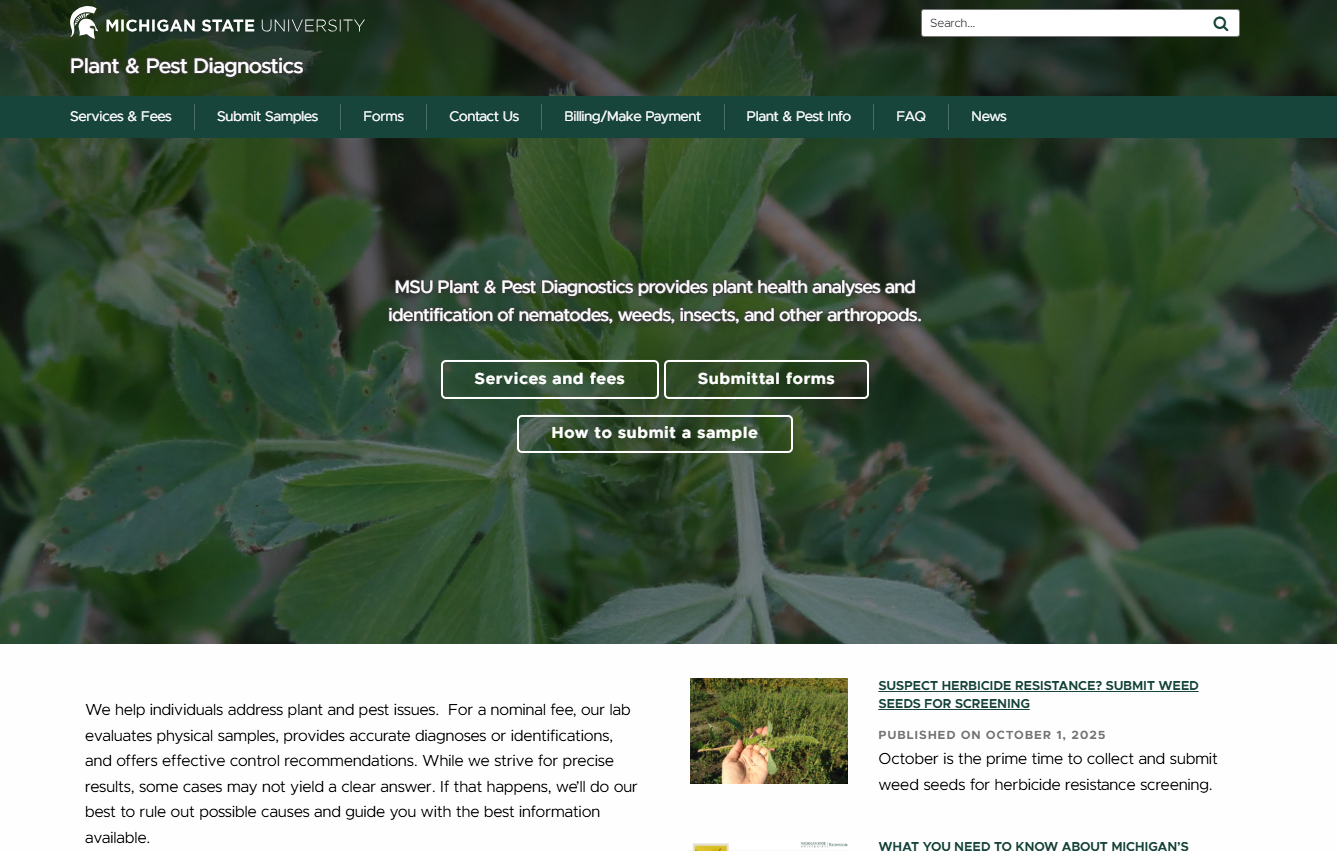
Need help diagnosing a problem? MSU offers help in identifying pests through MSU Plant & Pest Diagnostics. The diagnostics laboratory specializes in diagnosing plant and pest species as well as plant problems caused by nematodes, insects, mites, ticks, fungi, bacteria and viruses. To access more information, visit pestid.msu.edu.
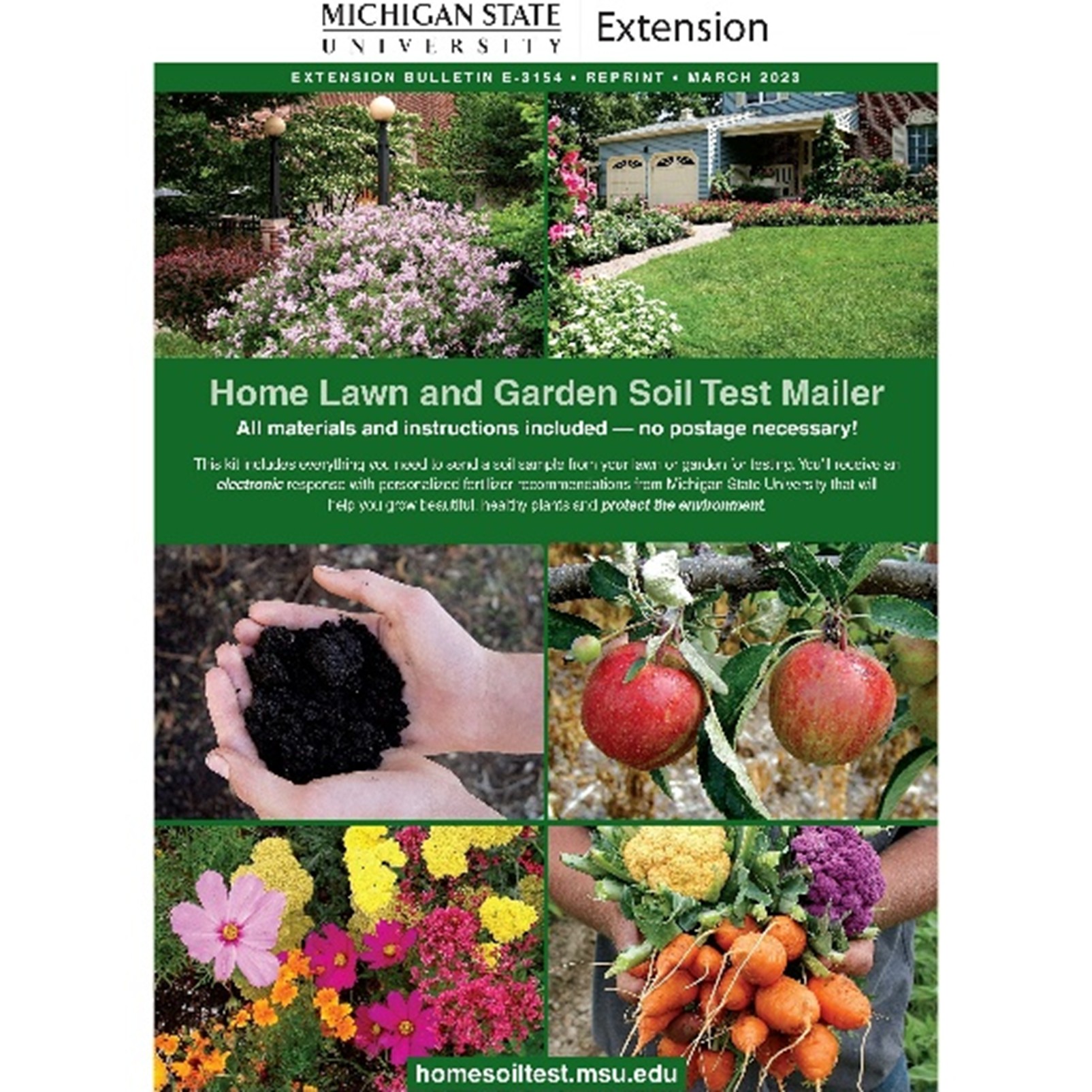
Finally, the cornerstone of responsible and sustainable management and nutrient management starts with soil nutrient testing. MSU Extension provides personalized recommendations for fertilizers and soil amendments through our soil testing program. Home lawn and garden soil tests are available for purchase at the MSU Extension Bookstore. Commercial soil tests (farm scale) are available at your local county MSU Extension office.
Educational programs
MSU Extension offers hundreds of programs annually. To view a list of current programming, visit the MSU Extension Events page and search by topics, location or date.
Also, check out the IPM-related online courses via the Desire to Learn platform. While there are dozens of courses available, the following courses may be of particular interest to IPM practitioners.
Core Pesticide Applicator Training: This is a self-paced, online Core pesticide applicator training course.
The Integrated Pest Management (IPM) Academy: This is a self-paced, online course that uses a combination of videos, resources and interactive content.
Pollinator Protection for Land Managers: This self-paced, online course about pollinators is directed toward pesticide applicators with a focus on land management.
Pollinator Protection for Pesticide Applicators: This self-paced, online course about pollinators is directed toward pesticide applicators with a focus on crops pollinated by honey bees.
Vegetable Pest Management: The Pesticide Safety Education Program has developed this self-paced course to help pesticide applicators earn restricted use pesticide (RUP) recertification credits or prepare for the Pesticide Applicator Certification Exam.
IPM contacts
MSU faculty are here to help. Visit the IPM people page to see a listing of agriculture experts focused on IPM. Home gardeners can utilize the Lawn and Garden Hotline staffed by MSU Extension consumer horticulture staff and specially trained Extension Master Gardeners from across the state. Visit migarden.msu.edu for current hotline hours, then call 888-678-3464 to have your questions answered by our hotline responder team members.
MSU Extension can also connect you to specialists within Michigan and around the country via Ask An Expert.
This work is supported by the Crop Protection and Pest Management Program [grant no 2024-70006-43569] from the USDA National Institute of Food and Agriculture. Any opinions, findings, conclusions, or recommendations expressed in this publication are those of the author(s) and do not necessarily reflect the view of the U.S. Department of Agriculture.