'It changed my life': Urban farmer finds stability through counseling support
 Print
Print Email
EmailChris Huntoon operates a microgreens farm in downtown Grand Rapids where constant demands and financial strain eventually took a toll.
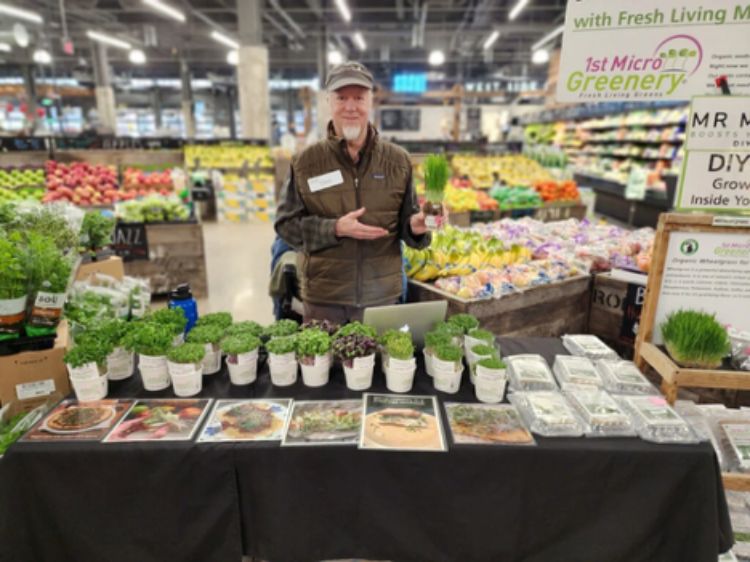
In the middle of downtown Grand Rapids, a 100-year-old house hums with controlled chaos. Inside, Chris Huntoon grows microgreens to sell both harvested and as living plants for fresh, ready-to-eat food. Microgreens are vegetable plants that are harvested when leaves appear, about one to three weeks after planting, which is when nutrients are at an all-time high. The operation is fast-paced, highly manual and constantly changing.
“I am everything. I am the weather,” Huntoon said. “It’s a constant… everything has to be monitored 24 hours a day.”
In a system like his, small mistakes do not stay small. One missed step can ripple through the entire operation.
He shared, “I came home and my plants are all laying over dead. We cleaned the reservoir and I forgot to plug in the pump. That’s all it takes.”
On top of production demands, he manages deliveries to customers and unpredictable ordering patterns. Over time, the pressure built in ways that became difficult to ignore. He had never considered counseling before, but after learning about behavioral health support for farmers through a Michigan State University (MSU) Extension workshop, he decided to try something new.
“I decided I’d try it,” he said. "I didn’t even think of it as something I would do.”
What he found surprised him.
“It changed my life.”
For Huntoon, counseling became a place to sort through the constant demands of farming and business without judgement.
“It’s somebody to talk to,” he added. "Somebody to bounce ideas off. Things my family and friends wouldn’t really understand.”
He described it less as treatment and more as practical support.
“It’s like a personal coach. Somebody in your corner,” he explained.
Along with counseling, Huntoon began using small daily practices to manage stress, including brief pauses during the workday and guided meditation. He also worked through deeper stressors with his counselor, which he said helped him better understand what felt overwhelming.
Looking back, he says the difference is clear.
“I’m less anxious about everything.”
The work is still demanding, but it no longer feels unmanageable in the same way.
To other farmers who may be unsure about reaching out for support, Huntoon offers a candid reflection.
“I never would have believed it would help this much.”
Opportunities to Connect
For those in the agriculture industry like Huntoon, resources and information can be found on the Managing Farm Stress website. These resources include the teletherapy services Huntoon benefitted from, free virtual Rural Resilience training, and the AgrAbility project which supports people with disabilities working in agriculture and more.
MSU Extension also offers a variety of programming and resources for general audiences to support yourself or loved ones experiencing mental health distress. Such programs include Mental Health First Aid, which can teach you how to support someone who is experiencing a mental health challenge or crisis. Other health and wellbeing programs are offered for free, and you can refer yourself or a friend.