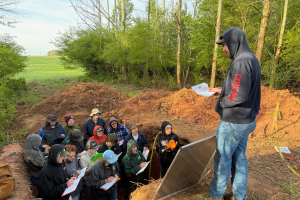
KBS Science Coordinator Nameer Baker encourages on-going collaboration with PSM faculty and students
 Print
Print Email
EmailSeminar series guest details numerous opportunities for interactions

KBS LTER Science Coordinator Nameer Baker Highlights Opportunities for Long-Term Ecological Research
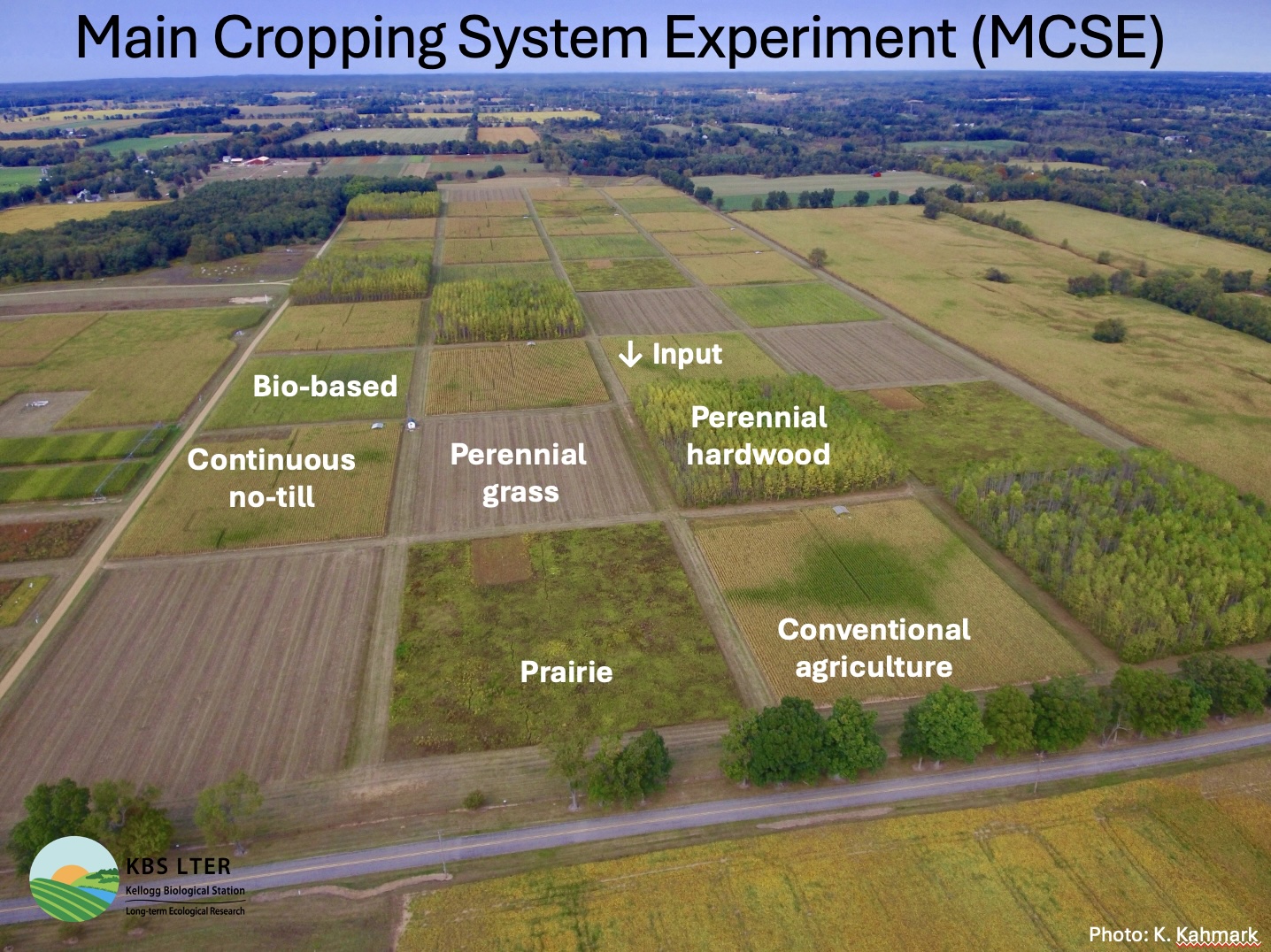
Dr Sasha Kravchenko and PSM recently hosted Nameer Baker, Science Coordinator for the Kellogg Biological Station Long-Term Ecological Research (KBS LTER) program. Baker’s visit focused on strengthening research connectivity and increasing awareness of the extensive experimental resources available through KBS. Baker emphasized that KBS LTER maintains one of the longest-running and most comprehensive ecological research platforms in the region, with multi-decadal datasets, continuously maintained experimental plots, and established protocols that support rigorous cross-site and longitudinal analyses. The program’s infrastructure enables investigators to address questions related to ecosystem processes, biogeochemical cycling, landscape-level change, and organism–environment interactions with a temporal resolution not achievable in short-term studies.
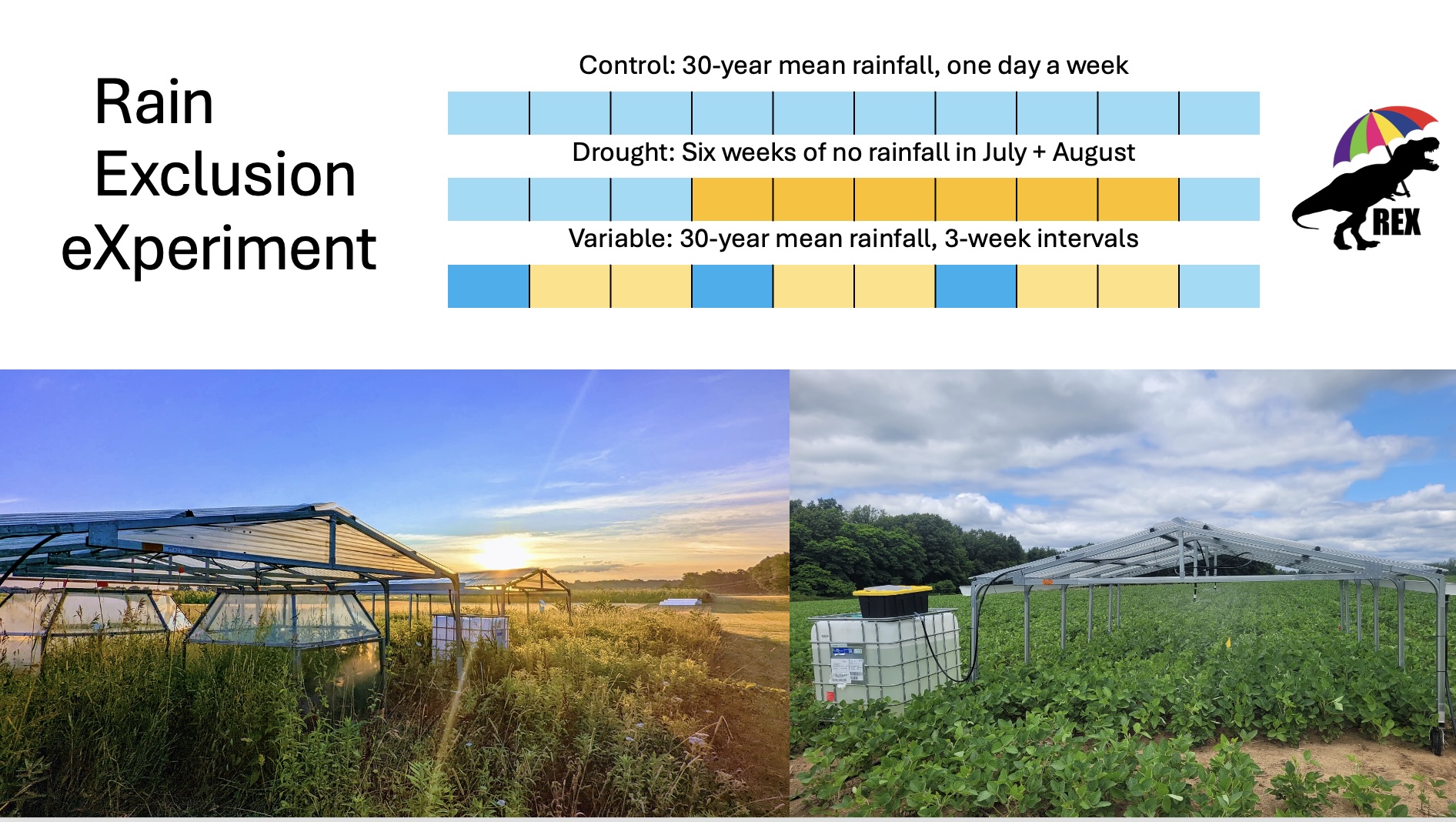
He encouraged PSM researchers to consider KBS LTER as a field site for future investigations, particularly for projects requiring sustained monitoring, replicated experimental designs, or integration with long-term ecological datasets. Baker also underscored the value of collaborative research efforts that leverage KBS’s experimental history to generate insights into ecosystem dynamics under changing environmental conditions.
Researchers interested in exploring collaborations or accessing KBS LTER resources are invited to further engage with the program.
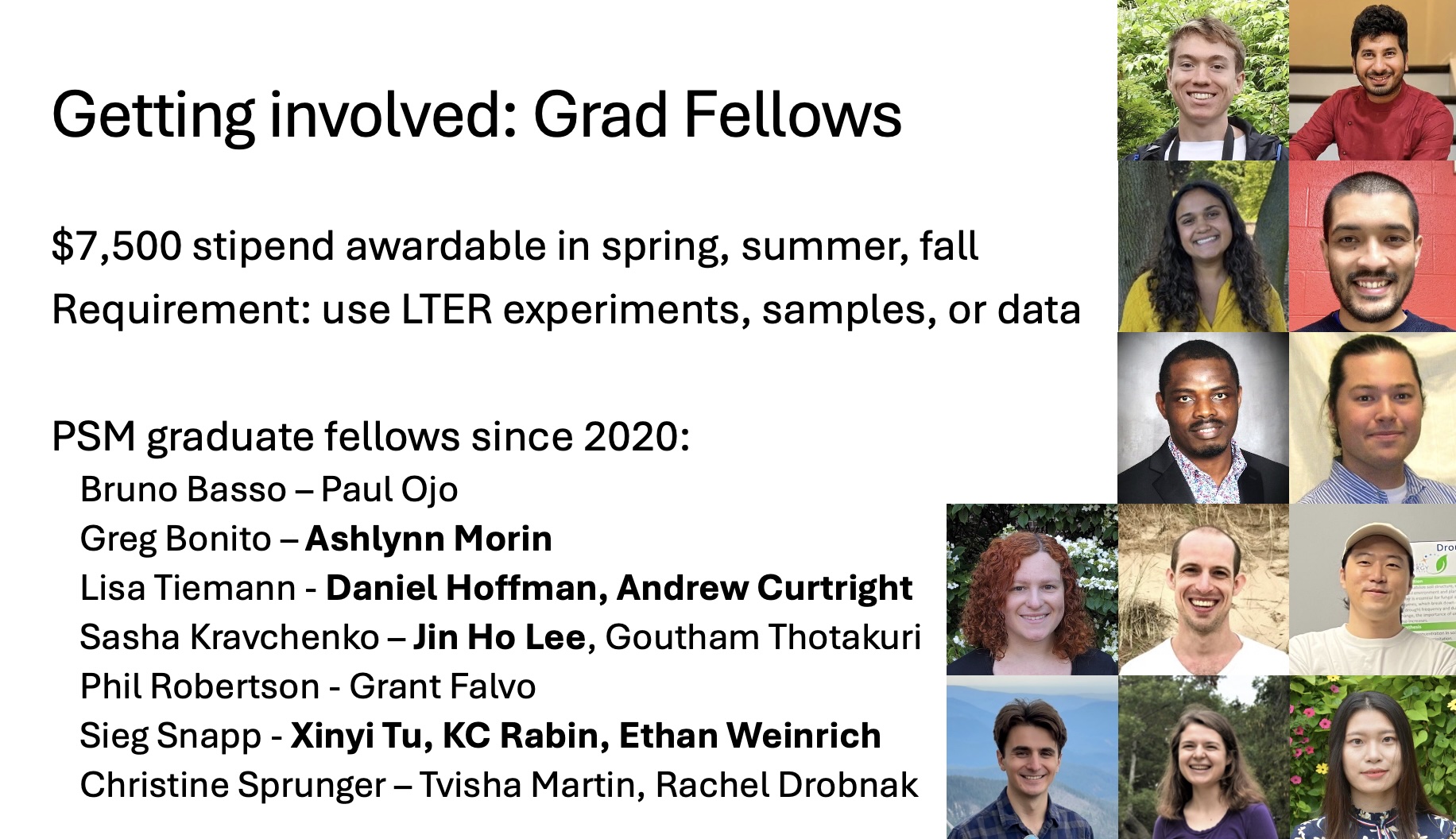
Getting involved: Grad Fellows $7,500 stipend awardable in spring, summer, fall
Requirement: use LTER experiments, samples, or data. Since 2020, KBS has hosted a dozen grad students from PSM. Read more here