Lake Huron fisheries: A tale of challenges and opportunities
 Print
Print Email
EmailJim Johnson and Tuffy Cross spent decades learning from the lake and helped to ensure its fisheries story is told.
Step inside the Great Lakes Fisheries Heritage Exhibit at the Besser Museum for Northeast Michigan, and the story of Lake Huron unfolds not as a single timeline, but as an immersive experience. 
The Native American exhibit and fish diversity displays help anchor the understanding that fisheries are not just economic systems, they are cultural systems grounded in stewardship and personal connections with the Great Lakes. Tribal Nations fished and benefited from a diversity of native fishes seasonally and across Michigan’s waterways.
By the late nineteenth century, and as cultures from across the world came together in the Great Lakes region, fishing on Lake Huron eventually expanded into a full-scale commercial enterprise. The Katherine V exhibit captures a working commercial fishing vessel at a moment in time. Walking along the docks, visitors can imagine themselves in the world of Lake Huron's commercial fishery, experience the activity of a bustling harbor as fishermen prepare their gear, retrieve fishing nets, or return to port with their catch. Nearby, the R/V Chinook outfitted with the science and research equipment once deployed from this research vessel speaks to a different kind of work on the water.
This is a story of Lake Huron fisheries and the coastal communities who have depended on these waters for centuries. It is also a story told through the voices of those who experienced these Lake Huron fisheries and the changes they have seen firsthand.
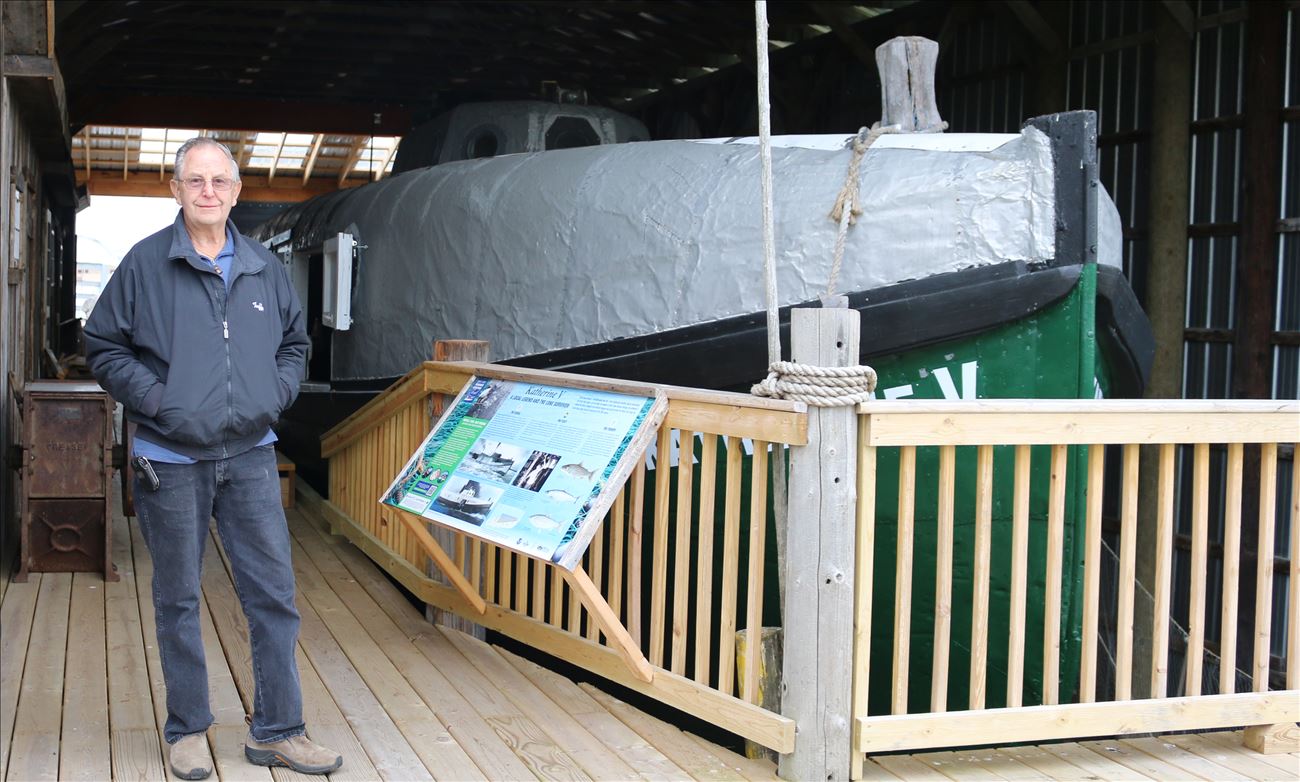
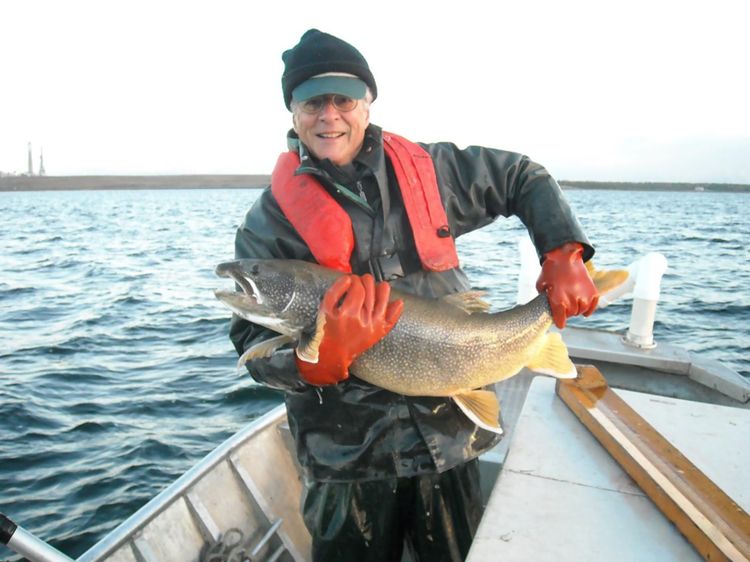
One of those voices belongs to Clarence “Tuffy” Cross, a fifth-generation commercial fisherman who has known the lake through cold mornings, heavy nets, and the rhythms of a working harbor. Cross would later serve as captain aboard the R/V Chinook, a Michigan Department of Natural Resources (MDNR) Fisheries Division research vessel. There, his experience on the water intersected with science, working alongside fisheries biologist Jim Johnson.
Johnson spent decades studying Lake Huron, translating observation into science and science into stewardship. His work examining food web changes, driven in part by invasive species, is reflected in the documentary Lake Invaders: The Fight for Lake Huron, which follows Johnson, Cross, and their team aboard the Chinook as they work to understand a changing ecosystem.
Together, their lives bridge the very story this exhibit tells. Cross came up through a fishing family lineage dating back to the mid-1800s, beginning as a boy selling fish on the dock and later hauling nets as a deckhand. Johnson came to know the lake through research, leading the Alpena Fisheries Research Station and dedicating more than 25 years to understanding Lake Huron’s fish community and its recovery.
It is no coincidence that Cross helped lead the restoration of the Katherine V, while Johnson guided interpretation of the Chinook. Today, at the Great Lakes Fisheries Heritage Exhibit the Katherine V and R/V Chinook sit side by side, telling two parts of the same story about Great Lakes fish harvest and fisheries science from our past, which shapes our present day fishery and as we look to the future.
Lake Huron’s story is not simply one of rise or decline. It is a story of the relationship between people and place that has adapted over time in response to both opportunity and challenge. It is a story about people like Jim Johnson and Tuffy Cross who have spent their lives learning from the lake, adapting alongside it, and helping ensure that its story endures for generations to come.
More stories online
Michigan Sea Grant and Michigan State University Extension, in partnership with America250MI and the Great Lakes Fisheries Heritage Trail (GLFHT) network, offer this Great Lakes fisheries history and heritage storytelling series celebrating Michigan’s commemoration of America’s 250th anniversary. Follow these stories exploring Michigan’s Great Lakes fisheries heritage online at the Great Lakes Fisheries Heritage Trail website.
Additional resources
Explore to learn more about Great Lakes fisheries:
- Life of the Lakes: A Guide to the Great Lakes Fishery — produced by Michigan Sea Grant with University of Michigan Press.
- Small Fry, Big Catches: The Great Lakes Fishery — a Michigan History Magazine article published by the Historical Society of Michigan in partnership with Michigan Sea Grant.
- Listen to an interview online with Tuffy Cross at the NOAA: Oral Histories of Great Lakes Michigan Fishers.
- Besser Museum's Great Lakes Fisheries Heritage exhibit webpage has additional resources, videos and articles offering more insight into the fishery on Lake Huron, including the Katherine V and the Chinook.
- Learn more about America250MI: america250mi.org
The following worked together to bring you this learning series as part of Michigan’s America250 commemoration: Great Lakes Fisheries Heritage Trail network, Michigan Sea Grant and Michigan State University Extension, Great Lakes Fishery Commission, Michigan Department of Natural Resources, Besser Museum for Northeast Michigan, Fishtown Preservation Society, and others. This series has been made possible in whole or in part by America250MI.