Manure timing matters: How to reduce phosphorus loss
 Print
Print Email
EmailApplying manure in winter can considerably increase phosphorus loss through tile drainage. Apply after harvest and incorporate or inject to protect water quality.
Important takeaways
- Applying manure in December and January causes much higher phosphorus loss than in October and November.
- Applying manure soon after harvest in early fall reduces phosphorus loss.
- Winter flows dodge dormant vegetation, and even manure applied on unfrozen ground can freeze under snow and later wash out during thaw, as snowmelt and rain flush phosphorus into tile drains.
- If injection is not available, incorporate manure after surface broadcasting.
- Avoid spreading on frozen ground or before heavy rain.
- Plan storage early to prevent winter spreading.
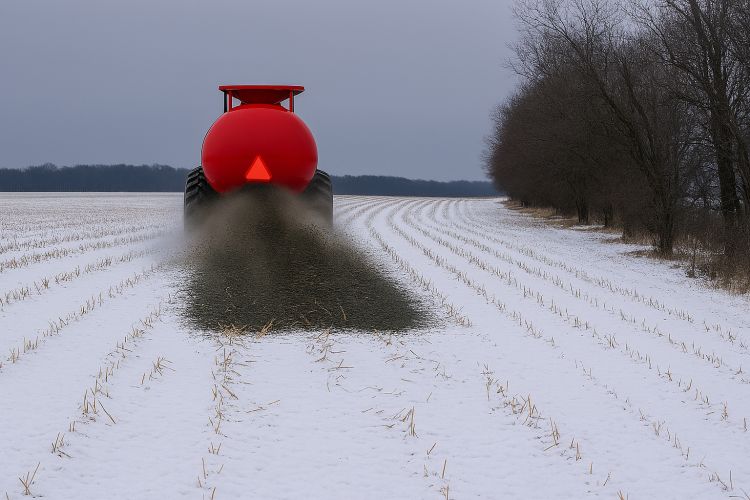
Manure is an excellent source of crop nutrients but applying it at the wrong time, especially during winter when tile drainage is more active, can greatly increase phosphorus loss. This poses risks to water quality.
Winter applications increase risk
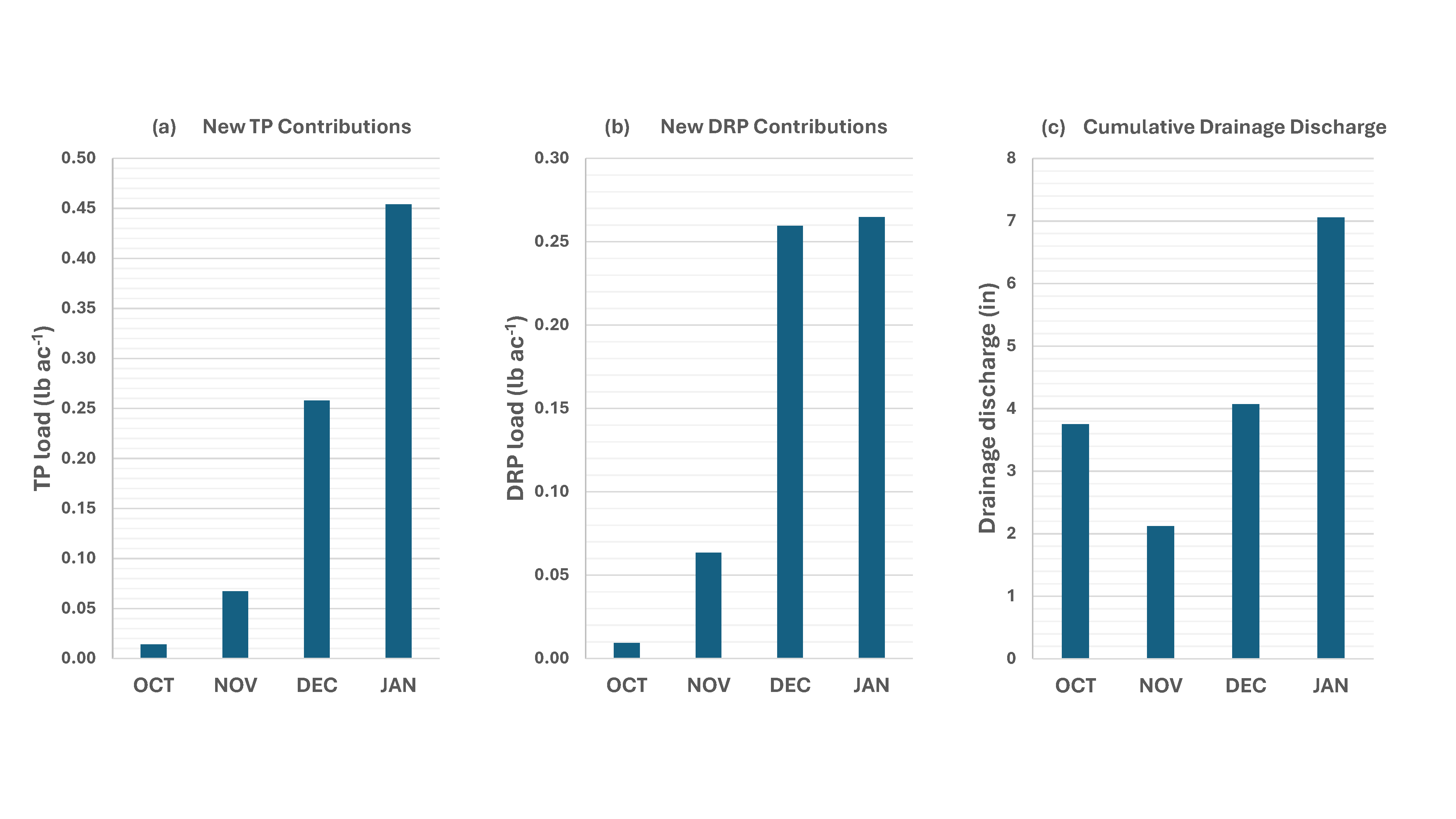
In a six-year Michigan study from 2019–2024, manure applied in December–January lost 0.68 pounds per acre (lbs/ac) of total phosphorus, compared to only 0.072 lb/ac when applied in October–November. Dissolved phosphorus losses were 0.468 lb/ac in winter versus 0.064 lb/ac in fall.
These losses represent phosphorus from recent manure applications only and do not include legacy phosphorus already present in the soil. This distinction shows the direct impact of winter manure spreading.
Why the difference?
More tile flow in winter: After dry fall months, winter precipitation restores flow, bypasses dormant vegetation and carries phosphorus into drains.
Freeze-thaw cycles: The southeast Michigan field experienced seven to 10 freeze-thaw cycles per season, often combined with rain-on-snow events (historically only three to five cycles). When manure was applied in winter, it quickly froze in place. During subsequent thawing, snowmelt and rain created tile flow that flushed phosphorus previously locked in frozen soil.
Example: 44 days after a manure application on Jan. 5, 2022, two snowmelt events on Feb. 17 and 22 contributed about 20% of the year’s total phosphorus load. Watch this event and other freeze-thaw cycles in the following time-lapse photography.
Higher winter application rates: Winter applications averaged 124 lbs/ac of phosphorus, compared to 45 lbs/ac in fall. With only 2.7 times more manure applied, winter losses were seven to nine times higher than those in fall because increased drainage flow is the dominant driver of phosphorus loss.
Apply manure after harvest, before winter
Spreading manure soon after harvest, when soils are dry, gives phosphorus time to bond with the soil and reduces the risk of leaching.
Controlled drainage helps
Installing controlled drainage (structures with weirs or gates) slows down tile flow after manure application, reducing phosphorus loss during the first big flow event. Michigan research shows this practice is more effective at reducing phosphorus loss than conventional free drainage.
Benefits of Incorporation or Injection
If injection isn’t available, incorporate manure with low-disturbance tillage after surface broadcasting. This mixes manure into the soil, increasing contact with soil and reducing phosphorus loss, as described by Kleinman et al. (2022).
Plan ahead for storage
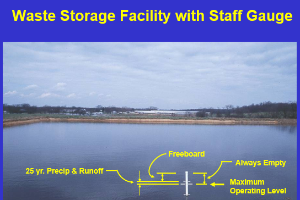
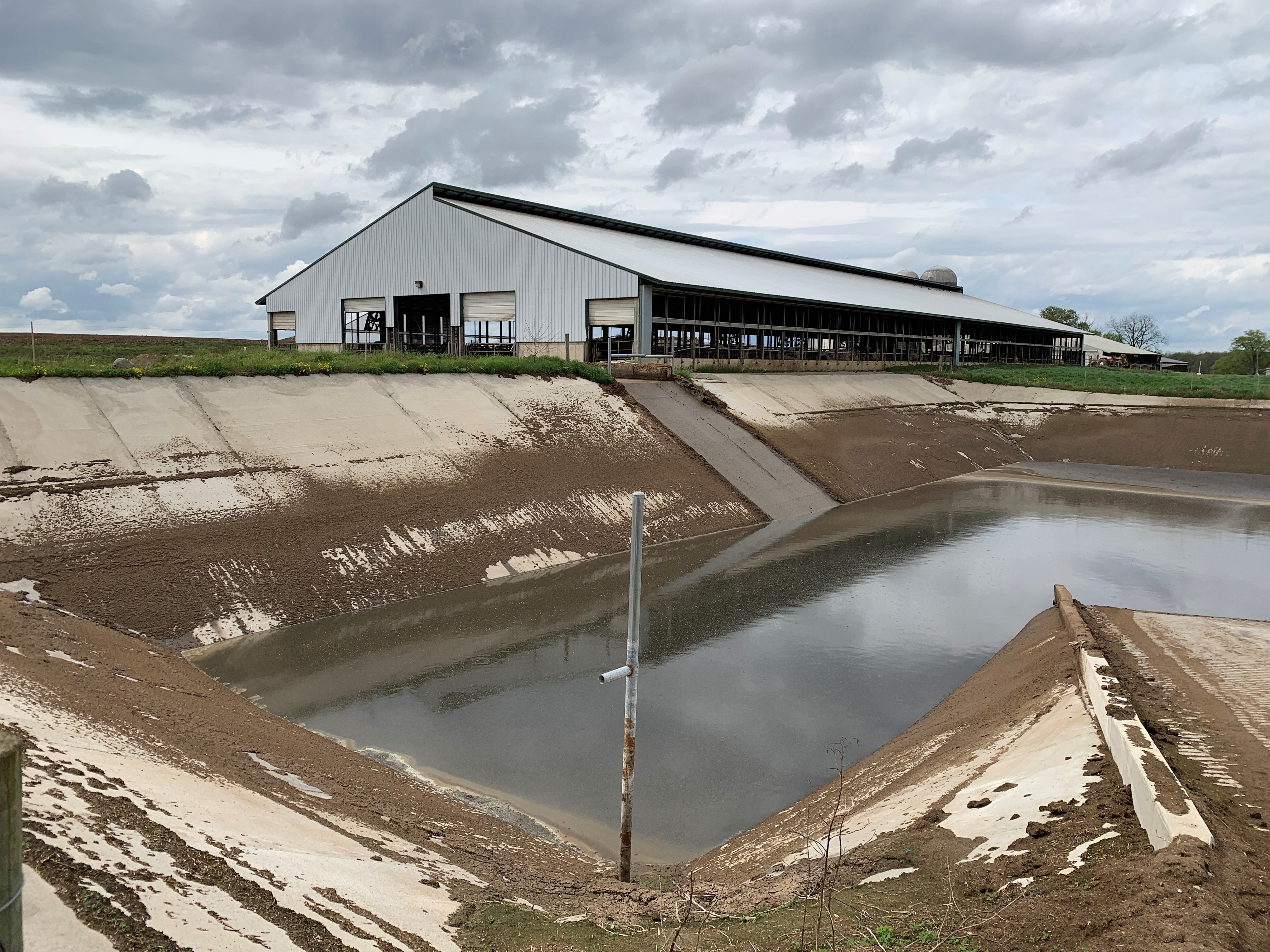
Manure storage gives farmers the flexibility to apply manure at the right time for crop growth rather than when weather or field conditions are unfavorable (Figure 2). Without adequate storage, farmers may be forced to apply manure during high-risk periods, such as rain or snowmelt, increasing environmental loss. Proper storage improves timing and placement, helping protect water quality. Planning ahead can prevent these risks. Keep in mind that winter weather can affect the integrity of storage structures.
Recommendations
All Michigan livestock producers should follow the Michigan Right to Farm Generally Accepted Agricultural and Management Practices (GAAMPs) for manure management and utilization. In the GAAMPs section “Manure Application to Land,” key winter application practices are provided:
- Avoid spreading manure on frozen or snow-covered soils whenever possible. If necessary:
- Solid manure: Apply only on fields with slopes less than or equal to 6%.
- Liquid manure: Apply only on fields with slopes less than or equal to 3%.
- Use controlled drainage to reduce phosphorus loss.
- Incorporate manure whenever possible.
- Use conservation practices (e.g., vegetative buffer strips) to reduce runoff and erosion.
- Maintain a 150-foot buffer from surface water inlets and concentrated flow areas.
- Assess fields using the Manure Application Risk Index, which rates sites based on 12 factors (e.g., slope, soil type, phosphorus levels, setbacks, buffer width, application method). Fields rated very low (less than 19) or low (19–37) are best for winter spreading.
Large farms classified as concentrated animal feeding operations, or CAFOs, must comply with National Pollutant Discharge Elimination System permit rules, including having storage for six months of manure, which generally allows farms to avoid winter spreading.
If you would like to learn more about winter application guidelines and tools, see this article on winter spreading resources from Michigan State University Extension.
For assistance, contact your local Michigan Agriculture Environmental Assurance Program technician, Natural Resources Conservation Service technician or soil and water conservation district for local rules.
This research was funded by the Michigan Department of Agricultural and Rural Development (grant No. 791N7700580). The peer-reviewed journal article can be found at: Journal of Environmental Quality. DOI: 10.1002/jeq2.70145
Resources
- Linking Nutrient Transport to Soil Physical Processes During Freeze/Thaw Events to Promote Wintertime Manure Management, Nutrient Use Efficiency, and Surface Water Quality, Sustainable Agriculture Research and Education
- Nutrients and sediment in frozen-ground runoff from no-till fields receiving liquid-dairy and solid-beef manures, M.J. Komiskey, T.D. Stuntebeck, D.R. Frame and F.W. Madison
- Considerations for mid and late winter manure applications, University of Wisconsin-Madison Discovery Farms
- Fall tillage and manure application timing after corn silage affect winter runoff losses, University of Wisconsin-Madison