How do nest cover and light uniformity affect egg laying in cage-free systems
 Print
Print Email
EmailThe impacts of aviary management on production and mortality.
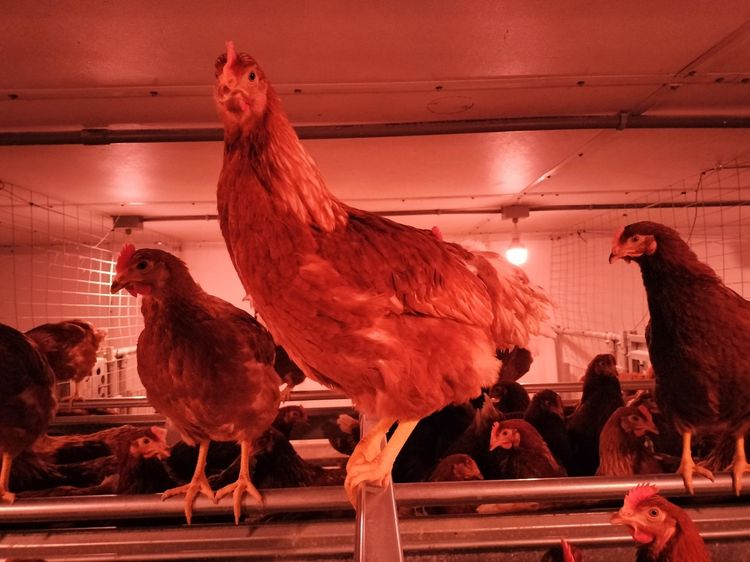
If operating a cage-free system, where laying hens are kept indoors but can move freely within the barn, were a chess game, good management strategies and smart resource allocation would be the winning moves toward checkmate in addressing emerging welfare and production challenges. Among these management strategies, optimizing house lighting and nest design play a crucial role in influencing bird behavior and resource use.
For example, gradually dimming lights in the evening encourages hens to move back into the system before dark. In the case of nests, researchers at Michigan State University (MSU) and the producers they talked to found that hens do not use certain nests or will crowd the corners of others. This could be due to how much light enters a particular nest or area of the nest. Therefore, changes in lighting and nest appearance can directly and indirectly reflect production (e.g., percentage of floor eggs, mortality) and be key to maintaining a healthy flock.
Researchers conducted an experiment at the MSU Poultry Teaching and Research Center Laying Hen Facility to evaluate how more uniform lighting and different levels of nest enclosure affected bird production and fitness. The experiment included 2,624 birds housed in a multi-tiered cage-free system that allowed hens to move horizontally and vertically between levels, or tiers. The system was open on both sides and across all tiers, with litter areas for foraging, scratching and dustbathing on both sides. Water was available on the bottom and middle tiers, feed on the bottom and top tiers, and nests on the middle tier.
We compared ceiling lights alone with ceiling and wall lights. Nests were either fully covered in front by curtains or partially covered with every other curtain flap removed.
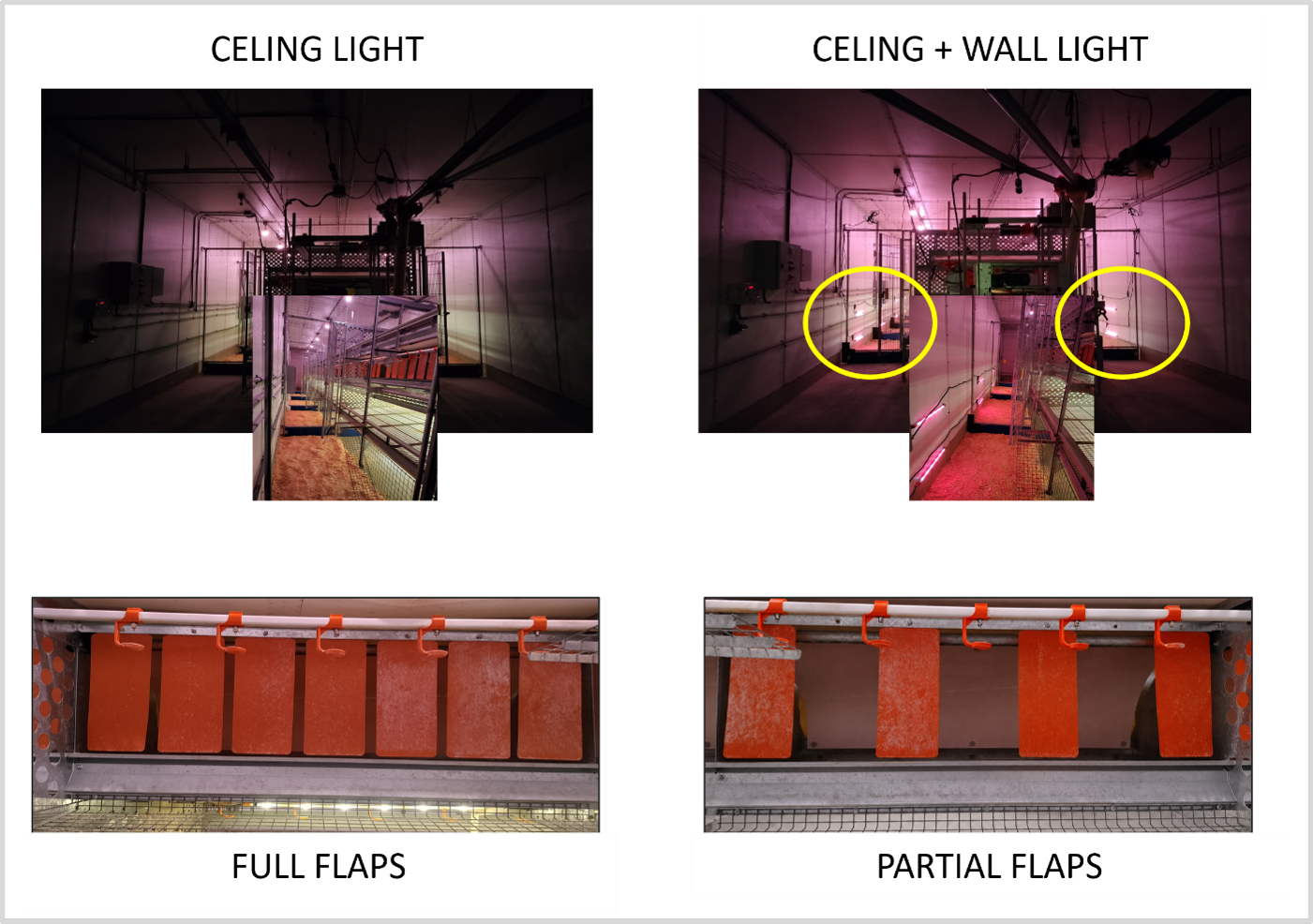
We thought birds would move better in a more evenly lit environment with wall lights, leading to better resource use and lower mortality. We also expected increased lighting near the litter area to encourage hens to move to nests to lay eggs rather than laying in the litter. Similarly, we expected hens to prefer more secluded, fully covered nests with all flaps in place and lay more eggs there than in partially covered nests.
Overall, bird performance fell within the normal ranges provided by the guidelines. Hen-day production, or the percentage of hens that laid an egg on a given day, remained unchanged across treatments. Body weight uniformity, or the percentage of birds within a defined range of the flock’s average weight, and case weight, or the total weight of a standard 30-dozen case of eggs, also remained unchanged. Weekly mortality averaged 0.44%. Surprisingly, adding wall lights resulted in more floor eggs but lower mortality.
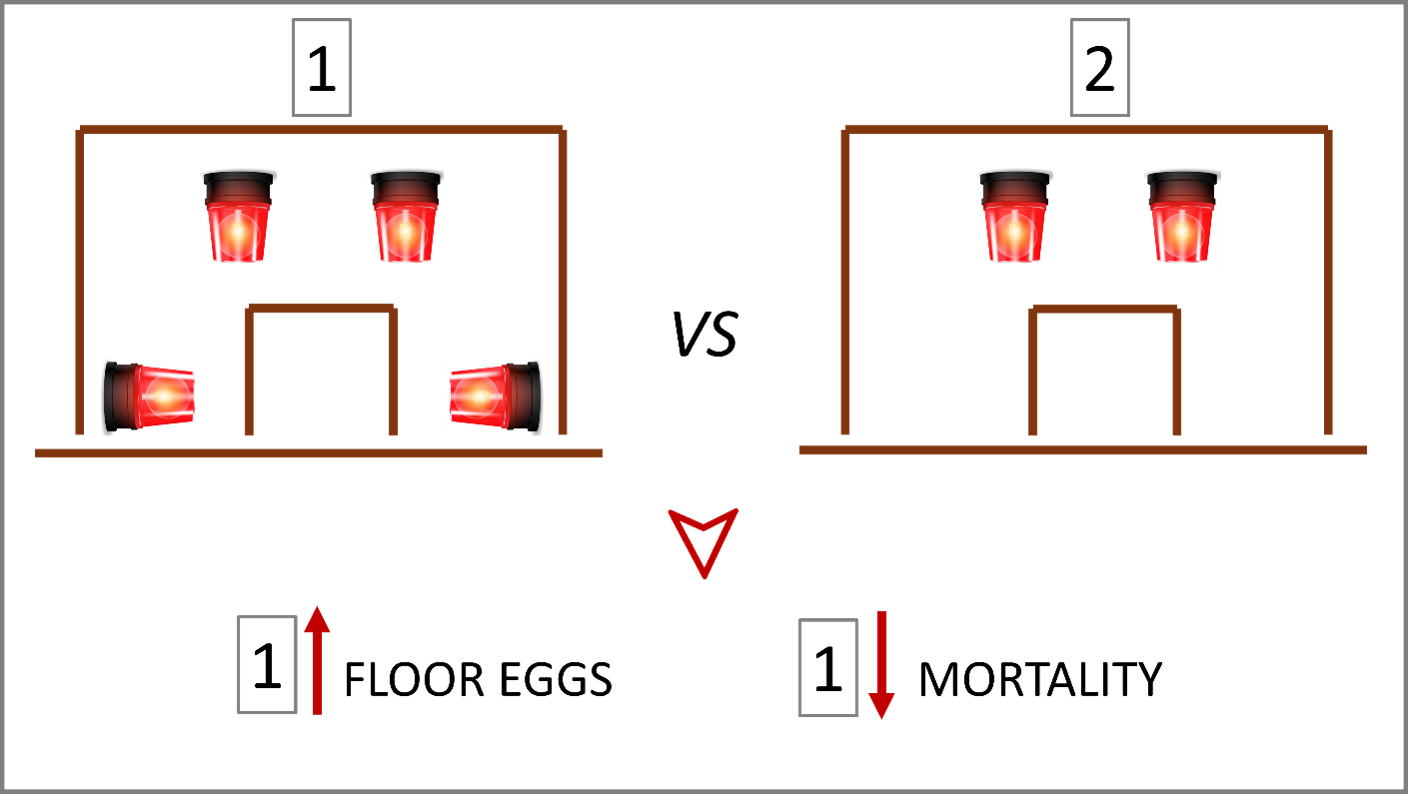
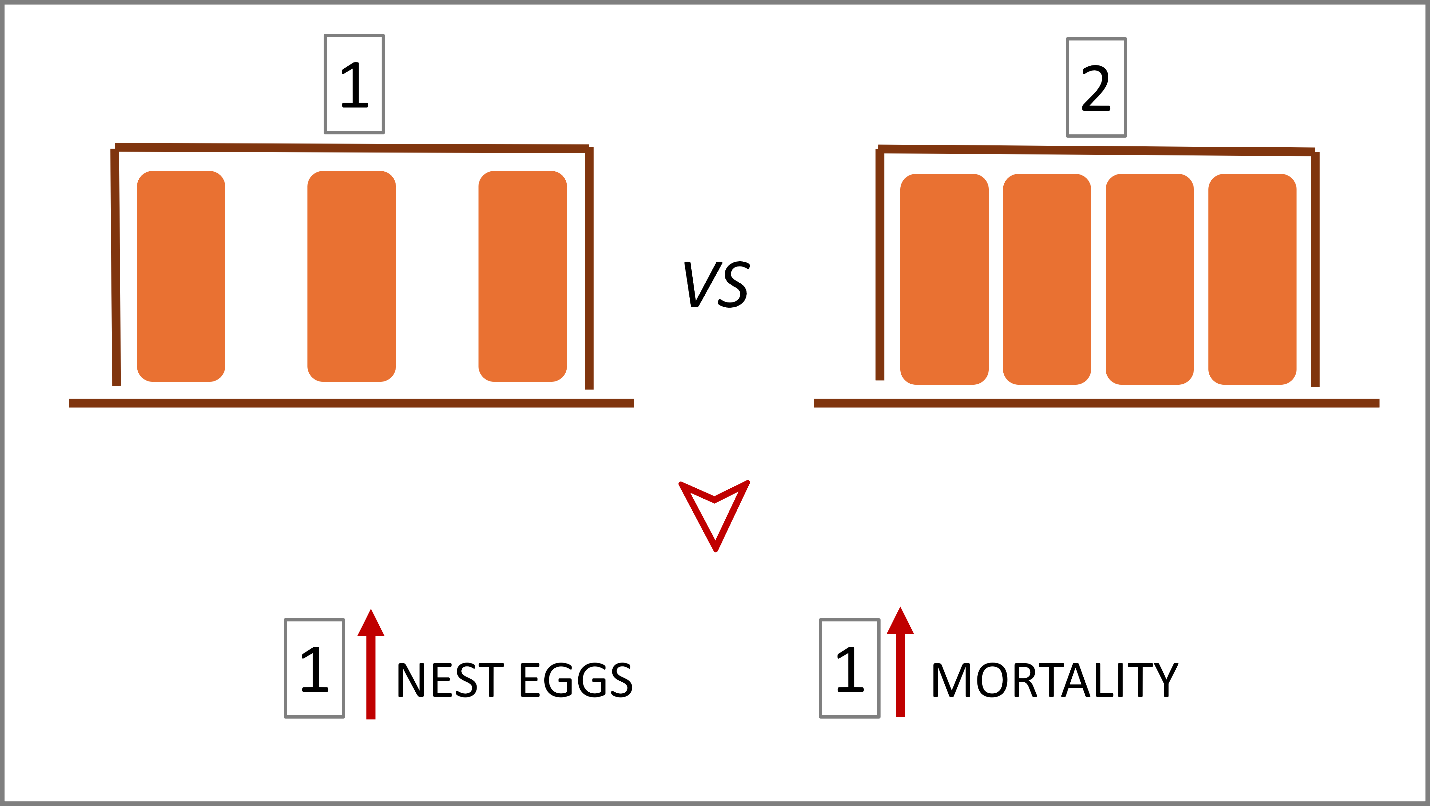
When we removed some nest flaps to create a more open nest, hens laid more eggs in the nests, but mortality was higher after hens came into production than in pens with fully covered nests.
The results were quite different from what we expected. Since we wanted to make the light more uniform, we adopted for wall light the same spectrum used for ceiling ones. This spectrum boosts hens’ reproductive physiology. Perhaps when red lights are near the floor, where hens already feel comfortable, it triggered an increase in floor laying.
On top of that, lights can create contrasts and shadows, which can also lead to floor laying. Pens with wall lights did experience reduced mortality, possibly because 1) hens might have pecked at the light rather than at other birds, and/or 2) light made the environment easier to move through.
We also found more eggs in the nest with partial than full flaps, maybe because hens were able to move in and out the nest more easily with bigger gaps between the flaps. Lastly, the mortality was higher in the nests with partial flaps, possibly because birds could not hide as well in more open nests.
Each option we tested had advantages and disadvantages. Wall lights increased floor eggs but lowered mortality, while partially covered nests increased the number of eggs laid in nests but also increased mortality.
Next, we will explore modifications to another style of cage-free aviary by adding new pathways for hens to move between the litter and tiered levels. The goal is to improve the flow of birds in and out of the tiers. In this aviary style, the nest is located on the top tier. We will also explore whether changing how enclosed the nest is can increase nest acceptance.