Precision agriculture: Long-term yield data show regenerative management practices improve yield stability and farm resilience
 Print
Print Email
EmailRegenerative management, like no-tillage and cover crops, can help farms withstand droughts, floods and extreme heat. Research shows regenerative management improves yield stability and resilience to yield variability.
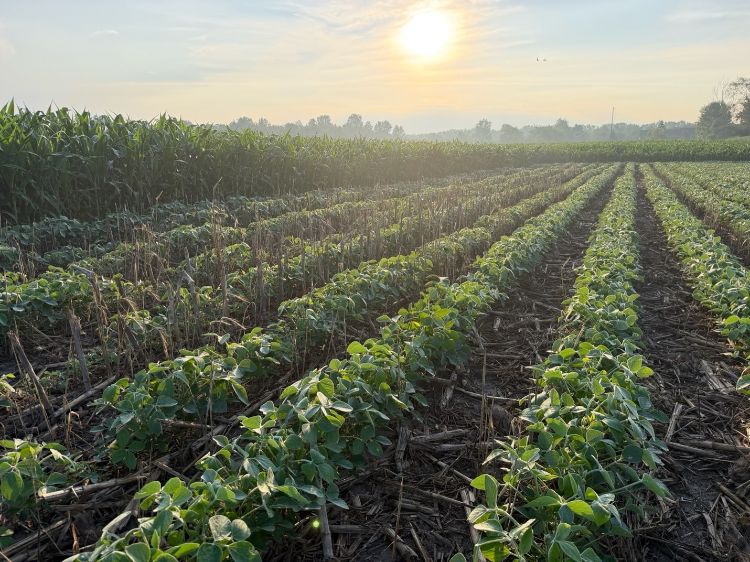
Regenerative agricultural practices
Building healthy soils is one of the main goals of regenerative agriculture. Farmers who adopt regenerative management practices often aim to improve soil function, reduce input losses, and increase the resilience of their operations to challenging weather conditions. In row crop agriculture, regenerative agriculture is a systems-based approach that emphasizes practices designed to improve soil health through conservation and holistic management. These practices commonly include reduced or no-tillage, cover cropping and in some systems, the integration of livestock. A persistent challenge is quantifying the economic return with regenerative practices. Because yield gains vary each season and may not increase linearly, evaluating improvements in the system’s resilience is critical to understanding their long-term value.
Classifying yield stability zones
Not all areas of a field perform the same year after year (Table 1). By analyzing historical yield maps, precision and digital agriculture platforms can delineate management zones that reveal patterns in crop productivity within a field. Management zones are classified based on both long-term yield levels (low, medium or high) and temporal stability (stable or unstable). Yield stability maps don’t predict yields for a specific growing season, which are largely influenced by weather conditions and in-field variations. Instead, they identify persistent areas of a field that consistently perform above-average, at-average, below-average and areas where productivity fluctuates from year to year.
|
Yield Stability Zone |
Definition |
Significance |
|
High and stable |
Areas of the field that consistently produce high yields across years and crops. |
Consistently high yields due to favorable soil and landscape characteristics. |
|
Medium and stable |
Areas of the field that consistently produce average yields across years and crops. |
Consistently average yields and makes up the majority of the field. |
|
Low and stable |
Areas of the field that consistently produce low yields across years and crops. |
Consistently low yields associated with shallow soil depth, compaction along field edges, shading from trees or brush, and wildlife damage. |
|
Unstable |
Areas of the field where yield levels vary substantially from year to year. |
Yields fluctuate considerably from year to year, often from landscape positions, like slopes, hilltops and depressions, which affects the amount of water in the soil from excessive or insufficient precipitation. |
Sampling for soil health indicators
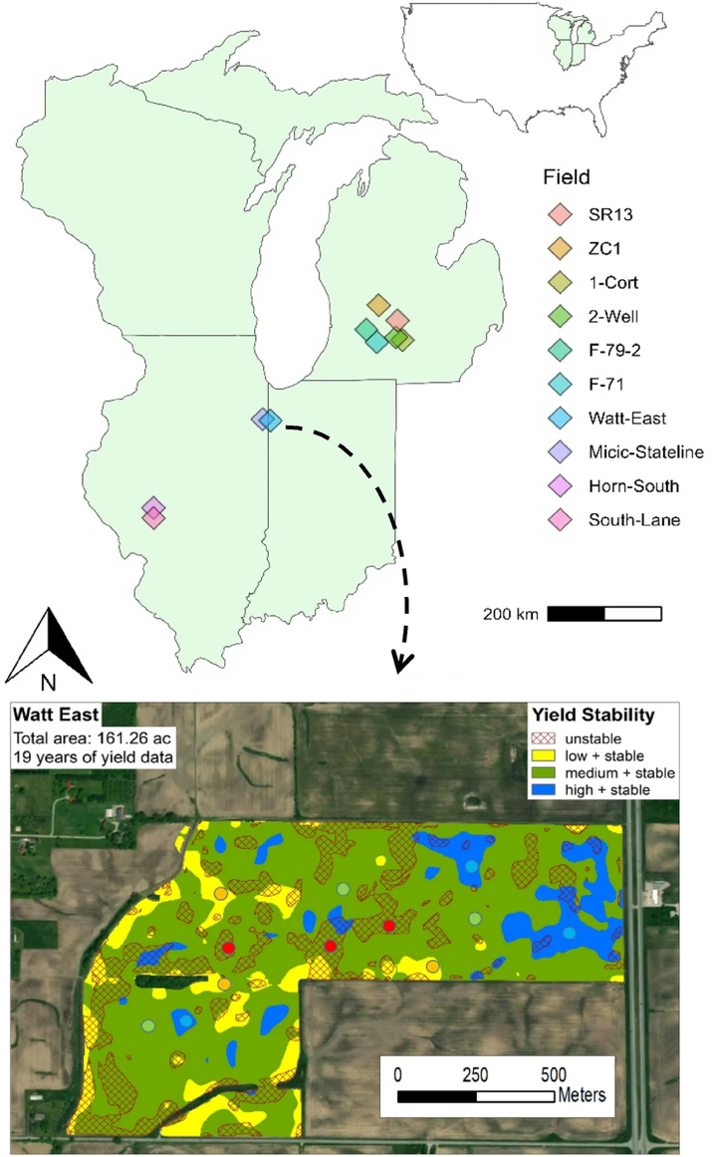
Research published in 2024 showed that yield stability maps can effectively identify soil health differences (Figure 1). Low and stable zones often had lower soil organic carbon, a key soil health indicator, when compared with medium-, and high and stable zones. whereas management strategies to target improving soil health might be more effective. This research supports using yield stability maps as a basis for soil sampling and precision management strategies.
Long-term analysis of yield stability
The benefits of regenerative management may not always be apparent in a single growing season. Evaluating long-term yield records can provide a clearer picture of how these practices influence farm performance over time.
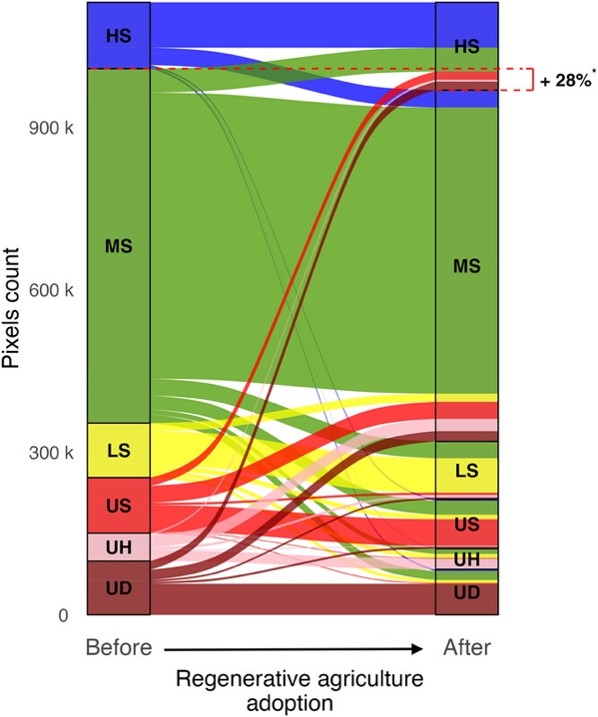
Crop yields are influenced by weather, management, soil conditions, and other environmental factors. In a recent study, a central Michigan farm transitioned from conventional tillage using a chisel plow to no-tillage, while also incorporating winter cover crops. Researchers analyzed 14-17 years of yield data collected from 10 fields before and after the implementation of these regenerative practices. Yield stability maps generated from these data showed a 28% increase in the area classified as high and stable following adoption of regenerative management (Figure 2). Much of this increase occurred in areas that were previously classified as unstable, indicating a shift toward more consistent crop performance over time.
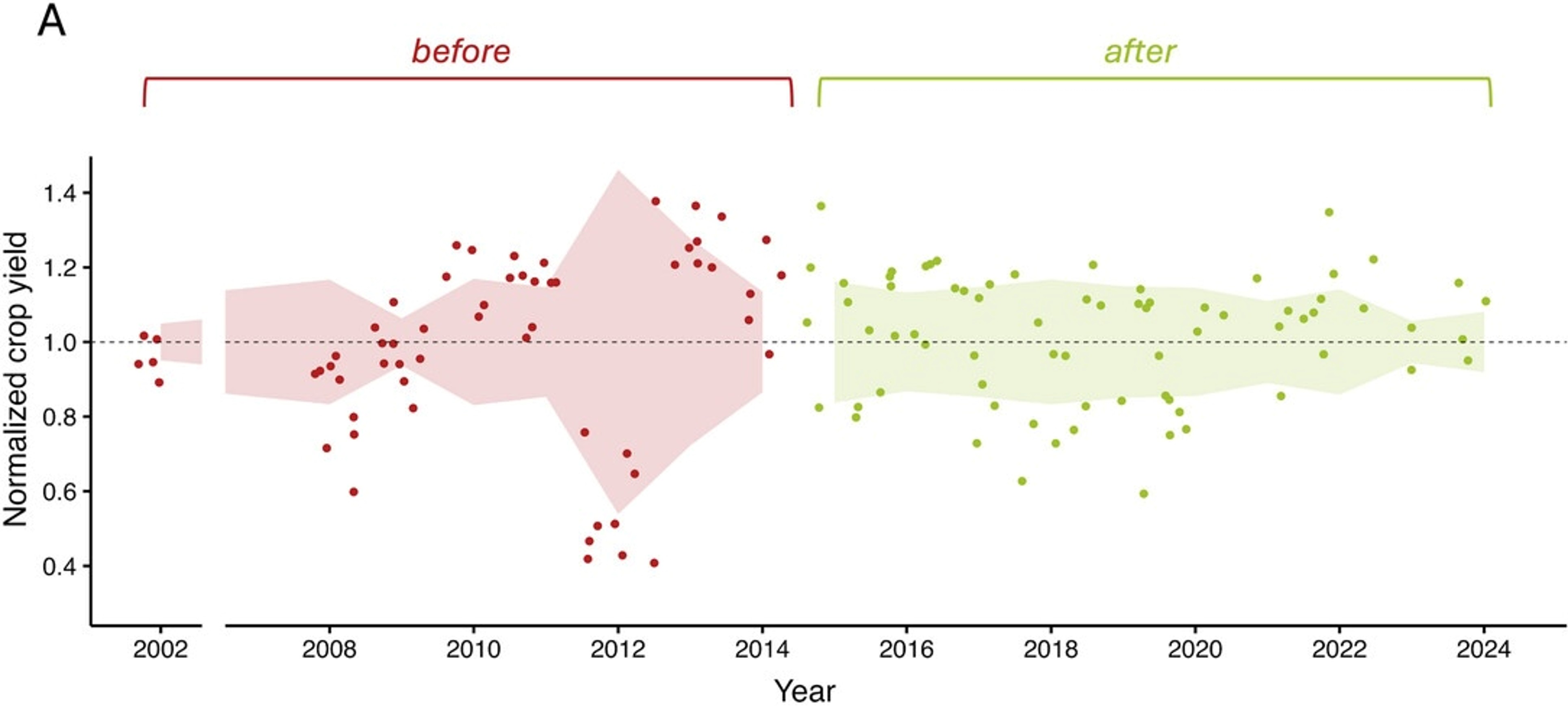
Another representation of this change is shown in Figure 3, where normalized corn and soybean yields were compared before and after regenerative management practices were implemented. Yield variability was greater under the previous management system (red), whereas yields following implementation of no-till and cover crops (green) were more consistent and showed reduced variability.
The study also found that regenerative management practices reduced soil erosion and runoff while enhancing nutrient cycling. Although these practices did not directly increase or decrease yields over the long-term, they reduced yield variability, which suggests greater farm resilience to future harmful weather events.
To better understand the long-term impact of regenerative management practices, we need to evaluate the farming system using long-term yield data rather than individual growing seasons. Because annual yields are strongly influenced by seasonal weather, one or two years of yield data may not accurately reflect the effects of changes from regenerative management practices. Yield stability analysis integrates multiple years of observed yield data to identify persistent patterns in crop productivity, providing a more robust assessment of how regenerative practices influence long-term performance, resilience, and therefore, profitability.