Southwest Michigan field crops update – September 10, 2026
 Print
Print Email
EmailSeed corn harvest continues and potato storage harvest will start this week, temperatures permitting.
Weather
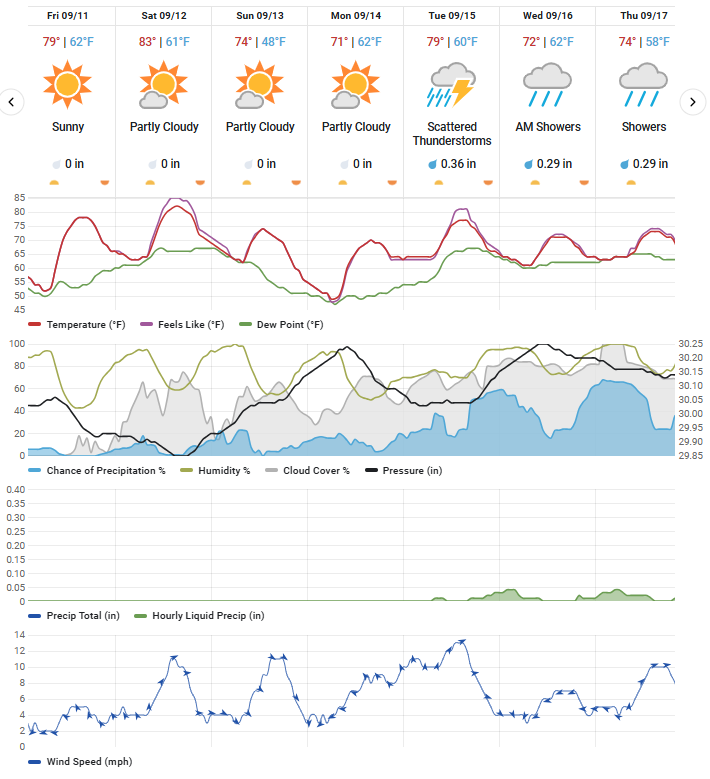
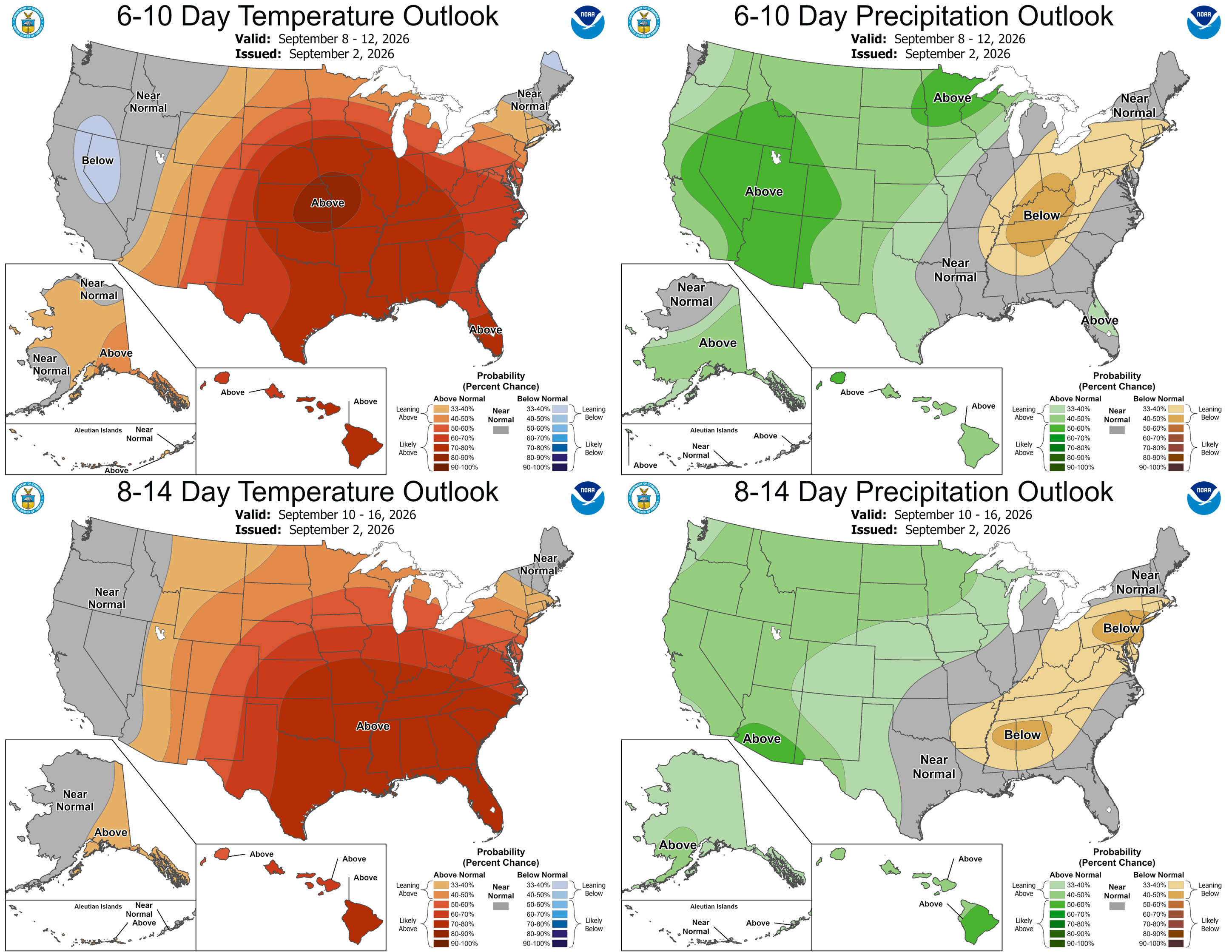
Storms heading into the past weekend brought significant rainfall, with much of southwest Michigan receiving an inch or more. Temperatures also cooled down to highs mainly in the 70s. The next week is forecast to be sunny and warm except for storms in the early part of the week that will bring around 0.5 inches of precipitation.
Crops and pests
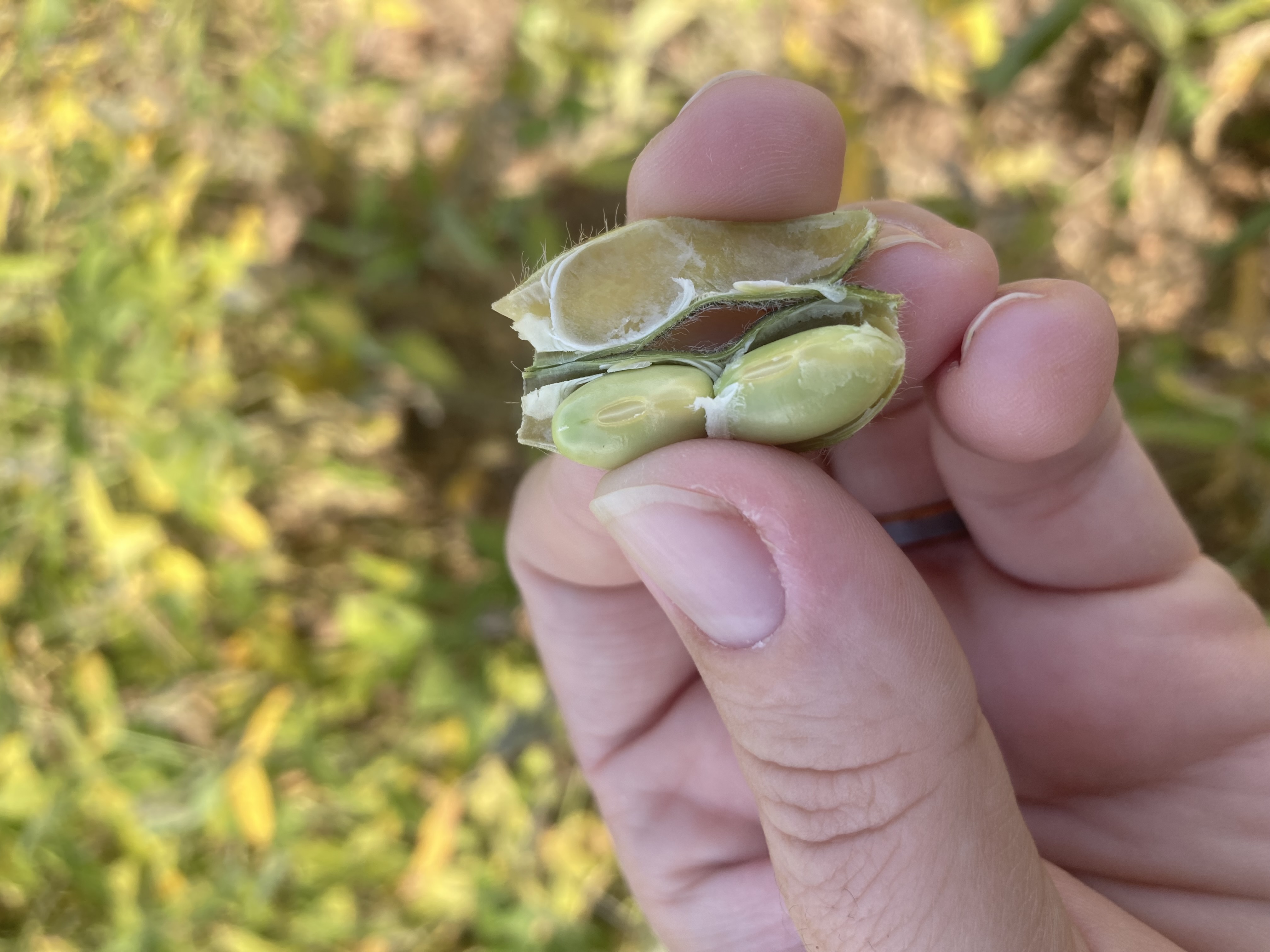
Full-season soybeans are mainly in R6 (full seed), with some entering R7 (one pod is mature color). Fields continued to senesce and dry down. Once one pod on the stem reaches its mature color, the soybean is at R7. Red crown rot scouting and sampling remains a priority as symptoms become more visible just prior to senescence. Symptoms look similar to sudden death syndrome and brown stem rot. See pictures and learn more at “An overview of red crown rot of soybean” by the Crop Protection Network.
If you suspect red crown rot, submit a sample to the Michigan State University Plant and Pest Diagnostics Lab. Michigan Soybean Committee and the United Soybean Board will cover the diagnostic fees. You can request a soybean sampling kit.
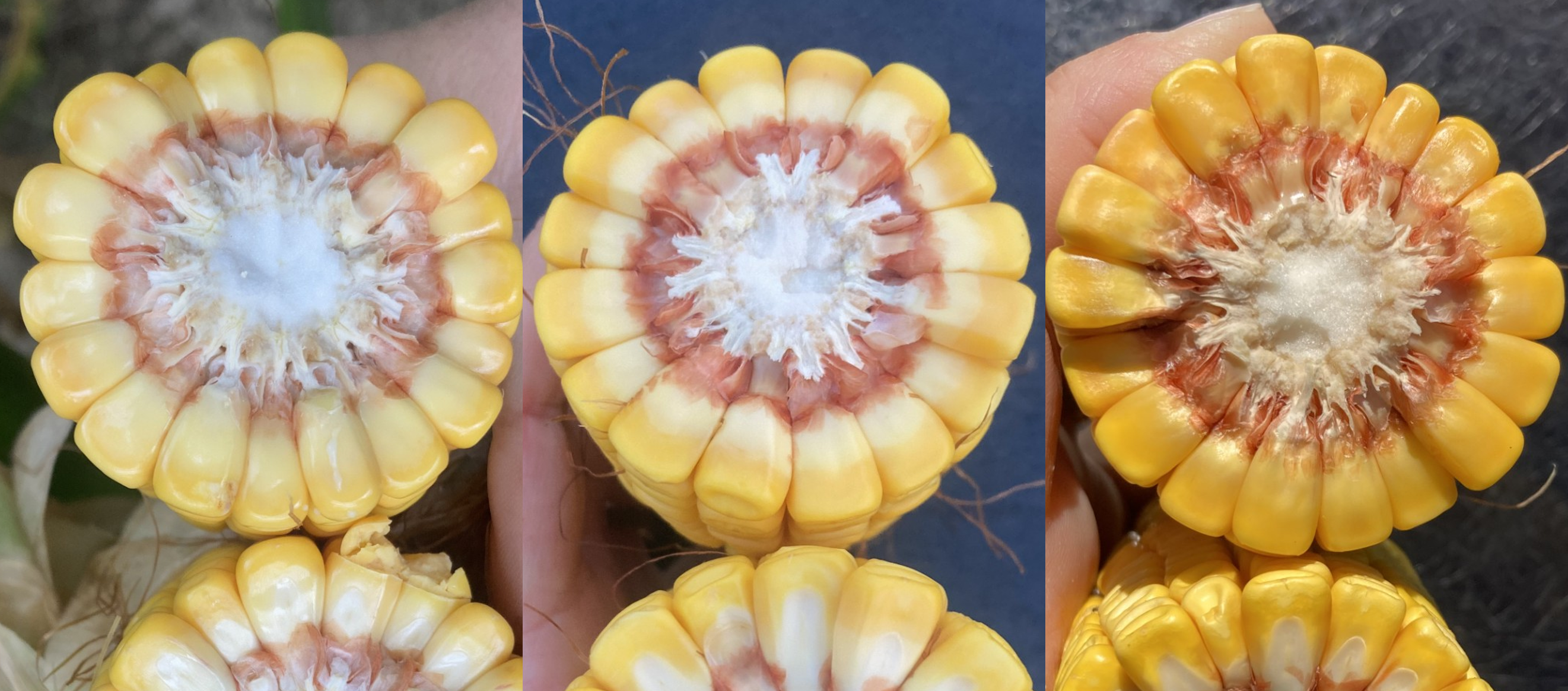
Corn is predominantly at R5 (dent) or R6 (black layer). At R5, the milk line is visible. This is a change in color in the middle of the kernel that shows where solid starch accumulation (darker color) has occurred, starting from the outer edge and moving inward. Prior to harvest, scout for ear molds and stalk rots, which can affect harvestability and seed quality. Seed corn harvest continued as weather permitted.
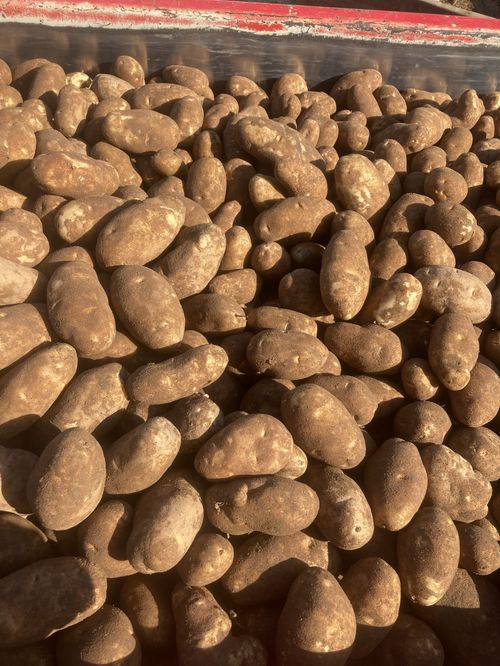
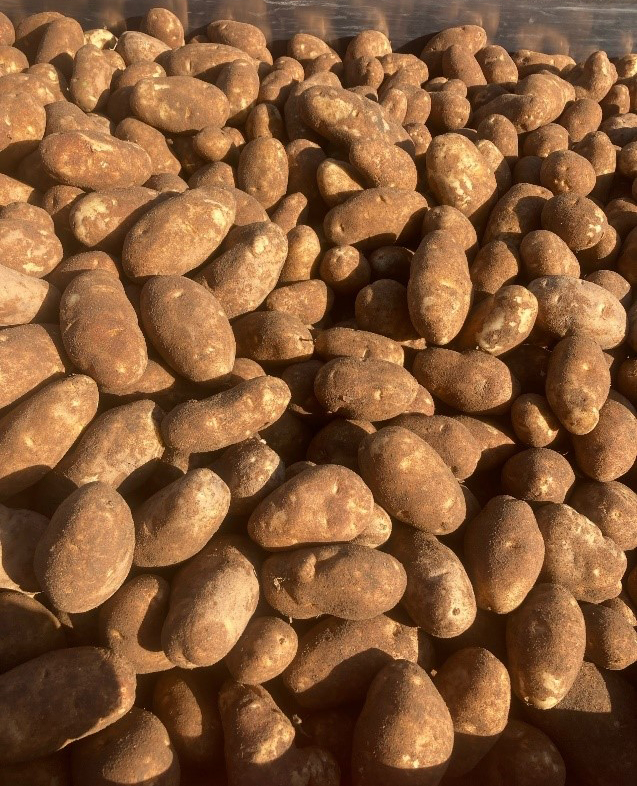
Potato storage harvest will begin within the next week as temperatures permit. Cover crops have gone in on many of the early harvested fields.
Irrigation and water use
At R5 (dent) stage, corn still uses approximately 1 inch of water per week. Once corn reaches the black layer (maturity), water use decreases to about 0.6 inches per week, and additional irrigation may no longer be beneficial. Start thinking about your last irrigation event. Once corn reaches black layer, there is no benefit to adding more water.
Soybeans at R6 remain at peak water use, at approximately 1 inch per week. Before making your last irrigation decision, check soil moisture to ensure there is enough water available to carry the crop through full maturity. When approximately 50% or more of the leaves have turned yellow, this can be a good endpoint for irrigation.
Rainfall this week is expected to be variable, with lower temperatures and decreasing evapotranspiration and crop water demand.
To improve irrigation management, consider using irrigation scheduling tools such as the free and updated MSU Irrigation Scheduling Mobile App, available for Apple and Android devices. The app provides field-specific irrigation recommendations based on crop growth, weather, and soil type.
This year, weekly crop water use updates will continue to be shared through the Southwest Michigan Crop Updates. For added convenience, updates will also be sent through direct email and text messages. If you would like to see an additional location included in the report, please contact Angie Gradiz at gradizme@msu.edu or 531-249-4956.
The table below summarizes estimated crop water use (inches per week) for major irrigated field crops across Michigan's primary irrigated regions.
Estimated weekly crop water use for field crops in Michigan (in/week) for the week of Sept. 7–13, 2026:
|
Crop |
Growth stage |
Constantine |
Berrien Springs |
Entrican |
Hart |
|
Reference ET |
0.91 |
0.97 |
0.94 |
0.93 |
|
|
Corn |
VT, Silk, Blister, Dough, Begin Dent |
1 |
1.07 |
1.03 |
1.02 |
|
Corn |
Full Dent |
0.91 |
0.97 |
0.94 |
0.93 |
|
Corn |
Black Layer |
0.6 |
0.64 |
0.62 |
0.61 |
|
Soybeans |
R3 (Begin pod) - R4 (Full pod) |
1 |
1.07 |
1.03 |
1.02 |
|
Soybeans |
R5 (Begin seed) - R6 (Full seed) |
1 |
1.07 |
1.03 |
1.02 |
|
Soybeans |
Begin Mature |
0.73 |
0.78 |
0.75 |
0.74 |
|
Potatoes |
Bulk |
0.55 |
0.58 |
0.56 |
0.56 |
|
Potatoes |
Pre-Senescence |
0.27 |
0.29 |
0.28 |
0.28 |
|
Potatoes |
Maturity |
0.09 |
0.1 |
0.09 |
0.09 |
Field Crops Virtual Breakfast Series

Precision agriculture, presented by Richard Price, was the topic for the MSU Extension Field Crops Virtual Breakfast this week. Now more than ever, farm equipment can collect data that can be used for evaluation and future decision-making. This data can inform variable rate applications, yield stability and areas of profitability within each field.
Recordings of this and all the Virtual Breakfast meetings are closed-captioned and available at the Field Crops Virtual Breakfast webpage and the MSU Extension Field Crops Team social media platforms: Facebook, Spotify, Mediaspace, YouTube, Apple Podcasts and Twitter/X.
This work is supported by the Crop Protection and Pest Management Program (grant no 2024-70006-43569) from the USDA National Institute of Food and Agriculture. Any opinions, findings, conclusions, or recommendations expressed in this publication are those of the author(s) and do not necessarily reflect the view of the U.S. Department of Agriculture.