Eleven tips for running effective meetings with youth
 Print
Print Email
EmailThese tips can help create a successful learning experience for all youth at your next 4-H meeting.
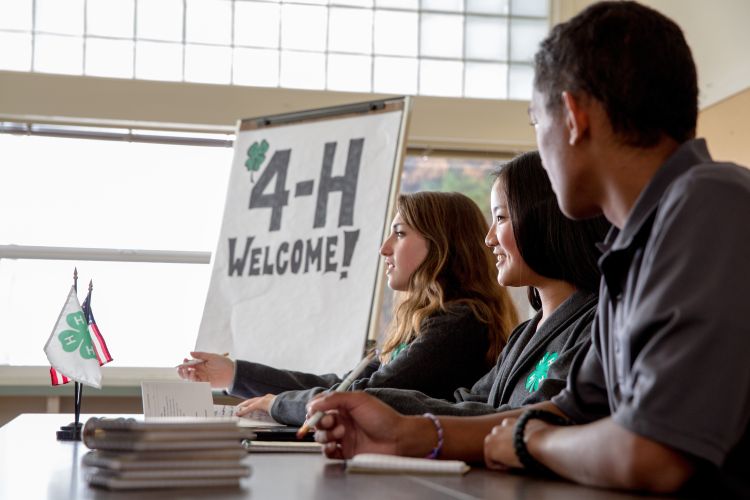
One of the 4-H Essential Elements for Positive Youth Development focuses on engagement in learning, where “young people are actively engaged in different learning environments and are challenged to pursue their own learning.” Engaging youth in meaningful roles in 4-H club meetings and groups encourages them to take ownership of their learning, develop leadership skills and build confidence as active contributors to their communities.
Strong 4-H clubs support engagement by providing opportunities for youth to serve in leadership roles, participate in planning and organizing club experiences, and contribute through service and community involvement. These experiences help youth build decision-making, teamwork and leadership skills while developing citizenship and civic responsibility.
Consider using these tips at your next meeting:
- Set ground rules: Establish agreed upon expectations for behavior during the meeting. It’s most effective when these are established during a meeting and agreed upon by the entire group. Keep these posted in visible location during all meetings.
- Recite pledges: In 4-H, youth recite the U.S. Pledge of Allegiance followed by the 4-H pledge. Reciting the pledges at each meeting instills a sense of belonging within the organization, amongst each other, and helps to build awareness that youth are engaged in a 4-H experience.
- Utilize club officer roles: Nominating and electing youth to leadership roles as officers of the club provides experience in formal leadership roles. Youth leadership opportunities are a key indicator of engagement and help young people practice decision-making, teamwork and responsibility. Consult Michigan 4-H Youth’s So Your an Officer in a 4-H Club for more information on typical officer roles used in 4-H.
- Establish a meeting agenda: Business is addressed most effectively when an agenda is used. Consider setting a time limit for the business portion of the meeting or on individual discussion topics in order to keep meetings from running too late. Whenever possible, involve youth in developing the agenda and organizing meeting activities so they gain experience planning club experiences.
- Have fun: Include icebreakers and team builders to incorporate elements of fun and familiarize youth with each other. If adults are participating in the meeting, encourage them to participate in the activities as well. This equalizes youth and adults and establishes shared respect for both parties.
- Foster learning: Plan educational programs, demonstrations or activities in order to infuse “learning” into club meetings. Invite experts, guest speakers or suggest meeting attendees share relevant information that they may be knowledgeable about through demonstrations. It can be difficult to instill the importance of attending the meeting when business is always the only focus. Provide opportunities for attendees to enhance their skill level or expertise. Active participation in learning is encouraged when youth help lead demonstrations, teach others, explore project interests and share what they have learned.
- Involve youth in planning: Meet with youth officers or teen leaders in advance of the meeting to prepare. Always involve youth in the agenda writing process and resist the temptation to simply hand an agenda over to youth. Involving youth in the process assures that they understand the topics to be discussed and are invested in discussion to follow. Youth engagement grows when members consistently participate in planning, organizing and evaluating club activities, rather than simply attending them
- Follow-up: Appoint a youth member (a wonderful role for the vice president) to follow-up with any individuals who have volunteered to work on something before the next meeting. Committees that forget to meet only stall the work of the entire group. Also, assure presenters or guest speakers are well prepared for their presentation date.
- Use a fair system for decision making: This is often in the form of parliamentary procedure or Roberts Rules of Order, but a group can also choose to use consensus-building strategies. Make sure all group members’ voices are heard. This may involve pausing a meeting to assure that decisions are being made with consideration to all points of view. In a mixed meeting with both youth and adults, taking time to hear youth opinions and concerns is especially important. Adults may too quickly voice their opinions and discourage youth from speaking up.
- Celebrate successes: Appropriate recognition reinforces successes and provides affirmation for individuals working on a project. Recognize not only project accomplishments but also youth contributions to leadership, planning, service and club improvement efforts. Visit the Michigan 4-H Recognition Handbook for ideas for appropriate recognition for clubs and groups.
- Connect learning to service: Provide opportunities for youth to apply what they have learned through community service projects, presentations, mentoring younger members or other activities that benefit others. Service helps youth see the impact of their skills and leadership within their community.
Following these 11 tips will help ensure that youth are actively engaged in meetings and that Michigan 4-H is helping prepare youth to be Beyond Ready.
Michigan State University Extension and Michigan 4-H Youth Development help to prepare young people for successful futures. To find out how to get involved as a youth participant or an adult volunteer, contact your county MSU Extension office.