West central Michigan tree fruit update – May 12, 2026
 Print
Print Email
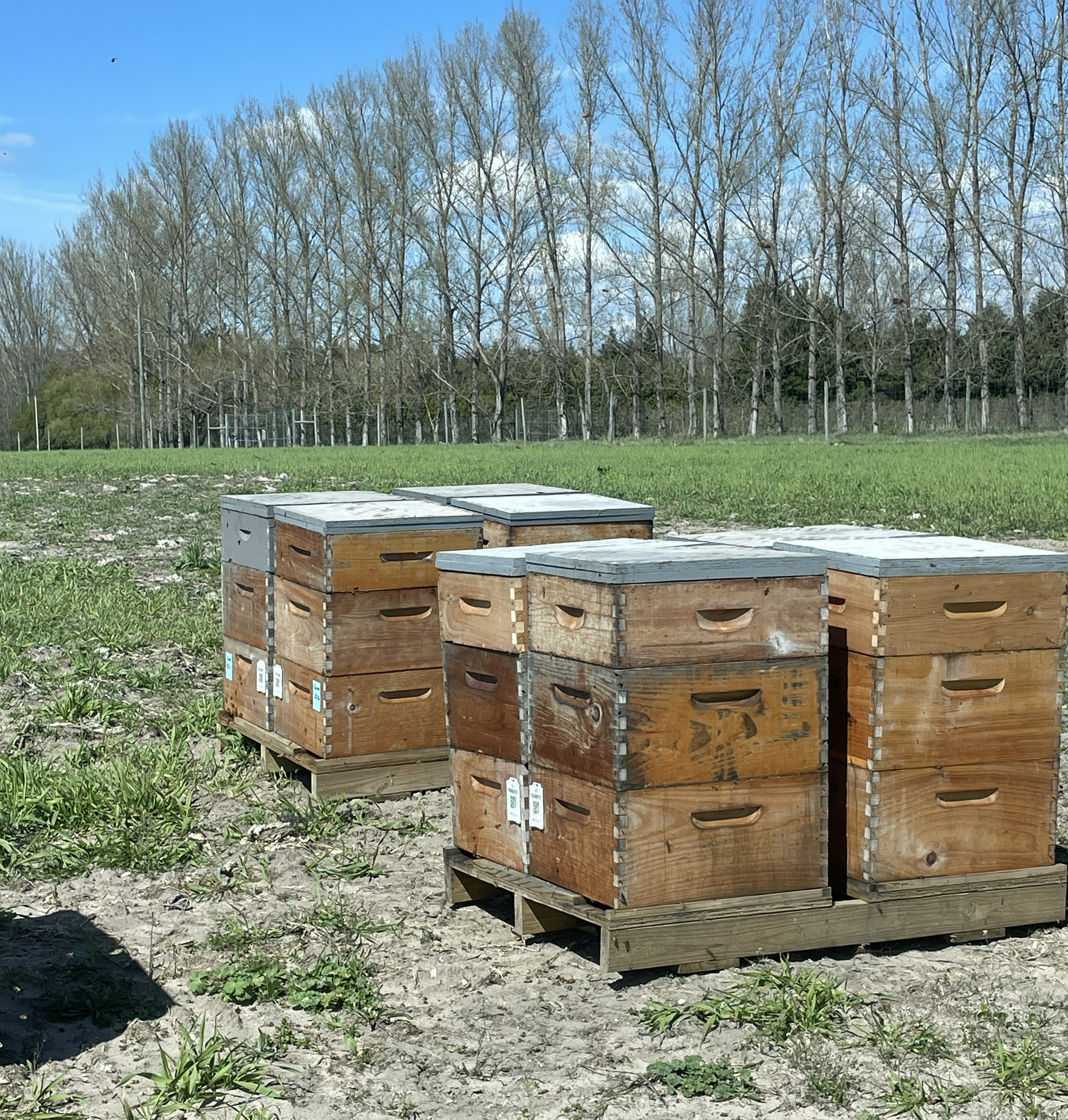
EmailCool and dry conditions continued over the past week. Apple blooms are slowly opening, and bee hives have been placed in the orchards for pollination.
Weather update
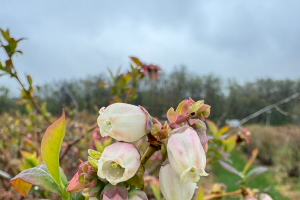
Changes in bud development are slow and steady with cooler temperatures over the past week across west central Michigan (Figure 1). Cool air masses continue to move down from northern regions in North America over the Midwest and Northeast. Cool weather is forecast for the next few days with a warmup over the weekend.
Based on the Hart MSU Enviroweather station for May 11, current degree-day (DD) accumulation is 424 DD42 and 193 DD50. At the Sparta Enviroweather station, current DD accumulation is 538 DD42 and 273 DD50. Last week, daytime highs were in the 50s and 60s with nighttime temperatures in the 30s and 40s. Hart saw below freezing temperatures on May 6, 7, 8, 10 and 11. Overnight low temperatures in Sparta were below freezing on May 8 and 10.
This week started out cool on May 11 with some rain for the week on May 12 in Hart and Sparta. High temperatures are forecasted to be in the 50s and 60s for most of the week. A warmup will come at the end of the week with high temperatures in the 70s over the weekend in Hart and Sparta. More rain is forecasted for next week on Monday, May 18. Warmer weather is on the way!
Listen to the weather update from Jeff Andresen, MSU climatologist, at the Fruit & Nuts Weather page from MSU Extension.
Weather data was gathered from MSU Enviroweather.
More information and reports on normal weather conditions and departures from normal can be found on the NOAA Climate Prediction Center website, NOAA U.S. Climate Normals website, NOAA Climate Normals Quick Access Page.
Crop update
Similar to last week, field conditions are drying out. It has been easier to get crew members and machinery in the fields to finish orchards tasks such as pruning, planting trees and installing trellis. It’s time to start thinking about thinning in apples if needed for your orchard blocks.
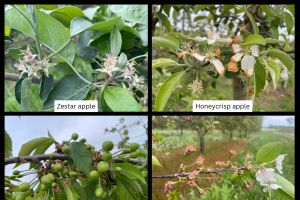
Cool temperatures are extending bloom across the west central and Grand Rapids regions. Honey bees and bumble bees have been actively working in blossoms this week (Figure 2). Honey bees will forage at temperatures at 65 F or warmer. Bumble bees and solitary bees will forage at temperatures 5-10 degrees cooler than honey bees. During bloom, use practices that minimize pesticide exposure to bees. Find tips and guidelines to minimize bee pesticide exposure in the following articles, provided by Michigan State University Extension bee educator Ana Heck. With extended bloom, it will be important to continue to management efforts to support pollinators and protect bees from pesticide exposure.
- Pollinator stewardship during fruit crop bloom
- Protecting Pollinators – a guide to understand pollinator language on pesticide labels
- Michigan Pollinator Protection Plan Resources
- Pollinator supportive trees and shrubs for farm and orchard windbreaks
- Pollinator planting guide
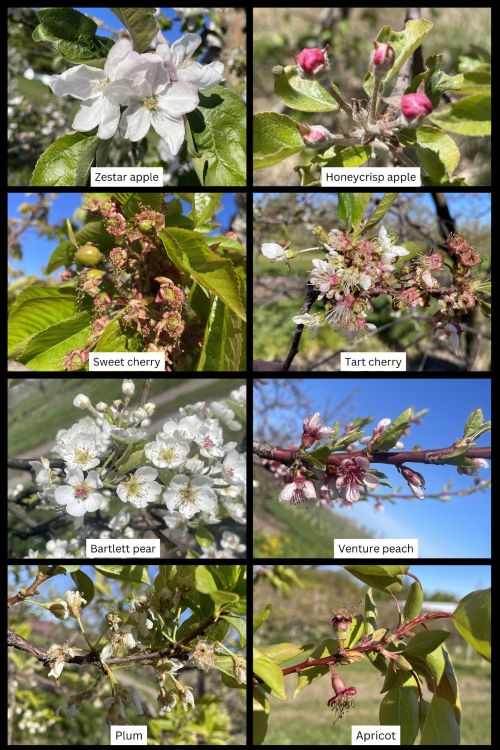
Apple varieties in Oceana County range from pink to early petal fall. Early varieties such as Zestar and Idared are about at early petal fall and later varieties such as Gala and Honeycrisp are at pink or king bloom. In Sparta, early varieties are at full bloom and early petal fall, and later varieties like Gala and Honeycrisp are at king bloom to full bloom.
Growers are continuing to assess potential damage from cold temperatures. There have been multiple cold events, and frost protection strategies such as frost fans have been deployed for multiple nights over the past few days. Fruitlet damage will depend on the stage of development and the environmental variability across orchard blocks at the time of the cold events. Scout block by block to determine the damage in apple and other tree fruit crops. Damage can occur at a range of temperatures depending on stage of development. It’s important to look at the center of the flower to see if the pistil is damaged. See this article on evaluating frost or freeze damage and assessing the impact of cold temperatures on early fruit development.
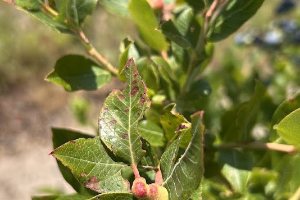
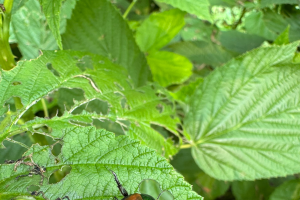
Spur leaves are also showing signs of cold injury with leaf reddening, some deformation or cupping at the leaf margins, or necrotic spots on the leaves (Figure 3).
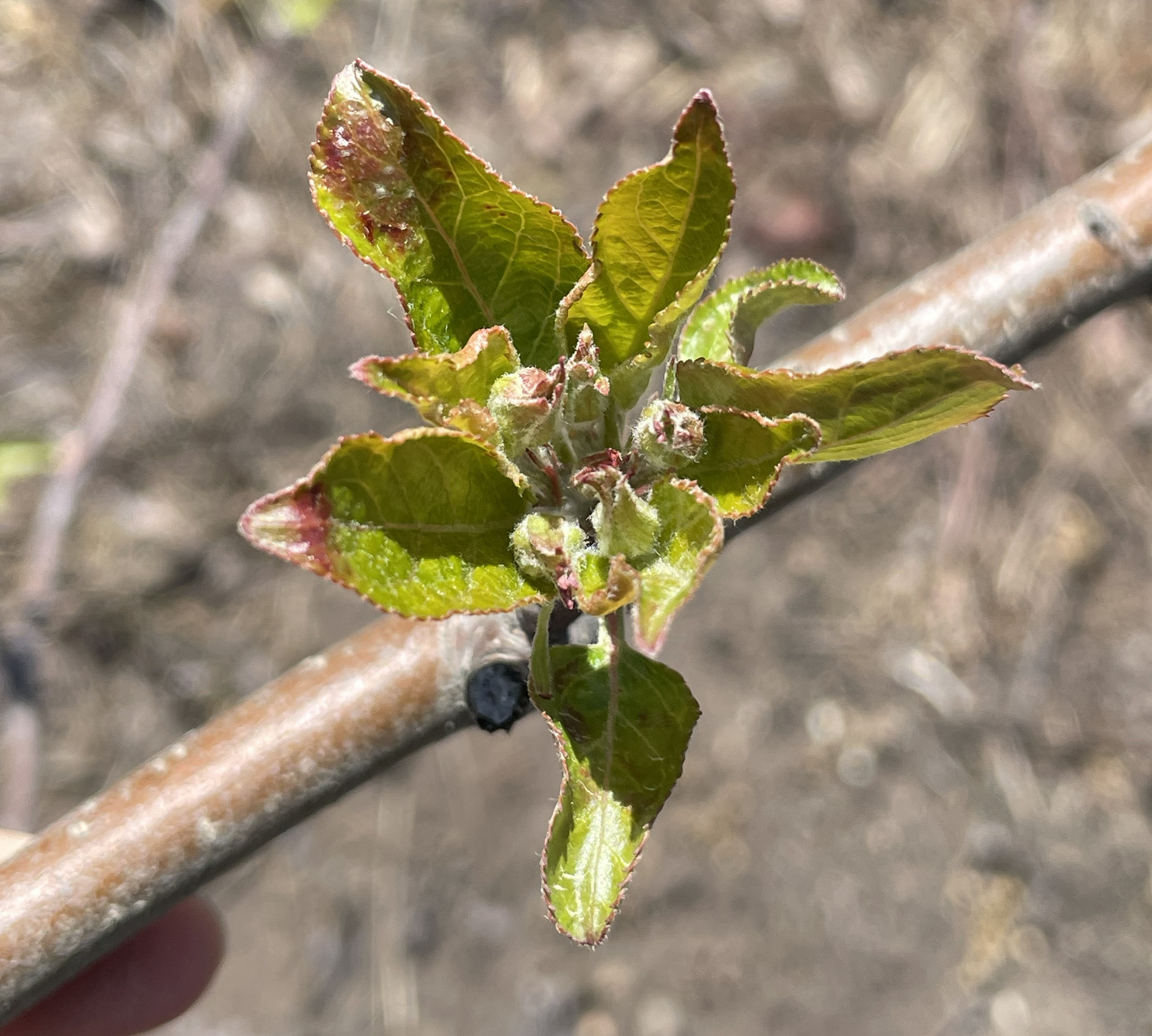
ReTain can also be applied to increase fruit set, particularly on shy bearing varieties such as Golden Supreme or EverCrisp. Read more about using ReTain and application rates.
Apple thinning programs should be considered as return bloom and fruit set can be evaluated. Apple thinning can start with pruning by removing excess fruit buds. Early thinning strategies can begin for this season with bloom and petal fall thinning applications where needed. See this article on general apple thinning recommendations and decision-making tools. Risk for overthinning at these earlier application timings is low.
Apple scab is predicted to be little risk this week in Hart, according to the Rimpro model, due to cool conditions. Spores will be counted after the rain event today, May 12. The Rimpro model is predicting spores will be ejected today with the rain event. The wetting period will be short, so the fungus may not have enough time to infect during the wetting period due to cool temperatures and slow fungal growth. Leaf wetness will differ by orchard site.
For Sparta, the Rimpro model also shows little risk of apple scab this week due to cool temperatures in the forecast.
With warmer weather forecasted over the next few weeks, apple scab pressure will likely be high during the next large rain event.
The MSU Enviroweather fire blight model for Hart and Sparta is predicting little to no risk of fire blight infection over the next few days due to cool temperatures and dry conditions. EIP values are predicted to be below 20 from May 12–15 in Hart and Sparta, well below the recommended 70 EIP threshold for treatment. With warmer weather coming later this week, EIP values are expected to rise and be over 71 on May 17–18. If open blooms are present, antibiotic applications are recommended before a rain event to protect blossoms from bacterial infection.
Now is a good time to put up mating disruption for codling moth before first flight begins.
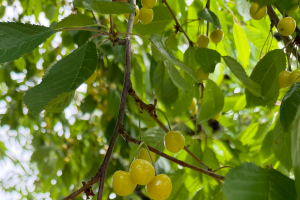
Tart and sweet cherry buds are in full bloom and early petal fall. Dry conditions are leading to lower risk for European and American brown rot during bloom. European brown rot (blossom blight) infection occurs under cool, wet conditions. Infection can begin in the popcorn stage before bloom. Treatment should include two applications, one at white bud and the other at full bloom. See more information on managing European brown rot. American brown rot infection occurs in warm, wet conditions, above 65 F. See more information about American brown rot infection.
The risk for cherry leaf spot in tart cherries is low due to cool temperatures but will start to increase as bract leaves emerge and temperatures warm up. Cherry leaf spot is caused by the fungus Blumeriella jaapii. This fungus overwinters on the ground in diseased leaves. Fungal ascospores are released in spring during prolonged wetting events. According to George Sundin, MSU tree fruit pathologist, spores can infect as soon as bract leaves emerge. Spores infect through open stomata, and stomates on bract leaves were shown to be open when they emerged from buds.
Peaches are early at petal fall or in the shuck for some varieties. During bloom, fungicide applications for brown rot may be needed; however, with cool, dry conditions, brown rot infection risk is low. Rusty spot (powdery mildew) management may be needed, particularly if disease pressure was high in 2025.
No oriental fruit moths were trapped this week at the West Central Michigan Research and Extension Center. There have been reports of oriental fruit moth catches at other farms in Oceana County.
Plum varieties are at early petal fall in west central Michigan.
Pear varieties are at full bloom or early petal fall. Similar to last week, applications to manage pear scab may be needed to cover new green tissue before the next rain event. Pears will also need to be protected against fire blight before the next rain this weekend.
Additional pest and disease information
No green fruitworm adults were trapped this week in Oceana County. Pest activity seems low in our area, likely due to the cool weather. With warmer temperatures coming this weekend, scout for increased activity of early season pests like plum curculio, aphids and mites.
For more information about regional reports, please visit the Michigan State University Extension website.
This work is supported by the Crop Protection and Pest Management Program [grant no 2024-70006-43569] from the USDA National Institute of Food and Agriculture. Any opinions, findings, conclusions, or recommendations expressed in this publication are those of the author(s) and do not necessarily reflect the view of the U.S. Department of Agriculture.