


Wheat Watchers Week of June 8, 2026
 Print
Print Email
EmailSee how the wheat crop is progressing across the state this week.
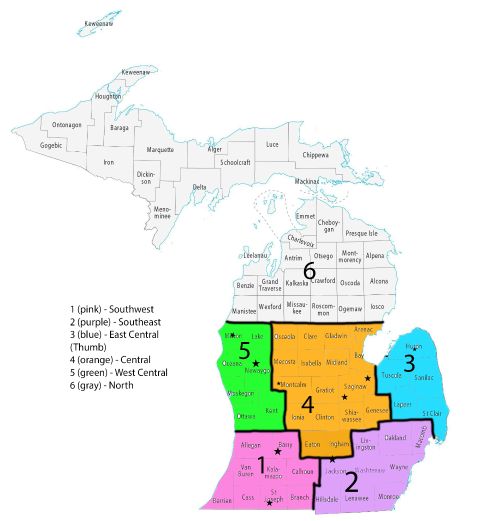
Welcome to the eighth edition of this season’s Wheat Watchers! This is the last weekly wheat watchers report as most of the state has hit flower. We will be switching to bi-weekly moving forward until most of the state reaches harvest. This report is only possible because of our agribusinesses and farmers who participate as wheat watchers. If you are interested in being a wheat watcher, especially if you see your area isn’t represented, please contact Michigan State University Extension field crops educator Jenna Falor at falorjen@msu.edu.
Overall, this week reporters are seeing wheat ranging from Feekes 10 in the northernmost region to Feekes 11.2 (soft dough) in the southern portions of the state.
Southwest Michigan
We had no wheat watchers reporting from the southwest region this week.
Southeast Michigan
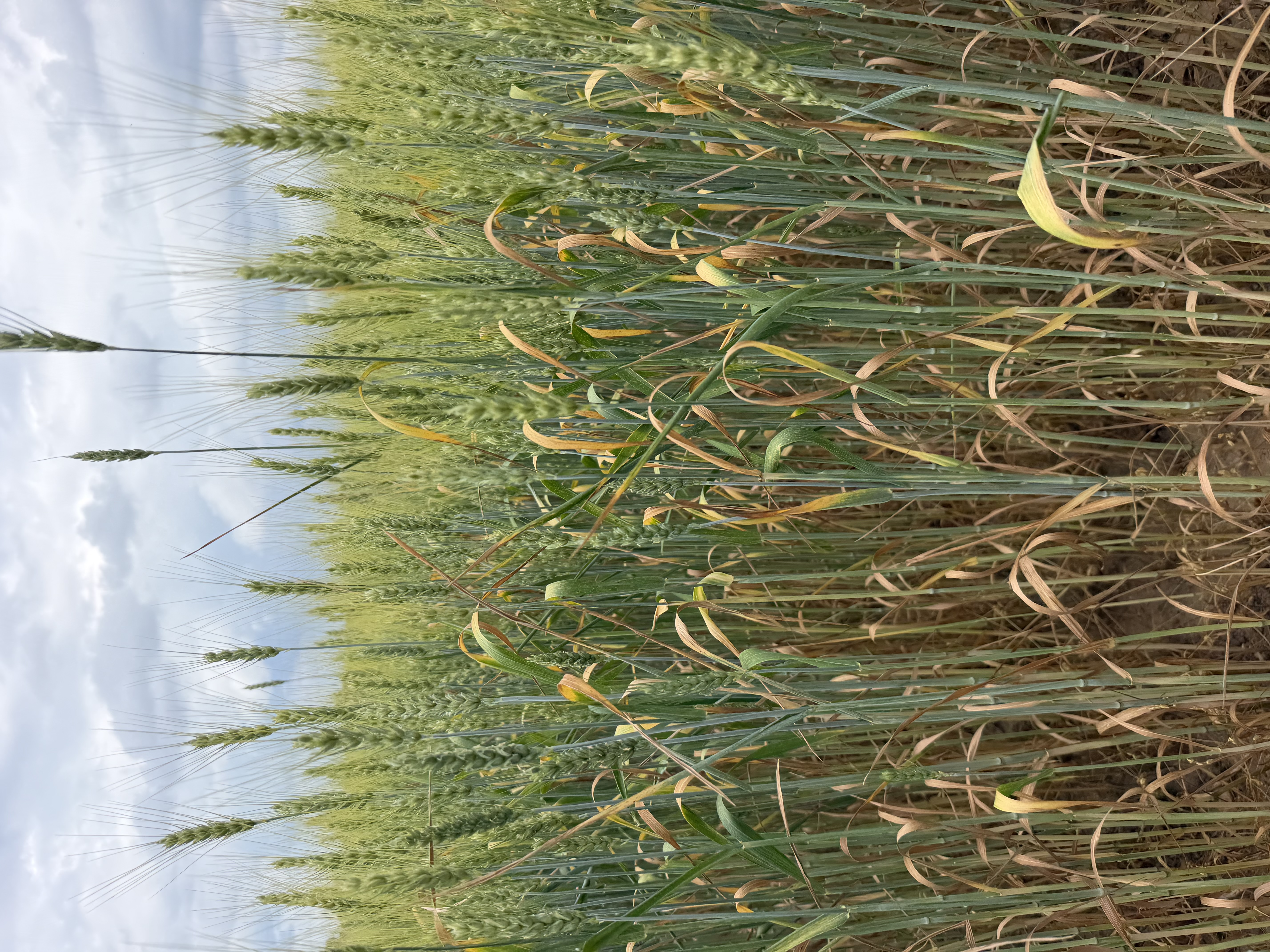
We had one wheat watcher reporting from the southeast region in Jackson County near Jackson. Wheat has reached Feekes 11.1 (milk) to 11.2 (soft dough). Drought stress is starting to show in some fields.
East central (Thumb) Michigan
We had one wheat watcher reporting from the Thumb in Huron County near Ubly. Wheat is at Feekes 10.5.2 to 10.5.3. Fungicide applications for head scab have been going out across the area this past week.
Central Michigan
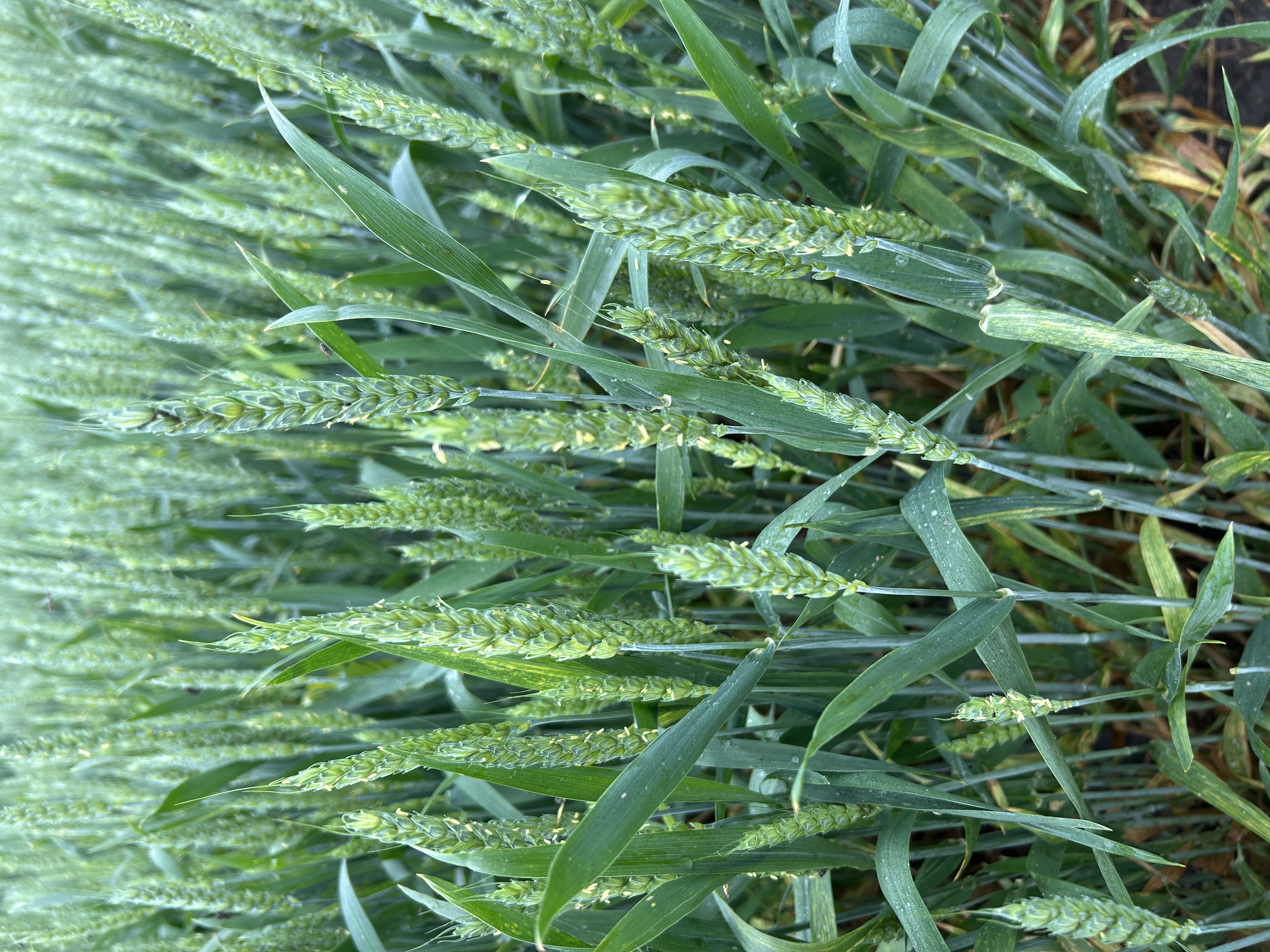
We had three wheat watchers reporting from the central region: one in Saginaw County near Richville, one in Montcalm County near Entrican and one in Saginaw County near Chesaning. All the wheat through the area is at various stages of flower or beyond.
The watcher near Chesaning reports wheat is at Feekes 10.5.3 and late fields are getting head scab applications. Some stripe rust and a few cereal leaf beetle larvae are visible. The 1 inch of rain received on June 9 should help the crop along a bit.
The watcher near Richville reports most of the wheat has completed flowering and is reaching Feekes 10.5.4. Head scab applications wrapped up last week. There have been no issues with lodging yet either.
The watcher near Entrican reports wheat is at Feekes 10.5.3 to 11.1. Fungicide applications are wrapping up. Armyworm is present in most fields but at the below threshold range.
West central Michigan
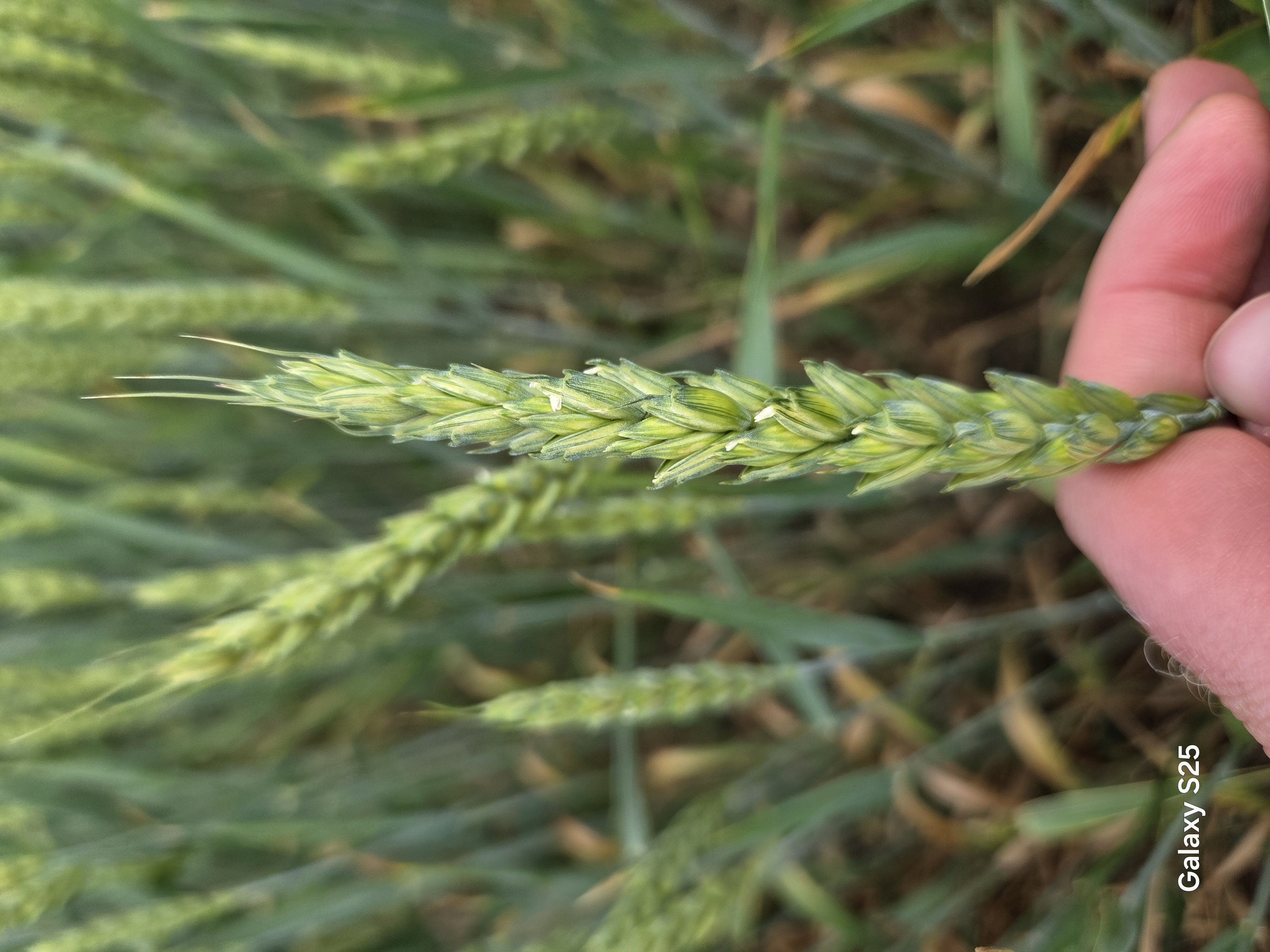
We had one wheat watcher reporting from the west central region in Mason County near Custer. Wheat is at Feekes 10.5 (heading). Miravis Ace was applied last week, which is a bit early but was necessary with other needed sprayer applications. The watcher is hoping the long residual reputation Miravis Ace has will hold true. Overall, it has been very dry with 0.2-0.3 inches of rain in the last 25 days. The watcher is expecting their worst crop in quite a few years.
North Michigan
We had one wheat watcher reporting from the north region in Montmorency County near Hillman. Wheat has reached Feekes 10 to 10.5. The recently received rain and heat has been great for the crop.
Other notes
Michigan State University is monitoring fungicide resistance and would like your help in identifying fields to sample. Nationally, there are a few efforts that have demonstrated resistance in some pathogens to fungicide classes such as the strobilurin (FRAC 11) group. If you have a field you would like us to sample, please contact Marty Chilvers at chilvers@msu.edu or 517-898-3049. Or submit a sample to MSU Plant and Pest Diagnostics.
This work is supported by the Crop Protection and Pest Management Program (grant no 2024-70006-43569) from the USDA National Institute of Food and Agriculture. Any opinions, findings, conclusions, or recommendations expressed in this publication are those of the author(s) and do not necessarily reflect the view of the U.S. Department of Agriculture.