Jimsonweed
August 28, 2015
 Print
Print Email
EmailDatura stramonium L.
Life cycle
Erect, branching summer annual.
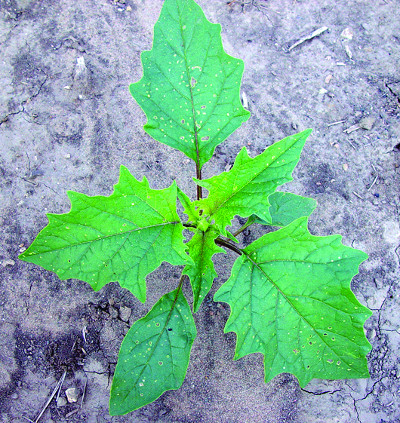
Jimsonweed plant.
Leaves
Cotyledons are long and narrow with a prominent midvein. Leaves are alternate, oval to egg-shaped, 3 to 8 inches long, smooth with long petioles. First leaves are entire; later leaves have large, coarsely and unevenly toothed margins. Damaged leaves will emit a foul odor.
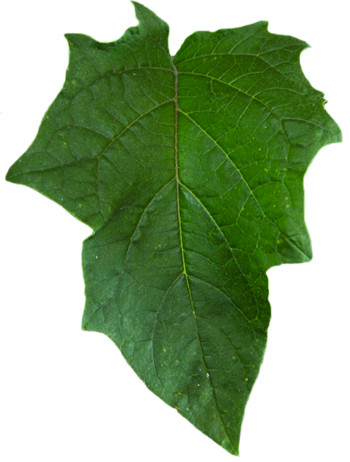
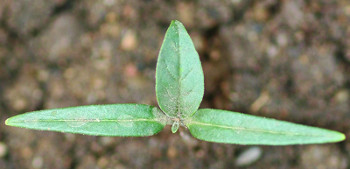
Jimsonweed leaf (left) and seedling (right).
Stems
Erect and branching, up to 5-foot-tall stems are hollow, generally smooth and green to purple. Damaged stems emit a foul odor.
Flowers and fruit
Flower petals are large, white to purple in color and fused into a 2- to 5-inch-long tube. Fruit are very spiny, egg-shaped capsules with four valves. Each valve contains numerous flat, dark brown to black, round to kidney-shaped seeds.
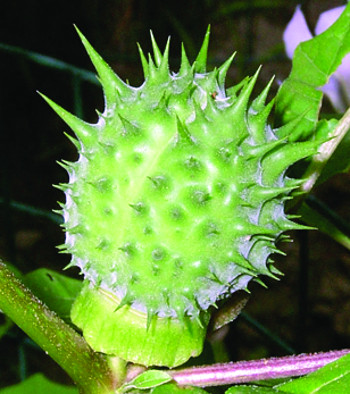
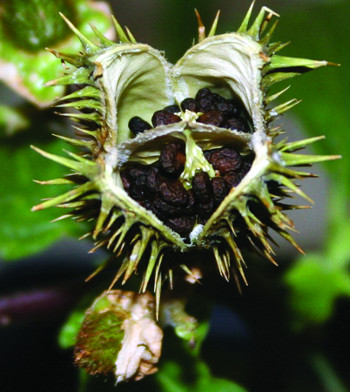
Immature Jimsonweed fruit (left). Mature Jimsonweed fruit (right).
Reproduction
Seeds.
Toxicity
All plant parts are toxic to animals.
Print a PDF of this page: Jimsonweed