Bulletin E3550
Lampshade Traps for Spotted Lanternfly
DOWNLOAD
August 31, 2026 - Deborah McCullough and Tim Harrison, Michigan State University Extension, Department of Entomology, Department of Forestry
 Print
Print Email
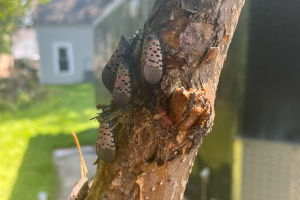
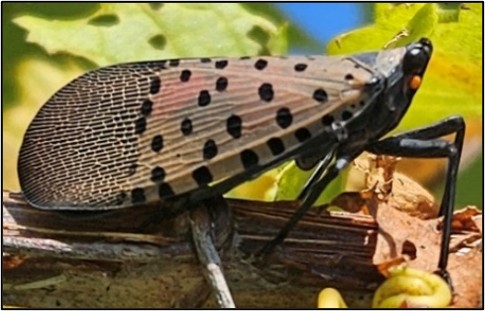
EmailSpotted lanternfly (SLF), an invasive pest native to Asia, feeds on the sap of a variety of trees & vines. As they feed, they excrete sticky “honeydew” that fosters growth of black sooty mold. Over time, high SLF densities can reduce vigor & growth of trees or affect the quality of grapes or hops. Egg masses are laid in summer & fall on trees or on other hard, rigid surfaces. Eggs overwinter then hatch the following spring.
What is a Lampshade trap?
A lampshade trap consists of dual layers of abrasive material, such as grip tape, attached to a tree trunk. The coarse inner & outer surfaces mimic the rough bark textures preferred by SLF females for egg laying.
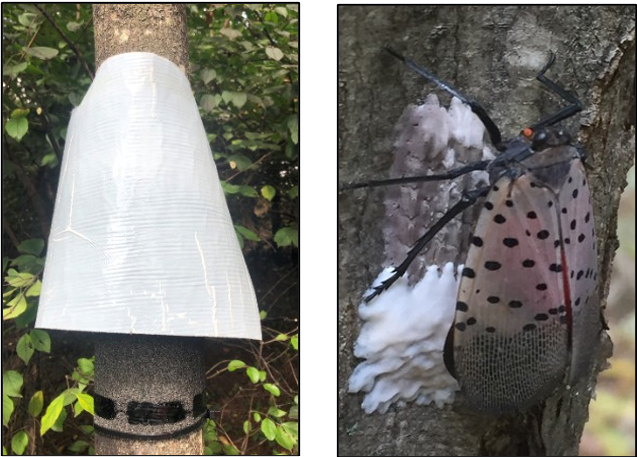
Lampshade traps can concentrate SLF egg masses in a small, accessible area. This makes it simple to remove traps with the egg masses in fall or winter. Soaking eggs in soapy water for 1-2 days will prevent any eggs from hatching.
Unlike other SLF traps, lampshade traps:
- Do not harm non-target organisms
- Do not require repeated visits to collect & dispose of dead, captured insects
- Require no lures, pesticides or sticky glues
- Can remain in place for the entire SLF egg-laying season (Aug. to Nov.)
- Can be attached to a tree within a few minutes using easily sourced materials
How can Lampshade Traps reduce SLF density?
Egg masses, each containing 30–50 eggs, overwinter then hatch in spring. Destroying egg masses in fall or winter slows local SLF population growth, reducing insect numbers next year. That means less feeding, less honeydew & less black sooty mold!
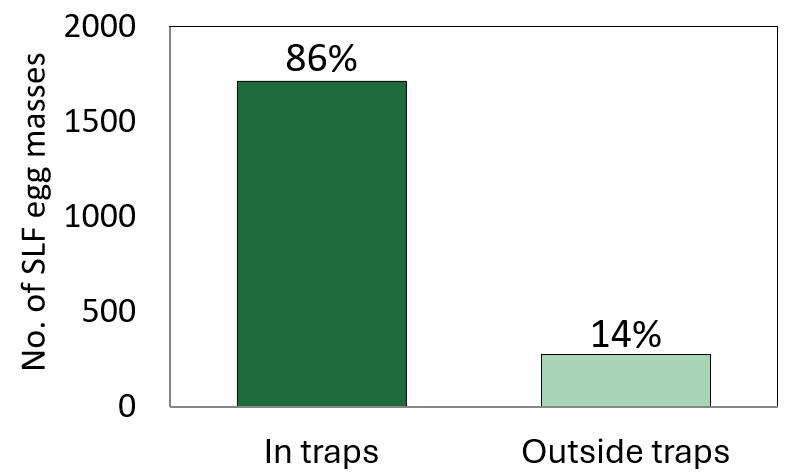
Key results from a recent 2-year study:
In 6 recently infested sites, lampshade traps required less time & effort for SLF monitoring than other trap designs or visual surveys. Moreover, SLF females consistently & strongly preferred the dark, protected shelter & rough surface provided by lampshade traps for laying their eggs.
How to Build & Deploy a Lampshade Trap
Materials
- Anti-slip grip tape or flat roofing material to wrap around the tree trunk
- Cotton or foam batting – 4 inches wide & long enough to wrap around the tree trunk
- Zip ties (2 zip ties, both long enough to wrap around the tree trunk)
- Paper clip – jumbo size
Tools
- Staple gun with ½ inch staples or a hammer & push pins
- Measuring tape
- Work gloves
- Scissors or utility knife
- Choose a trap tree - Select a live Tree of Heaven (Ailanthus altissima), the preferred host of SLF. Measure the circumference or diameter of the trunk, 4.5 feet high. Trees that are 19 to 32 inches in circumference or 6-10 inches in diameter are ideal.
- Wrap the inner layer - Wrap grip tape around the trunk with the abrasive side FACING OUT. Leaving a 1 inch overlap, cut the extra grip tape off. Staple along the seam where the tape overlaps or use a zip tie to secure the bottom of the grip tape around the tree trunk (abrasive side facing out!).
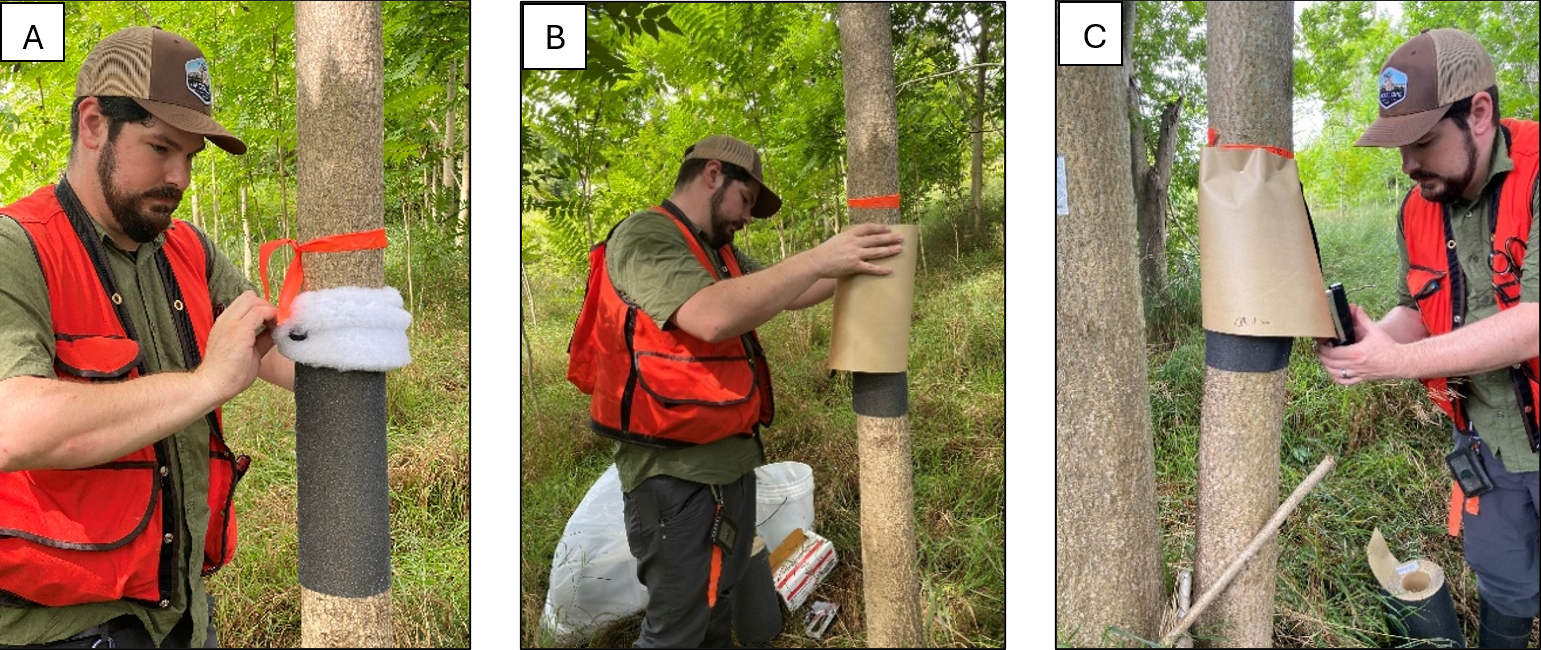
- Add the spacer - Wrap cotton or foam batting around the top of the grip tape, double it over, then staple or use a zip-tie to create a 1-2 inch wide raised ridge (A). This cotton (or foam) spacer creates the dark, sheltered space SLF females prefer for egg laying.
- Apply the outer layer - Wrap a second layer of grip tape just above the cotton or foam with the abrasive side FACING INWARD (towards the trunk). Flair out the bottom to resemble a lampshade. (B). Staple or use push pins to secure the tape around the tree at the top. The outer layer should fully cover the cotton or foam. Use the paperclip or a staple to secure the overlapping ends (C).
- Periodically check your trap - Use a flashlight to look for egg masses under the outer layer & on the inner surface of the trap. If needed, traps can be repaired with staples or push pins.
How to remove lampshade traps & destroy SLF egg masses
Wait until SLF adult activity has ended after the first freeze (usually in Nov.). Removing traps too early means missing egg masses laid late in the season. Be careful to avoid dislodging egg masses on the trap.
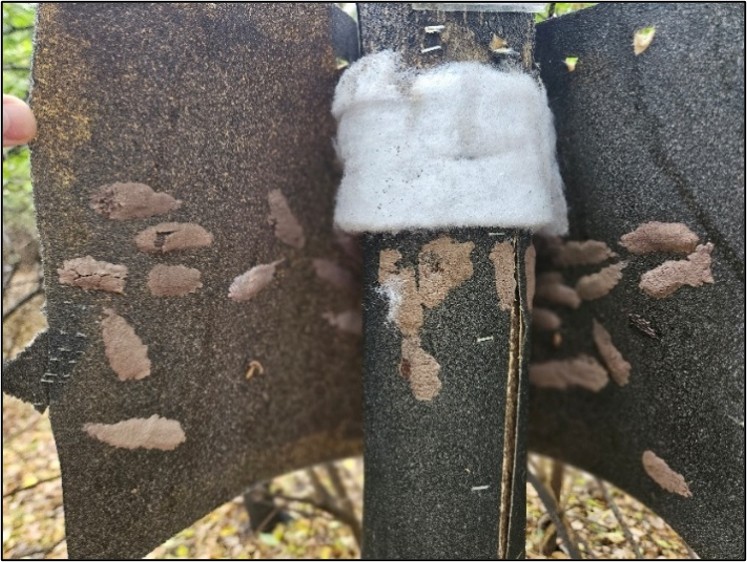
- Remove zip ties or staples & pull off the outer layer of grip tape. Check inner & outer layers for egg masses.
- Cut the zip tie holding the cotton or foam spacer in place & remove the spacer. Pliers may be needed if staples were used.
- Cut zip ties & carefully peel the outer layer of grip tape off or gently pull the material through the staples along the seam.
- Remove the inner layer of grip tape, again being careful not to dislodge egg masses. Eggs that fall to the ground may still hatch next spring.
- Lay both sections of grip tape out flat.
- Scrape egg masses off the grip tape into a bucket of soapy water & let them soak for 1-2 days. Eggs can also be crushed - but be careful to thoroughly crush all of the eggs.
- Properly dispose of trap materials & soaked or crushed egg masses in sealed garbage bags.
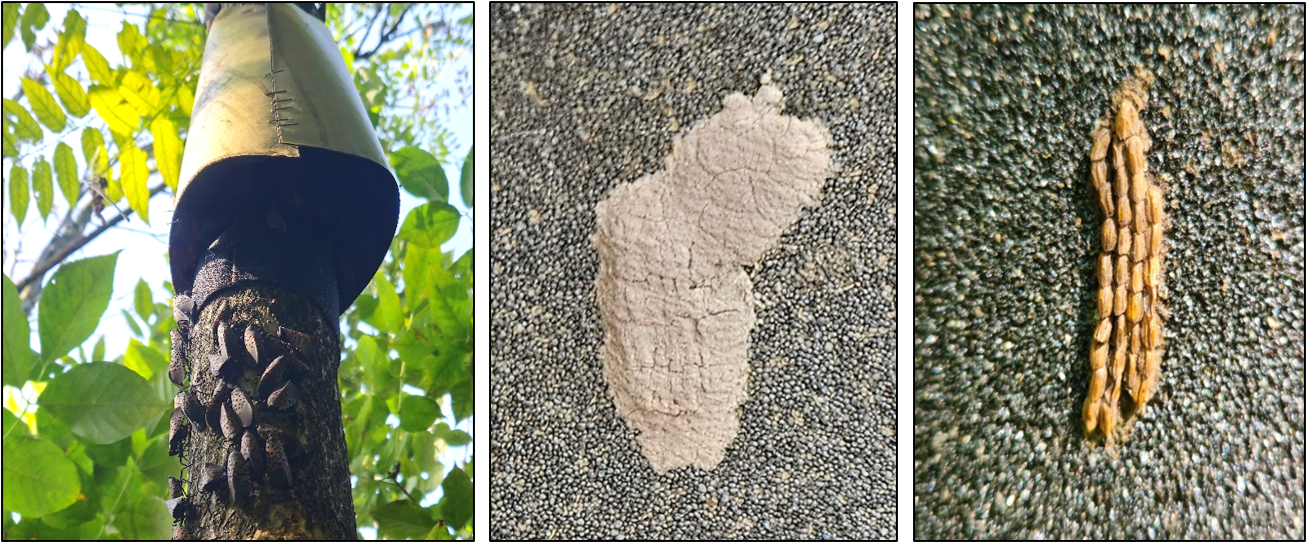
Destroying SLF egg masses on lampshade traps will not eradicate SLF but it can help to reduce the local population in your area. However, we expect SLF will continue to spread in Michigan. Adult insects can fly short distances but much of the spread occurs when people unknowingly transport egg masses, nymphs or adults on their vehicles or on outdoor items, such as firewood or nursery plants. Do your best to avoid transporting any SLF life stages to new areas.
Additional Information & Resources for Spotted Lanternfly
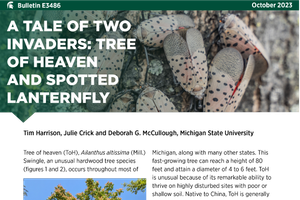
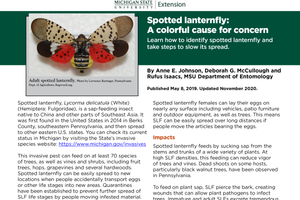
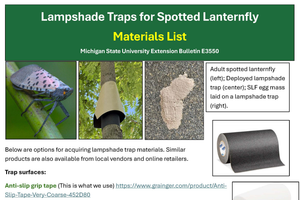
Three MSU Extension Bulletins on SLF (below) are available online at www.canr.msu.edu/spotted-lanternfly, from your local MSU Extension office or can be ordered from the MSU Extension Bookstore.

Report SLF & get help
MDARD Pest Hotline
800-292-3939
MDA-Info@Michigan.gov
MSU Extension
canr.msu.edu/spotted-lanternfly
USDA APHIS
aphis.usda.gov/plant-pests-diseases/slf
This work is supported by the Crop Protection and Pest Management Program (grant no 2024-70006-43569) from the USDA National Institute of Food and Agriculture. Any opinions, findings, conclusions, or recommendations expressed in this publication are those of the author(s) and do not necessarily reflect the view of the U.S. Department of Agriculture.