2026 Status of herbicide-resistant weeds in Michigan
 Print
Print Email
EmailHerbicide resistance screening is conducted by MSU Plant & Pest Diagnostics every year. In 2025, there was a rise in waterhemp submissions.
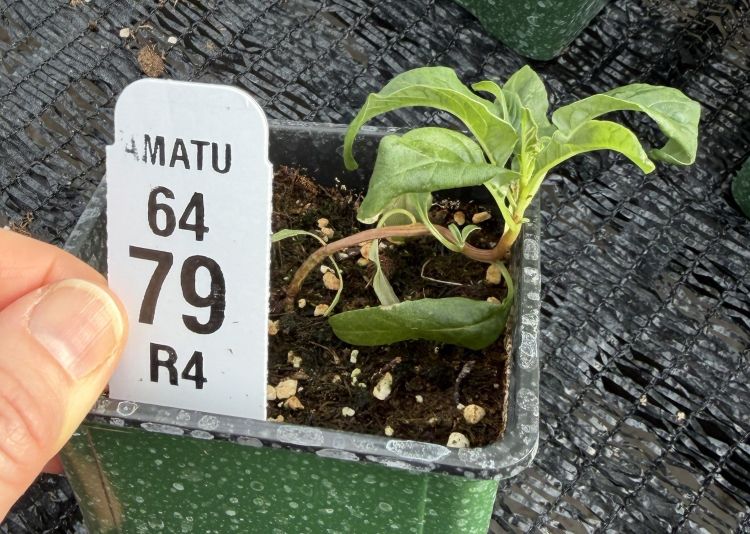
After the 2024 confirmation of 2,4-D resistance in waterhemp in Sanilac County, Michigan State University Plant and Pest Diagnostics saw an uptick in 2025 waterhemp submissions for herbicide resistance screening from four to 14! In total, MSU Plant and Pest Diagnostics had 27 resistance screen submissions, a number not seen since 2018. Most of these screens were funded by the Michigan Soybean Committee. For more than a decade, the Michigan Soybean Committee has provided ongoing support for the screening of select weed species for herbicide resistance that are found growing in soybean rotations (e.g., pigweeds, ragweeds, marestail/horseweed and common lambsquarters).
The 27 samples included Palmer amaranth (1), Powell amaranth (2), redroot pigweed (3), waterhemp (14), common lambsquarters (1), common ragweed (2), ryegrass (3) and johnsongrass (1). No herbicide resistance was noted in the johnsongrass sample, and no new types of herbicide resistance were confirmed in any of the other species. While this is good news overall, we did confirm new combinations of issues and new counties impacted by resistance issues.
New county locations or incidents of resistance confirmed from 2025
*G# refers to the herbicide site of action group
Redroot pigweed
- ALS resistant (G#2): Bay
Waterhemp
- Glyphosate resistant (G#9): Bay, Huron, Ingham, Isabella, Saginaw, St. Clair
- Multiple resistant (ALS-G#2 + glyphosate-G#9): Ingham
- Multiple resistant (2,4-D-G#4 + glyphosate-G#9): Isabella
- Multiple resistance (triazine-G#5 + glyphosate-G#9): Saginaw
- Multiple resistance (PPO-G#14 + glyphosate-G#9): Tuscola
Common ragweed
- Multiple resistant (ALS-G#2 + glyphosate-G#9): St. Clair
Ryegrass
- Glyphosate resistant (G#9): Ionia
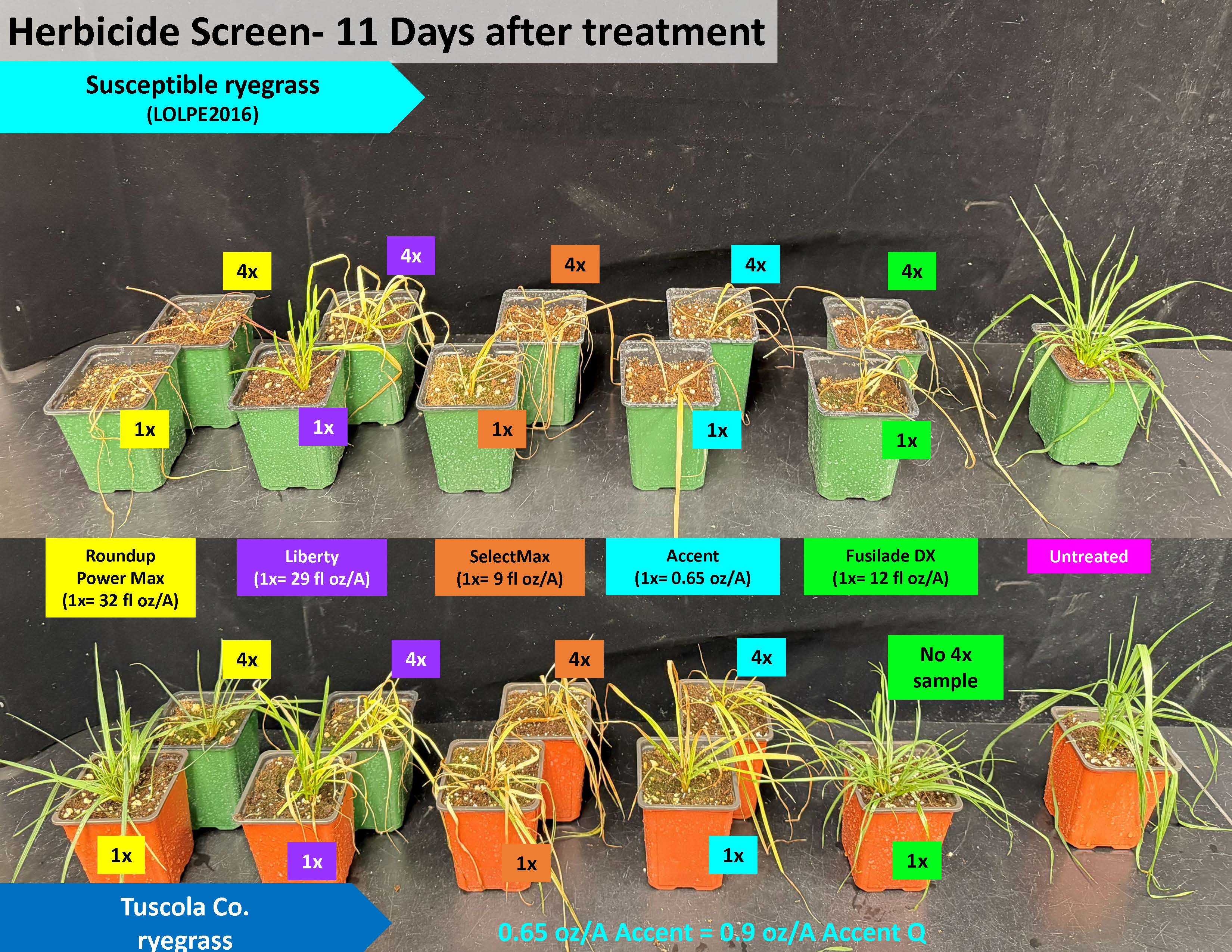
- Multiple resistance (ACCase-G#1 + glyphosate-G#9): Tuscola
Resistance to 2,4-D in waterhemp was confirmed only in one additional county, Isabella, bringing the total to two (Figure 1). Both of those samples were multi-resistant, with glyphosate as the other site-of-action group.
Some years we have a ryegrass submission, some years we do not, but in 2025 we had three submissions. During testing at MSU Plant and Pest Diagnostics, all ryegrass species are grouped together for ease (e.g., Lolium spp.). Distinguishing between perennial, annual/Italian ryegrass, etc. is challenging and has thus far not been as important as looking for resistance issues. This was the first year we had a population with multiple resistance to both the POST grass herbicides (ACCase G#1) and glyphosate (Figure 2). Fortunately, Michigan appears to be behind many other places in the world that have had ryegrass resistance issues for decades.
If you are considering submitting a ryegrass sample, please note that these species flower in late spring and produce mature seed sometime between July and August, ahead of our summer annuals. Determining when these grass seeds are mature can also be a bit more challenging than our broadleaf species. You want to look for seeds that are firm and do not crush when squeezed between two fingernails.
To view a map and summary of all herbicide resistance cases confirmed by MSU, please visit the Plant and Pest Diagnostics Herbicide Resistant Weeds in Michigan website.
Herbicide resistance testing will again be available in the fall of 2026. Fully mature seeds are needed for these screens, with most annual species expected to have mature seeds starting in mid-September through frost. All submissions are due by mid-November 2026. Information on these supported programs, fees for other types of samples, and the submission process can be found on the MSU Plant and Pest Diagnostics website or in the back of the 2026 Weed Control Guide for Field Crops (E-434). Information and photos showing how to collect seeds for the bioassays is available in “Tips for collecting weed seeds: Ensure your resistance sample gets tested.”
Please note that submissions not covered by the Michigan Soybean Committee as described above are subject to a $90 fee for in-state samples and a $180 fee for samples submitted from outside of Michigan.
If you have any questions regarding the 2025 results or future sample submissions, please contact Erin Hill at hiller12@msu.edu for more information.
Thank you to Christy Sprague for reviewing this article.