4-H around the world: South Korea
 Print
Print Email
Email4-H is around the world. Let’s explore 4-H in South Korea and hear from the Michigan 4-H’ers who traveled there in 2025.
The Michigan State University Extension series exploring 4-H around the world continues with the South Korea 4-H program, which has over 65,000 members in 4-H! South Korea 4-H focuses on the values of agriculture, environment and life. You can even check them out on Facebook through their Korea 4-H Facebook page.
The Korea 4-H Association is the 4-H activity supervising organization. According to the Korea 4-H Association, “4-H is a social education movement, which helps to inspire the youth of Korea to be agriculturally minded, as well as to become well-rounded individuals by living by the 4-H club ideals of head, heart, hands, and health.”
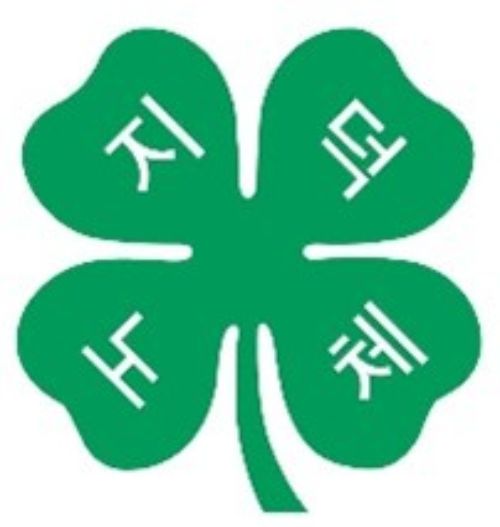
The Korean words for the four H’s are head—chi; heart—dok; hands—no; and health—che. The Korea 4-H movement has a partnership with the public and private sector with leadership from the Rural Development Administration, the Agricultural Research and Extension Services, and the Korea 4-H Association.
How does 4-H look in South Korea? 4-H started in Korea in 1945 after its independence from Japan. Clubs were known as “rural youth clubs” designed to help youth play a role in reviving underdeveloped rural communities. In the early 1950s, there were 1,900 4-H clubs with 50,000 members. During the Korean War, 4-H clubs were not active. After the war, with government and private support, 4-H became a driving force in post-war redevelopment in rural communities. With the industrialization of Korea in the 1990s, more people began moving to the cities from the rural areas, which impacted the agricultural 4-H program. To increase 4-H participation, programming was expanded to urban schools. The National 4-H Center was founded in Seoul in 1990.
Korea 4-H has three age groups with programs designed for each group. Childhood 4-H members, aged 9-12, have a focus on learning 4-H ideas and developing an agricultural and eco-friendly mind. Teenager 4-H, aged 13-19, focuses on youth leadership and life skill development, and developing the potential to be an agricultural successor. Young adult 4-H, aged 20-29, focuses on helping youth become young leaders in their community and on developing advanced farmers. Adult leaders are 30 and older. Five percent of the clubs are in 2,000 schools, with clubs being led by teachers during the school day. The 4-H program offers group and individual-based projects, a variety of educational training programs, outdoor activities, a national competition and fair festival, a national 4-H, and international exchanges.
Michigan 4-H sent its first international exchange delegate to South Korea in the summer of 2016 as part of the States' 4-H International Exchange Program. In 2025, Michigan 4-H had two exchange delegates from Washtenaw and Lenawee counties travel outbound to Korea. Below, they share about their one-month experience in South Korea.
Mitia W., from Lenawee County 4-H, shared the following about her experience.
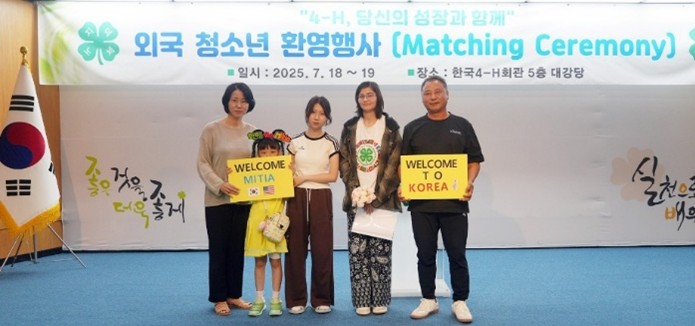
“My trip to Korea was an amazing experience. I got to experience their culture and traditions while living with a host family. My host family was very nice and understanding. I wasn’t able to see my host father much due to Korea’s work ethic. Everything is a learning experience, as every night I had to teach my younger host sibling English.
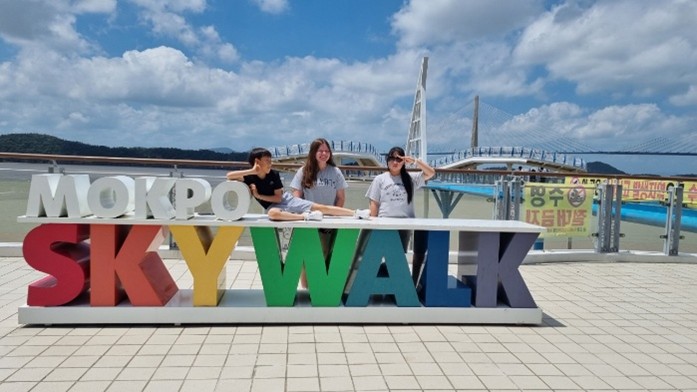
I stayed in the city of Muk-po while there, and it was very beautiful. There was a waterfall just a walk away from the apartment building I was in. More than 68% of people lived in apartment buildings. The last few days I stayed there, I was in the city of Seoul. I was staying in the 4-H building, there in the middle of Seoul. The day before we left, we went on a cable car ride up to the top of a mountain and saw all of Seoul.”
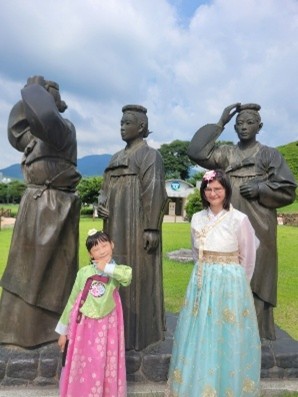
Audra A., from Washtenaw County 4-H, shared the following about her opportunity.
“I had the opportunity to immerse myself in a different culture, which gave me new experiences, and I was able to meet new people. I got to see a fireworks show, visit museums, go to a dog cafe, and experience everyday life while in a host family located in Mokpo. Learning about Korea’s history was exciting because I felt that I was really able to engage and learn more about the culture.
I was also able to have a sleepover with Mitia (my fellow Michigan 4-H friend) while we were both in the country. Together, we were able to visit a temple and have a fun time together while exploring the country. My host family was so welcoming and excited to see me when we first met, which made my overall experience comforting as I could express my thoughts and feelings with them.
Overall, this trip showed me that stepping out of your comfort zone and doing things that you have never done before can be one of the best things to ever happen.”
Consider learning more about Michigan 4-H international exchange opportunities! Check out the Michigan 4-H International Exchange website, States’ 4-H International Exchange Program website, the Michigan 4-H International Exchange Programs Facebook page, and the States 4-H International Exchange Programs Facebook page. Following these pages will keep you updated on all the excellent opportunities available.
Michigan 4-H can't wait to see the international connections made, life-changing experiences, cultural learning, and more by youth traveling abroad in the summer of 2026!
Michigan State University Extension and the Michigan 4-H Youth Development program help to prepare youth as positive and engaged leaders and global citizens by providing educational experiences and resources for youth interested in developing knowledge and skills in these areas. For more information about 4-H learning opportunities and other 4-H programs, contact your county MSU Extension office.
Other articles in this series
- 4-H around the world: Nepal – Part 1, October 31, 2024
- 4-H around the world: Nepal — Part 2, October 21, 2024
- 4-H around the world: Tunisia 4-H, May 30, 2024
- 4-H around the world: Tanzania, February 16, 2023