Boxwood leafminer: A hidden pest in plain sight
 Print
Print Email
EmailSpringtime reveals damage from a boxwood pest that was active last summer.
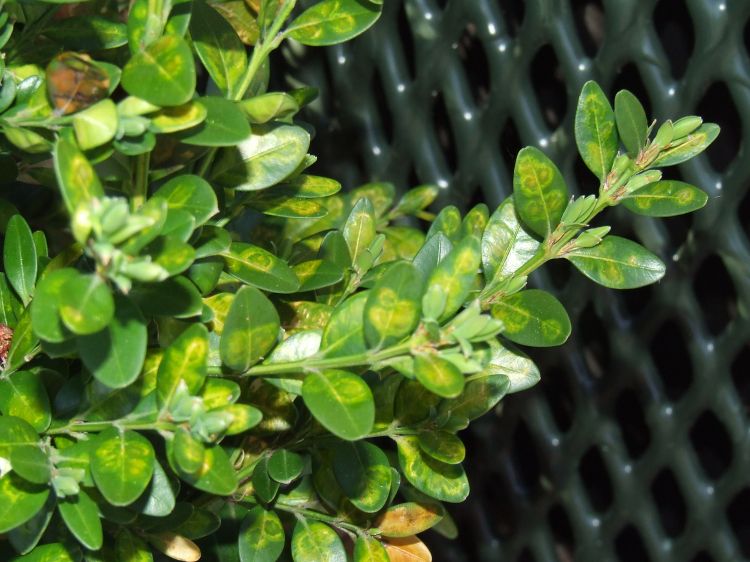
Many gardeners are increasingly familiar with the issues that affect boxwood health. Boxwood leafminer (Monarthropalpus flavus) is one that has been present for a while and occasionally rises to the level of a serious pest. In some areas of Michigan, yearly feeding of this insect can seriously disfigure the shrubs, leading to leaf discoloration (Photo 1) and even browning and leaf shedding (Photo 2).
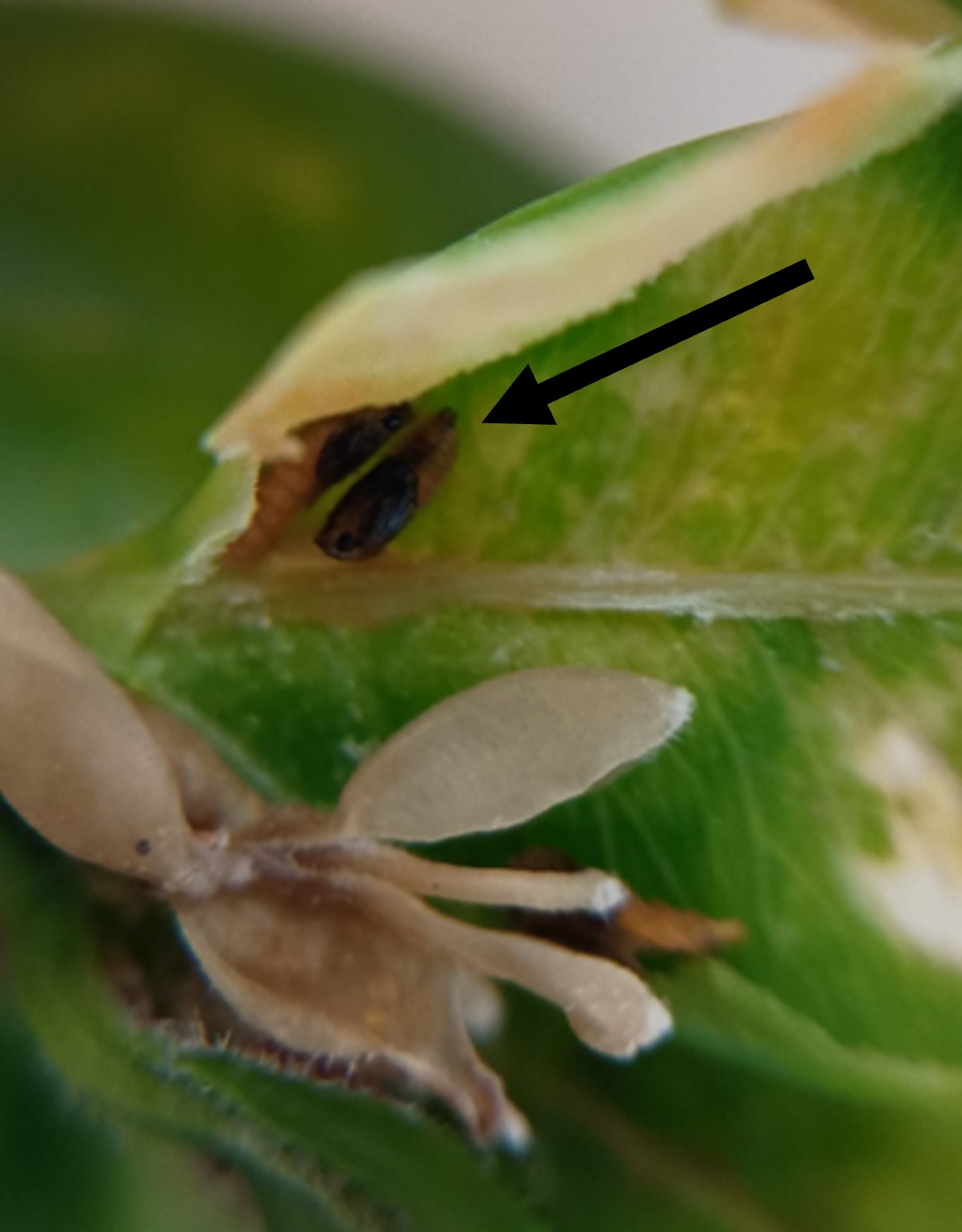
The insect responsible for the damage is actually a fly, but its larval form, which looks like a tiny yellow worm (maggot), is the life stage that causes damage as it feeds between the upper and lower layer of the leaf. The damage we see now actually began last summer, but damage is seldom noticed until spring.
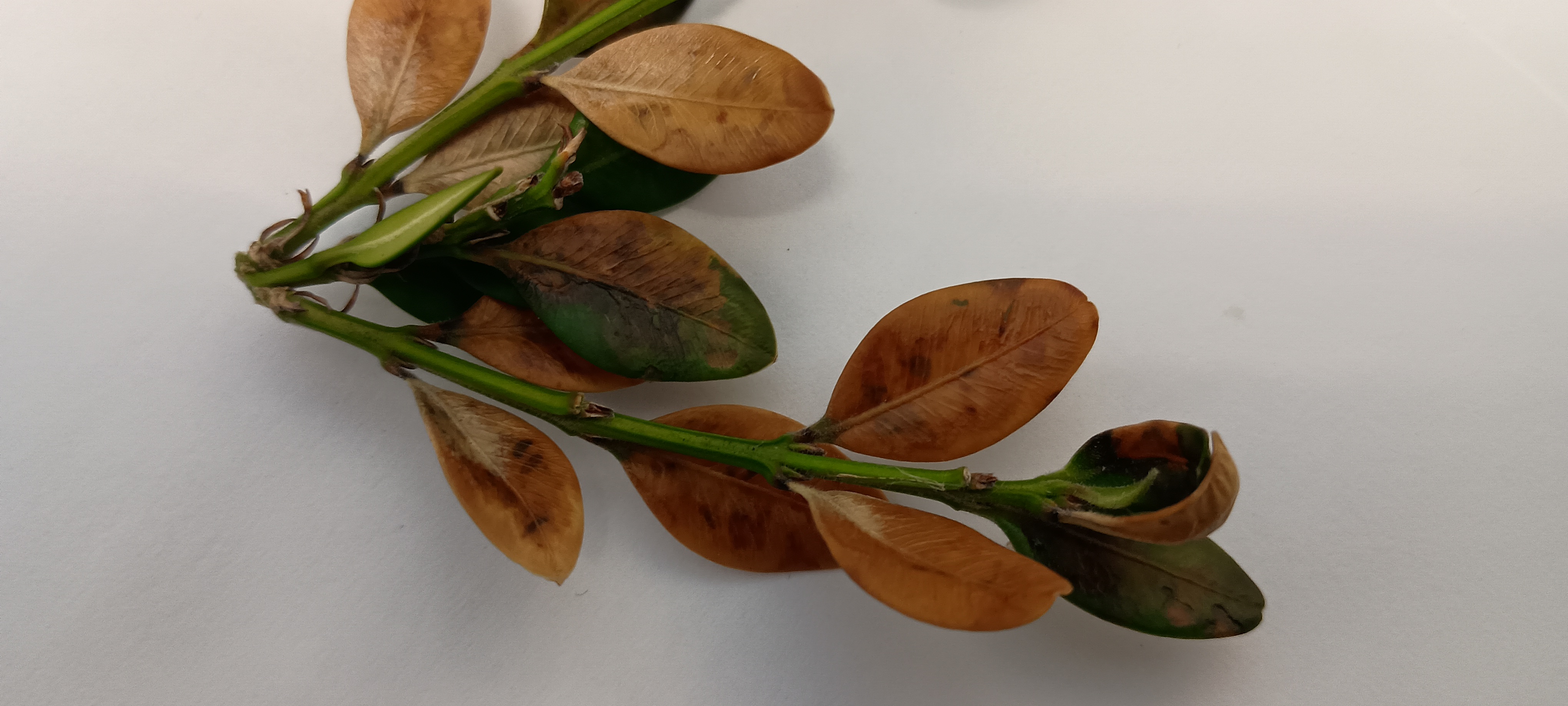
Most of the boxwood leafminer’s life is spent as a larva between the upper and lower leaf surface. As spring temperatures warm up, the larvae resume feeding, making very obvious “blisters” on the leaf. While the discoloration on the leaves can be confused with winter injury, there is a simple way to confirm if the damage was due to boxwood leafminer. Peel open the space between the upper and lower surfaces of a few affected leaves. If you notice maggot-like insects within the boxwood leaf, you’ve discovered the larvae or pupae of boxwood leafminer (Photo 3).
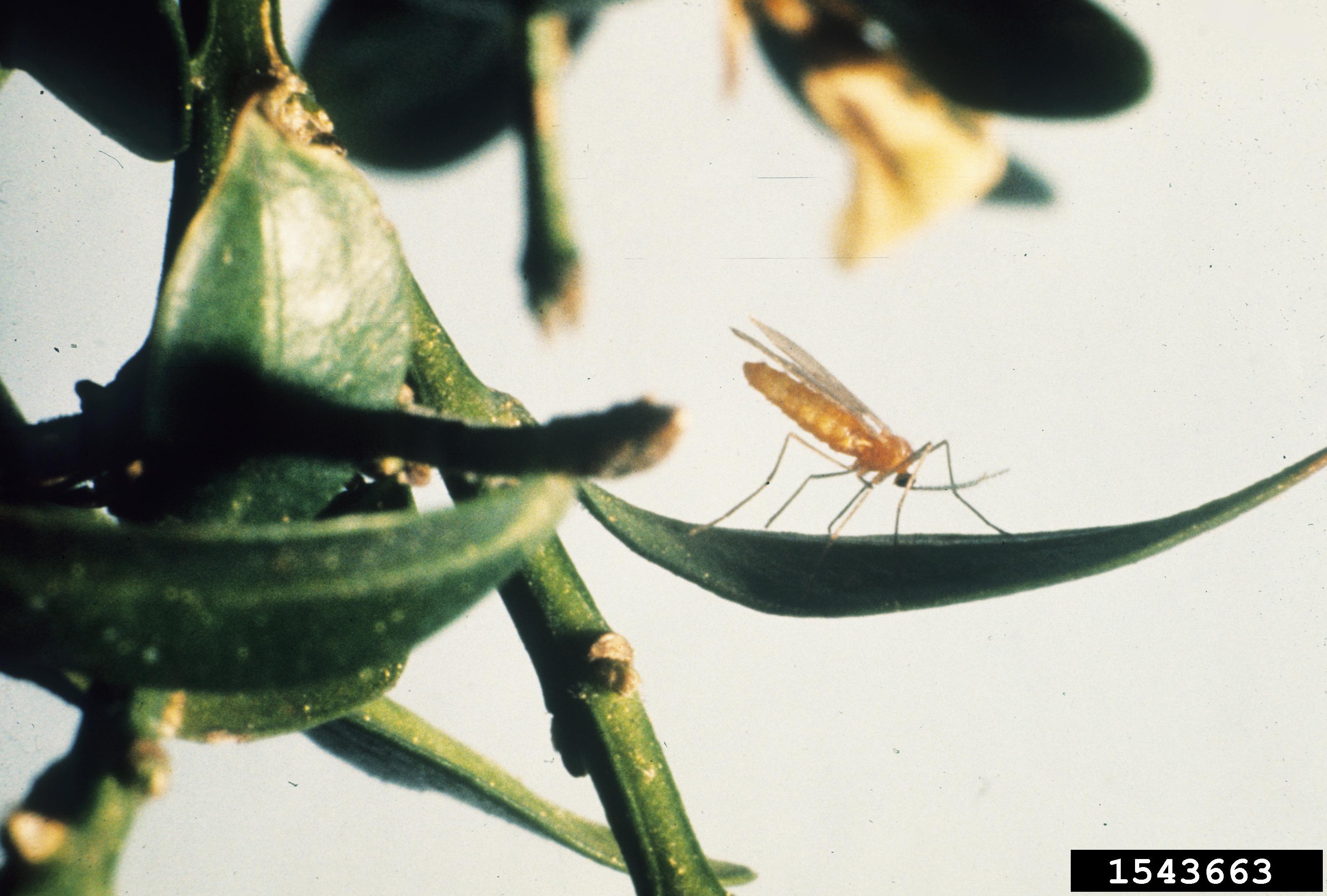
During springtime, boxwood leafminer completes its development and eventually emerges from the leaf as an adult fly (Photo 4). They live for a few days at most, utilizing the time to lay eggs in between the upper and lower leaf surfaces of new growth. After adult emergence, you will see tiny pinprick-sized emergence holes on the underside of the leaf.
Boxwood leafminer may only be an occasional pest in some areas. When damage is severe, some gardeners have reported hearing heavily infested plants that sound like they are crackling. This sound is the leafminer pupae trying to push through the leaf surface.
Control options
If damage is limited to specific sections of the plant, prune out the affected leaves. Some cultivars of boxwood are more resistant than others. Several are listed below, although others have been reported as being resistant to boxwood leafminer too. Be sure to verify that these are adapted to your USDA Plant Hardiness Zone before planting.
- Buxus microphylla japonica and var. sinica ‘Franklin’s Gem’
- Buxus sempervirens ‘Handworthiensis.’ ‘Pyramidalis,’ ‘Suffrutircosa,’ or ‘Vardar Valley’
- Buxus sinica var insularis ‘Nana’
Chemical control with an insecticide spray is difficult because the application must be timed with the emergence of the adult flies. Typically, this is mid-May through June and corresponds to roughly when weigela is in bloom. Insecticide sprays containing bifenthrin, cyfluthrin, abamectin or malathion are among the materials that can be applied. Note that none of these will affect the larvae and pupae within leaves.
Imidacloprid, a systemic insecticide (Merit or BioAdvanced Tree and Shrub Insect Control), will control the larvae inside the leaves and does not require precise timing for application. However, this material should only be used after boxwood flowers bloom in the spring. The systemic nature of the active ingredient means there is potential for the insecticide to be present in the boxwood flowers if it is applied before bloom. Applying a systemic insecticide before bloom can be toxic for pollinators. There is also a risk of imidacloprid causing a secondary outbreak of spider mites.
Before applying a pesticide, confirm the presence of leafminer either by dissecting a leaf or holding it up to the light. Otherwise, symptoms could be confused with disease or abiotic causes. Be sure to read and follow all instructions and safety precautions found on the label before using any pesticide. No insecticides should be used while boxwood flowers are present.
If boxwood pests and control have you considering alternative shrubs, Michigan State University Extension has a list of recommended landscape shrubs that offer a similar look and fewer problems.
This work is supported by the Crop Protection and Pest Management Program (grant no 2024-70006-43569) from the USDA National Institute of Food and Agriculture. Any opinions, findings, conclusions or recommendations expressed in this publication are those of the author(s) and do not necessarily reflect the view of the U.S. Department of Agriculture.