Carpenter ants nesting in trees and homes
 Print
Print Email
EmailCarpenter ants in trees and houses are an indicator of a moisture and decay problem. Locating the problem gives you the opportunity to act.
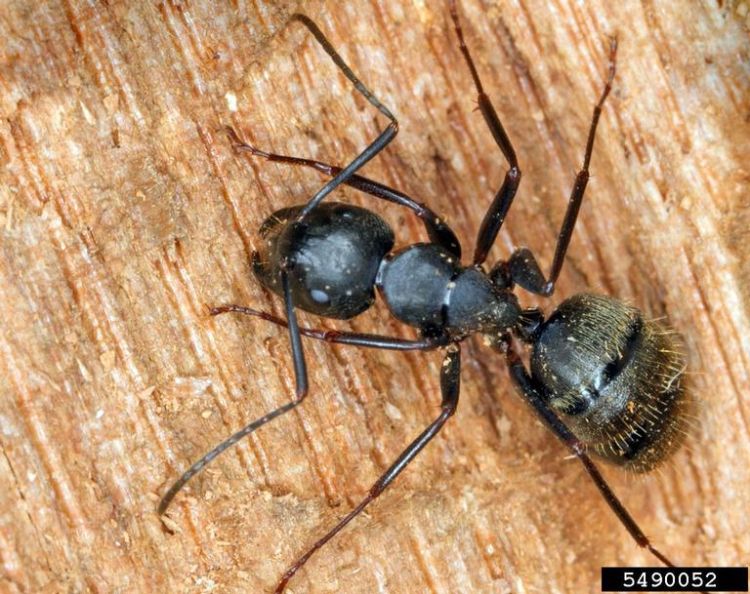
Large ants often elicit fear that severe damage to gardens or structures is soon going to be discovered. While there is a good chance that 0.25- to 0.5-inch ants with hairs on its abdomen may be a carpenter ant (Photo 1), their presence does not guarantee you will be dealing with a crisis. The location, number and time of year when carpenter ants are detected determine the risk they pose to trees and indoor structures.
Carpenter ants are opportunists and tend to build nests in moist wood, whether in homes, firewood or decaying trees. Winged ants emerge from spring to early summer in search of new sites to establish their colonies.
Are carpenter ants killing my trees?
Carpenter ants do not feed on wood, but they do create galleries within rotting wood to build their nest within the tree (Photo 2). Unlike termites, an insect that does eat wood, carpenter ants excavate tiny bits of wood that look like course sawdust. Piles of sawdust deposited by carpenter ants can often be found at the base of the tree. The fact that you see them wandering out of the tree is the nature of ants, not termites.
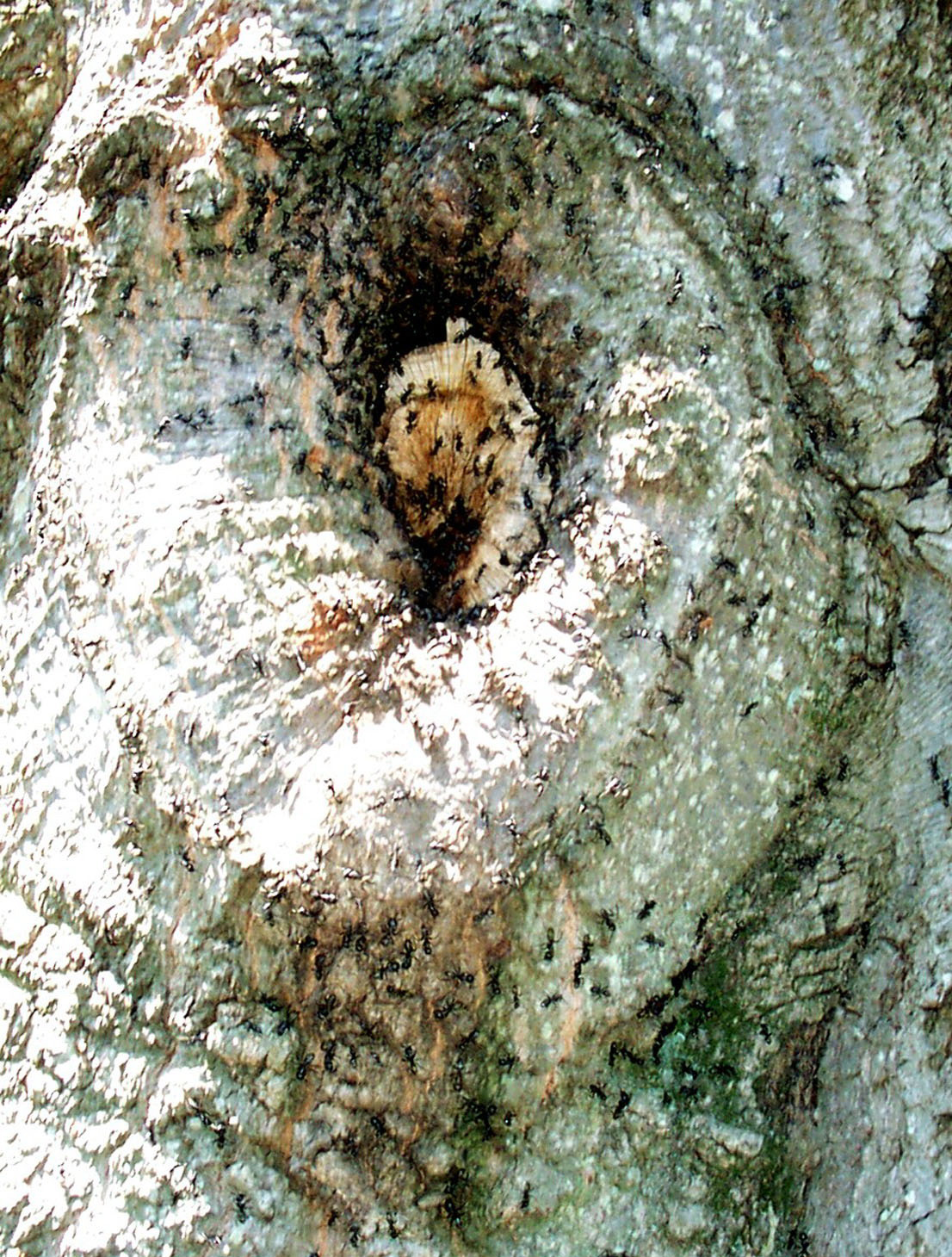
Trees with carpenter ants are already weakened from rot or moisture damage, and the ants only live rather than feed within wood. Seeing dozens of large ants coming and going out of a tree indicates there is some decay within. This does not equate to imminent decline in tree health. Too much moisture and past wounds create conditions that carpenter ants take advantage of to create nests. Often, nests go unnoticed for years in healthy trees since the ants are tunneling in dead tissue and not disrupting the flow of water and nutrients.
An injury to a tree can expose wood to moisture, creating the right environment for carpenter ants to build a nest. Injury to trees can come from a lawn mower bumping into the tree, pruning wounds, a weed whip cutting through the bark, a woodpecker drilling into the tree, a buck rubbing the bark, a borer type of insect feeding under the bark, or a fungal disease. Some openings through the bark are caused by the environment, including a lightning strike, broken branches due to wind and even low temperature damage to the wood of young trees. Exposure to moisture allows fungi to attack the wood and decay begins.
What are carpenter ants eating?
Carpenter ants feed on living and dead insects as a source of protein and on a sugary substance called honeydew (produced by insects like aphids and scale that siphon the sap out of plants). Carpenter ants may even forage inside a home for protein and sugar sources such as pet food, sugar, syrup and other sweets.
Are carpenter ants nesting in my home?
When you find ants searching for food within your home, it is important to first identify the ant since this will give you an indication of their nesting habits. The University of Nebraska Extension has a great Ant Identification Resources webpage. If the ants in your home are carpenter ants and it is winter or early spring, there is a stronger possibility there is an existing nest in your home or building. Finding them later in the season could mean they are just searching for food, as they will travel up to 100 feet from their nests. Lots of winged ants in the home is a telltale sign of a nest. Carpenter ants follow common paths, so it is possible to observe the ants and follow them from your home to a nest outdoors. Sometimes, though, the nest is within the house or structure.
Nesting within a structure usually indicates wood is being damaged by water. Rotting windowsills, wood located around sinks and tubs or rotting roofs are common sites where carpenter ants can be found. As with the old rotting tree, the ants are not eating the wood but excavating it.
Managing carpenter ants indoors and outdoors
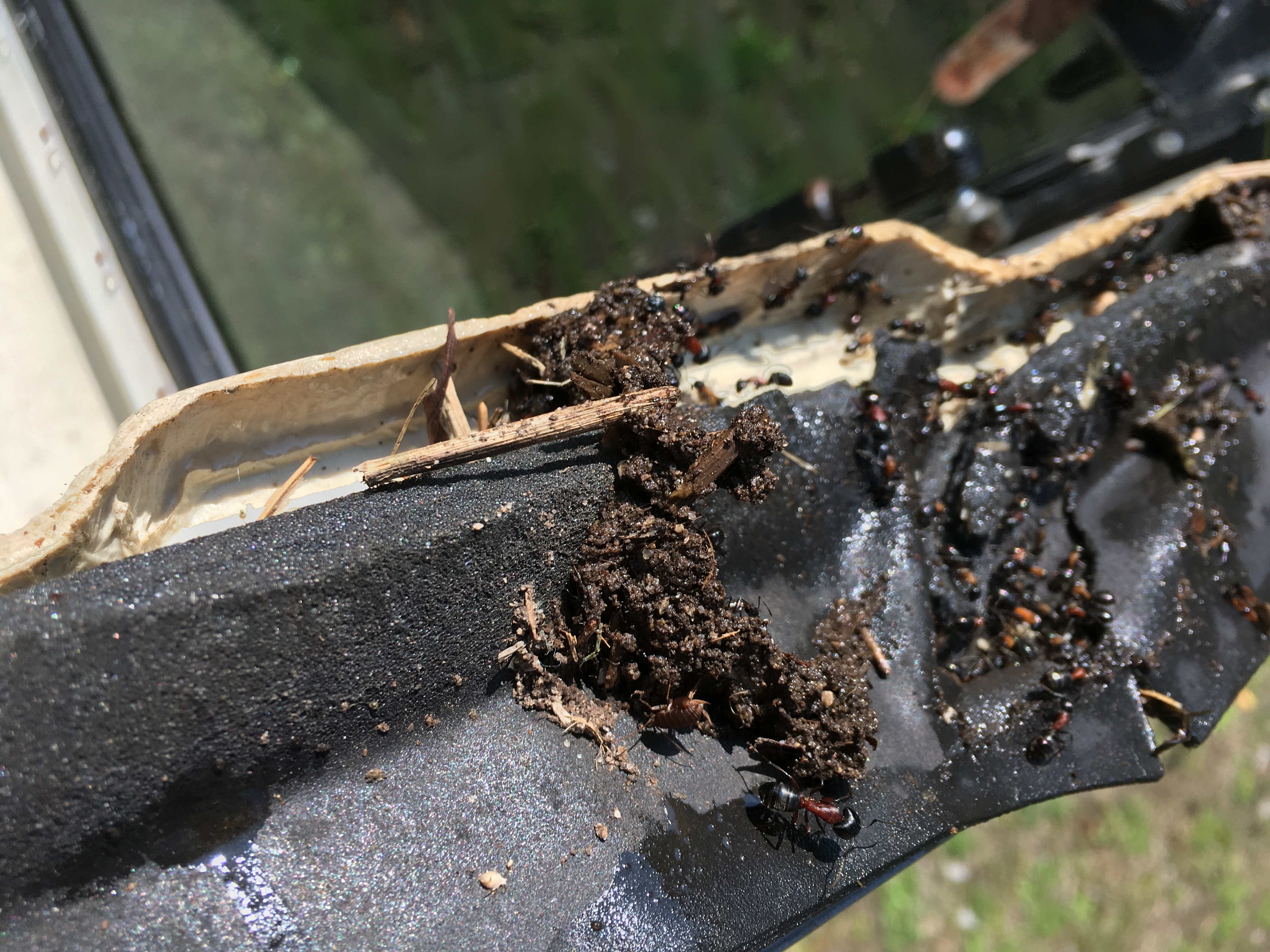
Managing the problem indoors requires locating the nest and killing the ants. While trees are usually the source, carpenter ants are opportunists at building nests (Photo 3). If there is a moisture issue, this must also be fixed along with damaged wood to prevent structural problems and further colonization. If the problem is indoors, you’ll likely need to address a water leak or the source of the moisture to prevent further damage to a structure. Be sure there are no large branches or shrubs touching the structure. These can be a source of entry for carpenter ants.
Baits in areas where the ants are commonly found are an option to try to get the ants to bring the insecticide back to the nest. However, carpenter ant feeding patterns make it difficult to predict the success of baits, and, even when successful, it may require several weeks to determine if the ants decline in numbers. Nests in walls can be treated with an insecticidal dust, but the challenge of finding and treating them indoors makes them best managed by a pest control professional.
Outdoors, carpenter ants are considered beneficial as predators of other insects. However, a nest too close to a house can create a nuisance indoors as they hunt for food. Understanding the carpenter ant’s role in nature and that they are not the underlying factor in the decline of a tree are factors to consider when determining a course of action. If there is an obviously decaying limb that is the source of the ants, prune it out or hire an arborist to do so. In old trees, there may be little action that can be taken when the decay is at the base of the tree other than to reduce any additional stress, especially from drought conditions. You may need to continue monitoring decay where trees are near structures to determine if there is a potential hazard of the tree collapsing.
While an outdoor nest can be treated with an insecticidal dust, controlling the nest itself is unnecessary to protect the health of the tree. If using a pesticide on a tree, be sure that it is labeled for use outdoors.