Dirt to Glass 2026: From soil to sensory, Michigan’s next leap in vineyard and wine quality
 Print
Print Email
EmailDirt to Glass has grown into Michigan’s statewide platform connecting growers, winemakers, researchers and industry leaders to drive measurable improvements from vineyard to glass. Registration is open for the Aug. 20–21, 2026 conference in Traverse City.
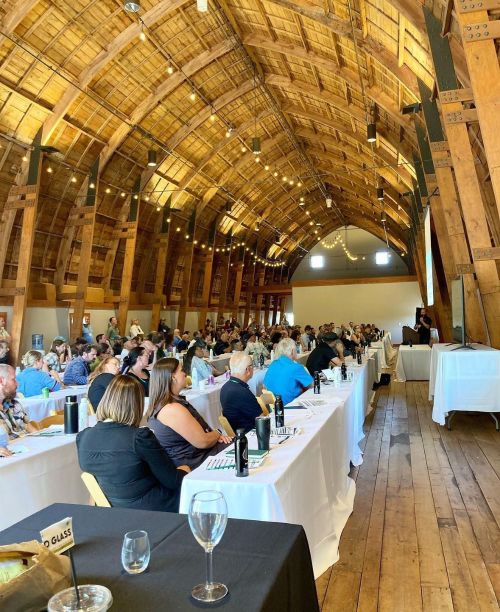
Registration is now open for the fifth annual Dirt to Glass conference, returning to Traverse City, Michigan, on Aug. 20 and 21, 2026. Dirt to Glass is a two-day, applied conference designed to connect viticulture, enology and soil health with real-world decision-making, linking what we do “in the dirt” to what we taste “in the glass.”
This year’s program features 23 speakers, combining Michigan growers, vineyard managers and producers with national and international expertise. The format blends technical presentations with moderated industry panel discussions, creating an environment where participants can compare approaches, troubleshoot challenges, and leave with strategies that can be implemented immediately in Michigan vineyards and wineries.
Speaker highlights
- Nick Dokoozlian, PhD (E. J. Gallo). A combination of viticulture, chemistry, and enology leadership. Dokoozlian brings a “vineyard-to-wine” perspective that connects farming decisions to measurable wine outcomes and quality benchmarks.
- Jacopo Miolo (Simonit and Sirch). Internationally recognized pruning and vine-architecture trainer. His work focuses on vine longevity, wound minimization, and consistent performance, highly relevant for improving vineyard resilience and uniformity in Michigan.
- Tom Plocher (Plocher Vines). A leading breeder advancing the next generation of disease-resistant grape varieties. He will frame how to evaluate these cultivars rigorously and how they may fit Michigan production systems while maintaining high wine quality.
- Madeline Triffon, Master Sommelier (Plum Market). Brings top-tier sensory evaluation expertise to connect “what we taste” with decisions in viticulture and enology, helping define quality targets and typicity for Michigan wines.
- Bruno Basso, PhD (Michigan State University, Soil Inventory Project). A national leader in soil science and data-driven agriculture. He will connect soil variability and soil health to vine performance and fruit quality, with practical implications for site-specific management.
- Rich Price (Michigan State University Extension). Conservation systems agronomy educator bringing practical strategies in soil management, cover crops, and sustainable systems that improve efficiency and resilience.
- Christie Lee Apple (CropScout Christie). Focused on crop scouting, field diagnostics, and decision support. She helps translate observations into timely, actionable management to protect canopy health, yield, and fruit quality.
- Alexa Kipper (Organic Matters; Camp Compost). A leader in compost and soil biology programs. She will highlight practical ways to integrate organic amendments and soil-building strategies into vineyard operations.
- Diego Barrison (Herrick Grape Vines). Brings hands-on expertise in vineyard establishment and vine sourcing, connecting early design and planting decisions to long-term vineyard performance.
- Michigan vineyard and winery leaders, including Kasey Wierzba (Shady Lane Cellars), Andy Fles (Shady Lane Cellars), Marcel Lenz, PhD (Leelanau Cellars), Tomas Moreno Jr. (Bel Lago), Derrick Vogel (Folklor Wine and Cider), David Bos (BOS Wine), Andrew Backlin (Modales Wines), Joe Herman (former Karma Vista Vineyards), Sandy and Larry Tiefenbach (Lone Silo Vineyards) and Jon Hinkelman (Hinkelman Farms), bringing real-world perspectives from Michigan vineyards and cellars.
Why Dirt to Glass matters in 2026
Dirt to Glass is built around one core idea: wine quality starts with farming decisions, and improving quality requires the ability to connect site, soil, canopy and fruit decisions to measurable outcomes in the winery and in the glass. A unique emphasis this year is a collaboration with E. J. Gallo supporting a structured evaluation of Michigan wines by a group of experts, paired with advanced chemical analyses offered by the chemistry group of the Gallo winery. The goal is to connect sensory results to chemistry using rigorous, modern approaches, helping us better understand what drives Michigan wine quality and where the biggest opportunities exist for improvement.
The program will also spotlight modern pruning and vine-architecture training through Simonit and Sirch, including discussion of their work in Michigan and the potential to improve vine health, longevity and consistency in our cool-climate production systems.
Finally, the conference will feature focused discussion on the next generation of disease-resistant grape varieties, including how to evaluate these cultivars, how they fit Michigan production goals, and how Michigan trials can accelerate adoption while maintaining high quality standards.
Two-day conference format
Day one – Thursday, August 20
Seminars, guided tastings and a walk-around tasting.
Day one takes place at the Cathedral Barn at Historic Barns Park, 1500 Red Drive, Traverse City, MI 49684, and includes a full day of presentations by featured speakers, educational guided tastings, moderated panel discussions and lunch. The day concludes with an evening walk-around tasting featuring approximately 100 wines.
Day two – Friday, August 21
Field day with shuttle transportation.
Day two is a full day in the field with shuttle transportation, designed for learning, conversation and networking. Participants visit selected vineyard and winery sites to explore day one concepts with visiting experts. Lunch is included. Seating is extremely limited, and day two is available only to day one participants as an additional registration option.
Registration
Discounted registration is available for the first 50 registrants for days one and two, after which regular pricing applies.