


Does kernel weight change after corn maturity?
 Print
 Email
Kernel weight does not change during dry down. However, yield losses can still occur due to other factors.
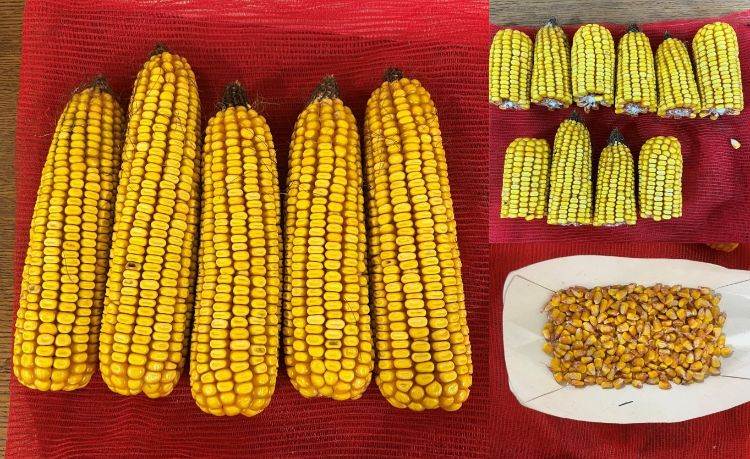
Data from recent USDA Crop Progress reports indicate delayed corn maturity in Michigan, as we pointed out in our previous article. October has been relatively warm and dry, and fields that matured before the turn of the month have experienced rapid dry down rates. However, for fields with delayed maturity, some growers (especially those with limited facilities for artificial drying) may have to delay harvest to achieve adequate field drying or risk paying grain elevators for drying high moisture grains.
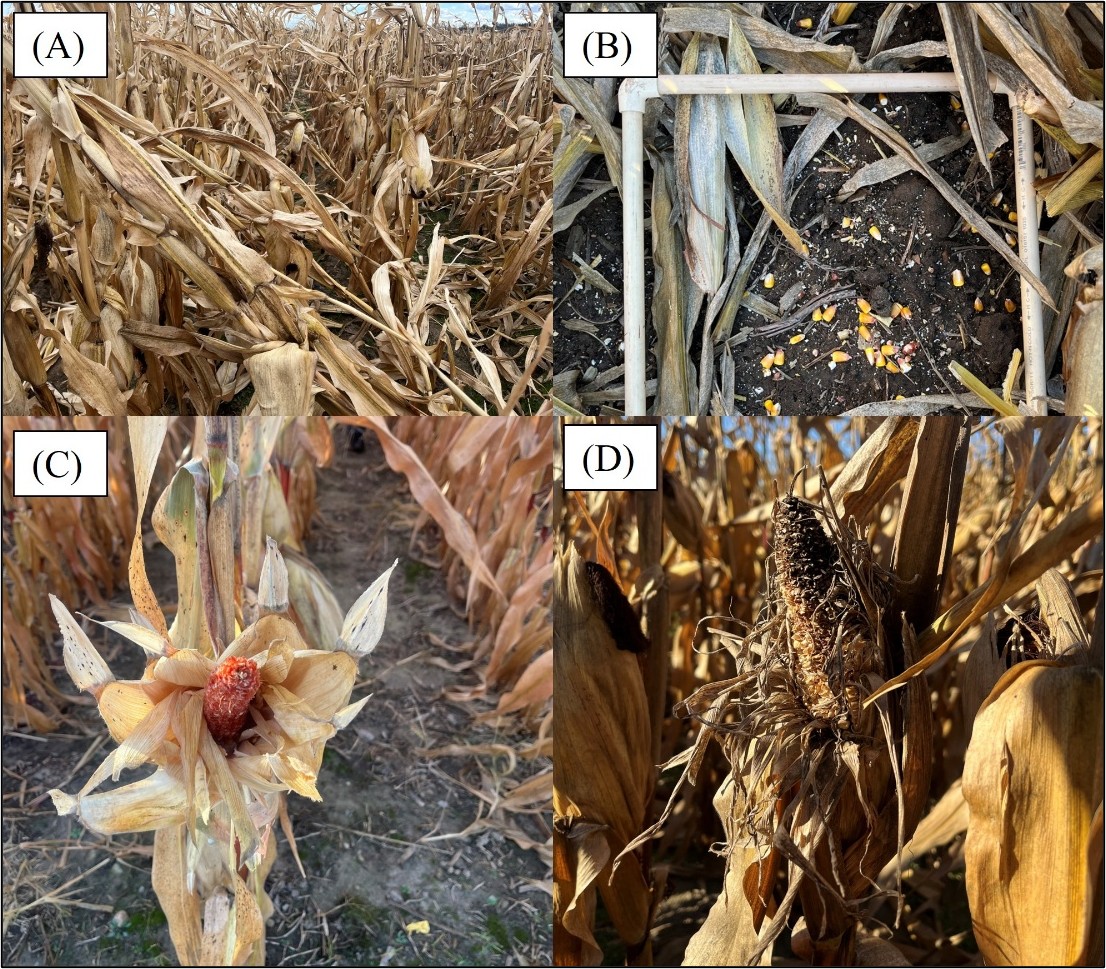
As corn harvesting gets delayed, concerns with yield losses increase. Yield losses from delayed harvest could come from stalk lodging (Figure 1A), shattering or header losses (Figure 1B), and animal feeding (Figure 1C and D). While these issues can cause bushels to decline between corn reaching black layer and the time grain gets to the bin, growers still debate if kernel weight declines during dry down period (so called phantom yield loss) and contribute to yield losses.
Over the years, researchers have conducted field trials to determine if corn kernel weight changes during dry down and whether these changes contribute to yield losses. Some earlier studies (1980s and 1990s) reported decline in kernel weight by 1.1% per point decrease in grain moisture content due to seed respiration. However, recent studies have shown that corn kernel weight remains stable after black layer formation.
The Cropping Systems Agronomy Lab at Michigan State University conducted similar field trials in Michigan from 2021 to 2024 to evaluate kernel weight stability during the dry down period. Our trials involved three typically used corn hybrid relative maturities (RM: 89, 99 and 109) planted within a typical Michigan corn planting window (around May 10 to May 31).
We monitored the development of each hybrid RM until black layer formation, after which we began sampling (three times each week) to estimate grain moisture content and kernel dry weight. Because of differences in hybrid RM and planting date, black layer formation occurred at different times, resulting in differences in sampling dates.
Overall, the earliest sampling began the first week of September while the last samples were taken around the second week of November. Kernel moisture at black layer ranged from 26 to 38%, depending on hybrid RM, planting date, and growing season. By the end of the sampling period, kernel moisture was between 15–25%.
Kernel weight during dry down for different hybrid maturities
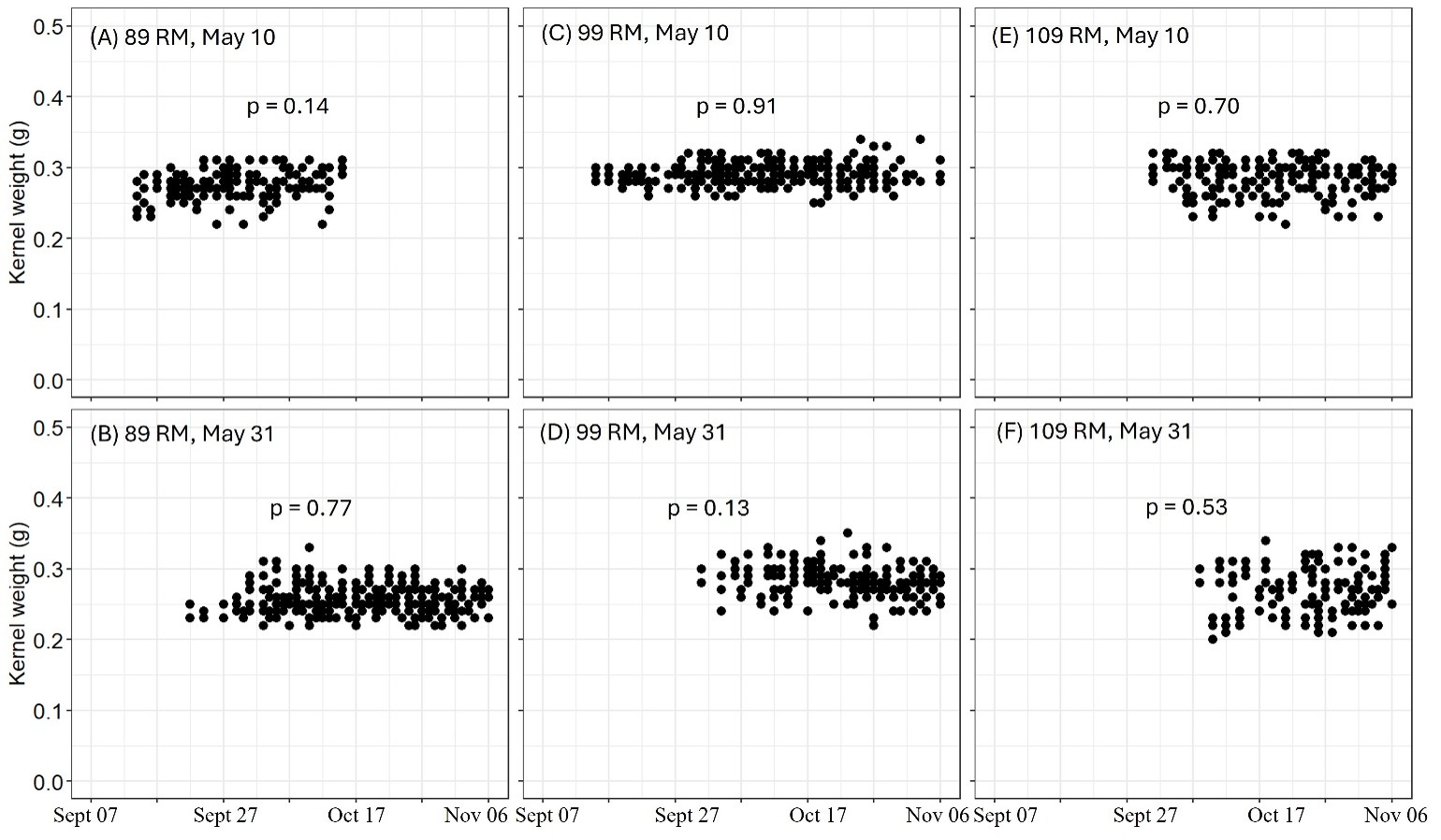
Figure 2 shows kernel weight (0% moisture) during dry down for different hybrid maturities at different planting dates. Overall, there was no evidence of a decline in kernel weight during the dry down period as shown by the relatively high p values for the relationship between kernel weight and sampling date for all hybrid RM and planting dates.
We also observed slight differences in average kernel weight among hybrid RM. For example, the 99 RM had an average kernel weight of 0.28 g (range of 0.22-0.35 g) across planting dates, while the 89 RM had an average weight of 0.26 g (range of 0.22-0.33 g). Our results further confirm recent findings from researchers in Iowa and Indiana who have reported that kernel weight remains stable during dry down.
Key takeaways
Can delayed harvest cause yield losses?
Yes. Delayed harvest can likely cause yield losses due to stalk lodging, shattering or header losses, and animal feeding.
Does kernel weight decrease during dry down?
No. Corn kernel weight does not decline after black layer is formed; hence, loss of dry matter inside the kernel is not a contributing factor to harvest losses.
Can I delay corn harvest to achieve dry down?
Yes. Dry down still occurs in late October and November but at a much lower rate. See this MSU Extension article on dry down rates in Michigan.