Drive-by botany: Common spiderwort and northern catalpa
 Print
Print Email
EmailProfiles of common Michigan roadside flora in early June 2026.
Author’s note: Drive-By Botany is a continuing series that highlights flowering plants commonly seen from the road. As a service to new readers, we include the introduction with each article. If you're already familiar with the premise, feel free to skip down to the good stuff.
Has a patch of flowers ever caught your eye as you travelled down the road? It certainly happens to us all the time! As gardeners and naturalists, we're always interested in increasing diversity in our gardens and landscapes. Here at Michigan State University Extension, we thought it would be fun to consider some of the roadside plants that we see every day. Each article in this series will feature two plant species that are currently blooming and frequently observed from the road. Our goal is to answer two simple questions:
- What are they?
- Would they make good garden plants?
As part of the process, we'll include some biological tidbits and a few useful characteristics for identification. Please note that some of the plants we feature are exotic invasive species; we'll be sure to include recommendations from land management professionals on how to manage them in your landscape.
June 2026 – week 24. Growing degree days (GDD) 680 base 50 F, East Lansing, Michigan
Common spiderwort (Tradescantia ohiensis)
Synonyms: bluejacket, Ohio spiderwort, smooth spiderwort
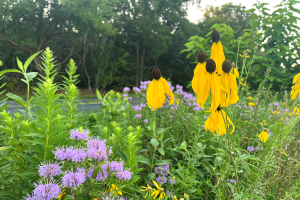
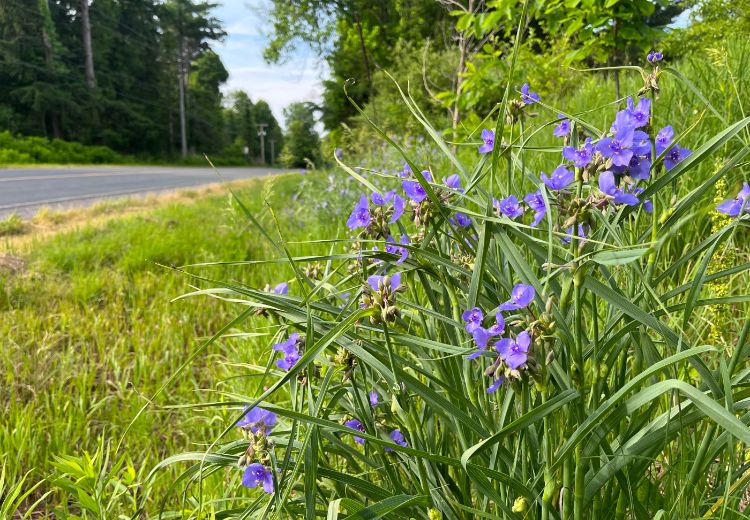
Common spiderwort (Tradescantia ohiensis) is a member of the dayflower or spiderwort family (Commelinaceae), a group of plants known for their short-lived flowers and unusual pollination biology. This clump-forming herbaceous perennial produces narrow blue-green leaves that are folded lengthwise down the center of the blade. During the blooming season, terminal clusters of violet-blue flowers emerge above the foliage, with six bright yellow stamens providing a striking contrast to the petals (Photos 1 and 3). The genus Tradescantia was named in honor of John Tradescant the Elder and his son, both English botanists who served as successive royal gardeners to King Charles I during the 17th century.
Commelinaceae is a medium-sized plant family containing approximately 730 species distributed across 41 genera. Most species are perennial, with many members cultivated for their ornamental value. Although the family is most diverse in tropical regions, species occur throughout much of the world and exhibit a high degree of variation in both floral form and structure.
The flowers themselves are particularly interesting because they offer only pollen as a reward to pollinators; nectar is absent throughout the family. Flowers are often ephemeral, remaining open for only a brief period. Moreover, species in the Commelinaceae also tend to bloom at characteristic times, with these flowering periods sometimes being short and well-defined enough to conceivably establish reproductive isolation and prevent hybridization between some closely related species.
Description
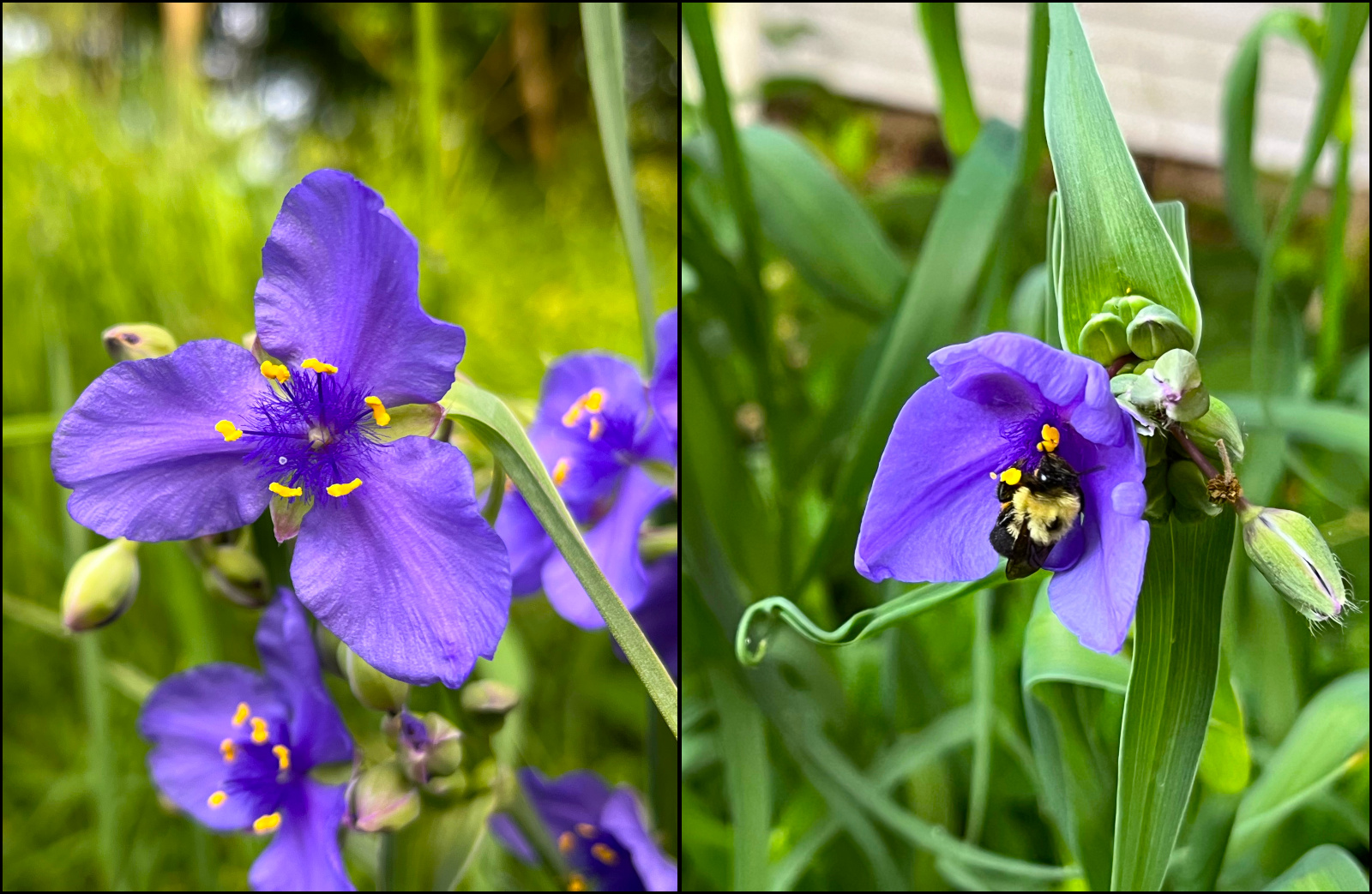
Flowers: Common spiderwort produces clusters of three-petaled flowers in varying shades of purplish-blue. Individual flowers are typically 0.75-1.5 inches wide and consist of three green leaf-like sepals positioned beneath three broadly ovate petals. The petals surround a single pistil and six bright yellow stamens, creating a vivid contrast at the center of the flower (Photo 2, left). Although uncommon, individuals with white petals have also been documented.
The blooms are borne in clusters near the ends of the stems and emerge from leafy bracts that resemble small leaves. Each flower is attached to the cluster by a short stalk called a pedicel. Like many members of the dayflower family, spiderwort flowers are short-lived. Individual blooms typically open during the morning hours and begin to close as temperatures rise later in the day. By afternoon, the delicate petals often wither and collapse into a jelly-like fluid. Because each cluster contains numerous flower buds at different stages of development, plants continue producing fresh blooms over a period of weeks.
Leaves: This species has long, narrow, blade-like leaves that give the plant a grass-like appearance from a distance. Individual leaves are typically 8-15 inches long and less than an inch wide with smooth margins and pointed tips. The foliage is usually smooth and hairless with waxy blue-green coating that botanists often describe as glaucous (Photo 3).
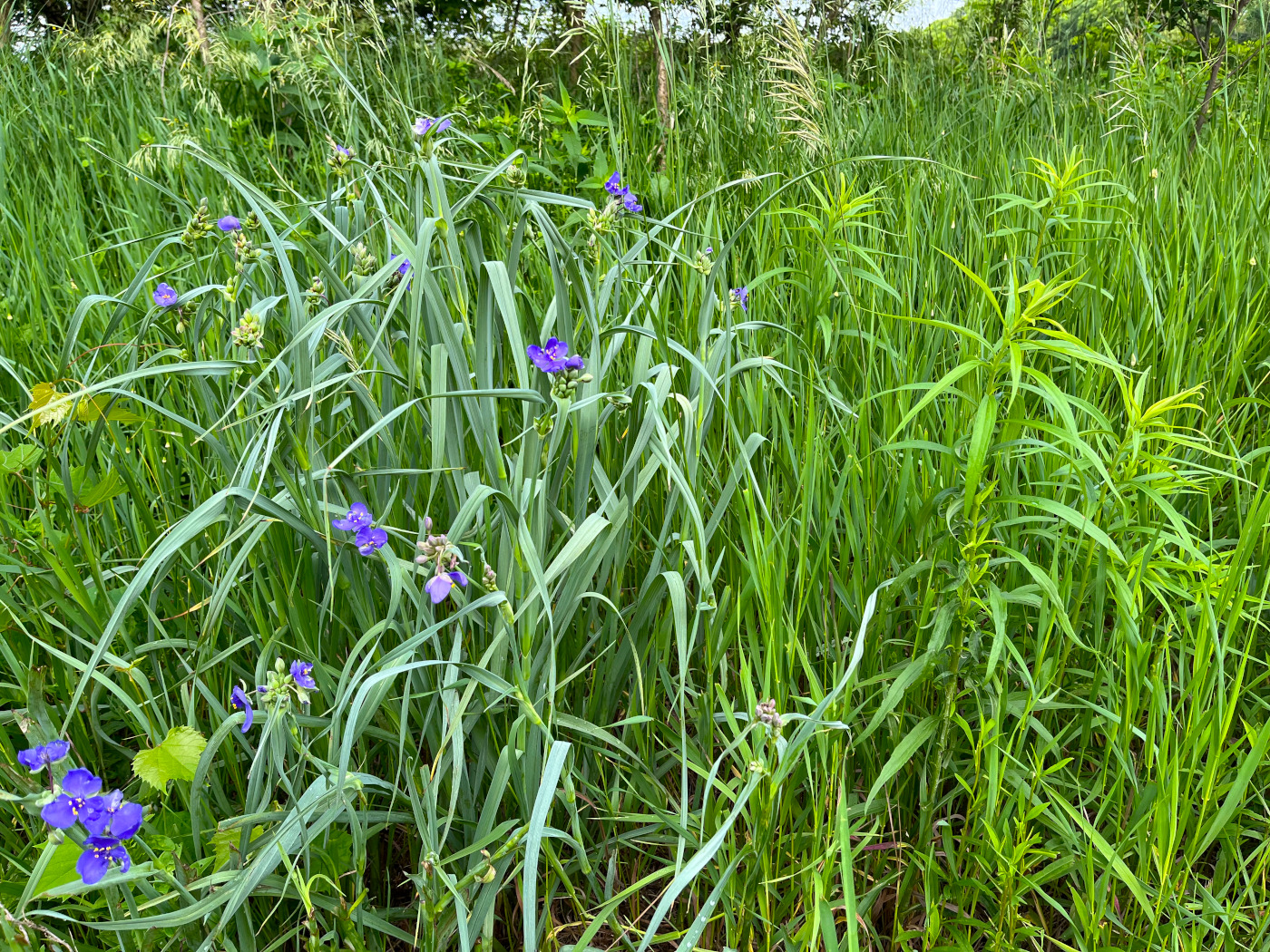
Leaves are arranged alternately along the stem, with one leaf arising from each node. A useful identifying characteristic is the way the leaf blade folds lengthwise, creating a shallow groove or channel down the center. The leaves also tend to project outward from the stem at an acute angle, giving the plant a somewhat spidery appearance. At the base, each leaf wraps completely around the stem, a characteristic shared by many members of the dayflower family. Upon closer inspection, the veins run nearly parallel from the base of the leaf toward the tip, a characteristic trait shared by other monocots such as grasses, lilies, and their relatives.
Seeds/fruit: Following pollination, common spiderwort produces small dry capsules that are typically less than 0.25 inches long. The capsules have three distinct ribs or wings and split open when mature to release their seeds. Individual seeds are approximately one-tenth of an inch long, making them slightly smaller than the average sesame seed. For most observers, however, the flowers and foliage are generally more useful for identification than the fruit and seeds.
Size/architecture: Common spiderwort typically grows in upright clumps 2-3 feet tall, although plants growing in favorable conditions may occasionally become larger. The stems are generally erect, smooth, unbranched and round in cross-section. Like the leaves, they are often covered with a pale blue-green waxy coating. Taken together, these characteristics give spiderwort a distinctive growth habit. The shape, color and angle of the leaves, combined with the violet-blue flower clusters, give common spiderwort a texture and appearance that is unlike most grasses and other roadside wildflowers (Photo 3).
Distribution and habitat: Tradescantia ohiensis is among the most widespread species of spiderwort in the United States. Its range extends from Maine to Florida, west to Minnesota and Texas (respectively), with a small extension into southern Ontario. Today, the species occurs throughout much of eastern and central North America and has been documented in 35 states.
In Michigan, common spiderwort has been documented in 33 counties, primarily in the southern half of the Lower Peninsula. Although it has been documented farther north, the records are few and far between. The authors of Michigan Flora suggested that northern specimens may represent plants that escaped cultivation rather than from naturally occurring populations.
Common spiderwort occurs in an exceptionally wide range of habitats, including prairies, meadows, woodland edges, roadsides, railroad corridors, thickets and occasionally along streams. The species is most often encountered in sunny locations and can thrive under a broad spectrum of soil moisture regimes. Populations can be found in relatively dry sandy sites as well as moist meadows and other higher-moisture environments.
Blooming period: Common spiderwort typically blooms from late May through early July in Michigan. Although each flower lasts only a single day, plants continue to produce new blooms over a period of weeks.
Native status: This species is native to eastern and central North America, including Michigan.
Garden uses: From a gardening perspective, one of spiderwort's greatest strengths is its versatility. This species is easy to cultivate and grows successfully in an exceptionally wide range of conditions. It tolerates sandy soils, clay soils and many other challenging sites. Once established, spiderwort is also tolerant of drought, dry areas and rocky ground. At the same time, it performs well in moist environments, making it a suitable choice for everything from dry borders to the edges of rain gardens.
As suggested earlier, common spiderwort prefers full sun to partial shade and can be used in a variety of landscape settings. It works well as a border plant and is particularly effective in naturalized plantings, meadows and the open edges of woodland gardens. The growth habit, blue-green foliage, and clusters of violet-blue flowers provide a unique visual texture that contrasts nicely with many other garden perennials.
Recognizing its value to pollinators, the Xerces Society for Invertebrate Conservation has identified common spiderwort as a plant of special value to native bees. Its flowers attract a variety of pollinators, including bumble bees and numerous native bee species (Photo 2, right). Combined with its adaptability and reputation for being resistant to deer browsing, these characteristics make spiderwort an excellent choice for both home and commercial landscapes.
One final consideration is that common spiderwort can self-seed and gradually expand within a planting over time. For most gardeners this is a minor consideration, but those seeking a highly formal or tightly controlled planting design may occasionally need to divide or thin established clumps.
Similar species: Asiatic dayflower/common dayflower (Commelina communis) is an exotic species that has naturalized in some parts of the state. Common spiderwort could also potentially be confused with either of Michigan’s other two native spiderworts, long-bracted spiderwort (Tradescantia bracteata) and Virginia spiderwort (Tradescantia virginiana). The probability of coming across either of these species, however, is very low due to their conservation status within the state: T. virginiana is listed as Threatened, while T. bracteata is presumed Extirpated.
Northern catalpa (Catalpa speciosa)
Synonyms: hardy catalpa, cigar tree, catawba, Indian bean tree, Indian cigar, Shawnee wood, early-flowering catalpa
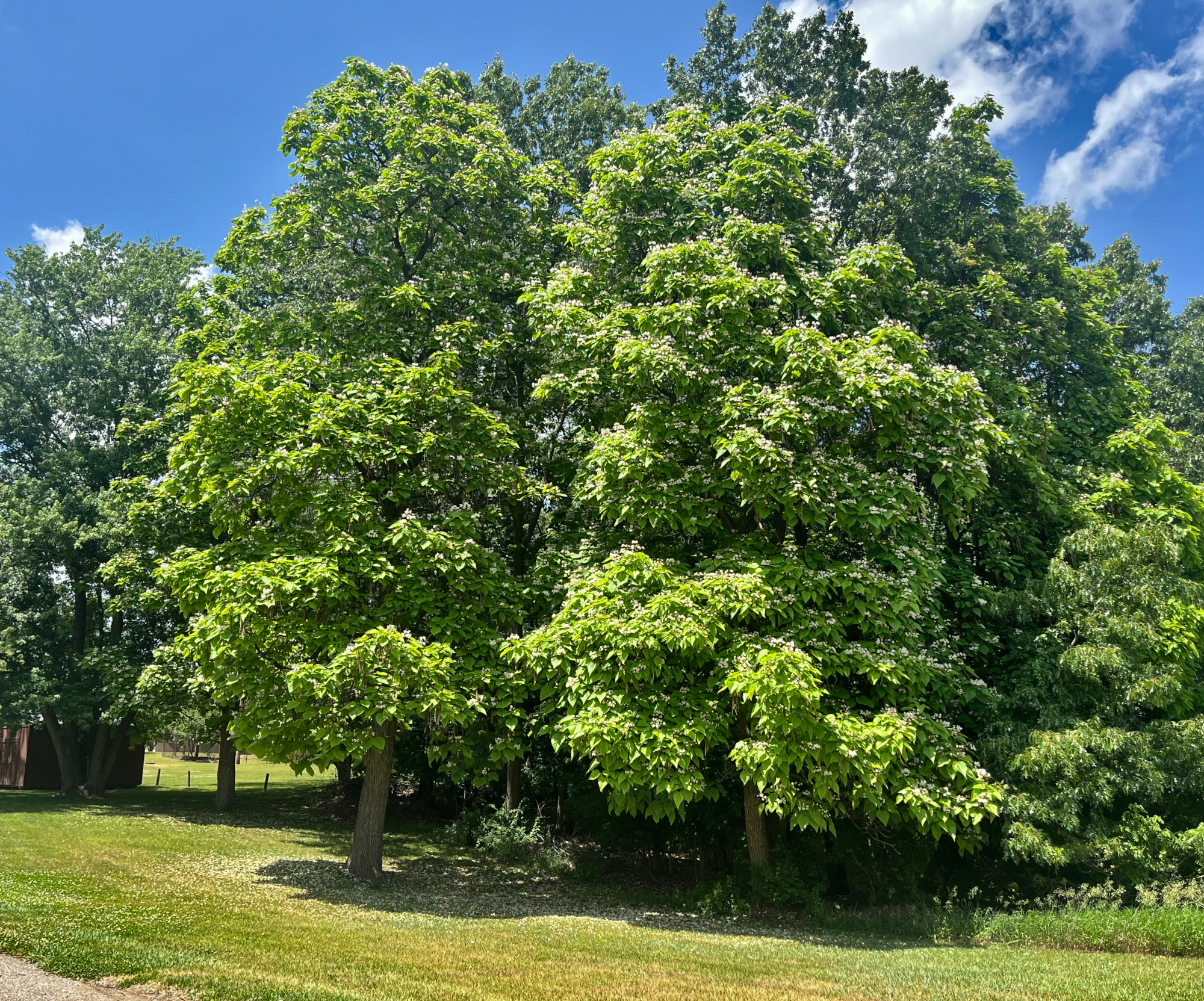
Northern catalpa is a medium-large deciduous tree in the trumpet creeper family (Bignoniaceae), a botanical group known for producing clusters of large, showy flowers with fused petals. In the United States, northern catalpa is planted extensively as an ornamental shade tree and is a familiar sight in parks, residential neighborhoods, and along roadsides. During late spring and early summer, mature trees become especially conspicuous when the canopy fills with large clusters of white blossoms (Photo 4). The combination of enormous heart-shaped leaves and dangling bean-like seed pods give northern catalpa an appearance that many describe as almost tropical.
The trumpet creeper family contains roughly 800-900 species distributed across 80-85 genera, although botanists are still refining some of the relationships within the group through modern genetic studies. Most members of the family are woody plants, particularly trees, shrubs and vines, with the greatest diversity occurring in tropical regions of the world. Many species are cultivated for ornamental purposes because of their striking floral displays. Readers may already be familiar with a few other members of the family, such as trumpet vine (Campsis radicans) or crossvine (Bignonia capreolata). Although the family is best represented in warm climates, northern catalpa is one of the more cold-hardy members and has adapted quite well to life in the Midwest and Great Lakes region.
Description
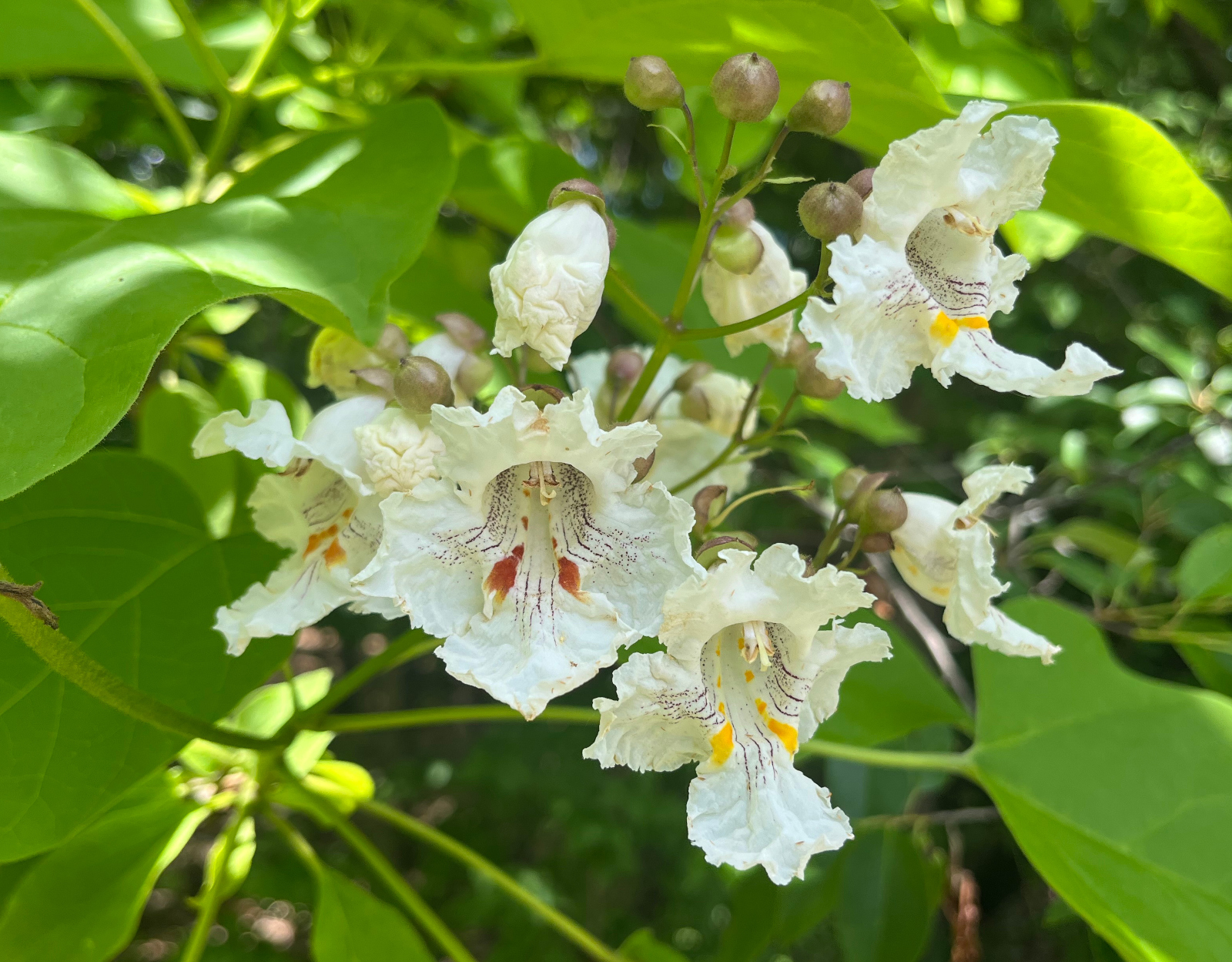
Flowers: Northern catalpa flowers are large, showy and difficult to miss when the tree is in full bloom. Individual flowers are white and bell-shaped with five ruffled lobes and conspicuous yellow stripes and purple spotting inside the throat of the corolla (Photo 5). The blossoms are typically 1.5-2.25 inches wide and produced in large, upright clusters (panicles) that may contain 10-30 flowers and reach 8-10 inches in length.
Like many members of the trumpet creeper family, northern catalpa flowers have a distinctly tropical appearance despite the tree’s Midwestern origins. From a botanical perspective, the flowers are considered “perfect,” which means they contain both male and female reproductive structures. The flowers are also attractive to pollinators and have historically been regarded as a useful nectar source for honey production.
Leaves: Northern catalpa leaves are large, simple and often described as heart-shaped (cordate). Mature leaves are typically 7-12 inches long and 5-8 inches wide with smooth (entire) margins, pointed tips and rounded to cordate bases (Photo 6, bottom right). The leaves are yellowish green and softly hairy on the underside. On young shoots, leaves are commonly arranged in whorls of three, although opposite and alternate arrangements are also observed. Because of their enormous size and coarse texture, northern catalpa leaves give the tree a bold, almost tropical appearance in the landscape.
Quick definition: A simple leaf has a single undivided blade. In contrast, compound leaves are divided into multiple smaller leaflets.
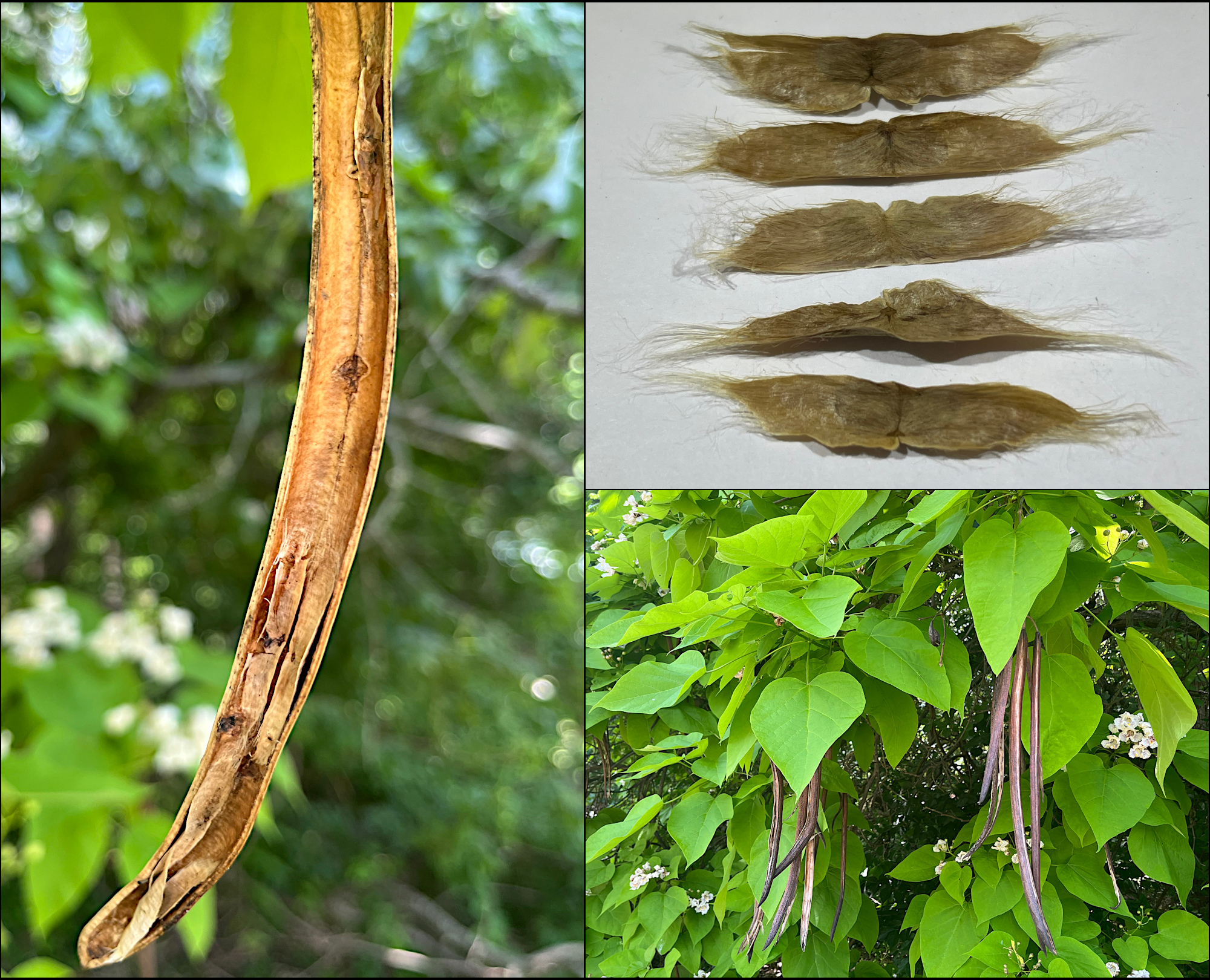
Seeds/fruit: Northern catalpa produces long, narrow seed pods that are among the tree’s most recognizable characteristics. The green pods resemble oversized bean pods and commonly reach 10-24 inches in length while remaining relatively slender. By autumn, the pods mature to a dark brown and eventually split open lengthwise to release numerous winged seeds. Individual pods may contain more than 100 seeds. The seeds themselves are flat, light brown, and equipped with papery wings tipped with short, fringe-like hairs that help them drift on the wind (Photo 6). Even after the leaves have fallen, the dangling seed pods often remain on the tree through winter, making northern catalpa relatively easy to identify from a distance.
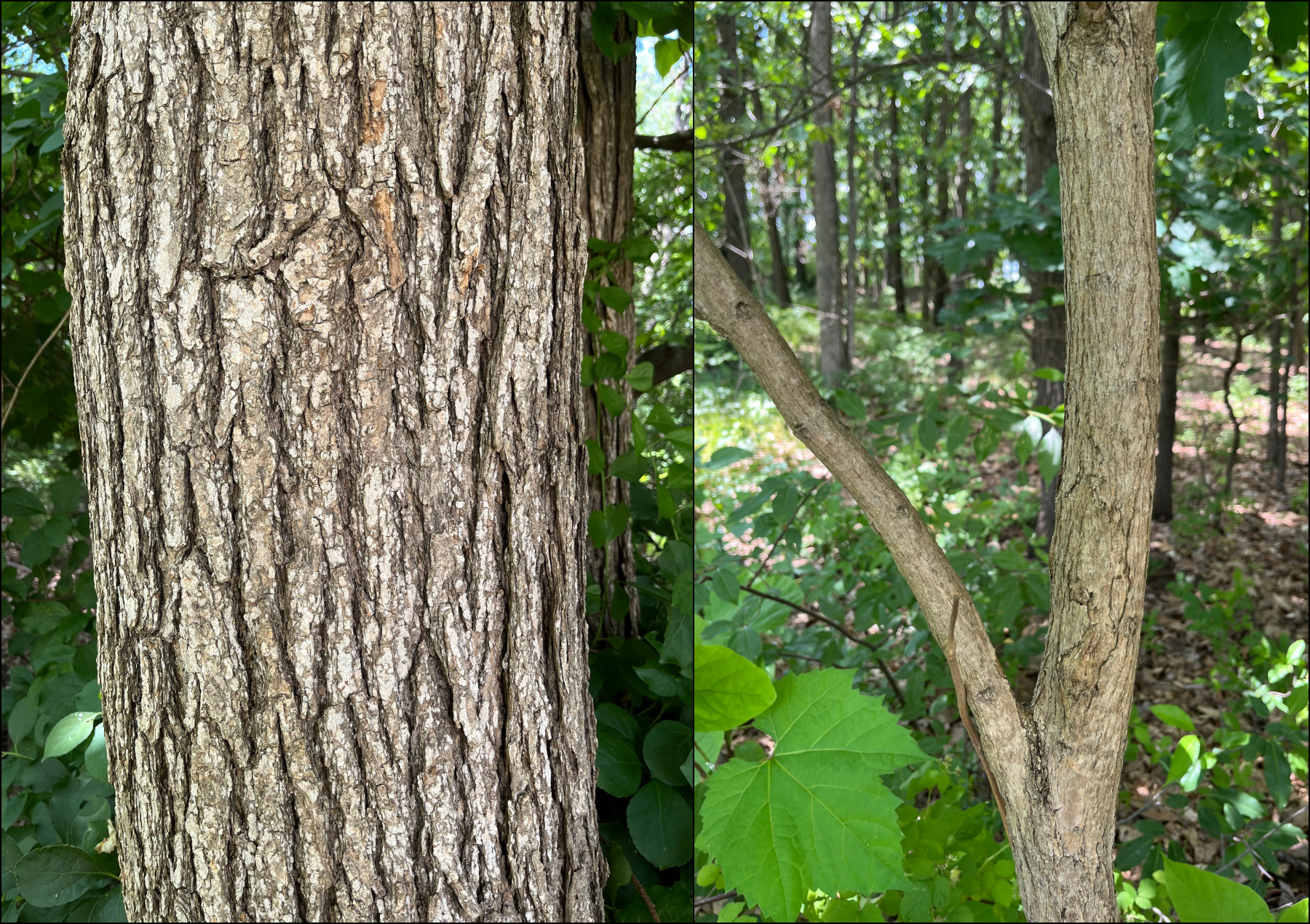
Bark: The bark of northern catalpa ranges from gray to grayish brown and varies considerably in texture depending on the age of the tree. Young stems and saplings have relatively thin bark that is easily damaged by rodents, lawn equipment or other mechanical injury. As trees mature, the bark becomes thicker and develops scaly ridges and irregular blocky plates (Photo 7). Older trunks are often described as flaky or furrowed in appearance, giving mature specimens a rugged texture that contrasts nicely with the large tropical-looking leaves.
Size: Northern catalpa is a medium-large deciduous tree that typically grows between 50 and 70 feet tall with a broad canopy that may spread up to 40 feet wide (Photo 4). Mature trunks can exceed 3 feet in diameter under favorable growing conditions. Although northern catalpas can become fairly large trees over time, their somewhat irregular branching habit often gives them a relaxed and informal appearance in the landscape.
Distribution
Northern catalpa is widely planted throughout the United States as an ornamental shade tree and has escaped cultivation in many regions. Historically, the species was thought to be native only to a relatively small portion of the central Mississippi River Valley near the confluence of the Mississippi and Ohio Rivers, including parts of southern Illinois, Indiana, western Tennessee, northeast Arkansas and southeast Missouri. Today, however, its range extends far beyond that original distribution due to extensive planting in urban and rural landscapes. Northern catalpa has now been documented in at least 39 U.S. states as well as Ontario, Canada.
In Michigan, Catalpa speciosa has been officially documented in 24 counties, primarily in the southern half of the Lower Peninsula, though records exist as far north as Grand Traverse and Crawford counties. Given its popularity as a lawn and street tree, the true distribution is almost certainly much broader. The species was first collected in Michigan in 1893 from Jackson County.
Northern catalpa is commonly associated with low ground near streams, rivers and lakes where soils remain moist but well-drained. That being said, it readily establishes itself in disturbed habitats due to its prolific seed production. Volunteers frequently appear along roadsides, railroad corridors, fencerows, vacant lots, parking lot edges, forest borders and old fields. In many parts of the Midwest, northern catalpa has become one of those trees that quietly blurs the line between “landscape specimen” and “wild roadside resident.”
Blooming period: In Michigan, the northern catalpa typically blooms from late May into June.
Native status: This species is native to the United States and is naturalized in Michigan.
Garden uses: Looking at a mature northern catalpa in full bloom, one might easily mistake it for a tropical tree. The enormous heart-shaped leaves, orchid-like flowers and dangling seed pods give the tree a bold and somewhat exotic appearance that stands out dramatically in Midwestern landscapes. For that reason, northern catalpa has been planted extensively across the United States as a shade and ornamental tree in parks, farmsteads and residential neighborhoods.
Catalpa speciosa also has a surprisingly rich cultural history. Historically, the lightweight but decay-resistant wood was used for fence posts, railroad ties, utility poles, furniture, interior trim, and carving projects. Early railroad companies even established northern catalpa plantations for timber production. Various parts of the tree were also used medicinally by pioneer doctors and herbal practitioners, although we should note that modern readers should approach historical medicinal uses with caution and not interpret them as medical recommendations.
Ecologically, northern catalpa plays an interesting role as the larval host plant for the catalpa sphinx moth (Ceratomia catalpae). The caterpillars of this moth, often called “catalpa worms,” can occasionally defoliate trees but are widely regarded by anglers as outstanding live fishing bait. Pollination studies have also shown that northern catalpa flowers attract a diversity of insects, including bees during the daytime and moths during the evening hours.
From a landscaping perspective, northern catalpa works best as a specimen tree in larger spaces where its irregular growth habit can be appreciated from a distance. It grows relatively quickly and provides generous shade. That being said, northern catalpa is not without its drawbacks. The flowers, leaves and long seed pods can create considerable seasonal litter beneath the tree. The wood also tends to be somewhat brittle, making branches susceptible to wind and ice damage. Moreover, northern catalpa readily escapes cultivation and can become somewhat weedy in disturbed habitats due to its prolific seed production. Young trees may also require protection from rabbits and rodents, which can damage the thin bark of saplings.
Common look-alikes: Not many. Southern catalpa (Catalpa bignonioides) is the species most commonly confused with northern catalpa. According to Michigan Flora (Voss 2001), differentiating between the two species can be surprisingly difficult, particularly when relying on vegetative characteristics alone. The leaves of southern catalpa are said to have a rank odor when crushed, but the reliability of this trait cannot be confirmed. In practice, however, most catalpa trees encountered in Michigan are almost certain to be the northern catalpa due to its wider use and greater cold tolerance.
Want more Drive-by Botany?
Check out some of our previous roadside adventures!
Questions? Feel free to contact Jeremy Jubenville with the MSU Extension landscape team.
Thank you to Scott Warner and Connor Wojtowicz from the Michigan Natural Features Inventory for their review of this article.
Resources
- Christenhusz, M. J. M.; Byng, J. W. 2016. "The number of known plants species in the world and its annual increase"
- Faden, Robert B. 1983. "Phytogeography of African Commelinaceae"
- Faden, Robert B. 2000. "Tradescantia ohiensis". In Flora of North America Editorial Committee. Flora of North America North of Mexico (FNA). Vol. 22. (Oxford University Press – via eFloras.org, Missouri Botanical Garden, and Harvard University Herbaria)
- Allan, Mea (1964). The Tradescants: Their Plants, Gardens and Museum 1570–1662
- USDA PLANTS Database (plants.usda.gov) – Catalpa speciosa
- USDA PLANTS Database (plants.usda.gov) – Tradescantia ohiensis
- MICHIGAN FLORA ONLINE. A. A. Reznicek, E. G. Voss, & B. S. Walters. 2011. University of Michigan.
This work is supported by the Crop Protection and Pest Management Program (grant no 2024-70006-43569) from the USDA National Institute of Food and Agriculture. Any opinions, findings, conclusions, or recommendations expressed in this publication are those of the author(s) and do not necessarily reflect the view of the U.S. Department of Agriculture.