Land Division Act amendment allowing the creation of more parcels means all local governments should review development ordinances
 Print
Print Email
EmailWith the authority for local governments to allow and approve more divisions of land comes the responsibility to follow the master plan and make environmentally and financially sound infrastructure decisions.
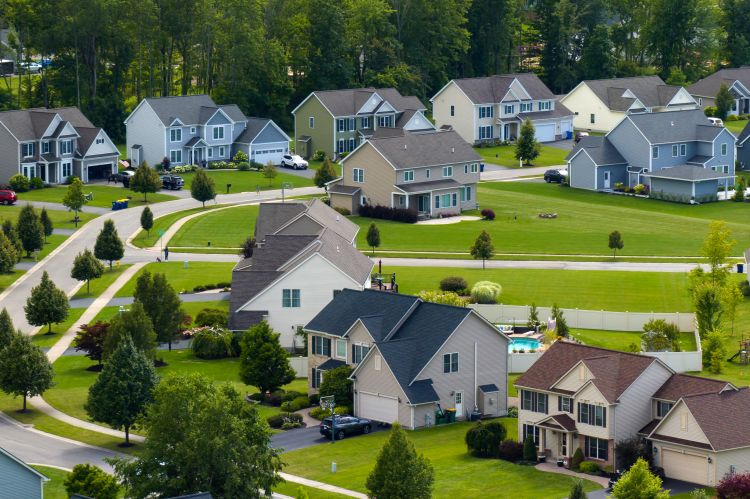
Senate Bill 23 of 2025 was signed into Michigan law by the governor on December 23, 2025, and assigned Public Act 58 of 2025. The stated purpose of the legislation is to authorize counties and municipalities to increase the number of parcels allowed when a property owner wishes to create land divisions under the Land Division Act, PA 288 of 1967, as amended. Supporters of the bill state the new law will help address the affordability of new housing.
Public Act 58 of 2025 takes effect on March 24, 2026, and amends Section 108 (MCL 560.108) of the Land Division Act to:
- Increase, from four to 10, the number of parcels that the first 10 acres of a parent parcel can be divided into on and after March 24, 2027 (per new Sec. 108(2)(a)(ii)), and
- Allow a municipality to authorize the further partitioning of land into more parcels than allowed under Section 108 if the land meets standards established by the municipality (per new Sec. 108(6)).
Section 108 of the Land Division Act establishes the formula for dividing parent parcels into “child” parcels and eventually “grandchild” parcels, based on the size of the starting parcel. Among other standards, Section 108 establishes that the first 10 acres or fraction thereof of a parent parcel cannot be divided into more than four separate parcels (see Land Division Act basics for landowners). Under the new law, the first 10 acres of a parent parcel or fraction thereof can be divided into 10 separate parcels at most. This increase in division rights by PA 58 begins one year after the effective date of the act – that being March 24, 2027.
Additionally, the new law allows a municipality or county that has authority to approve land divisions under Section 109 (MCL 560.109) to authorize by ordinance the further partitioning of a parcel into a greater number of parcels than otherwise authorized by Section 108. Put differently, a local government can adopt an ordinance as soon as the effective date of the amendment (March 24, 2026) to allow 10 or even more resulting parcels for the first 10 acres of a parent parcel.
With the potential for such a significant increase in the creation of new parcels for development, all municipalities, and the few counties having authority to approve land divisions, should review their land division ordinance immediately. Minimally, by March 24, 2027, local governments will need to modify any ordinance provisions that conflict with the amended Section 108(2)(a)(ii) of the Act.
Local governments will also want to carefully consider whether to allow more parcels to be created under the new law or to retain the current system of tracking and approving division and redivision of the parent parcel over time. While the new law has the potential to create more parcels available for sale for new housing, it also has the potential to result in low-density development inconsistent with Smart Growth principles.
In addition to reviewing the land division ordinance, local officials will want to review their community master plan and zoning ordinance. Carefully consider the master plan and where it envisions additional development or increased density. The entire jurisdiction need not be “open” to the added density authorized under PA 58. Then consider current and possible future zoning districts tied to those envisioned growth areas. Inventory the location and extent of available and planned water, sewer, transportation, and other infrastructure. The reason to consider these other factors relating to development is that the zoning ordinance will limit where additional parcels (additional density) will be permitted and where they will not.
The Land Division Act states in Section 109(6): “Approval of a division is not a determination that the resulting parcels comply with other ordinances or regulations.” That means if a local government amends the land division ordinance to authorize the additional density of the new Section 108(6), the minimum parcel size of each zoning district will control where that density can be realized. In a rural zoning district with a minimum parcel size of 10 or 20 acres, the added density under the new Section 108(6) is not likely to realize many additional parcels as compared to before Public Act 58 of 2025 (and dependent on the size of the starting parcel). In a zoning district with a smaller minimum parcel size, such as one acre or less, the added density under the new Section 108(6) is more likely to be realized.
A closely related consideration is the existing and planned provision of water and sewer service. This is a concern because the likelihood that the land can handle an onsite well and septic system on each resulting parcel decreases as the minimum parcel size decreases. Of course, there is great variation in ground water access and soil type from one area of the state (or county) to another, and local health department sanitary codes generally govern the siting and construction of wells and septic systems.
Considering growth and preservation goals of the local government, the added density envisioned by PA 58 of 2025 is not likely appropriate in a rural area of the community without water or sewer and where a relatively large minimum parcel size does little to reduce the cost of land for new housing.
Another consideration is access to new parcels, if not fronting on an existing public street or road. Communities will want to review or consider standards and policies related to private road construction and ongoing maintenance. Many new parcels all on a shared private driveway will soon present maintenance challenges if not addressed in a long-term private road maintenance agreement.
Michigan State University Extension encourages local governments to work with an experienced municipal attorney before adopting any land division ordinance or zoning ordinance amendment.