Michigan hop crop report – May 22, 2026
 Print
Print Email
EmailWarm, dry weather on the horizon will kick hops into gear.
Weather review
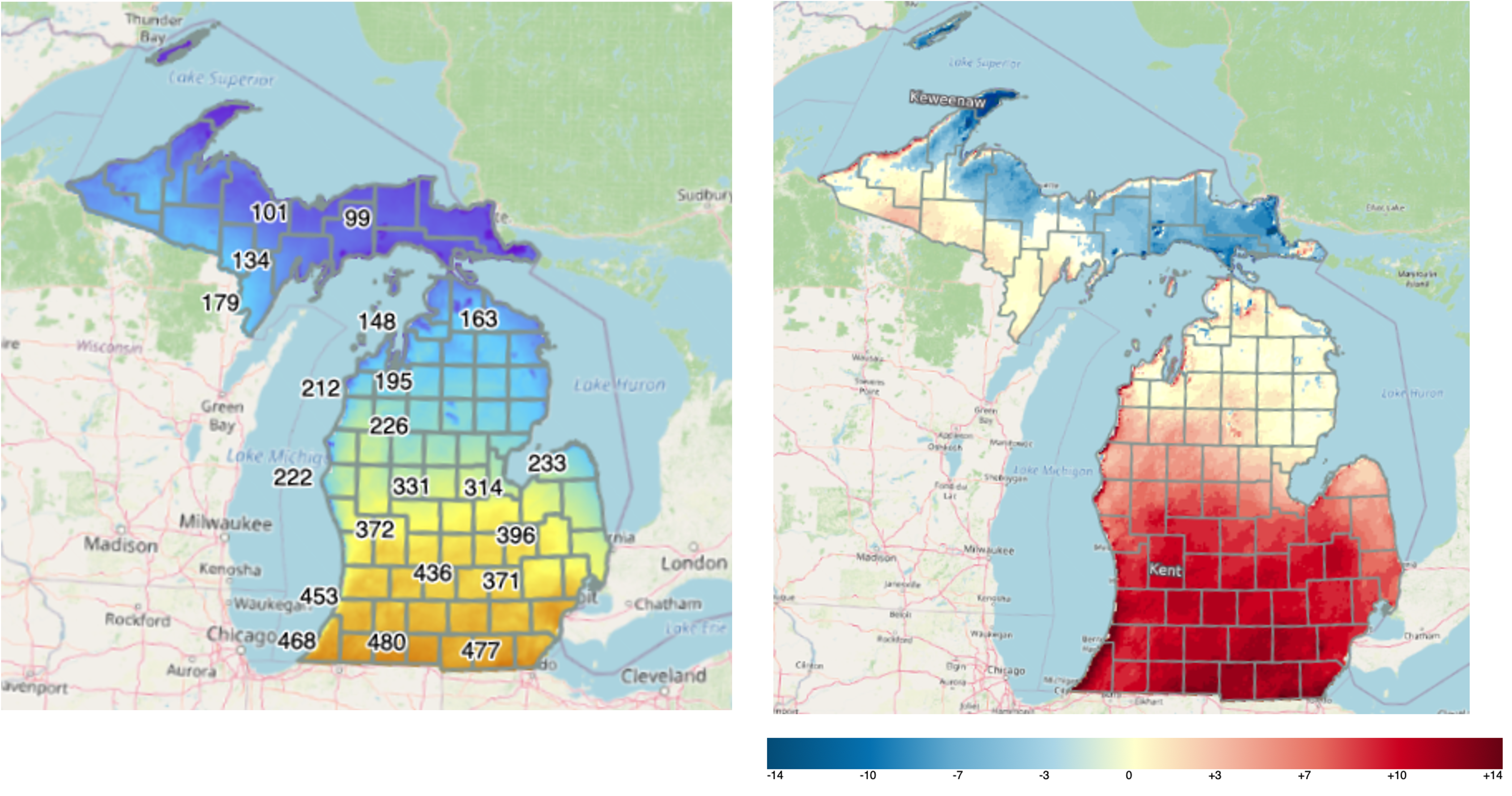
Over the last month, average temperatures have been slightly below normal across the state. Despite recent cool temperatures, accumulated growing degree days (GDD) base 50 degrees Fahrenheit are still ahead of normal in southern Michigan thanks to above average temperatures earlier this spring. Growing degree days (50) in the northern Lower Peninsula are close to normal, and below normal in the Upper Peninsula for this time of year.
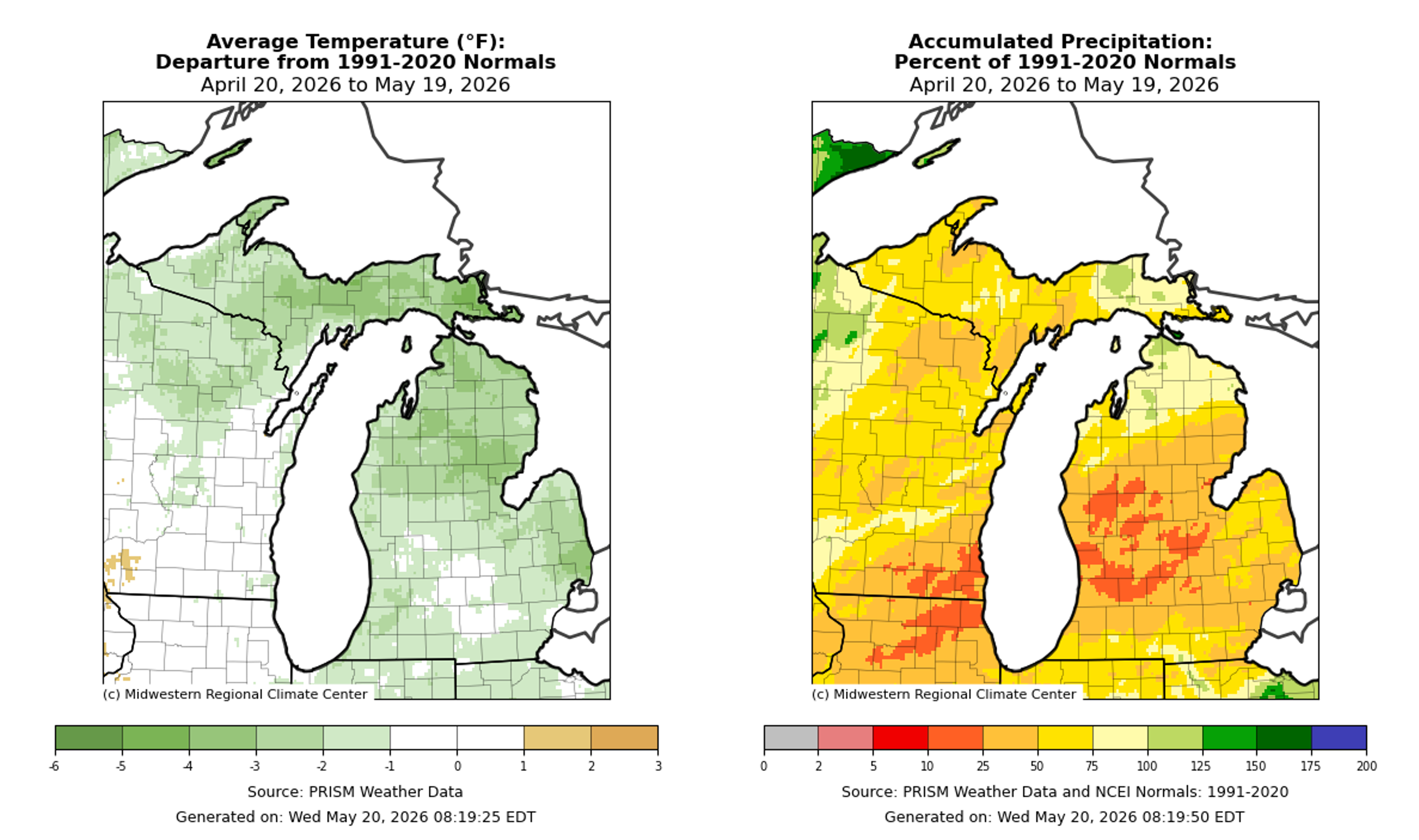
In terms of accumulated precipitation over the last month, southern Michigan is below average. Northern Lower Peninsula is close to average despite a very wet April that, along with the snow melt, caused extensive flooding in some locations. Most of the Upper Peninsula received close to normal levels of precipitation.
Looking ahead
Thursday, May 21, began quite chilly with some frost across the northern Lower and Upper Peninsulas. As we move into next week, temperatures should slowly climb to normal to above normal ranges after this three-week spell of cooler than normal temperatures. The 6-10 day forecast model predicts warmer than average temperatures and drier than normal conditions.
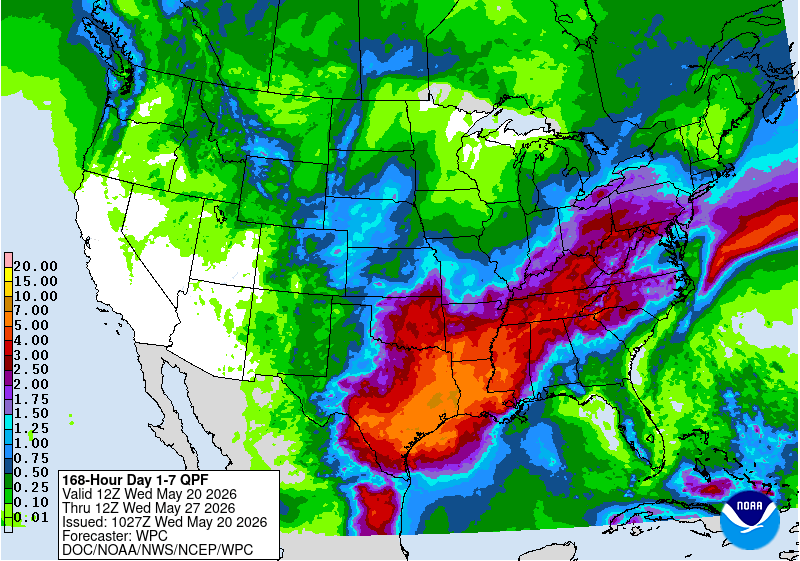
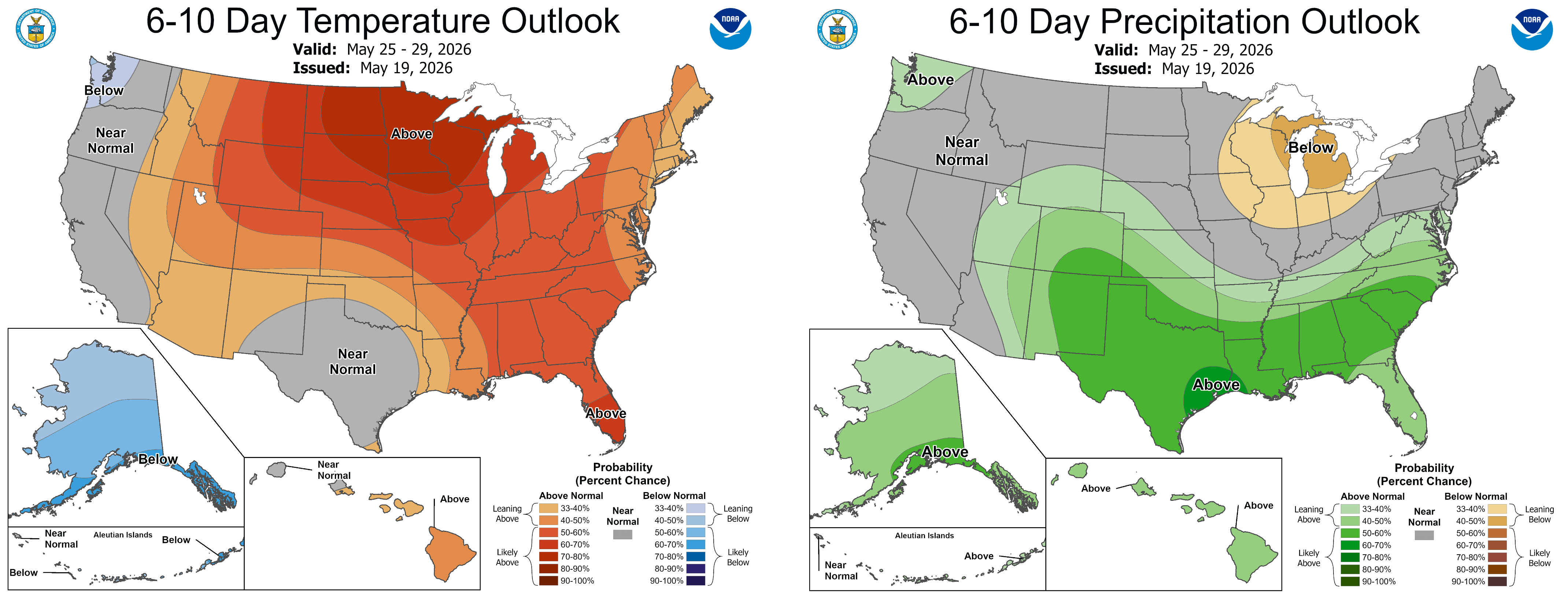
Visit MSU Extension’s Agriculture Weather page for the most recent agricultural weather forecast.
Stage of production/physiology
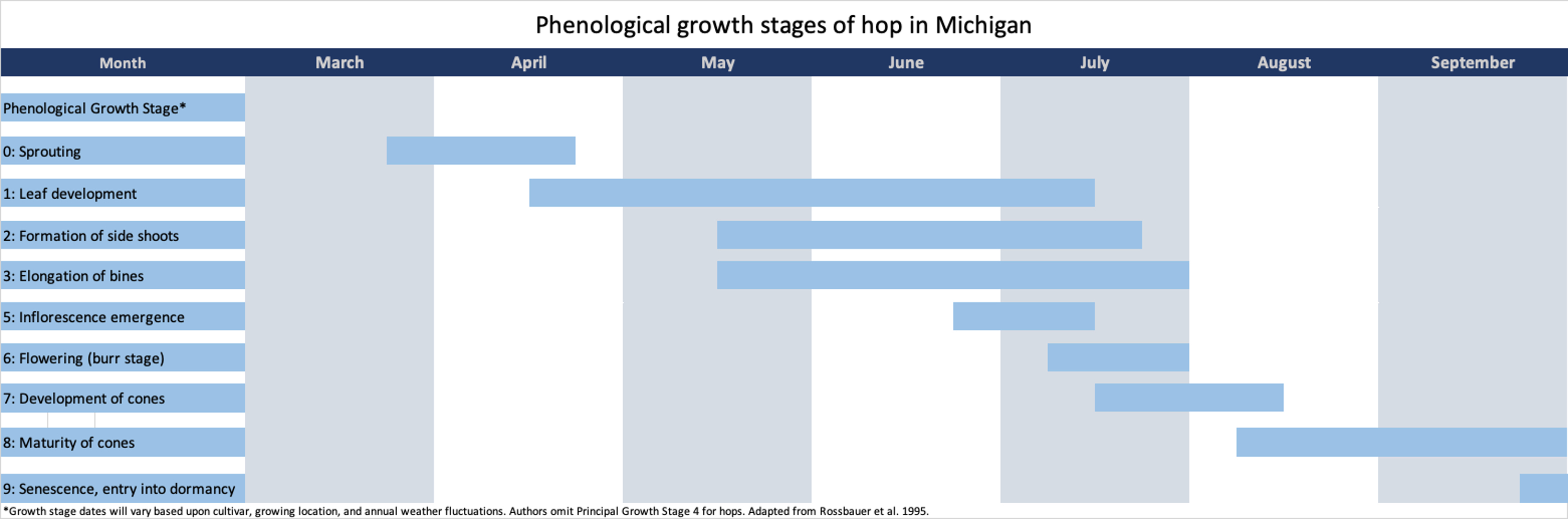
Hops across Michigan are in Principal Growth Stage 1: Leaf Development (from re-growth after burn back) and entering Growth Stage 2: Formation of Side Shoots and 3: Elongation of Bines, depending on growing location.
In the field
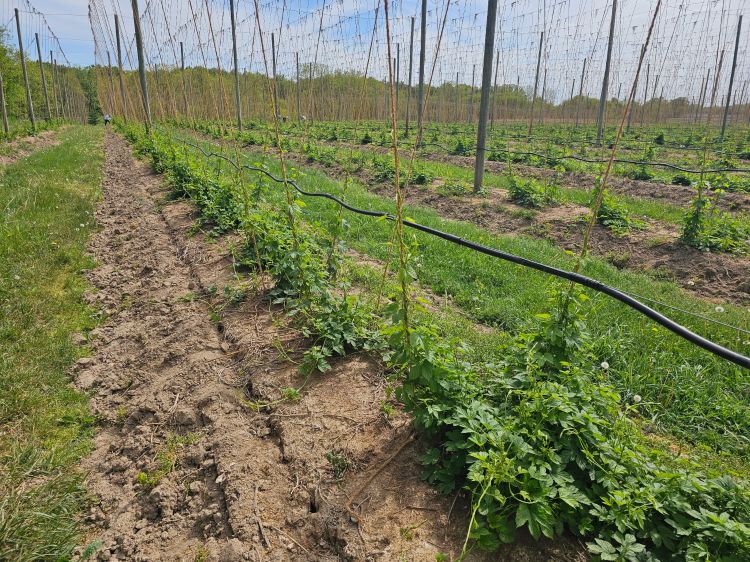
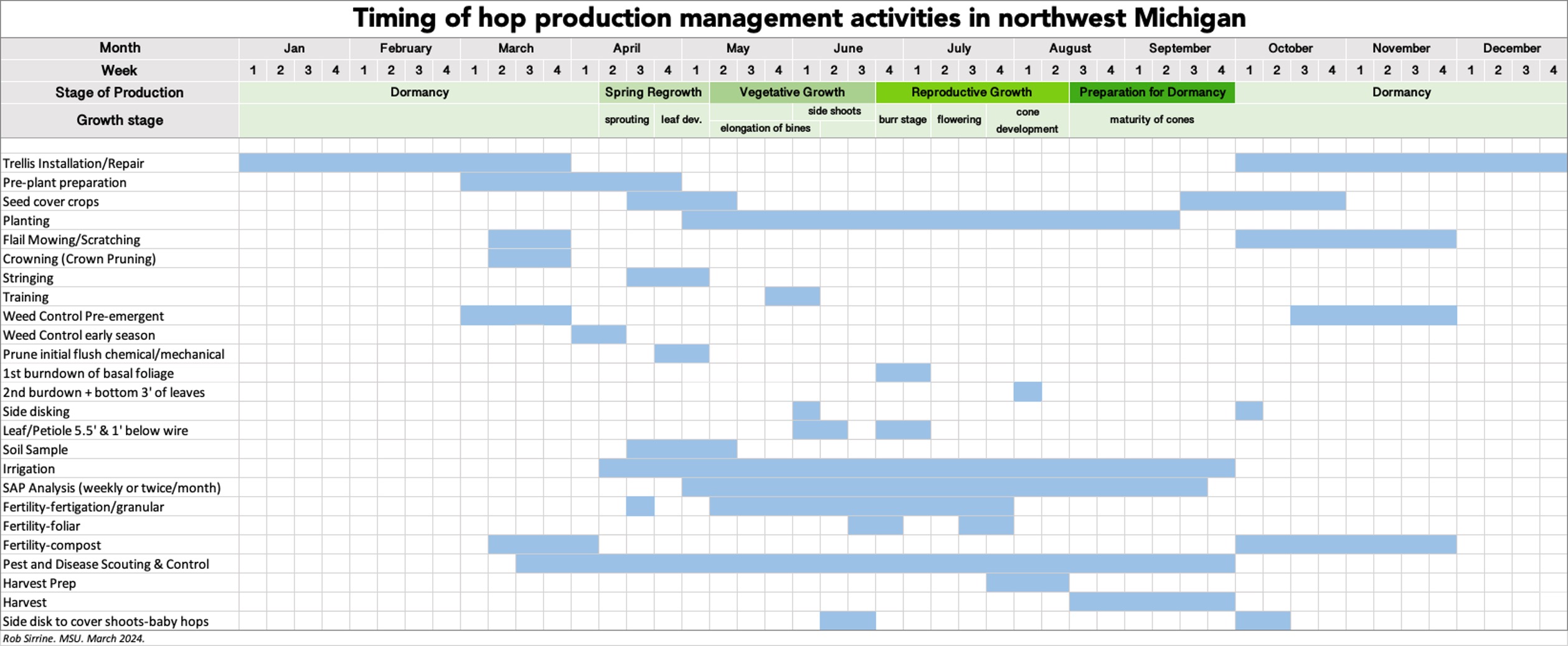
The forecast calls for above normal temperatures beginning the week of May 24, and hops should respond well. Growers are actively fertilizing, scouting and irrigating, or at least preparing irrigation in more northern growing areas.
Pest management update
For pest information, see the May 22 Hop Pest Report.
MSU Hop Chat Series update
The May 8 MSU Hop Chat Series, featuring Erin Lizotte and Rob Sirrine, and the May 21 Hop Chat Series, featuring MSU irrigation specialist Younsuk Dong, are available on MSU Mediaspace.
Sincere thanks to the Michigan hop producers who provided timely input for the Michigan Hop Crop Report.
Stay connected!
For more information from Michigan State University Extension on hop production practices, sign up for the Hops & Barley MSU Extension Newsletter, attend the free MSU Hop Chat Series and continue to visit the MSU Extension Hops website or MSU Hops News Facebook.
If you are unsure of what is causing symptoms in your field, submit a sample to MSU Plant and Pest Diagnostics. Visit the webpage for specific information about how to collect, package, ship and take pictures of plant samples for diagnosis. If you have any doubt about what or how to collect a good sample, please contact the lab at 517-432-0988 or pestid@msu.edu.
Become a licensed pesticide applicator
All growers using pesticides can benefit from getting a pesticide applicator license, even if not legally required. Understanding pesticides and the associated regulations can help you protect yourself, others and the environment. Michigan pesticide applicator licenses are administered by the Michigan Department of Agriculture and Rural Development. You can read all about the process by visiting the Pesticide FAQ webpage. Michigan State University offers a number of resources to assist people pursuing their license, including an online study/continuing education course and study manuals.
This work is supported by the Crop Protection and Pest Management Program (grant no 2024-70006-43569) from the USDA National Institute of Food and Agriculture. Any opinions, findings, conclusions or recommendations expressed in this publication are those of the author(s) and do not necessarily reflect the view of the U.S. Department of Agriculture.