Michigan vegetable crop report – June 10, 2026
 Print
Print Email
EmailThe weather is set to shift from hot conditions to cooler temperatures in the coming days.
Weather
Just like Babe Ruth, the weather is about to take a big swing again as the warm ridge in the Jetstream changes to a cooler trough after Thursday’s cold front passes.
The forecast for the upcoming week calls for:
- Precipitation totaling 1-2 inches in western Michigan decreasing to the east.
- Variable cloudy, hot and humid Wednesday and Thursday with showers and thundershowers statewide likely late Wednesday through Thursday morning and again late Thursday afternoon and evening. Strong severe thunderstorms possible Wednesday and Thursday evening, especially to the west. Fair and cooler Friday. Variably cloudy Saturday and Sunday with scattered showers possible.
- High temperatures generally in the 80s north to low 90s south Wednesday and Thursday, cooling back to the 70s north to low 80s south Friday and Saturday, and further into the 70s statewide by early next week.
- Low temperatures in the 60s north to low 70s south Thursday cooling back to the 50s by Saturday and the 40s north to 50s south by early next week.
- Medium range outlooks call for a major change for mid-June with the return of cooler than normal temperatures with above normal precipitation totals.
Pest alert!
Thrips parvispinus
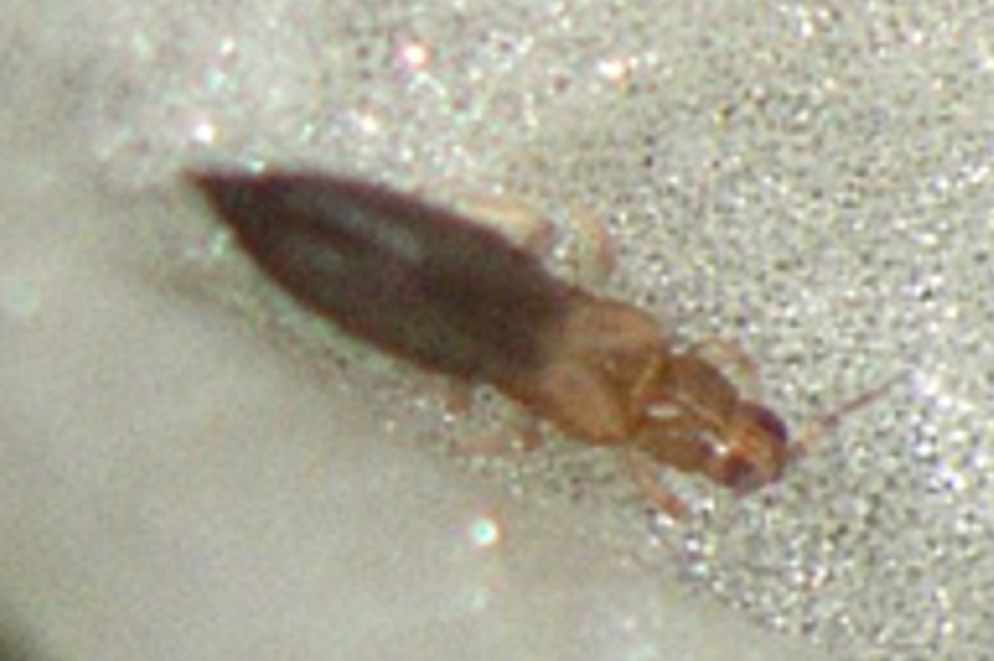
Thrips parvispinus is a newer regulated pest that should be reported to the Michigan Department of Agriculture and Rural Development (MDARD) when identified. It is present in some of the production states so the focus is on incoming stock, but it can be found on other plants in the greenhouse.
This pest has a broad host range. We are still learning about new hosts, so hosts cannot be used for identifying the species. In vegetables and fruits, it has been found on legumes, nightshades, cucurbits, shallots and strawberries. In ornamentals, it has been found on many hosts.
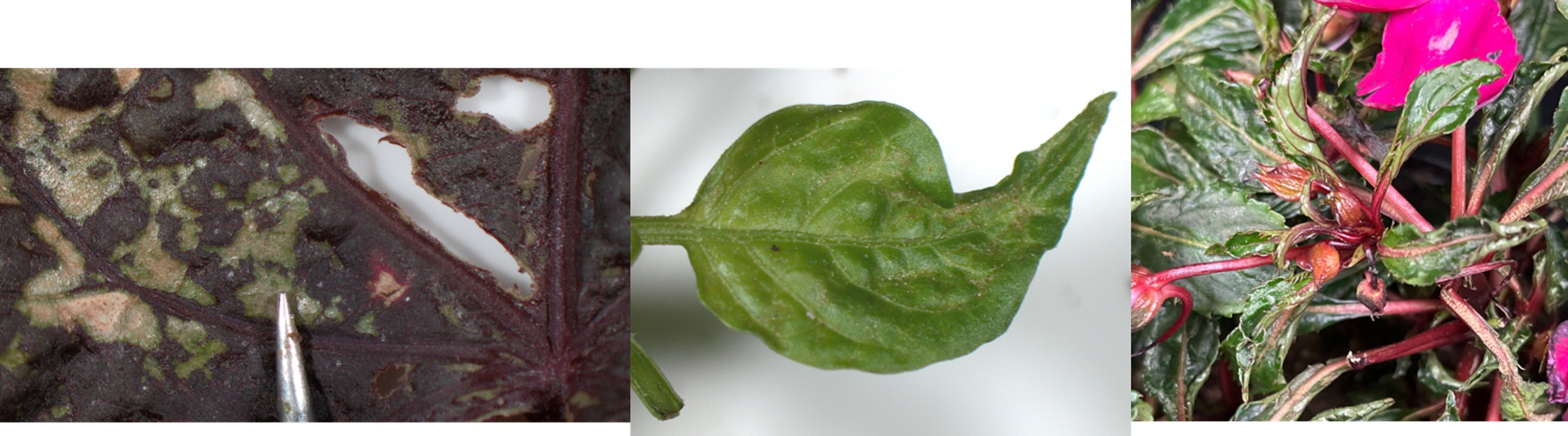
Injury from thrips parvispinus is similar to that of other thrips but can be more severe. In some cases, it may be confused with broad mites. Symptoms include:
- Rasping injury: causes discoloration, small holes and tattered edges
- Distortion: curling, pinched edges on leaves, twisting, narrow leaves
- Scarring/russeting on leaves, stems, fruits
- Capable of transmitting viruses, but no reports yet
Because of its broad host range and similar-looking injury to that of other pests, if you find an injury that looks like a thrips injury and you find brown thrips, take a closer look. The coloration of the females can be seen with a hand lens or stereo microscope, but identification requires adult females and must be done under a compound microscope.
If found and identified, report the pest to MDARD (MDA-Info@michigan.gov or MSUBugHelp@msu.edu) and provide your or your client’s contact information. MDARD will reach out with guidance.
MDARD has recently assessed this pest and has shared the following:
- If found on stock entering Michigan – may issue a Rejection Notice to the shipping state’s department of agriculture and the supplier
- If found on annuals – prevent sales or transportation of plants out of state
- If found on perennials – collect specimens for confirmatory ID, restrict the stock from sale or movement out of the greenhouse, recommend isolation to contain, and recommend a spray rotation to kill the pests. May require a second inspection to confirm eradication before selling the plants again.
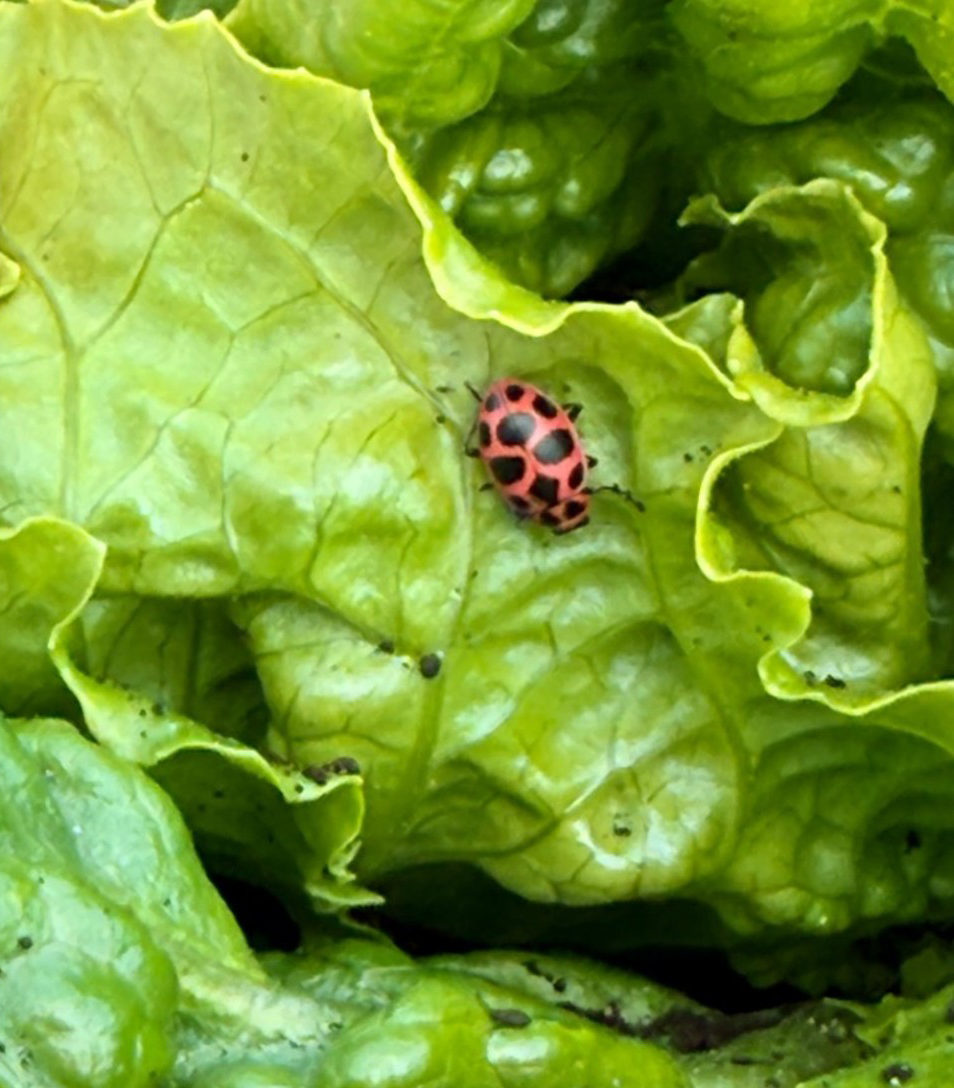
Early in the growing season, large numbers of adult lady beetles are often observed in Michigan vegetable fields. These beneficial insects help suppress pests by feeding on aphids, thrips and eggs and small larvae of caterpillars and moths. Lady beetles are highly sensitive to many insecticides. One common consequence of applying a broad-spectrum foliar insecticide, such as a pyrethroid, early in the season is a later flare-up of aphids. These sprays can reduce populations of beneficial insects, including lady beetles, that normally keep aphids in check. Once those natural enemies are removed, aphid populations can increase rapidly. Seeing high numbers of lady beetles in a field is usually a sign that natural pest control is already at work.
When possible, avoid unnecessary early-season pyrethroid applications to preserve these beneficial insects and help delay aphid outbreaks. If an insecticide application is needed, consider using a more selective product that has less impact on natural enemies. If you see lots of lady beetles, they’re already working for you. Preserving these beneficial insects can help reduce aphid pressure later in the season and may save you an insecticide application down the road.
Crop updates
Asparagus
Weed control will be the next major task on west central Michigan grower’s to-do list once harvest wraps up. Michigan State University Extension’s 2026 Weed Control Guide for Vegetable Crops is a good resource if you need a starting point for crafting a postharvest program seasoned with consultant and grower experience. At only $7, it is cheaper than fast food and has a wealth of information.
The following is an excerpt from Table 3 in that guide, which rates preemergence activity of different herbicides (N=No activity, P=Poor, F=Fair, G=Good, E=Excellent). Results may vary from the table, so experience is helpful. Also note that some of these herbicides have post activity and can help with burndown (the following table only reflects PRE activity against weeds).
|
Trade Name |
Mode of action |
Crabgrass |
Sandbur |
Pigweed |
Lambsquarters |
Marestail |
Smartweeds |
Nightshades |
Mustards |
|---|---|---|---|---|---|---|---|---|---|
|
Prowl H2O |
3 |
E |
G |
G |
G |
P |
F |
P |
P |
|
Callisto |
27 |
G |
N |
G |
G |
N |
G |
G |
P |
|
Chateau |
14 |
G |
N |
E |
E |
F |
F |
E |
E |
|
Spartan |
14 |
G |
N |
G |
E |
N |
G |
G |
F |
|
Command |
13 |
G |
G |
P |
G |
P |
F |
P |
F |
|
Dual Magnum |
15 |
E |
F |
G |
F |
N |
F |
G |
P |
|
Karmex* |
5 |
F |
G |
P |
E |
F |
E |
G |
G |
|
Lorox* |
5 |
F |
N |
P |
E |
P |
G |
G |
G |
|
Tricor* |
5 |
F |
F |
P |
E |
F |
E |
P |
E |
|
Sinbar |
5 |
G |
G |
F |
E |
E |
G |
G |
E |
*Pigweed populations in West Michigan asparagus are often resistant to this otherwise effective mode of action.
So, how do you use this information?
When choosing a mix of herbicides, consider (1) what your key weed is and (2) what modes of action you applied preharvest to control it. Pigweed species are typically the main target in west central Michigan, including Powell Amaranth and redroot pigweed. Look at the columns for your target weed, then move down the rows to find “goods” and "excellents" for candidates. For pigweeds, growers can choose from modes of action including group 3, 14, 15 and 27.
Resistance management is important for pigweed, as most west central populations are resistant to group 5 herbicides. It is important to conserve the modes of action that still work. For resistance management, use the mode of action codes (WSSA/HRAC groups) in a “non-matching” game, choosing different group numbers for pre and postharvest applications (Table 2 in the hardcopy bulletin). For example, if you applied Spartan preharvest (group 14), you could consider Prowl (group 3), Callisto (group 27) or Dual Magnum (group 15) postharvest to help with residual pigweed control. Chateau (group 14) is the same mode of action as Spartan and could be considered for another year.
The next step can be to backfill with other herbicides to fill in any gaps for secondary weeds. For example, Callisto has poor activity against field sandbur, so if that weed is an issue, you could add another PRE to complement it (e.g., Prowl H2O). There are also a variety of other annual broadleaves that can be present. Karmex and Tricor are still helpful for these and are still widely used.
Perennial weeds are typically targeted by burndown herbicides, with old standbys including glyphosate and 2,4-D. These control a broad spectrum of perennials in addition to burning down emerged annuals. In addition to these, growers may include another burndown when specific weeds are an issue. For example, clopyralid is effective against Canada thistle and rush skeletonweed. Quinclorac has activity against Canada thistle as well as field bindweed. Note, clopraylid can injure asparagus, and growers have even observed residual injury in following years.
As always, please read the label and talk to people with experience before trying a new-to-you product, rate or tank mix. Results will vary with dry soils, leaching rains, etc.
Carrots and celery
As of Monday, June 8, scouts in celery reported variable leafhopper numbers and traps for variegated cutworm were being placed near the most advanced celery fields. Sign up for aster leafhopper text alerts.
Two samples of aster leafhoppers were collected on Monday in Allegan and Oceana County fields. Infectivity levels in these collections were low (zero and 1.4%). Storms moving into Michigan from the southern U.S. are potential carriers of aster leafhoppers which may in turn impact infectivity. Upcoming forecasts indicate it’s important to be watching infectivity levels in the next few weeks.
Root crops
A new insecticide provides effective control of Colorado potato beetle and several other potato pests, offering growers a valuable new tool to incorporate into their resistance management programs. Read more in this article about recommendations for proper use and timing.
Cucurbits
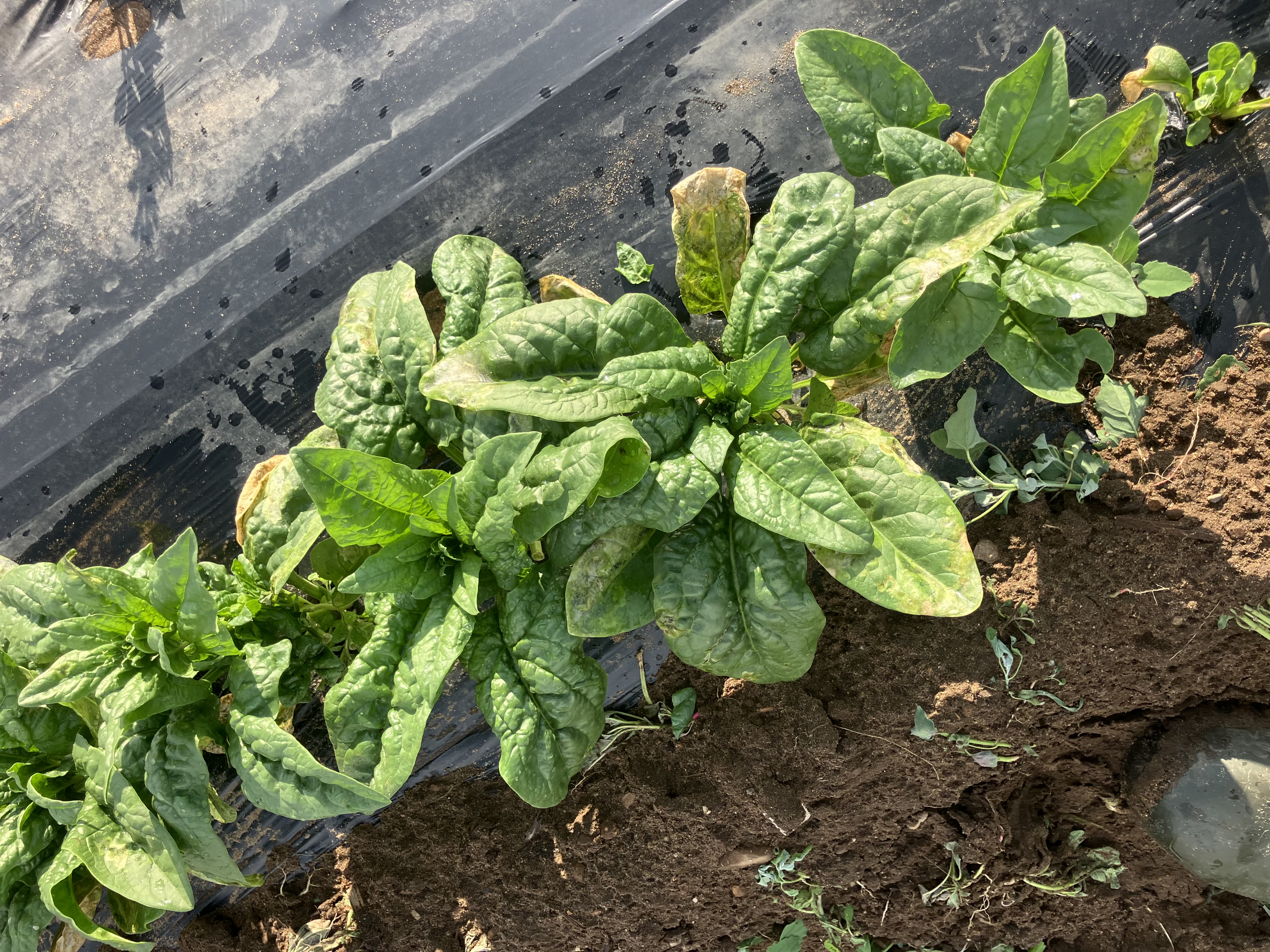
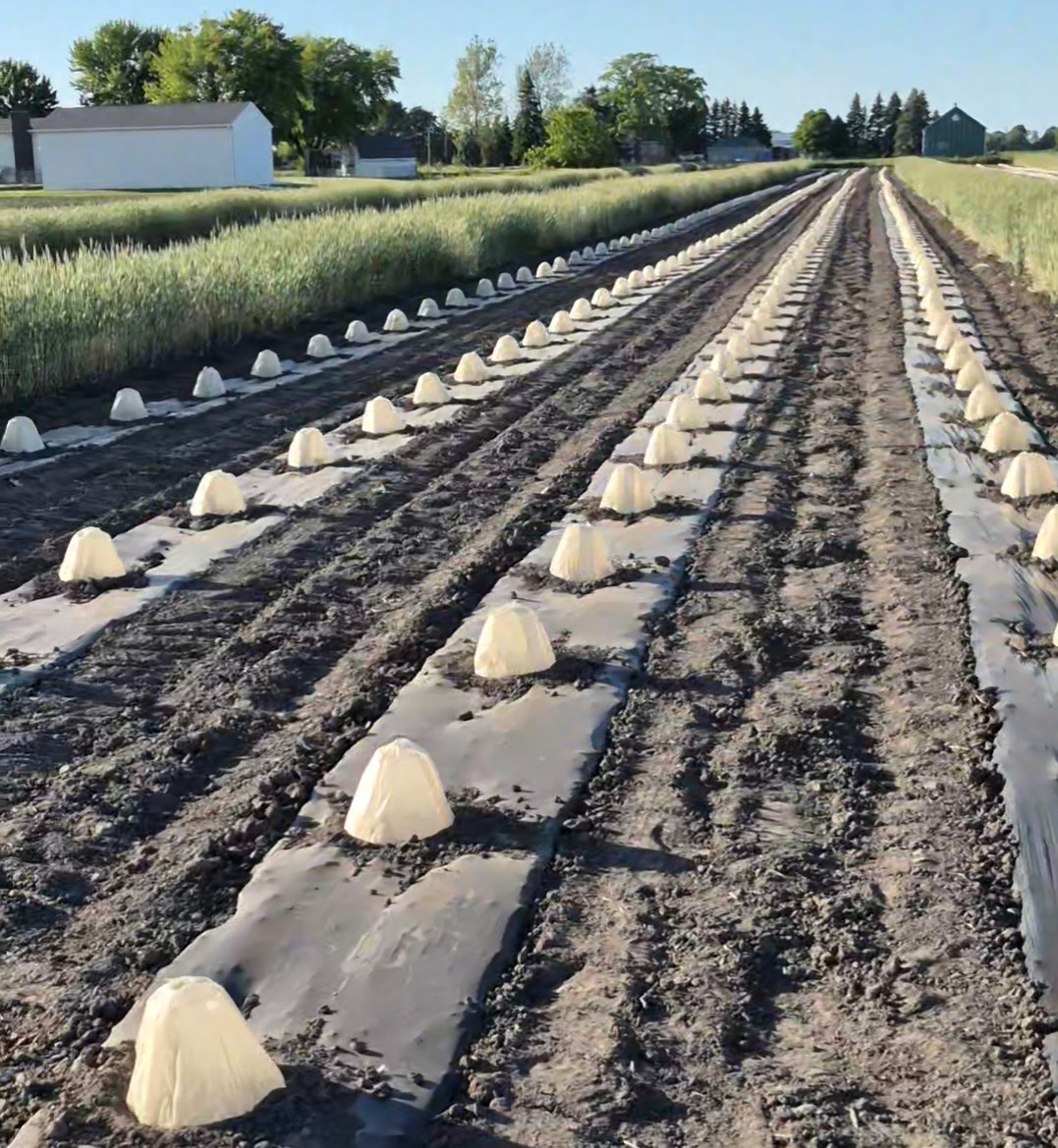
Cucumbers, squash and melons have been planted. Pickle planting has started and is ongoing. Pumpkin planting has started.
Cucurbit downy mildew spores have been detected in Berrien, Bay, Allegan and Muskegon counties. Read the full story in this recent article from MSU Extension, “Statewide monitoring network for cucurbit downy mildew verifies the 2026 arrival of spores in four Michigan counties.”
New technology enhances the downy mildew early warning system. Using recently developed molecular diagnostics coupled with microscopy ensures accurate confirmation of this pathogen from our spore trap air samples. We can distinguish the downy mildew pathogen that infects cucurbits from the downy mildew pathogen that infects other crops such as hop. Without the use of these new tools, we could mistake the hop downy mildew (which overwinters) for a downy mildew from a totally different crop resulting in a false positive.
Another important feature of our alert system is the ability to tell growers which cucurbits will be targeted by the arriving downy mildew spores. For instance, in past years, only Clade 2 of the cucurbit downy mildew pathogen has been detected in the air. Clade 2 most commonly infects cucumber and melon. Clade 1 has not been detected in the state in recent years, meaning that pumpkin, squash and zucchini growers do not need to be concerned about downy mildew on their crops. However, each week’s positive samples are tested to determine whether Clade 1 and Clade 2 have been detected so that growers can know if and which cucurbit crops are at risk from this highly destructive pathogen.
Phytophthora on squash has developed as a result of the increased temperatures along with recent rains. Early symptoms include plant wilting. As a reminder for those who have fields with a history of Phytophthora, MSU has a series of fact sheets on managing Phytophthora in various vegetable crops. Check out the list of publications on the Hausbeck Plant Pathology Research Lab website.
Brassicas and greens
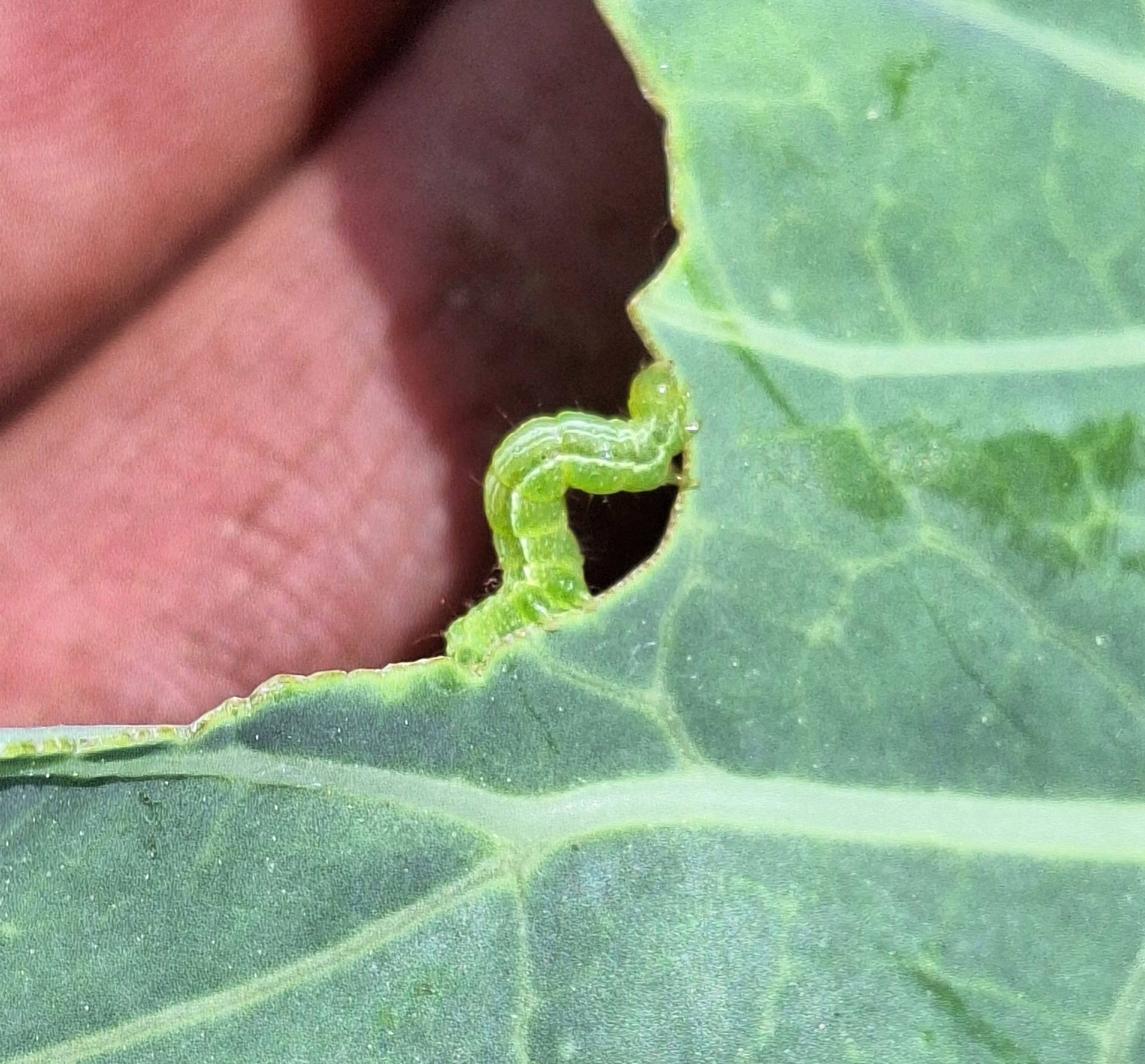
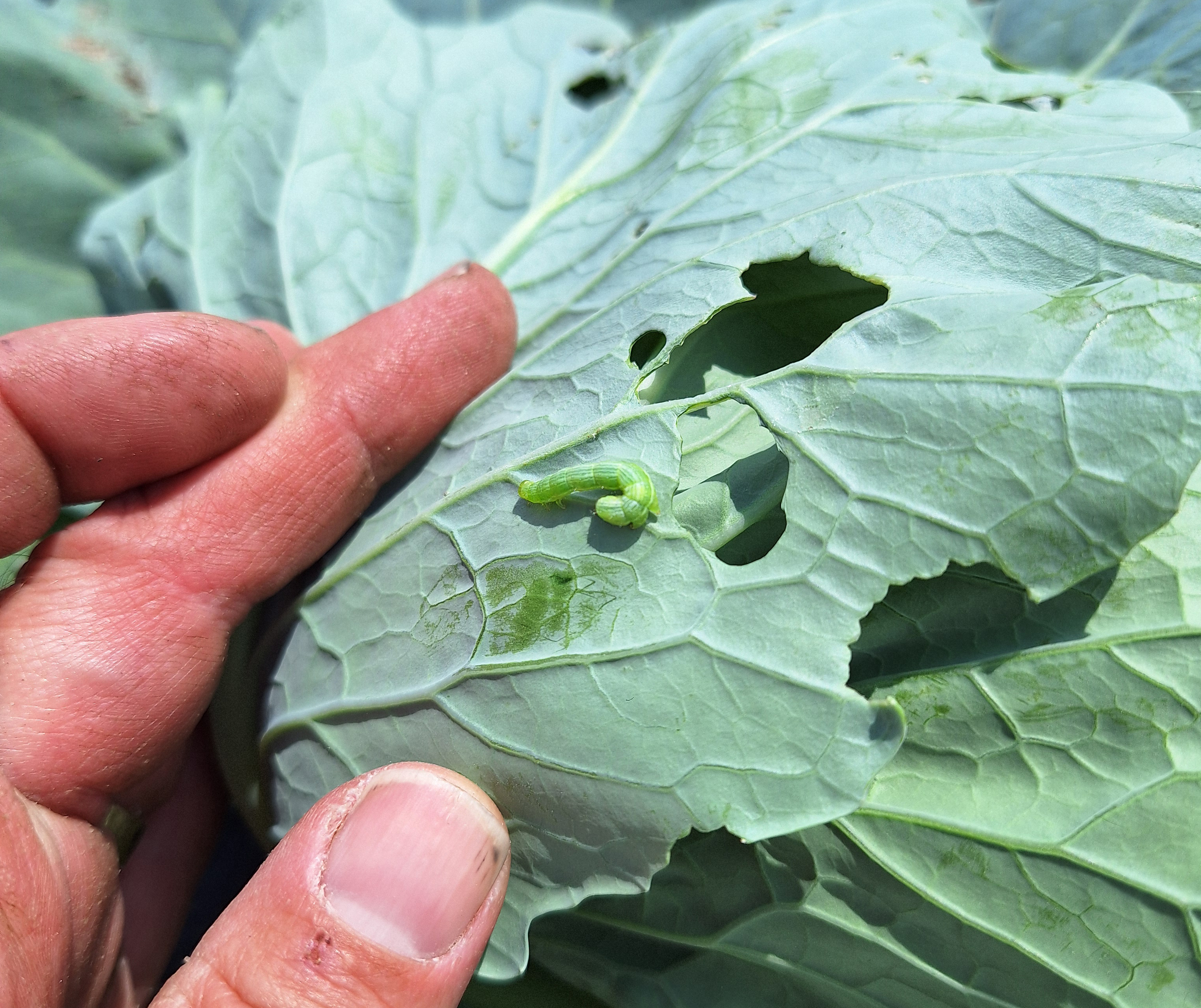
Growers are continuing to scout for and manage caterpillars. Decent-sized cabbage looper larvae were spottily present in one location early this week, so keep an eye out for this pest in addition to the usual suspects, diamondback moth and imported cabbage worm. Note, cabbage looper caterpillars may be difficult to control with Bt sprays once they get large. For organic growers, spinosad is an option. For conventional growers, most options you use for other caterpillars will work.
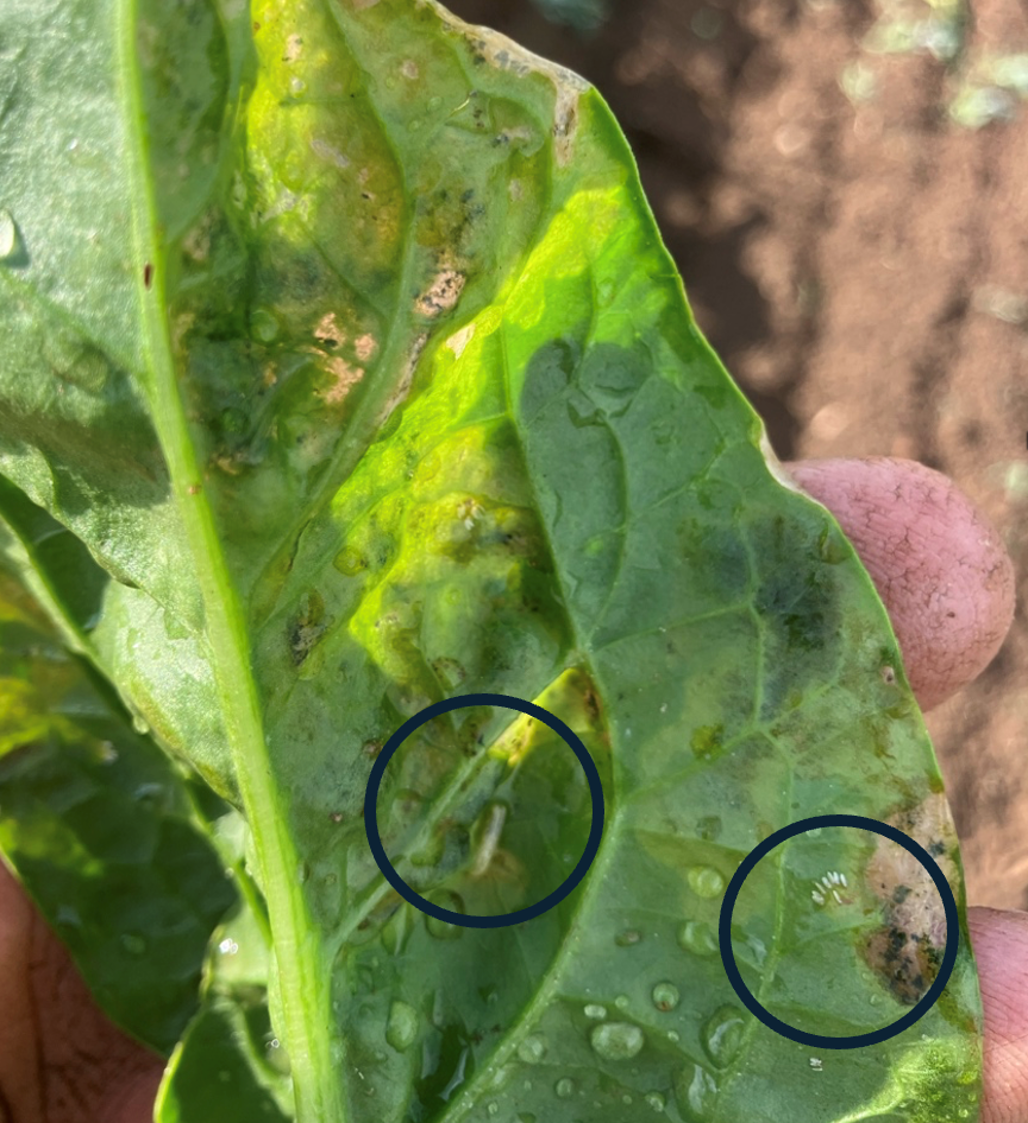
Lettuce is being harvested. Aster yellow has been identified in lettuce and confirmed with a molecular based detection by MSU Plant and Pest Diagnostics.
Legumes
Green bean succession plantings continue to go in.
Fruiting vegetables
Hoophouse tomatoes have ripe fruit. Pepper transplanting continues.
Garlic and onions
Garlic scapes are being harvested.
A low number of onion thrips adults have been found on direct seeded onions. Check out last week’s report for management options and read the updated management article by Zsofia Szendrei.
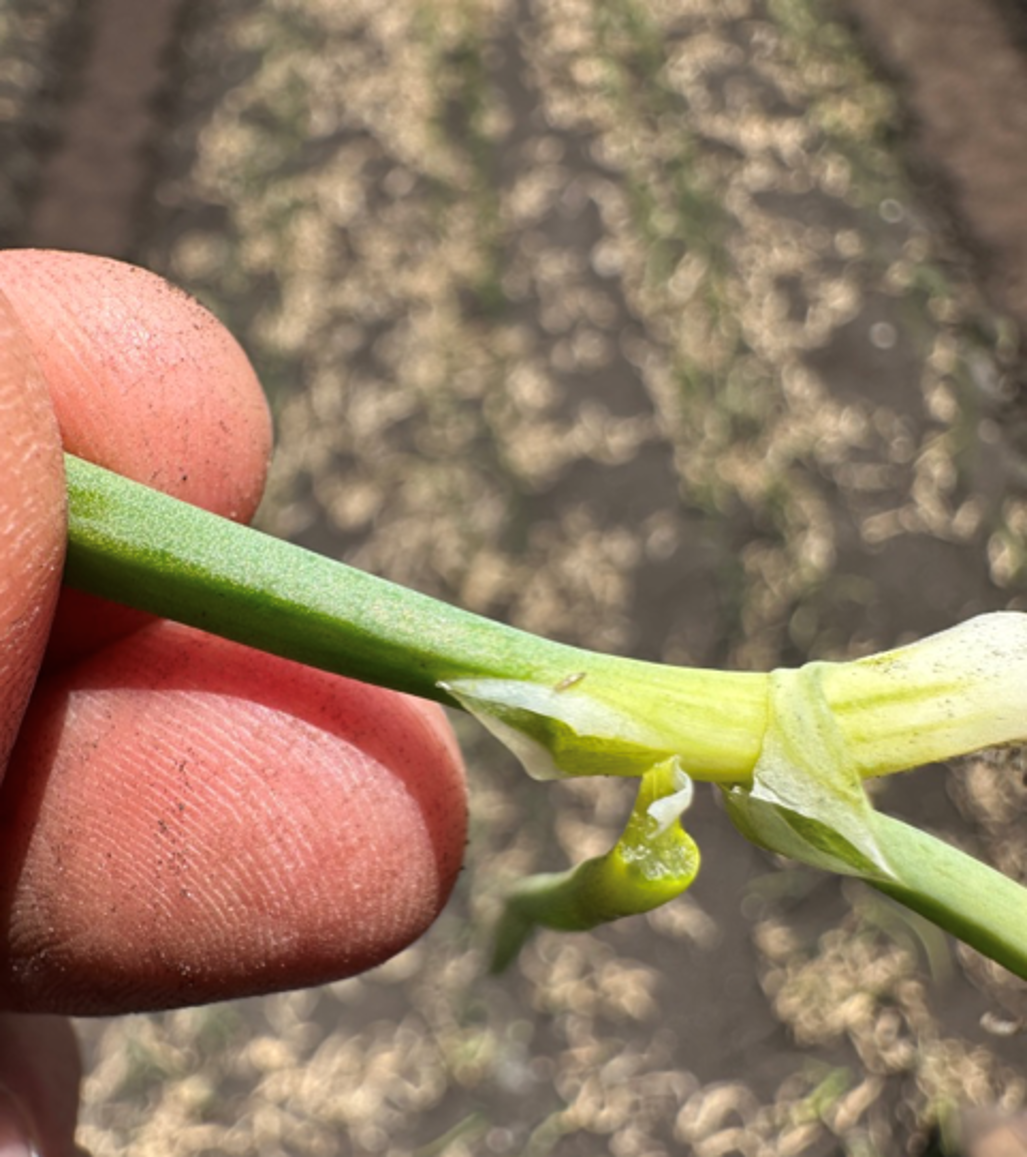
Movento is most effective for onion thrips control when applied early, before thrips populations become too high. In onions, treatment is recommended when populations reach 0.5 to one thrips per green leaf. When onions are at different stages within the same field, they may reach this threshold at different times.
If you are in this situation, consider that thresholds are based on the number of thrips per leaf (so it takes fewer thrips per plant to reach threshold in small onions). For example, a three-leaf onion reaches the treatment threshold at about 1.5 to three thrips per plant, while the same number of thrips on a six-leaf onion would still be below threshold because the insects are spread across more leaves.
Sweet corn
Sweet corn is knee high in some fields. Farms are cultivating young sweet corn to uproot and bury small weeds. European corn borer damage can be found on leaves.
Ohio State University Extension has started trapping corn earworm and western bean cutworm. Check out their recent numbers in their Lep Monitoring Network Update and consider subscribing to their CORN newsletter for regular updates.
Strawberries
Harvest of field grown strawberries has begun in west and east Michigan. Thrips populations have been high and damaging in multiple locations this spring. Thrips are attracted to flowers at bloom time and will feed on fruit early in their development. Their damage scars the fruit, and scars can become discolored or cracked as fruit grows and ripens. Symptoms include a bronze off-color, cracking and seediness.
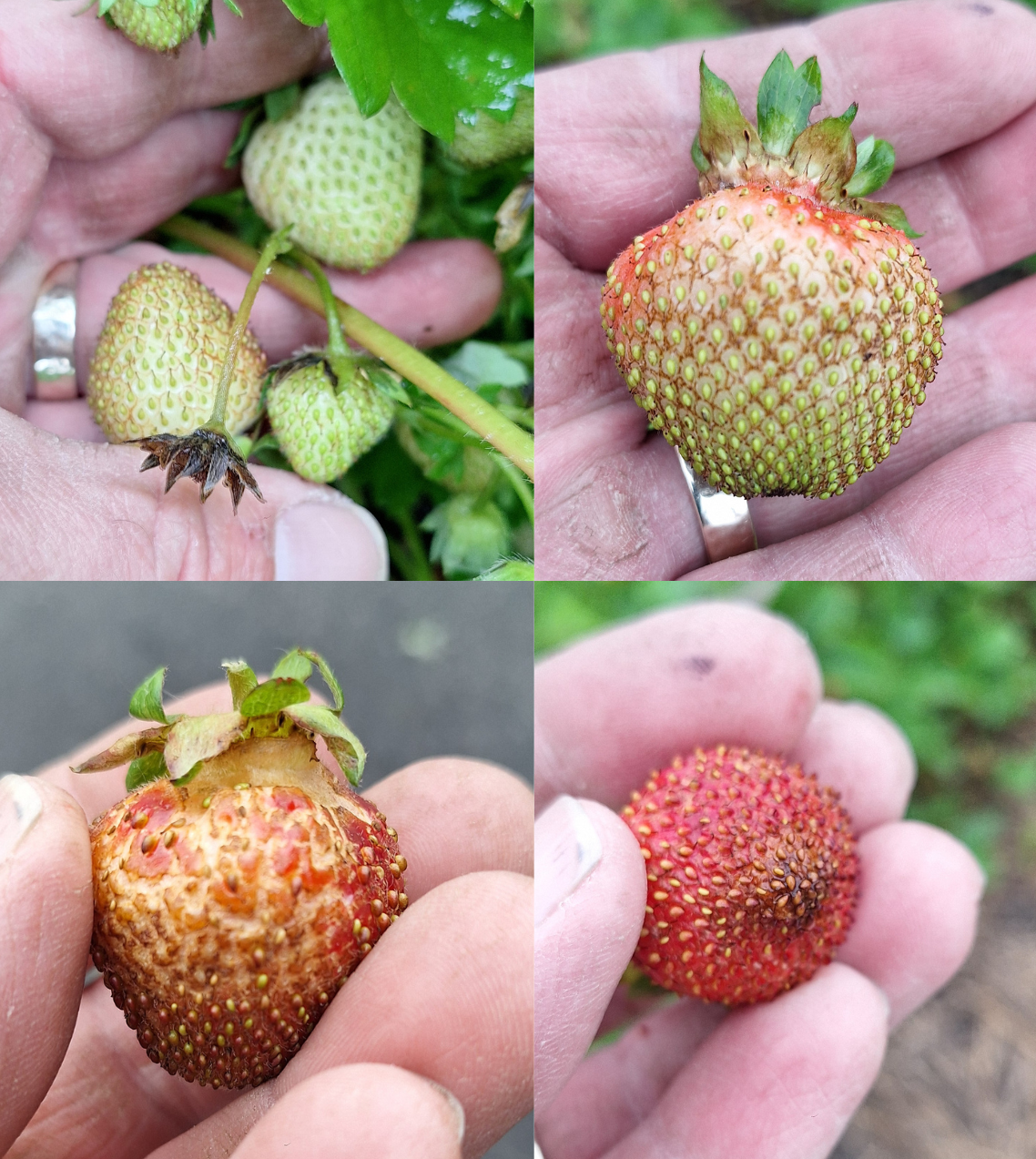
How can you tell if thrips will be an issue next year? Yellow or blue sticky cards can be placed within and alongside strawberries to provide an early warning system. If thrips are present prior to bloom, apply Assail to slow population growth. Assail can also be applied during bloom at a time when bees are not active. Radiant (spinetoram) and Delegate (spinosad) could then be used for post-bloom control.
Grass-family cash and cover crops can be a good rotational choice between strawberry plantings. They are a non-host for some strawberry diseases. If ground is open now, a summer cover crop could include sorghum sudangrass, oats or summer sown rye (which will not head out as it will not be vernalized). Fall-sown covers could include wheat or rye. Some farms grow wheat, which can get combined for seed or grain, and also will provide straw for strawberries.
Produce Food Safety On-Farm Readiness Reviews
Schedule an On-Farm Readiness Review (OFRR) today for a 2-hour educational visit that takes place during the harvest season and is meant to be casual and low stress. Everything discussed during an OFRR is confidential and focused on ways you can reduce your own risks in relation to produce safety. There is no pressure to take our advice either, we are just here to support you in your produce safety efforts!
Submit your ideas for 2026 GLEXPO sessions or speakers
The Great Lakes Fruit, Vegetable and Farm Market Expo (GLEXPO) is a premier conference for fruit, vegetable, horticulture and farmer market growers to see and learn about all of the latest research and innovations in farming. The GLEXPO board along with Michigan State University Extension hosts a variety of educational sessions and discussions to further the knowledge and resources growers need to be competitive in today’s markets. The 2026 GLEXPO will be Dec. 8-10 at the DeVos Place in Grand Rapids, Michigan.
The GLEXPO organizers and Michigan State University Extension would like your ideas as we plan future education sessions. We want to hear from growers and industry members about ideas for topics and speakers that you think would be of value to your farming operations as well as other growers. To facilitate this endeavor, the Great Lakes Expo board has created a fillable online form. Ideas can be submitted year-round via the online form. For ideas to be considered for inclusion in the 2026 education program, they must be submitted by June 12, 2026.
Access the form to submit your ideas
For more information on the Great Lakes Expo, visit https://glexpo.com.
Events
- June 12, 2026: Integrated Pest Management Workshop for Beginning Farmers - Kalamazoo, MI
- June 17, 2026: Food-Grade Grains Field Day at Kellogg Biological Station – Hickory Corners, MI
- June 17, 2026: Protecting the Farm: Medicaid & What Farmers Should Know - (Virtual)
- June 18, 2026: Healthy Habitats and Productive Pollinators – Flint, MI
- June 18, 2026: Jackson County Regenerative Ag Field Day - Rives Junction, MI
- June 20, 2026: Michigan Farm Bureau Farmers Teaching Farmers Event – Lansing, MI
- June 22-23, 2026: State of the Western Lake Erie Basin Conference – Adrian, MI
- June 25, 2026: Beekeeping Workshop - Novi, MI
- June 29, 2026: Technical Assistance Provider Training for Pay for Performance Program – Adrian, MI
- June 30, 2026: Monroe Conservation District Hands-On Mushroom Workshop – Temperance, MI
- July 8, 2026: 2026 Strawberry Day – Three Rivers, MI
- July 21, 2026: Washtenaw TOPP Farm Tours – Whitmore Lake/Dexter/Willis, MI
- July 23, 2026: Beekeeping Workshop – Novi, MI
- July 25, 2026: Beekeeping Workshop - Lansing, MI
- July 31, 2026: Berrien County Organic Agriculture: Tour 3 Value-Added & Agritourism Farms – Sodus/Buchanan/Three Oaks, MI
- August 6, 2026: 2026 Potato Field Day – Lakeview, MI
- August 11, 2026: West Michigan Organic Farm Tour: Explore Farm to Institution Markets from schools to hospitals – Muskegon/Whitehall, MI
- August 11-12, 2026: Michigan AgroExpo – St. Johns, MI
- August 18, 2026: Northwest Michigan TOPP Field Day: Farming for People, Purpose, and Profit – Petoskey, MI
- August 20, 2026: Hillsdale Nutrient Management Field Day – Waldron, MI
- September 3, 2026: Cover Crop Workshop at SVREC- Frankenmuth, MI
- September 3, 2026: Fourth Annual KBS LTAR Field Day - Hickory Corners, MI
- August 28, 2026: Washtenaw Conservation District Field Day – Ann Arbor, MI
- September 9, 2026: Tillage and Soil Health Field Day – Monroe, MI
- September 10-11, 2026: Great Lakes Tek Flex – Benton Harbor, MI
- September 16, 2026: 2026 Midwest Mechanical Weed Control Weed Day – Benton Harbor, MI
- September 22-24, 2026: Farm Science Review 2026 – London, OH
- October 4-6, 2026: Northern Michigan Small Farm Conference – Bellaire, MI
- November 4-6, 2026: Michigan Agritourism 20th Anniversary Convention – Frankenmuth, MI
- December 8-10, 2026: Great Lakes Fruit, Vegetable, & Farm Market Expo – Grand Rapids, MI
This work is supported by the Crop Protection and Pest Management Program (grant no 2024-70006-43569) from the USDA National Institute of Food and Agriculture. Any opinions, findings, conclusions, or recommendations expressed in this publication are those of the author(s) and do not necessarily reflect the view of the U.S. Department of Agriculture.