


News
-
Bulletins Live! Two Tracker Report available now
Published on October 23, 2026
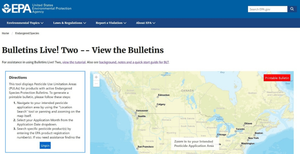
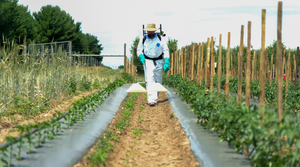
To raise awareness of pesticides currently impacted by the new EPA Bulletins Live! Two pesticide label directive, Michigan State University Extension will be generating a Bulletins Live! Two Tracker Report twice a month. -
Exercise matters, even when you work hard
Published on October 21, 2026
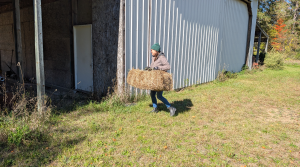
Does farm work count as exercise? -
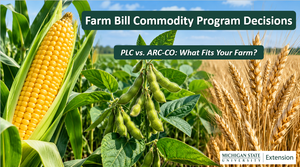
2026 Farm Bill Commodity Program Decisions: What Fits Your Farm?
Published on October 19, 2026
MSU Extension hosts a webinar to help you choose which Farm Bill commodity program best fits your farm. -
USDA awards more than $16.2M for MSU greenhouse renovations
Published on October 8, 2026
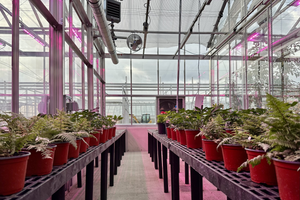
The upgrade efforts, which will help researchers advance solutions to some of agriculture's toughest challenges, will also receive matching funds from MSU that create $32.5M in new support. -
EPA launches email newsletter to track changes to Bulletins Live! Two
Published on October 7, 2026
Pesticide users are encouraged to sign up for this service to help track any changes to federal regulations that may impact pesticide use. -
Four NCR-SARE grant opportunities to fund farmers, educators and researchers are open for applications
Published on October 5, 2026
Apply by December 3 for Farmer Rancher, Youth Educator, Partnership and Research and Education grants. -
Earn RUP and CCA credits through 2026-2027 MSU Pesticide Safety Webinar Series: The RUP/CCA Credit Clinic
Published on October 5, 2026
The series includes 10 webinars covering pesticide safety and application topics. Pesticide and education credits are available for participants in Michigan and participating New England states. Registration is now open. -
Understanding the water use needs of Michigan growers
Published on October 1, 2026
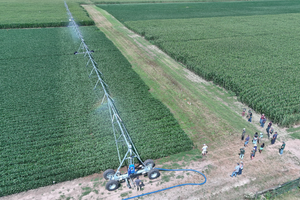
A statewide agricultural water use needs assessment provides insight into irrigation practices, water management challenges and the resources needed to make informed water-use decisions. -
Expand your knowledge of vegetable production at the 2026 Great Lakes Fruit, Vegetable, and Farm Market Expo
Published on October 1, 2026
This year’s schedule is packed with educational opportunities for vegetable growers. -
Michigan State University Extension offers Produce Safety Alliance Grower Trainings across Michigan and online
Published on September 30, 2026
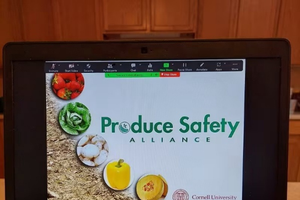
These trainings will help farms understand and comply with the Food Safety Modernization Act Produce Safety Rule while strengthening on-farm food safety practices.


 Print
Print Email
Email