Michigan vegetable crop report – May 20, 2026
 Print
Print Email
EmailAs planting continues, growers are keeping a lookout for early season pest problems.
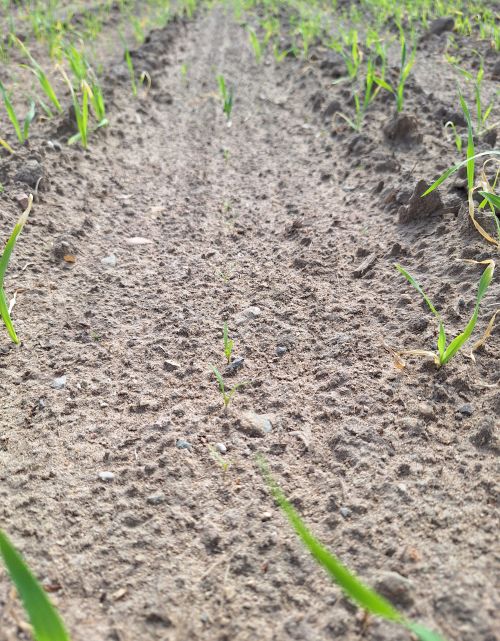
Weather
High winds up to 80 mph blew across part of the state on Monday and Tuesday afternoon, May 18 and 19, with some spotty hail. The past week started cooler than normal with warmer weather setting in later. Precipitation reigned from 0.25–2 inches from the southern to northern lower, with 1–1.5 inches in the Upper Peninsula. Degree day totals range from behind normal in the Upper Peninsula up to a week ahead in the south.
Check out Jeff Andresen’s weekly forecast:
- Variably cloudy, breezy and much cooler Wednesday and Thursday. Scattered showers possible again south Friday into Saturday morning. Fair, dry and gradually warmer Sunday into early next week.
- High temperatures from the 50s north to 60s south Wednesday and Thursday, warming to the 70s again by Sunday into early next week.
- Low temperatures from the 30s north to 40s south Wednesday and Thursday, warming to the 40s north to 50s south this weekend. Scattered light frost is possible north Thursday morning.
- Medium range outlooks call for warmer than normal mean temperatures with near to below normal precipitation totals during late May.
Bulletins Live! Two Tracker Report
Don’t forget to check out the biweekly Bulletins Live! Two (BLT) Tracker Report released by Michigan State University Extension. Pesticide applicators are legally required to check the BLT online mapping tool within 6 months of an outdoor application to ensure there are no geographically specific pesticide use limitations or mandatory runoff mitigation practices (via the PALM app) for their product in Michigan.
Check the “Bee Box” on your pesticide label before making an application
Exercise caution with insecticide foliar sprays as temperatures finally push past 65 degrees Fahrenheit. Honey bee foraging will surge alongside native bumble bees, which have been working through the cooler weather. No insecticide should be applied while bees are actively foraging in blooming crops. If a spray during bloom is absolutely necessary, it must be timed when bee activity stops.
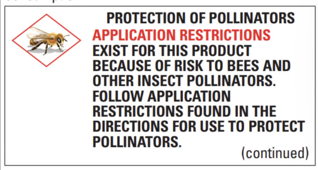 Checking for the EPA Pollinator Advisory Box (commonly called the "Bee Box") is the single most important habit for growers to double-check right now. When you see that distinct diamond icon with a honey bee on a label, it means the chemical inside has a high toxicity rating to pollinators. If the crop is flowering or if there are blooming weeds in the field margins, applications are strictly restricted to times when bees are not foraging, typically late evening/night when temperatures drop below 55 F. This can be crop and insecticide-specific, so you’ll need to check the label for each insecticide you are planning to apply. An important note is that the bee restrictions often apply in crops that produce flowers but are not pollinator-dependent, like potatoes.
Crop updates
Asparagus
Harvest accelerated in west central Michigan this past weekend as warm overnight and daytime temperatures launched fields through large early pickings. Cooler weather will moderate picking to a welcome pace.
It’s just like mushroom hunting; it’s that time of year. Check edges of known hotspots for common asparagus beetle. Beetles and eggs were present in low numbers at one location we checked early this week but were not detected at another. In addition to spears, skinny “whips” that develop fern are not a bad place to check for eggs as they do not get harvested. Acetampirid and carbaryl both have one-day preharvest intervals and are effective.
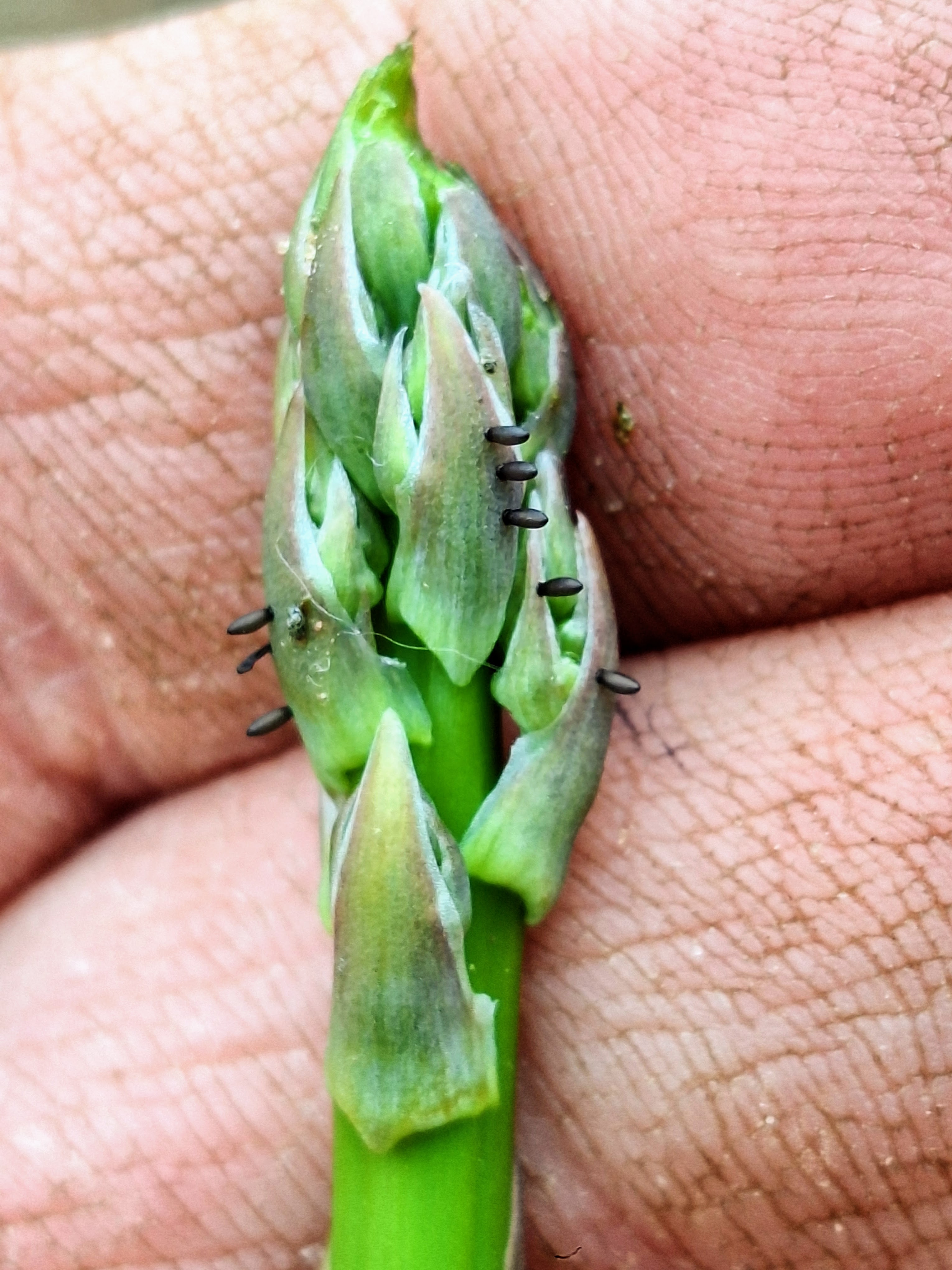
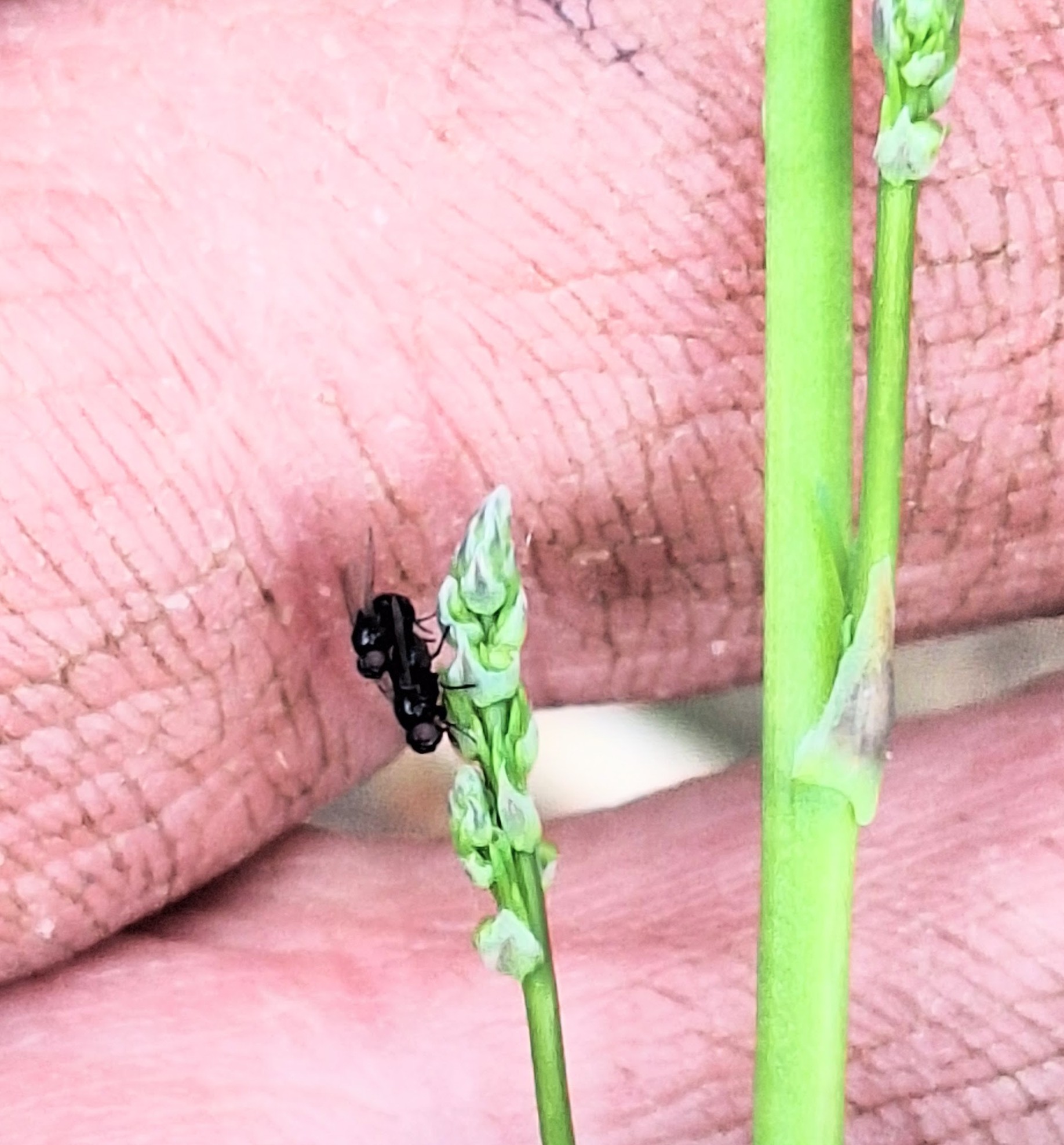
There are a few insects out and about you may see, but don’t need to do anything about. Love bugs, or March flies, were out this week. They have nothing to do with asparagus but this fly occasionally emerges in large enough numbers to generate a few “What is that?” Asparagus miner, a tiny black fly, is also out and about. This fly does not affect spears but can affect young fields, and larvae of later generations mine in the base of fern. There are no effective controls.
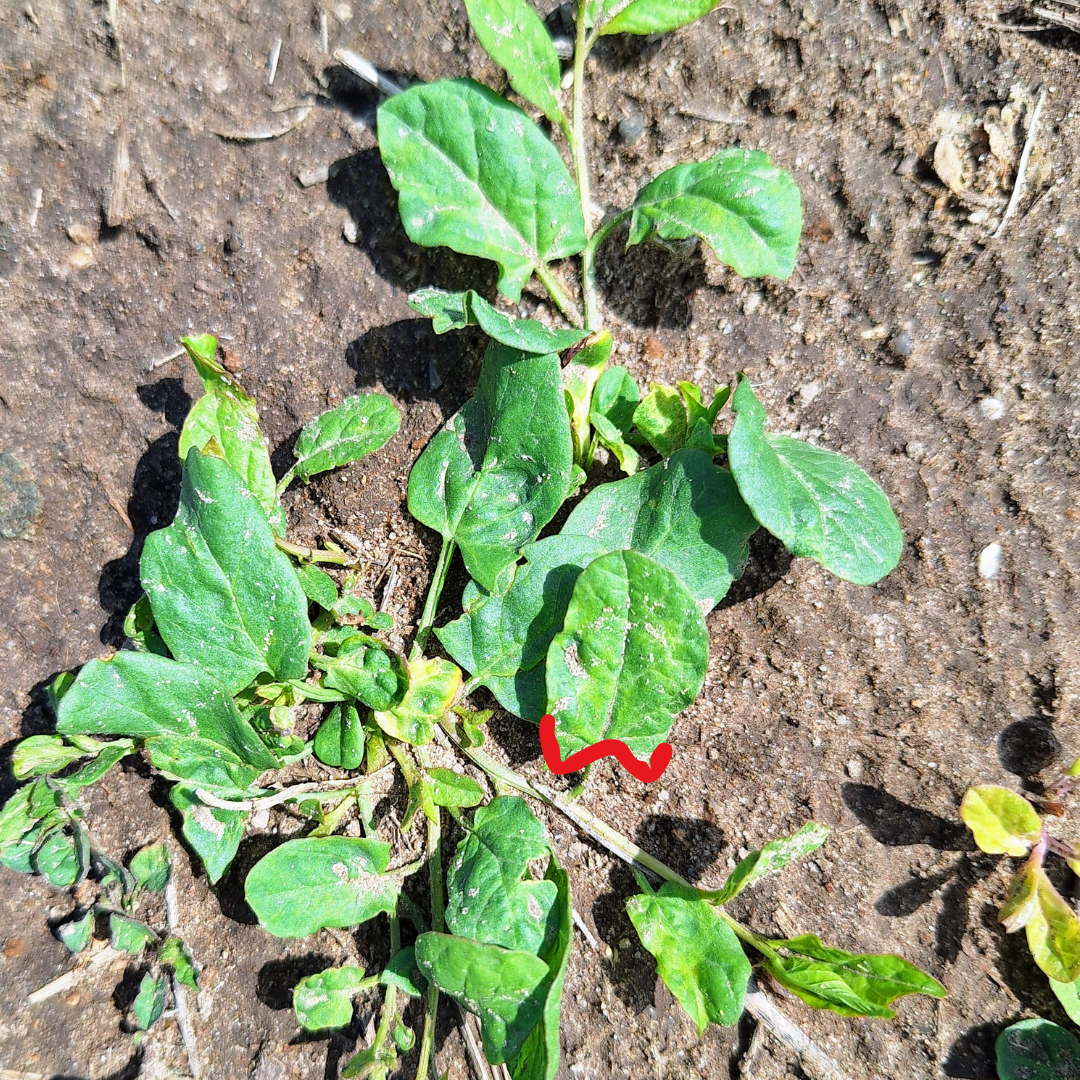
Field bindweed was up in a few locations this week. This perennial weed has leaves that look like an arrowhead with the edges of the base pointing backwards. Quinclorac can be applied at field shutdown to manage this bothersome weed.
Root crops
Onion maggot activity has been reported. Carrot stands are developing in west central processing fields with weed control the main task on tap. Small grains cover crops can be a good place to sweep for aster leafhoppers when carrots are small. Leafhoppers were present in low numbers in an Oceana County rye cover crop adjacent to a carrot field earlier this week.
For potatoes, hilling is a common practice with multiple benefits. It helps control weeds by working them up and burying them, reduces tuber greening by covering tubers, and (the main one) promotes stolon formation on buried stems nodes, which can increase tuber production. This article has some nice pictures. Potatoes may get hilled once or twice. The first hilling typically occurs when potatoes are about 6–10 inches tall, with about the top third of the plant left sticking up above the hill.
Weekly sampling of aster leafhoppers by MSU Extension staff and scouts has begun. Leafhoppers are tested by MSU Plant & Pest Diagnostics for phytoplasmas (the organisms that cause aster yellows). Results are then used to calculate action thresholds, which are shared through text alerts. Growers can use this information to make aster yellows management decisions throughout the growing season.
While the thresholds are specifically developed for celery and carrot production, the information may also be useful to producers of other crops that are susceptible to aster yellows. See this article to learn more and sign up for text alerts. There is no cost to participate. Funding for this project is provided by USDA National Institute of Food and Agriculture through the Crop Protection and Pest Management Program.
Cucurbits
Squash and cucumbers are being planted. Field cucumbers and summer squash are hanging on under low tunnels, waiting for warmer weather in some areas and growing slowly uncovered elsewhere. Some high tunnel cucumbers are setting fruit. Pickle planting is underway in Saginaw and Bay counties.
Brassicas and greens
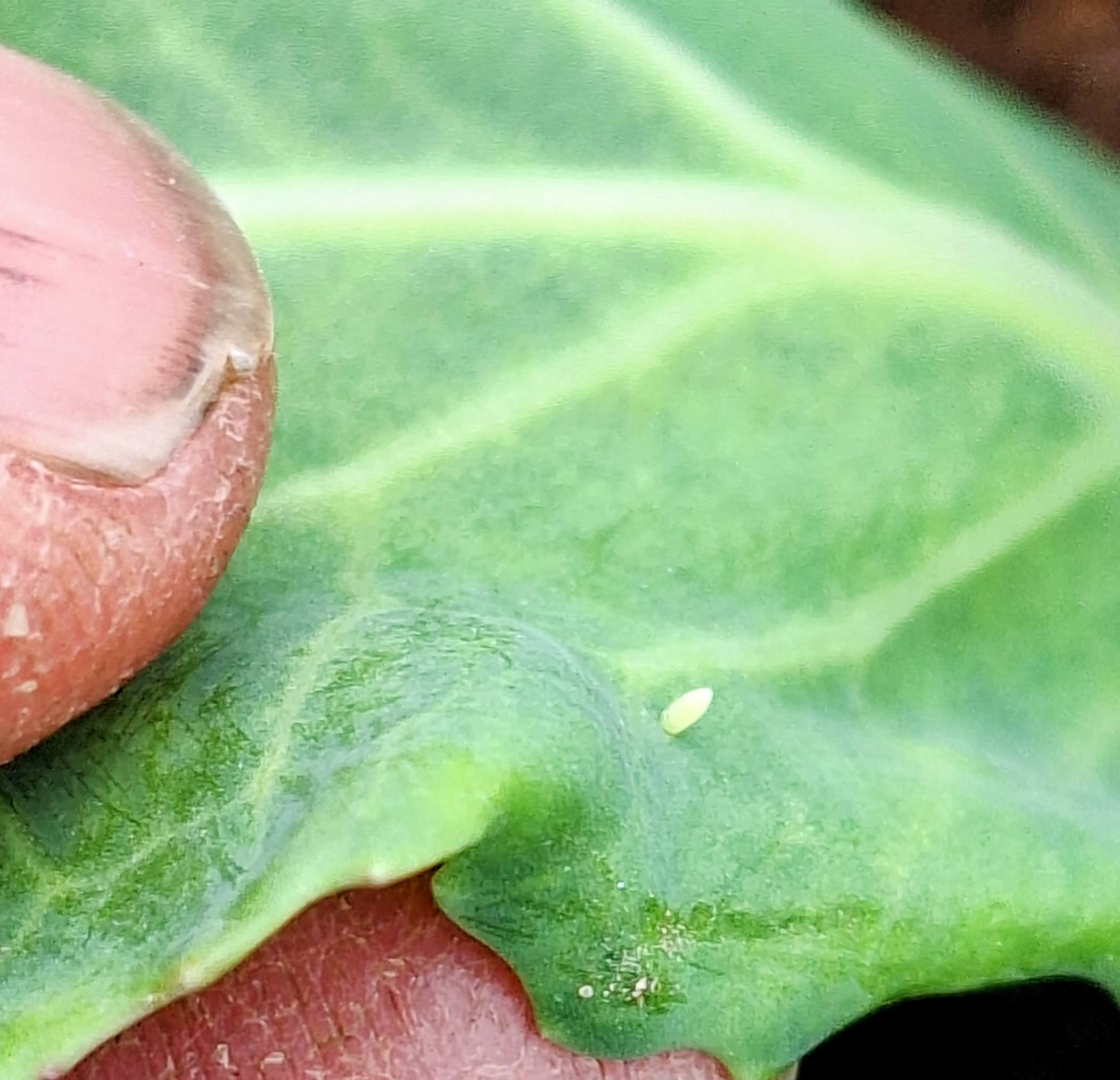
Broccoli, cabbage, cauliflower and other brassicas have all been and continue to be planted. Lettuce and celery transplanting and direct seeding are ongoing. Wirestem symptoms have been reported in cabbage. Eggs of imported cabbage worm laid by cabbage white butterflies were present in one brassica planting we checked this week, but caterpillars were not. A wait-and-see approach can work where scouting is an option. Bt products are one option for early season worm control that can help conserve beneficials that help with aphids and diamondback moth later in the season.
Fruiting vegetables
Greenhouse harvests are underway in southwest Michigan. Tomato and pepper transplants are being hardened off and planted. Eggplant, too.
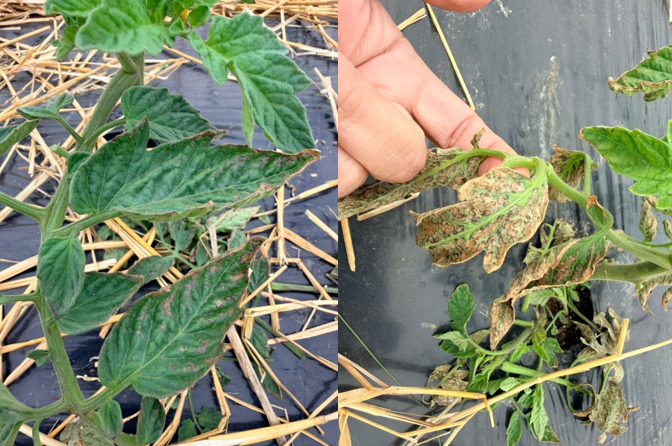
Boron toxicity has been reported in high tunnel tomatoes. While boron is an essential micronutrient for plant growth, it must be applied with caution because excessive levels can quickly become toxic to crops. If you suspect boron toxicity, submit a tissue sample to MSU Plant & Pest Diagnostics to confirm the issue before taking action.
Sensitivity to boron varies among vegetable crops. Some vegetables are highly sensitive, while others can tolerate higher boron levels. One management approach is to leach the soil with sufficient irrigation water that is presumed to contain low boron levels. However, leaching can also flush other essential nutrients from the soil, potentially affecting crop fertility. To learn more about boron deficiency and toxicity, check out this MSU Extension article.
Onions
Onions are very poor competitors with weeds because they grow slowly, have upright leaves, and do not shade the soil well. Early emerging weeds such as ladysthumb/smartweed, horseweed/marestail, common chickweed and other small broadleaves can reduce stands and yield if they are not controlled early. Weed control is most effective when weeds are still small, generally from cotyledon to the two-leaf stage.
Some good news for Michigan onion growers: the Goaltender use pattern that was previously covered under the Michigan 24(c) label has now been incorporated into the Section 3 federal label. This means the use is now included on the main EPA-approved product label, and a separate Michigan 24(c) should no longer be needed for that specific use pattern. As always, review the current label carefully and follow all crop stage, rate, timing and environmental restrictions before applying.
Sweet corn
Sweet corn successions are being seeded on many farms and some young sweet corn seedlings are developing well in some fields. This is a good time to think about residual weed control. Early season weed control is important because sweet corn can be sensitive to competition during establishment, especially where grasses and small-seeded broadleaf weeds emerge with the crop.
For preemergence programs, labeled options include Dual Magnum 7.62E at 1–2 pt/A, Prowl H₂O at 0.75–2 qt/A, and Outlook 6E at 12–21 fl oz/A. These products can provide residual control of annual grasses and some small-seeded broadleaves, but they need rainfall or irrigation for activation. Prowl H₂O can also be applied early POST up to 24-inch corn, mainly for residual control of later-emerging grasses, not for control of emerged weeds.
For postemergence cleanup, options include Shieldex 400SC at 1–1.35 fl oz/A for broader grass and broadleaf control and Basagran 4L at 1.5–2 pt/A + crop oil concentrate for small broadleaf escapes. Basagran will not control grasses. 2,4-D/Weedar at 1 pt/A can also be used for some broadleaf weeds, but it must be applied before sweet corn is 8 inches tall and should be used carefully around sensitive vegetable crops because of drift risk.
A general program could be Dual Magnum or Outlook + Prowl H₂O at preemergence, followed by Shieldex + Basagran at postemergence when weeds are small. If additional residual grass control is needed after emergence, Prowl H₂O can be included in early postemergence. If broadleaf pressure is high, 2,4-D may be included early postemergence, but only before sweet corn reaches 8 inches and only where drift to nearby sensitive crops can be avoided.
Growers using sweet corn in rotation with watermelon, pumpkins, squash or other vegetables should carefully check rotational restrictions before using products such as Callisto, Lumax, Lexar, Acuron, Impact/Armezon or Laudis. These products can provide strong weed control in corn, but many have longer vegetable plant-back restrictions. Always check the label for sweet corn type, crop stage, soil restrictions, adjuvant requirements and rotational intervals.
Strawberries
Early plasticulture strawberry harvests are underway.
Farmers invited to join national study on farming practices and soil health
Farmers and ranchers are invited to participate in a free soil health evaluation and contribute to research supporting profitables, resilient and sustainable agriculture. To learn more about the study and how to submit your soil samples, refer to the following article.
Produce Food Safety On-Farm Readiness Reviews
Schedule an On-Farm Readiness Review (OFRR) today for a 2-hour educational visit that takes place during the harvest season and is meant to be casual and low stress. Everything discussed during an OFRR is confidential and focused on ways you can reduce your own risks in relation to produce safety. There is no pressure to take our advice either, we are just here to support you in your produce safety efforts!
Submit your ideas for 2026 GLEXPO sessions or speakers
The Great Lakes Fruit, Vegetable and Farm Market Expo (GLEXPO) is a premier conference for fruit, vegetable, horticulture and farmer market growers to see and learn about all of the latest research and innovations in farming. The GLEXPO board along with Michigan State University Extension hosts a variety of educational sessions and discussions to further the knowledge and resources growers need to be competitive in today’s markets. The 2026 GLEXPO will be Dec. 8-10 at the DeVos Place in Grand Rapids, Michigan.
The GLEXPO organizers and Michigan State University Extension would like your ideas as we plan future education sessions. We want to hear from growers and industry members about ideas for topics and speakers that you think would be of value to your farming operations as well as other growers. To facilitate this endeavor, the Great Lakes Expo board has created a fillable online form. Ideas can be submitted year-round via the online form. For ideas to be considered for inclusion in the 2026 education program, they must be submitted by June 12, 2026.
Access the form to submit your ideas
For more information on the Great Lakes Expo, visit https://glexpo.com.
Events
- May 28, 2026: Presenting MI Farm Link: Connecting Farmers to Farmland – (Virtual)
- June 2-4, 2026: 2026 Conservation Drainage Network Annual Meeting – East Lansing, MI
- June 3, 2026: Beginning Farmer Field Day - Agritourism, Farm Marketing, Farm Business Management – Freeland, MI
- June 10, 2026: Food Grade Grains Field Day at Boyer Livestock – Clarklake, MI
- June 17, 2026: Food-Grade Grains Field Day at Kellogg Biological Station – Hickory Corners, MI
- June 17, 2026: Protecting the Farm: Medicaid & What Farmers Should Know - (Virtual)
- June 18, 2026: Healthy Habitats and Productive Pollinators – Flint, MI
- June 20, 2026: Michigan Farm Bureau Farmers Teaching Farmers Event – Lansing, MI
- June 22-23, 2026: State of the Western Lake Erie Basin Conference – Adrian, MI
- June 29, 2026: Technical Assistance Provider Training for Pay for Performance Program – Adrian, MI
- July 21, 2026: Washtenaw TOPP Farm Tours – Whitmore Lake/Dexter/Willis, MI
- July 31, 2026: Berrien County Organic Agriculture: Tour 3 Value-Added & Agritourism Farms – Sodus/Buchanan/Three Oaks, MI
- August 11, 2026: West Michigan Organic Farm Tour: Explore Farm to Institution Markets from schools to hospitals – Muskegon/Whitehall, MI
- August 18, 2026: Northwest Michigan TOPP Field Day: Farming for People, Purpose, and Profit – Petoskey, MI
- August 20, 2026: Hillsdale Nutrient Management Field Day – Waldron, MI
- August 28, 2026: Washtenaw Conservation District Field Day – Ann Arbor, MI
- September 9, 2026: MSU Extension Monroe County Field Day – Monroe, MI
- September 10-11, 2026: Great Lakes Tek Flex – Benton Harbor, MI
- September 16, 2026: 2026 Midwest Mechanical Weed Control Weed Day – Benton Harbor, MI
- September 22-24, 2026: Farm Science Review 2026 – London, OH
- October 4-6, 2026: Northern Michigan Small Farm Conference – Bellaire, MI
- November 4-6, 2026: Michigan Agritourism 20th Anniversary Convention – Frankenmuth, MI
- December 8-10, 2026: Great Lakes Fruit, Vegetable, & Farm Market Expo – Grand Rapids, MI
This work is supported by the Crop Protection and Pest Management Program [grant no 2024-70006-43569] from the USDA National Institute of Food and Agriculture. Any opinions, findings, conclusions, or recommendations expressed in this publication are those of the author(s) and do not necessarily reflect the view of the U.S. Department of Agriculture.