National Groundwater Awareness Week: March 8-14, 2026
 Print
Print Email
EmailNational Groundwater Awareness Week is the second week in March. There are many online resources available to learn more about the importance of groundwater and how to keep drinking water safe.
How much do you know about groundwater? National Groundwater Awareness Week is the second week in March; the 2026 dates are March 8-14. Michigan State University Extension encourages you to view the many online resources available to learn more about the importance of groundwater and how to keep drinking water safe.
Remember, there is no new water. What we have is what we have. In fact, we use the same water that dinosaurs used. It is incredible to think about how we can use and reuse the same water hundreds and thousands of times. The following are a few facts and resources to help you learn more about this limited, precious resource.
Did you know the Earth’s surface is 70% water, but only 1% is available for human use? Of that 1%, 99% is stored as groundwater.
Quick facts about groundwater:
- Fifty-one percent of the U.S. population depends on groundwater for drinking water.
- Groundwater is found in the spaces between particles of rock and dirt.
- Ninety-nine percent of rural populations depend on groundwater for drinking.
- Water is the only substance on Earth found naturally in three forms: solid, liquid and gas.
- Groundwater helps grow our food. Sixty-four percent of groundwater is used for irrigation to grow crops.
- Groundwater is an important component in many industrial processes.
- Groundwater is a source of recharge for lakes, rivers and wetlands.
We must keep our groundwater free of contamination. Drinking contaminated groundwater can have serious health effects. Groundwater contaminated by a leaky septic system could cause diseases such as hepatitis and dysentery. Toxins leaching into well water can cause other health issues. Wildlife may also be harmed by contaminated groundwater. There are long-term effects, such as certain types of cancer, that may also result from exposure to polluted water.
Some interesting facts about groundwater contamination include:
- Groundwater is part of the hydrologic cycle. Contaminants in the atmosphere or bodies of surface water can eventually be transferred into our groundwater supplies.
- Groundwater can be contaminated by materials from the land’s surface. Examples would be pesticides and fertilizers ending up in groundwater through runoff.
- Road salts, motor oil and other toxins may seep into groundwater.
- Uncontrolled hazardous waste can leach into groundwater.
- Storage tanks, gas, oil and other liquids, either above or below ground, can corrode, crack, and develop leaks. This can cause serious groundwater contamination issues.
The Groundwater Foundation offers groundwater activities to learn more about groundwater. Visit their site to access lesson plans for groups, as well as facts, quizzes and games to help you learn more about groundwater.
You may also find a number of interesting apps available to expand your knowledge of groundwater. Apps range from groundwater monitoring to games that support groundwater education. Search “groundwater apps” to select apps that fit your needs and to learn more about groundwater and/or monitor groundwater uses for your home and community.
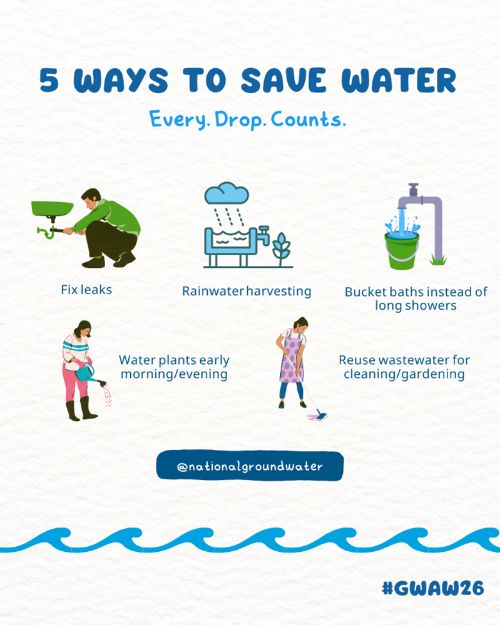
Be water-wise as you encourage others to be water-wise. Life on Earth depends on clean water. We all must do our part to protect this vital resource!