New MSU Extension Calculator helps producers set direct-market pork prices
 Print
Print Email
EmailA new MSU Extension tool helps small and direct-market pork producers calculate production costs, processing expenses and target selling prices.
Setting a price for direct-market pork can be more complicated than it first appears. Producers need to account for the cost of the pig, feed, labor, facilities, transportation, processing and other expenses while also determining how much profit is needed to make raising pigs worthwhile.
The new MSU Extension Pork Pricing Calculator was developed to help producers organize costs and make informed pricing decisions for their farm management.
It can be tempting to set prices based on what another producer charges or what pork costs at the grocery store. While those prices are useful for comparison, they do not tell you what it costs to raise and market pork on your farm. Feed prices, processing costs, labor and production practices can vary considerably between operations.
Start with production costs
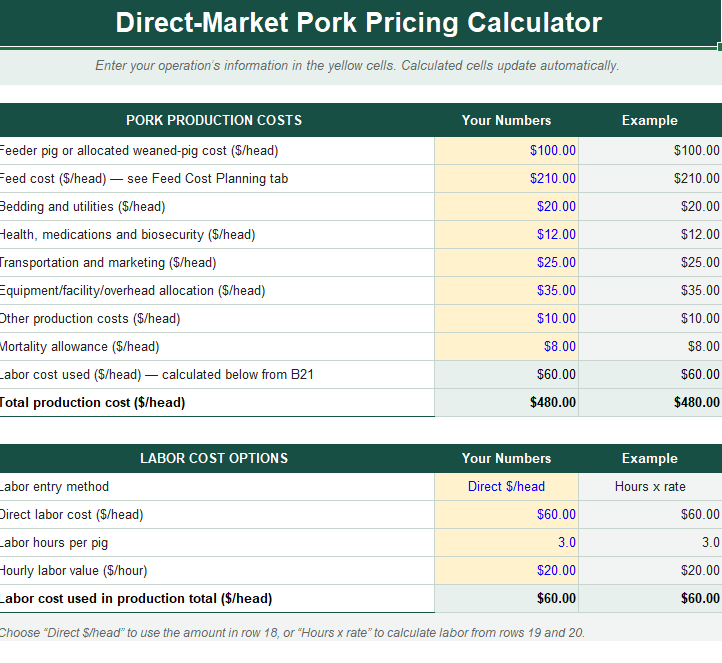
The calculator lets producers enter costs such as feeder pigs, feed, bedding and utilities, animal health, transportation, labor, facilities and other production expenses. Labor and facility costs can be easy to overlook, particularly on small farms, but both are part of the true cost of raising a pig.
The workbook also includes a Production Model and Feed-Cost Planning section to help producers think through production arrangements and estimate feed costs. This section connects with MSU Extension Bulletin E-3506, Models for Raising Pigs for Pork.
From live pig to packaged pork
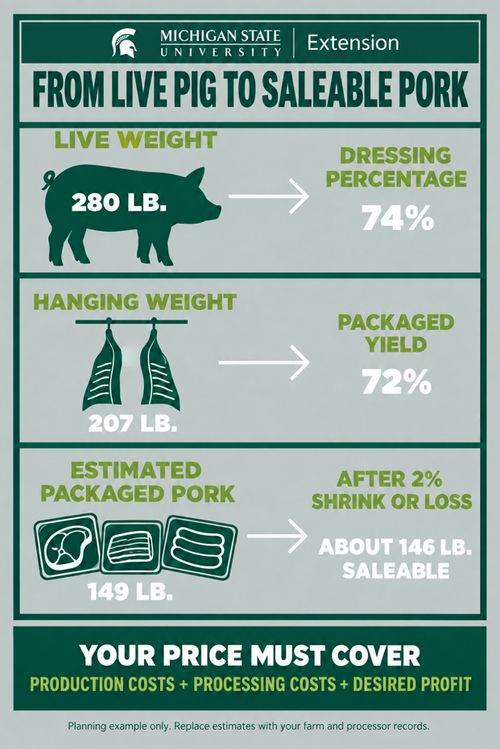
A 280-pound pig does not result in 280 pounds of pork in the freezer. The calculator helps producers estimate live weight, hanging weight, and packaged pork using dressing percentage and packaged yield.
Use actual processor weights and farm records whenever possible, because cutting instructions, trimming, bone removal and processing can significantly affect pork yield.
Don't forget processing
Processing can also significantly affect what the customer ultimately pays. The calculator accounts for slaughter, cut-and-wrap, smoking and curing and other processing expenses.
This lets producers review both their farm price and the estimated total cost to the customer after processing, helping them feel supported as they understand their financial picture.
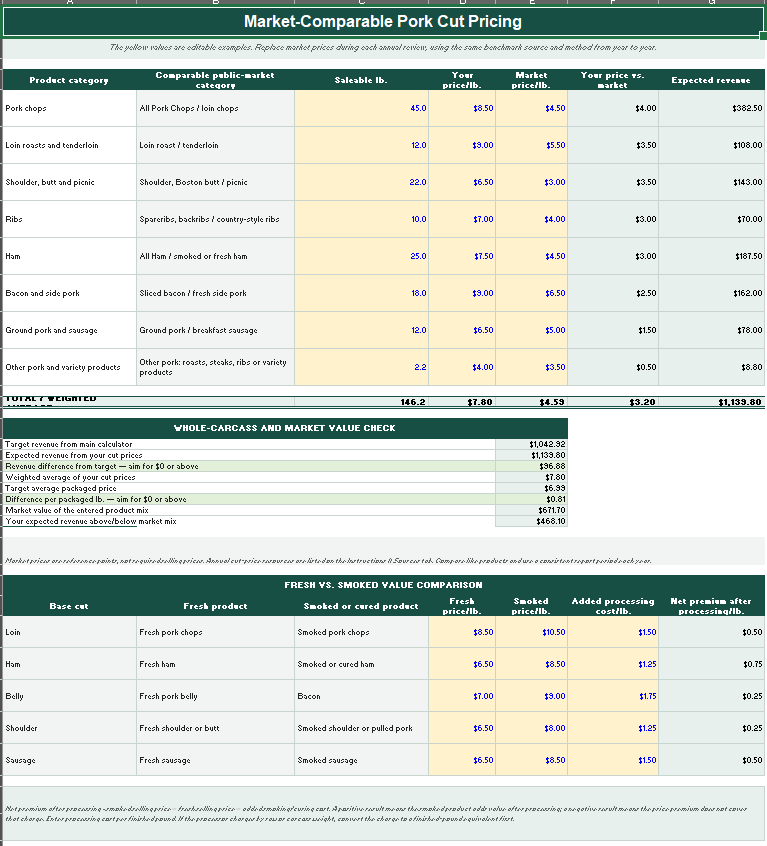
Snippet of the pork pricing calculator looking at meat cut prices.
What price do you need?
Once you enter farm costs, weights, processing expenses, and a desired profit, the calculator estimates break-even and target prices using live, hanging and packaged weights. It also calculates whole- and half-hog totals and helps producers see the difference between covering costs and meeting their desired profit goal.
For producers selling individual cuts, the Individual Cut Pricing and Whole-Carcass Value Check provides another way to evaluate pricing. Producers can enter expected pounds and prices for products such as chops, roasts, ham, bacon, ribs, sausage and ground pork, then compare the value of the entire carcass with the revenue needed to cover costs.
This is especially useful because the value of a pig is not limited to its highest-value cuts. The prices of all products sold need to work together to recover the cost of raising and marketing the animal.
Use your own numbers
The MSU Extension Pork Pricing Calculator is designed as a planning tool. Replace the example values with your farm and processor costs and update them as expenses change to improve pricing accuracy.
Producers should replace the example values with their own farm and processor costs and update them as costs change to make precise, reliable decisions.
Direct-market pork pricing involves more than just setting a price customers will pay. The calculator helps producers feel confident that their prices cover costs and provide a fair return, fostering trust in their decisions.
The MSU Extension Pork Pricing Calculator provides a starting point for working through those numbers and making more informed pricing decisions.