Southeast Michigan fruit update – April 8, 2026
 Print
Print Email
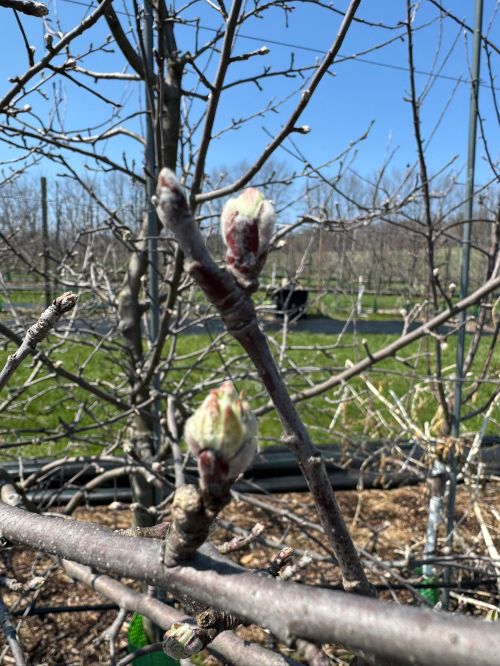
EmailApples are half-inch green. Low temperatures could have caused damage.
Welcome to the second in-season fruit article update for southeast Michigan for the 2026 season. Throughout the season these updates will include information about the weather in the past week and the upcoming week, a fruit-by-fruit guide to current conditions with appropriate pest and disease updates, and other relevant observations.
General observations
We had our first potentially damaging night of the season, with temperatures the morning of April 7 dropping to the 20-to-23-degree range in most of southeast Michigan. Damage occurs when low temperatures are sustained over a few hours at critical temperatures, which are listed in the fruit-by-fruit section. Overnight lows the morning of April 7 at different weather stations around southeast Michigan are listed in the following table:
| Difference in Degree Day Accumulation from Mar. 1, 2026 observed March 31 and April 7, 2026; issued April 7, 2026 | |||||||||
|---|---|---|---|---|---|---|---|---|---|
| Station (County) | Degree Days Base 42 F | Degree Days Base 42 F | Degree Days Base 42 F | Degree Days Base 45 F | Degree Days Base 45 F | Degree Days Base 45 F | Degree Days Base 50 F | Degree Days Base 50 F | Degree Days Base 50 F |
| Mar. 31 | Apr. 7 | Difference | Mar. 31 | Apr. 7 | Difference | Mar. 31 | Apr. 7 | Difference | |
| Commerce (Oakland) | 121 | 161 | 40.0 | 92 | 122 | 30.0 | 55 | 73 | 18.0 |
| Deerfield (Monroe) | 173 | 251 | 78.0 | 137 | 200 | 63.0 | 88 | 130 | 42.0 |
| East Lansing MSU Hort (Ingham) | 133 | 181 | 48.0 | 102 | 139 | 37.0 | 61 | 84 | 23.0 |
| Emmett (St. Clair) | 96 | 131 | 35.0 | 70 | 97 | 27.0 | 40 | 56 | 16.0 |
| Flint (Genesee) | 121 | 161 | 40.0 | 92 | 123 | 31.0 | 54 | 74 | 20.0 |
| Freeland (Saginaw) | 74 | 95 | 21.0 | 54 | 69 | 15.0 | 30 | 36 | 6.0 |
| Hudson (Lenawee) | 156 | 225 | 69.0 | 123 | 179 | 56.0 | 78 | 115 | 37.0 |
| Ithaca (Gratiot) | 87 | 125 | 38.0 | 63 | 92 | 29.0 | 35 | 53 | 18.0 |
| Lapeer (Lapeer) | 122 | 160 | 38.0 | 95 | 124 | 29.0 | 58 | 77 | 19.0 |
| Linwood (Bay) | 61 | 75 | 14.0 | 43 | 52 | 9.0 | 23 | 25 | 2.0 |
| Pigeon (Huron) | 57 | 79 | 22.0 | 42 | 56 | 14.0 | 23 | 29 | 6.0 |
| Richville/Frankenmuth (Tuscola) | 84 | 117 | 33.0 | 61 | 86 | 25.0 | 34 | 49 | 15.0 |
| Romeo (Macomb) | 119 | 159 | 40.0 | 90 | 120 | 30.0 | 53 | 72 | 19.0 |
| Sandusky (Sanilac) | 81 | 116 | 35.0 | 60 | 86 | 26.0 | 33 | 49 | 16.0 |
| Average of stations in this region: | 106 | 145 | 39 | 80 | 110 | 30 | 48 | 66 | 18 |
The good news is that, with the exception of apricots that may have been blooming, the lows likely weren’t cold enough or sustained enough to cause widespread damage in most fruit crops at their current stage of development. However, if you are in a low-lying area or your orchard is in a zone that tends to collect cold air, your risk of damage is greater. While we are starting to accumulate some growing degree days, the cool temperatures have slowed phenological progress.
Many of you will have already done spring weed control, but if not, this 2020 article on spring herbicide applications from Michigan State University Extension lists some available options.
This year, our weekly integrated pest management (IPM) updates have returned to the 2023 and 2024 format of Tuesday evening virtual meetings covering both small fruit and tree fruit in southeast and southwest Michigan. You can register online at 2026 South Michigan Fruit IPM Updates. It is a good opportunity to hear from experts, ask questions and receive restricted use pesticide (RUP) credits. See the latest weekly fruit meetings for southern Michigan on MSU’s Kaltura Media Space (these may take a few days to upload after the meetings are held).
Fruit-by-fruit conditions
Apples
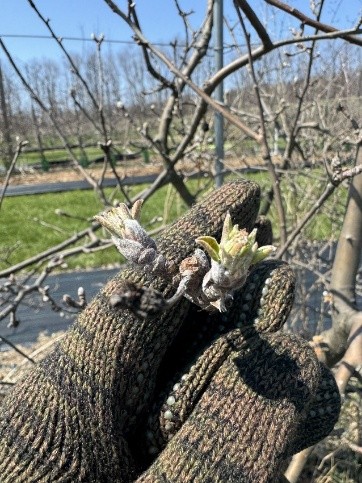
Apples in the region are mostly between green tip and half-inch green, though trees in colder parts of the region may still be at silver tip. Green tip in McIntosh was observed April 1 in Romeo, Michigan, setting the biofix for apple scab. This will be used as the biofix for monitoring apple scab. At silver tip the critical temperatures are 15 F for 10% kill and 2 F for 90% kill. At green tip the critical temperatures are 18 F for 10% kill and 10 F for 90% kill. At half-inch green the critical temperatures are 23 F for 10% kill and 15 F for 90% kill.
Blueberries
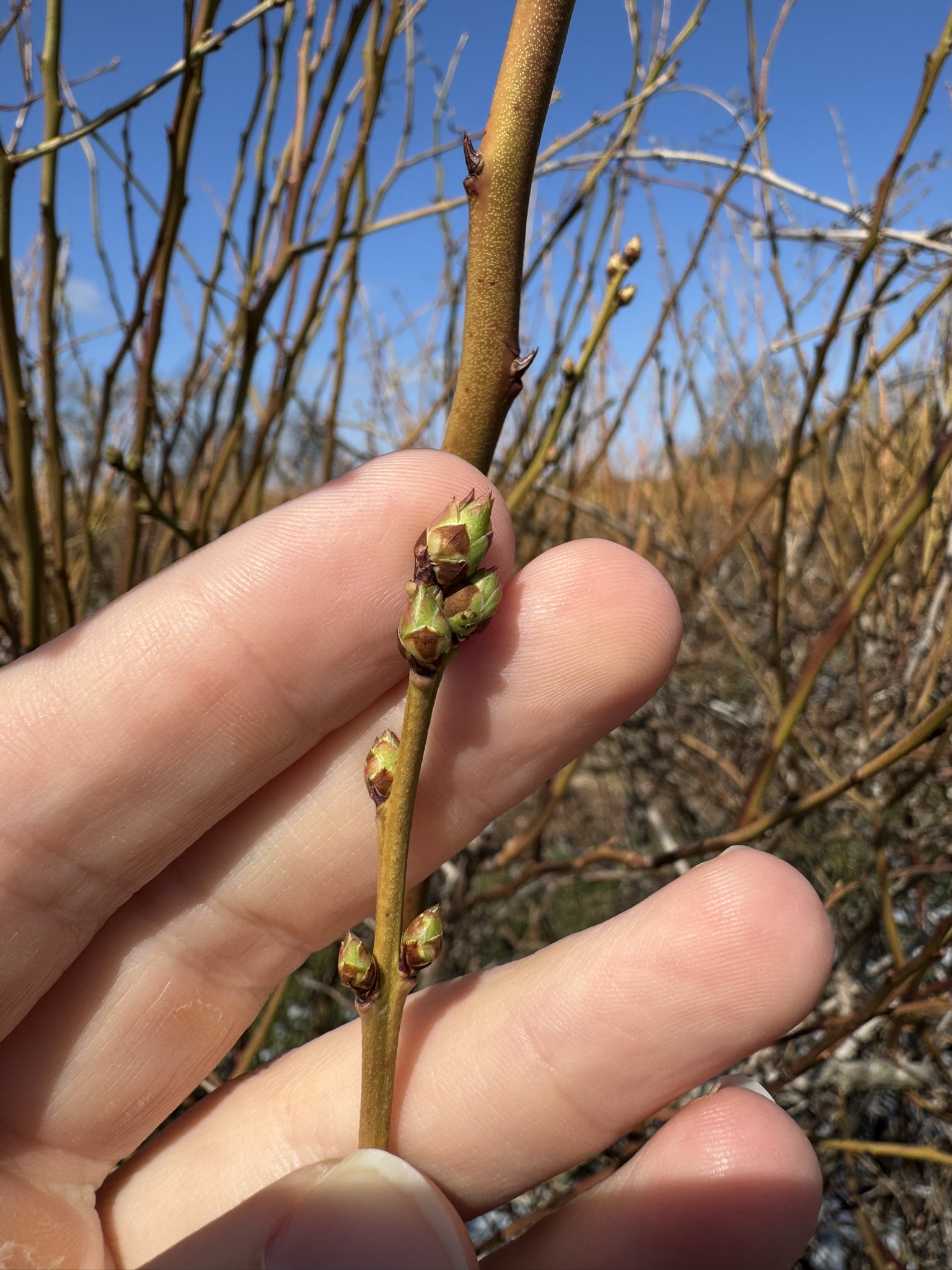
We are at bud swell in blueberry plantings in Fenton, Michigan. This is the primary risk period for mummy berry and it is time to start paying attention to phomopsis. FRAC 3 fungicides are reported to be efficacious for both mummy berry and phomopsis. At bud swell we see damage when temperatures drop to the 10-15 F range.
Brambles
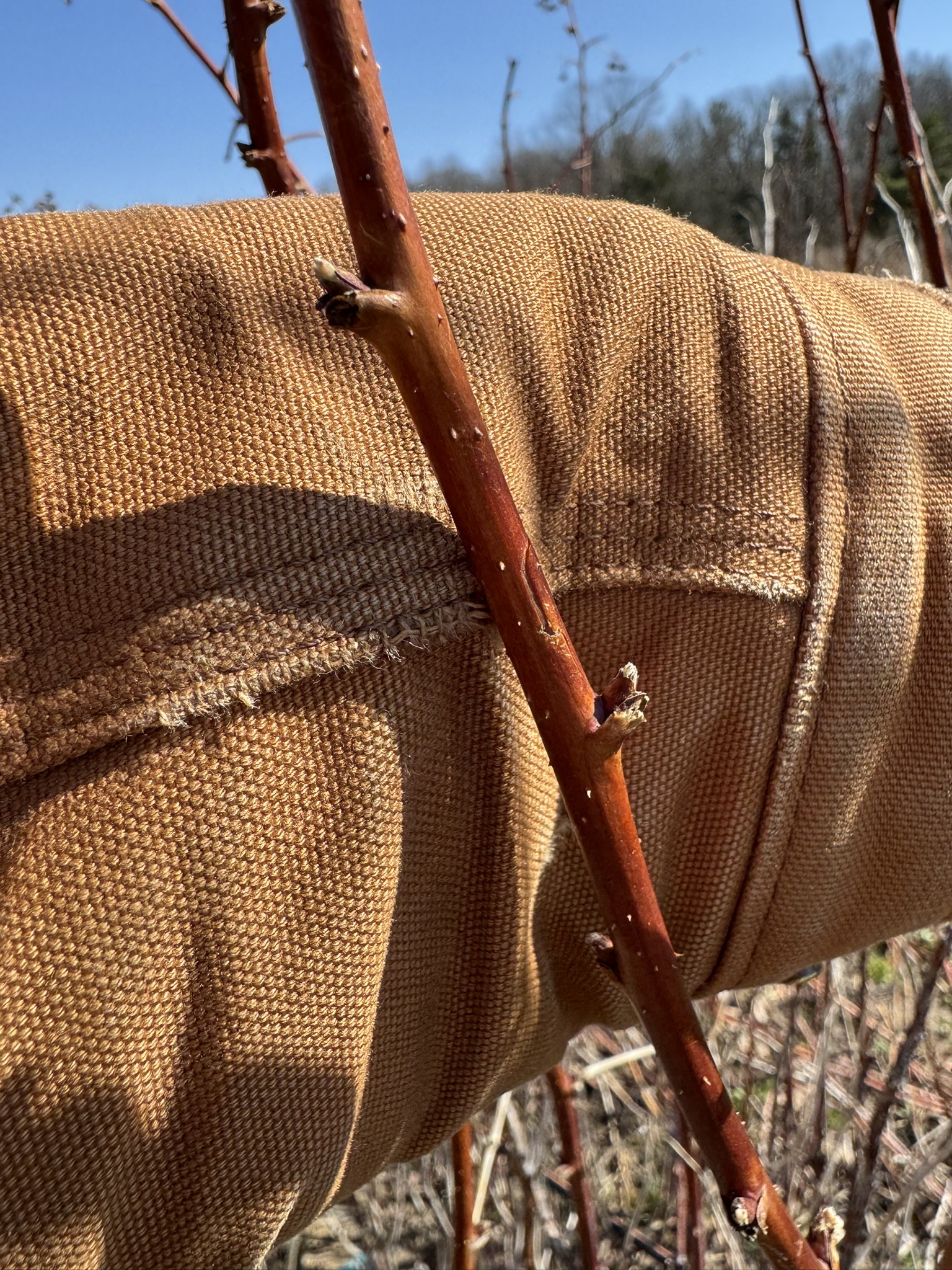
We are seeing first swell in summer raspberries. There is still time to cut down fall canes.
.JPEG?language_id=1)
Cherries
We are side green and even some green tip in sweet and tart cherries and some tarts are moving in to side green. At side green the critical temperatures for tart cherries are 24 F for 10% kill and 10 F for 90% kill. At green tip the critical temperatures for tart cherries are 26 F for 10% kill and 22 F for 90% kill. At side green the critical temperatures for sweet cherries are 22 F for 10% kill and 9 F for 90% kill. At green tip the critical temperatures for sweet cherries are 25 F for 10% kill and 14 F for 90% kill.
Grapes
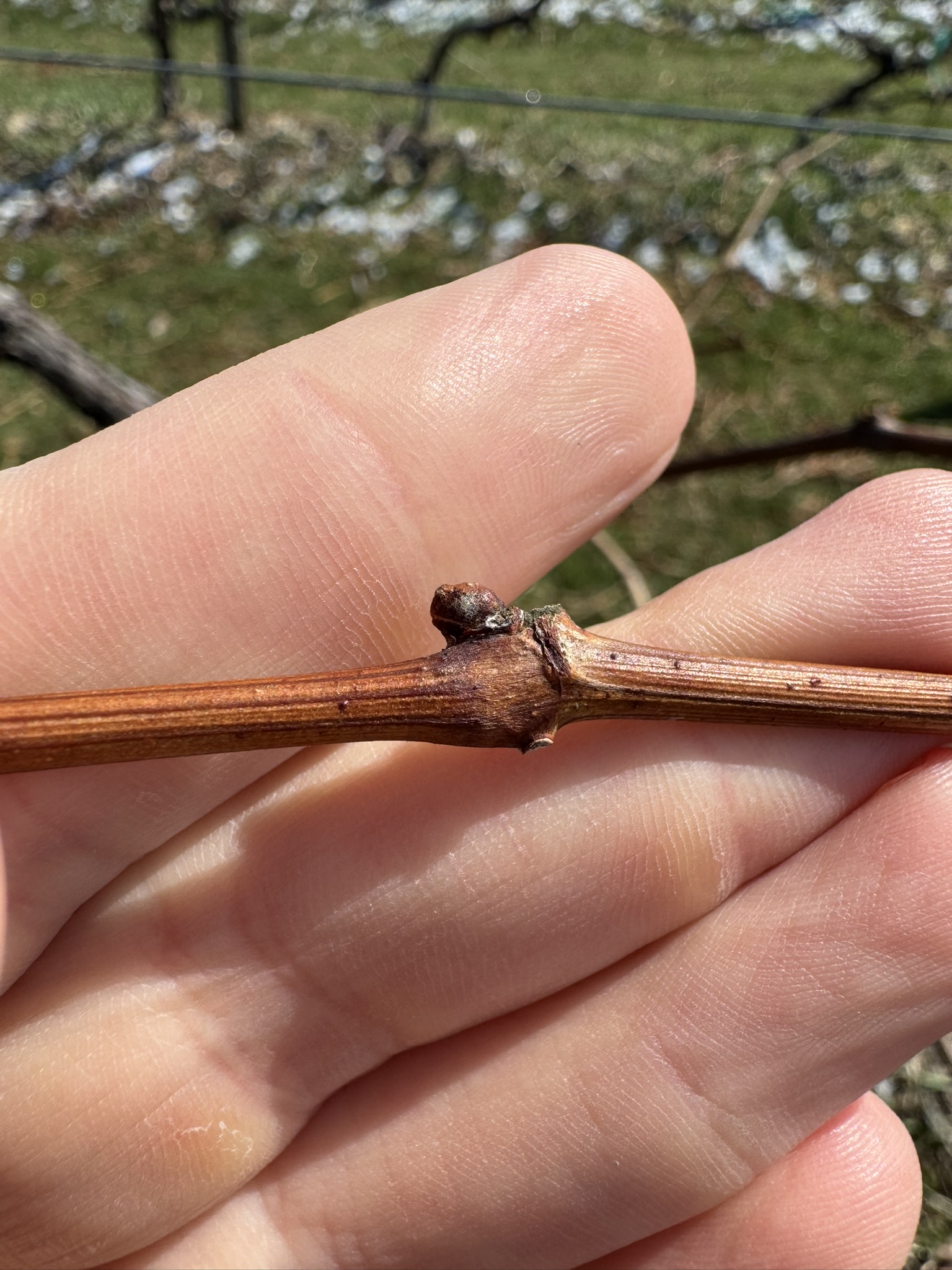
Some growers are still pruning grapes. We are seeing first swell in Concord grapes in the region. At first swell the critical temperatures are 13 F for 10% kill and -3 F for 90% kill.
Peaches and nectarines
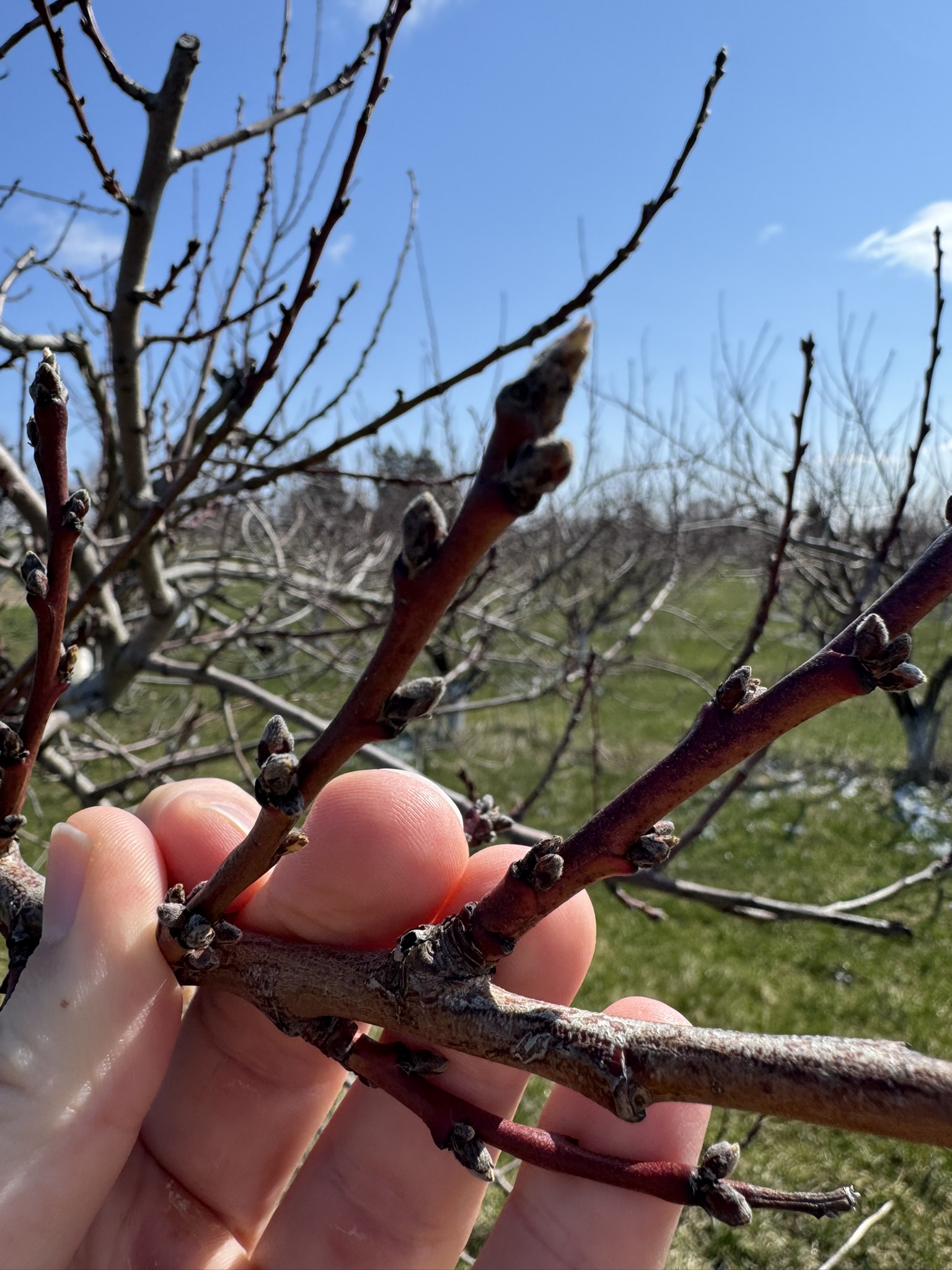
Peaches in Hartland are at the swollen bud stage. At swollen bud the critical temperatures are 18 F for 10% kill and 1 F for 90% kill. At calyx green the critical temperatures are 21 F for 10% kill and 5 F for 90% kill.
Pears
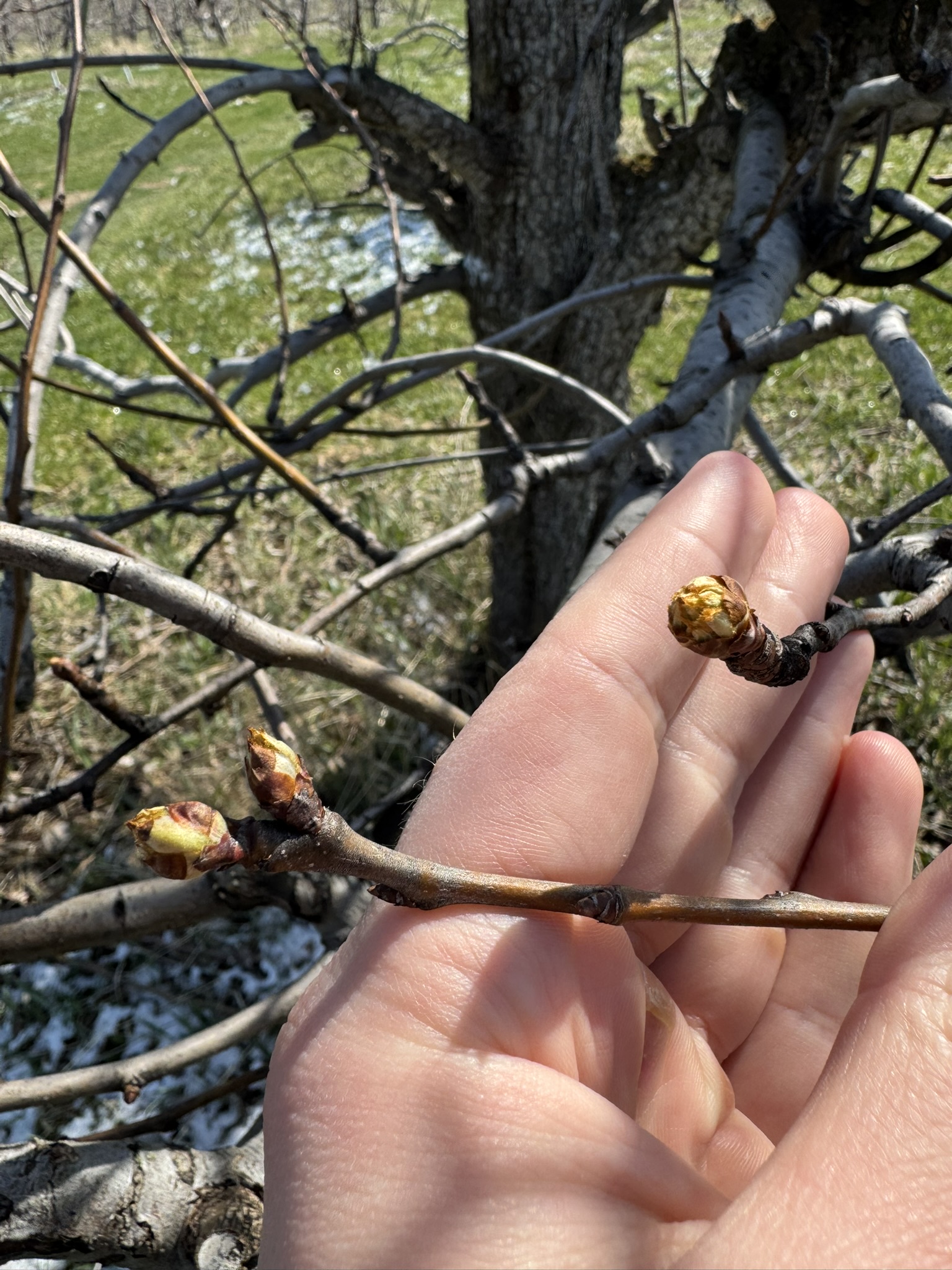
Pears observed in Hartland were at the blossom bud exposure stage. When blossom buds are exposed the critical temperatures are 20 F for 10% kill and 6 F for 90% kill.

Plums
Japanese style plums are in the green tip to tight cluster stager while European style plums are at first swell. At first swell the critical temperatures are 14 F for 10% kill and 0 F for 90% kill. At green tip the critical temperatures are 20 F for 10% kill and 7 F for 90% kill. Prune out black knot and dispose of the knots by burning or removing from the orchard. Sanitation is an important step in managing this disease.
Strawberries
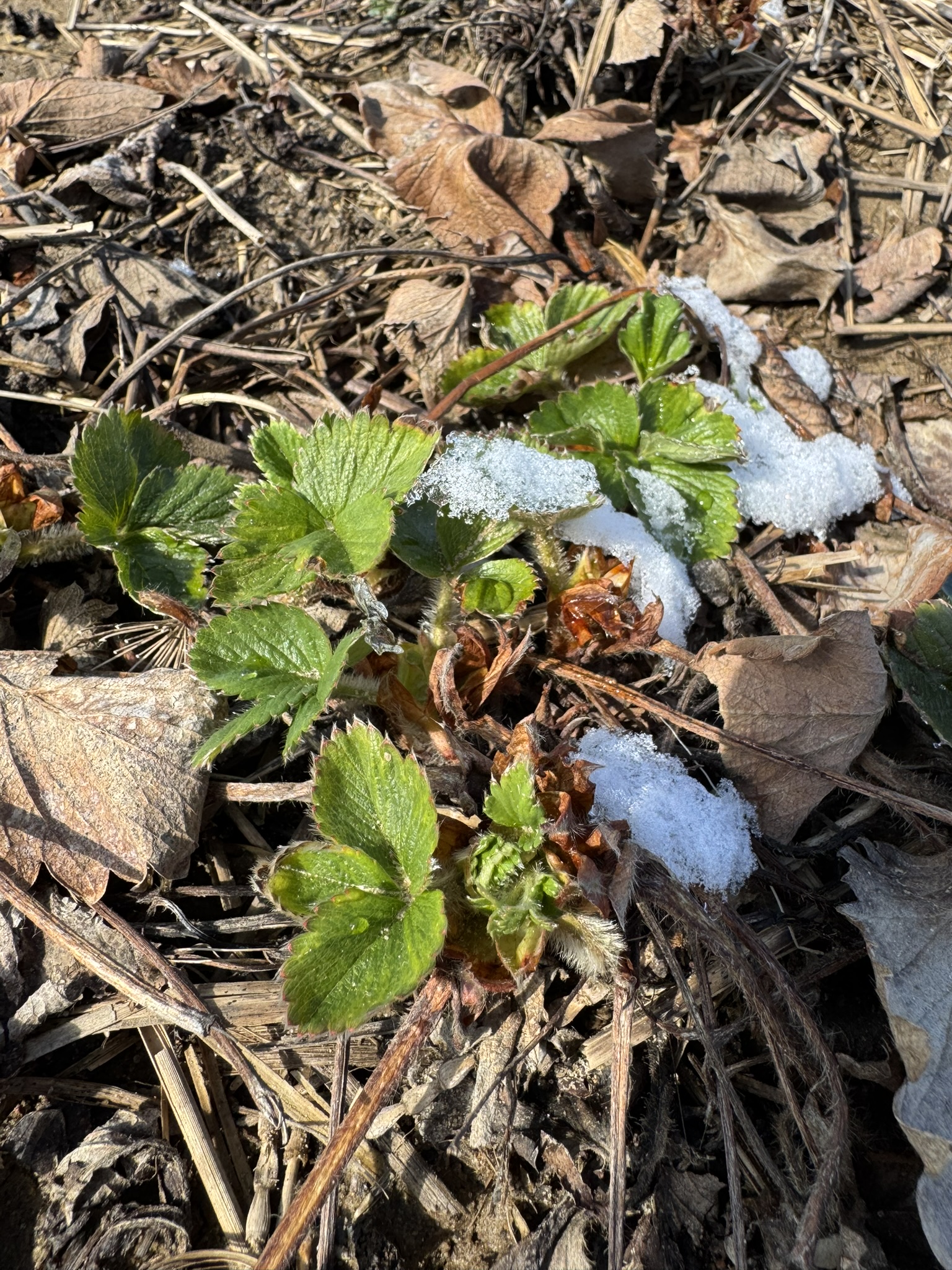
We are seeing some greening in field strawberries in Fenton, with some new leaf development. Early season fungicides should focus on controlling leaf spot.
Insect conditions
More in-depth information can be found by watching the latest weekly fruit meetings on MSU’s Kaltura Media Space (these may take a few days to upload after the meetings).
Black stem borer: Females start to search for new sites to deposit eggs around 100 growing degree days base 50 F (GDD50). The main control is to target emerging females at that point. Our warmest regions are forecast to get to 100 GDD50 next week.
European red mite: Control usually begins at tight cluster in apples and should be completed before the pink stage.
Green fruit worm: First catches have been reported in Fennville. These can be controlled with insecticides post-bloom.
Oriental fruit moth: Some growers are starting to set out traps.
Pear psylla: Egg hatch will ramp up in the next week.
Rosy apple aphid: Egg hatch is usually complete around the half-inch green stage and control is best applied around tight cluster.
San Jose scale: A delayed dormant oil spray between green tip and pink can be used to control scale. After this period the next time to control is when crawlers emerge in early summer.
Spotted tentiform leafminer: Control for spotted tentiform leafminer is usually not necessary, but may be useful in problem areas beginning at tight cluster in apples
Disease conditions
Apple scab: Biofix is set at green tip in McIntosh, which happened last week. Early control of scab is important for reducing secondary scab infections that can affect fruit.
Black knot: There is still time to prune out and burn black knot in plums and sour cherries. Fungicides may be used for limited control to supplement pruning and sanitation efforts.
Brown rot: This disease affects stone fruit and can proliferate during bloom, but we have not reached bloom yet. Fungicides may be necessary to control if bloom is during a warm period, especially in orchards that have had brown rot presence in previous seasons.
Cherry leaf spot: We are not expecting cherry leaf spot risk in the next week. See this 2013 article on cherry leaf spot management.
Grape black rot: Control for grape black rot usually begins at 1-inch shoot length, but we have yet to see grapes past first swell in the region. See this 2014 article for grape black rot management options and consult E-154.
Mummy berry: We are in the primary season for mummy berry infections. See bulletin E2846 for control methods.
Phomopsis: In blueberries, the Phomopsis fungus is active from bud swell until after harvest.
Powdery mildew of apple and pear: You can start to include products labeled for powdery mildew in sprays starting at tight cluster.
Seasonal weather update
In the last week, southeast Michigan has seen on average about 33 hours of rain accumulating to roughly 2.9 inches of precipitation.
| Liquid Precipitation Accumulation Mar. 1- April 7, 2026, issued April 7, 2026 | ||||
|---|---|---|---|---|
| Station (County) | Rainfall Total (in.) Current | Hours with Rainfall Current | Rainfall Total Average (5 Yr.) | Hours with Rainfall Average (5 Yr.) |
| Commerce (Oakland) | 5.6 | 77 | 3.3 | 71 |
| Deerfield (Monroe) | 6.1 | 75 | 3.2 | 69 |
| East Lansing MSU Hort (Ingham) | 7.0 | 87 | 3.8 | 74 |
| Emmett (St. Clair) | 6.4 | 87 | 3.3 | 68 |
| Flint (Genesee) | 6.7 | 91 | 3.8 | 74 |
| Freeland (Saginaw) | 6.7 | 86 | . | . |
| Hudson (Lenawee) | 6.1 | 77 | 3.8 | 74 |
| Ithaca (Gratiot) | 7.6 | 83 | 3.8 | 78 |
| Lapeer (Lapeer) | 6.5 | 91 | 3.0 | 68 |
| Linwood (Bay) | 6.5 | 87 | 3.5 | 72 |
| Pigeon (Huron) | 5.4 | 93 | 2.9 | 68 |
| Richville/Frankenmuth (Tuscola) | 7.3 | 90 | 3.6 | 71 |
| Romeo (Macomb) | 5.6 | 70 | 3.2 | 67 |
| Sandusky (Sanilac) | 6.1 | 78 | 3.1 | 63 |
| Average of stations in this region: | 6.4 | 83.7 | 3.4 | 70.5 |
| Difference in Liquid Precipitation Accumulation from Mar. 1 observed March 31 and April 7, 2026; issued April 7, 2026 | ||||||
|---|---|---|---|---|---|---|
| Rainfall Total (in.) | Rainfall Total (in.) | Hours with Rainfall | Hours with Rainfall | |||
| Station (County) | Mar. 31 | Apr. 7 | Difference | Mar. 31 | Apr. 7 | Difference |
| Commerce (Oakland) | 3.6 | 5.6 | 2.0 | 50 | 77 | 27.0 |
| Deerfield (Monroe) | 4.2 | 6.1 | 1.9 | 46 | 75 | 29.0 |
| East Lansing MSU Hort (Ingham) | 3.8 | 7.0 | 3.2 | 53 | 87 | 34.0 |
| Emmett (St. Clair) | 3.4 | 6.4 | 3.0 | 52 | 87 | 35.0 |
| Flint (Genesee) | 3.2 | 6.7 | 3.5 | 53 | 91 | 38.0 |
| Freeland (Saginaw) | 3.7 | 6.7 | 3.0 | 48 | 86 | 38.0 |
| Hudson (Lenawee) | 4.5 | 6.1 | 1.6 | 51 | 77 | 26.0 |
| Ithaca (Gratiot) | 3.8 | 7.6 | 3.8 | 47 | 83 | 36.0 |
| Lapeer (Lapeer) | 2.9 | 6.5 | 3.6 | 56 | 91 | 35.0 |
| Linwood (Bay) | 3.3 | 6.5 | 3.2 | 48 | 87 | 39.0 |
| Pigeon (Huron) | 2.8 | 5.4 | 2.6 | 59 | 93 | 34.0 |
| Richville/Frankenmuth (Tuscola) | 4.1 | 7.3 | 3.2 | 55 | 90 | 35.0 |
| Romeo (Macomb) | 3.1 | 5.6 | 2.5 | 41 | 70 | 29.0 |
| Sandusky (Sanilac) | 2.7 | 6.1 | 3.4 | 47 | 78 | 31.0 |
| Average of stations in this region: | 3.5 | 6.4 | 2.9 | 50.4 | 83.7 | 33.3 |
In the short term, we’ll see rainy conditions on Thursday and Friday (April 9-10) with the potential for additional showers early next week. Lows will be in the 30s and 40s through Saturday, with highs in the 50s and 60s.
In the medium term, we are expecting temperatures to be near to above normal and precipitation totals to be normal. The long lead outlooks are calling for both temperature and precipitation to be near normal.
Our regional average growing degree day accumulation for the season are slightly ahead of the five-year average, but at this early stage this may change. In the last week we accumulated on average 39 GDD at 42 F, 30 GDD at 45 F and 18 GDD at 50 F (see table below). Read this Michigan State University Extension article to learn more about degree days: Understanding growing degree-days.
| Degree Day Accumulation Mar. 1-April 7, 2026 Forecast from Apr. 8-14, 2026; issued April 7, 2026 | |||||||||
|---|---|---|---|---|---|---|---|---|---|
| Station (County) | Degree Days Base 42°F Current | Degree Days Base 42°F Average (5 Yr.) | Degree Days Base 42°F Forecast | Degree Days Base 45°F Current | Degree Days Base 45°F Average (5 Yr.) | Degree Days Base 45°F Forecast | Degree Days Base 50°F Current | Degree Days Base 50°F Average (5 Yr.) | Degree Days Base 50°F Forecast |
| Commerce (Oakland) | 161 | 122 | 232 | 122 | 87 | 179 | 73 | 47 | 111 |
| Deerfield (Monroe) | 251 | 165 | 331 | 200 | 122 | 265 | 130 | 69 | 174 |
| East Lansing MSU Hort (Ingham) | 181 | 137 | 257 | 139 | 99 | 199 | 84 | 55 | 124 |
| Emmett (St. Clair) | 131 | 104 | 190 | 97 | 73 | 144 | 56 | 37 | 86 |
| Flint (Genesee) | 161 | 136 | 231 | 123 | 99 | 179 | 74 | 55 | 111 |
| Freeland (Saginaw) | 95 | 100 | 152 | 69 | 70 | 113 | 36 | 38 | 62 |
| Hudson (Lenawee) | 225 | 143 | 306 | 179 | 105 | 245 | 115 | 60 | 159 |
| Ithaca (Gratiot) | 125 | 116 | 189 | 92 | 82 | 143 | 53 | 44 | 85 |
| Lapeer (Lapeer) | 160 | 129 | 226 | 124 | 93 | 176 | 77 | 51 | 111 |
| Linwood (Bay) | 75 | 83 | 129 | 52 | 58 | 93 | 25 | 32 | 51 |
| Pigeon (Huron) | 79 | 86 | 117 | 56 | 61 | 84 | 29 | 33 | 44 |
| Richville/Frankenmuth (Tuscola) | 117 | 116 | 177 | 86 | 83 | 133 | 49 | 43 | 78 |
| Romeo (Macomb) | 159 | 116 | 227 | 120 | 82 | 174 | 72 | 43 | 107 |
| Sandusky (Sanilac) | 116 | 97 | 166 | 86 | 68 | 125 | 49 | 36 | 74 |
| Average of stations in this region: | 145 | 118 | 209 | 110 | 84 | 161 | 66 | 46 | 98 |
| Difference in Degree Day Accumulation from Mar. 1, 2026 observed March 31 and April 7, 2026; issued April 7, 2026 | |||||||||
|---|---|---|---|---|---|---|---|---|---|
| Station (County) | Degree Days Base 42°F | Degree Days Base 42°F | Degree Days Base 42°F | Degree Days Base 45°F | Degree Days Base 45°F | Degree Days Base 45°F | Degree Days Base 50°F | Degree Days Base 50°F | Degree Days Base 50°F |
| Mar. 31 | Apr. 7 | Difference | Mar. 31 | Apr. 7 | Difference | Mar. 31 | Apr. 7 | Difference | |
| Commerce (Oakland) | 121 | 161 | 40.0 | 92 | 122 | 30.0 | 55 | 73 | 18.0 |
| Deerfield (Monroe) | 173 | 251 | 78.0 | 137 | 200 | 63.0 | 88 | 130 | 42.0 |
| East Lansing MSU Hort (Ingham) | 133 | 181 | 48.0 | 102 | 139 | 37.0 | 61 | 84 | 23.0 |
| Emmett (St. Clair) | 96 | 131 | 35.0 | 70 | 97 | 27.0 | 40 | 56 | 16.0 |
| Flint (Genesee) | 121 | 161 | 40.0 | 92 | 123 | 31.0 | 54 | 74 | 20.0 |
| Freeland (Saginaw) | 74 | 95 | 21.0 | 54 | 69 | 15.0 | 30 | 36 | 6.0 |
| Hudson (Lenawee) | 156 | 225 | 69.0 | 123 | 179 | 56.0 | 78 | 115 | 37.0 |
| Ithaca (Gratiot) | 87 | 125 | 38.0 | 63 | 92 | 29.0 | 35 | 53 | 18.0 |
| Lapeer (Lapeer) | 122 | 160 | 38.0 | 95 | 124 | 29.0 | 58 | 77 | 19.0 |
| Linwood (Bay) | 61 | 75 | 14.0 | 43 | 52 | 9.0 | 23 | 25 | 2.0 |
| Pigeon (Huron) | 57 | 79 | 22.0 | 42 | 56 | 14.0 | 23 | 29 | 6.0 |
| Richville/Frankenmuth (Tuscola) | 84 | 117 | 33.0 | 61 | 86 | 25.0 | 34 | 49 | 15.0 |
| Romeo (Macomb) | 119 | 159 | 40.0 | 90 | 120 | 30.0 | 53 | 72 | 19.0 |
| Sandusky (Sanilac) | 81 | 116 | 35.0 | 60 | 86 | 26.0 | 33 | 49 | 16.0 |
| Average of stations in this region: | 106 | 145 | 39 | 80 | 110 | 30 | 48 | 66 | 18 |
Watch Jeff Andresen's weekly agricultural weather forecast reports
More information and reports on normal weather conditions and departures from normal can be found on the NOAA Climate Prediction Center website, NOAA U.S. Climate Normals website, NOAA Climate Normals Quick Access Page (which may be searched by region), and Midwest Regional Climate Center website.
This work is supported by the Crop Protection and Pest Management Program [grant no 2024-70006-43569] from the USDA National Institute of Food and Agriculture. Any opinions, findings, conclusions, or recommendations expressed in this publication are those of the author(s) and do not necessarily reflect the view of the U.S. Department of Agriculture.