Southeast Michigan fruit update – May 12, 2026
 Print
Print Email
EmailTree fruit are at petal fall and blueberries are in bloom.
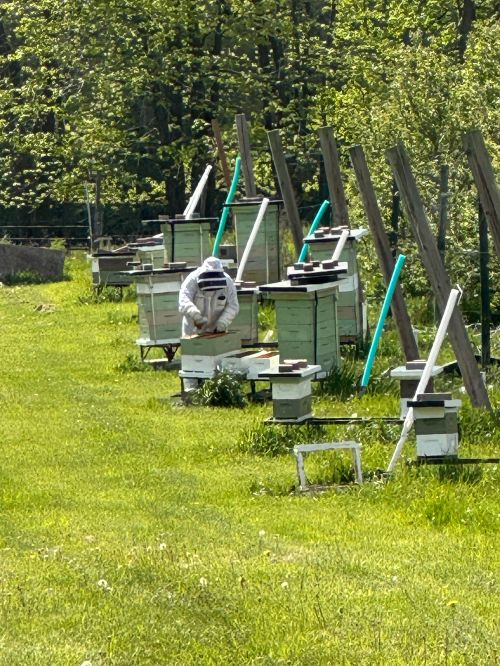
Welcome to the seventh in-season fruit article update for southeast Michigan for the 2026 season. Throughout the season these updates will include information about the weather in the past week and the upcoming week, a fruit-by-fruit guide to current conditions with appropriate pest and disease updates, and other relevant observations.
General observations
In the last week, cool temperatures kept blooms around in much of the region, though we still saw development. Conditions also slowed insect movement and disease progression. The weather will change quickly, with temperatures rising toward the end of the week. We expect some storms over the weekend, but the warm weather should be here to stay.
Many of you will have already done spring weed control, but if not, this 2020 article on spring herbicide applications from Michigan State University Extension lists some available options.
This year, our weekly integrated pest management (IPM) updates have returned to the 2023 and 2024 format of Tuesday evening virtual meetings covering both small fruit and tree fruit in southeast and southwest Michigan. You can register online at 2026 South Michigan Fruit IPM Updates. It is a good opportunity to hear from experts, ask questions and receive restricted use pesticide (RUP) credits. See the latest weekly fruit meetings for southern Michigan on MSU’s Kaltura Media Space (these may take a few days to upload after the meetings are held).
Fruit-by-fruit conditions
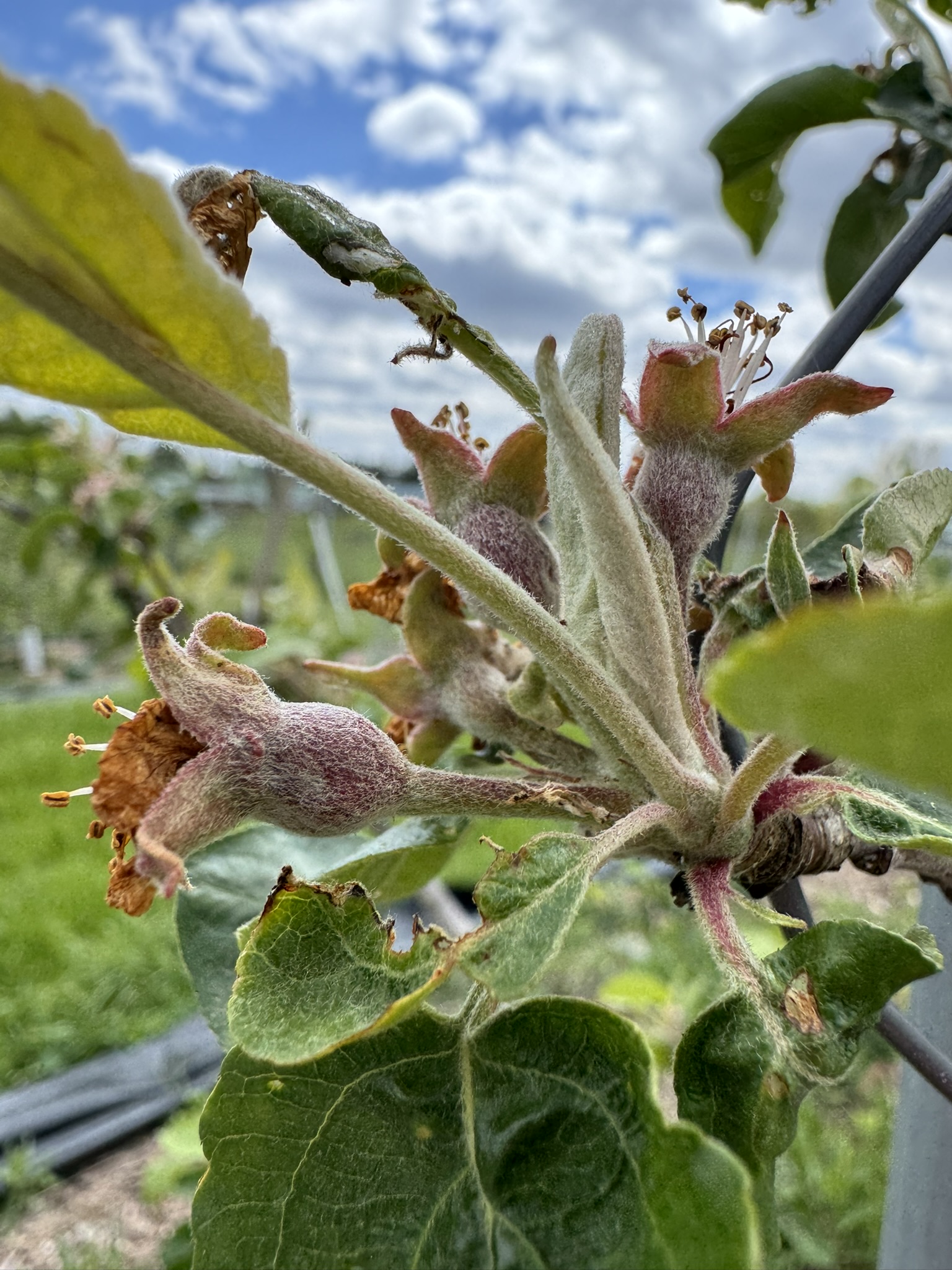
Apples: Apples in the region are mostly between petal fall and fruit set, though late blooming cultivars like Northern Spy and cooler parts of the region may still be seeing a lot of blooms. Green tip in McIntosh was observed on April 1 in Romeo, setting the biofix for apple scab. This will be used as the biofix for monitoring apple scab. At full pink, first bloom, full bloom and post bloom, the critical temperatures are 28 F for 10% kill and 25 F for 90% kill.
Frost damaged apples can be set with plant growth regulators if necessary.
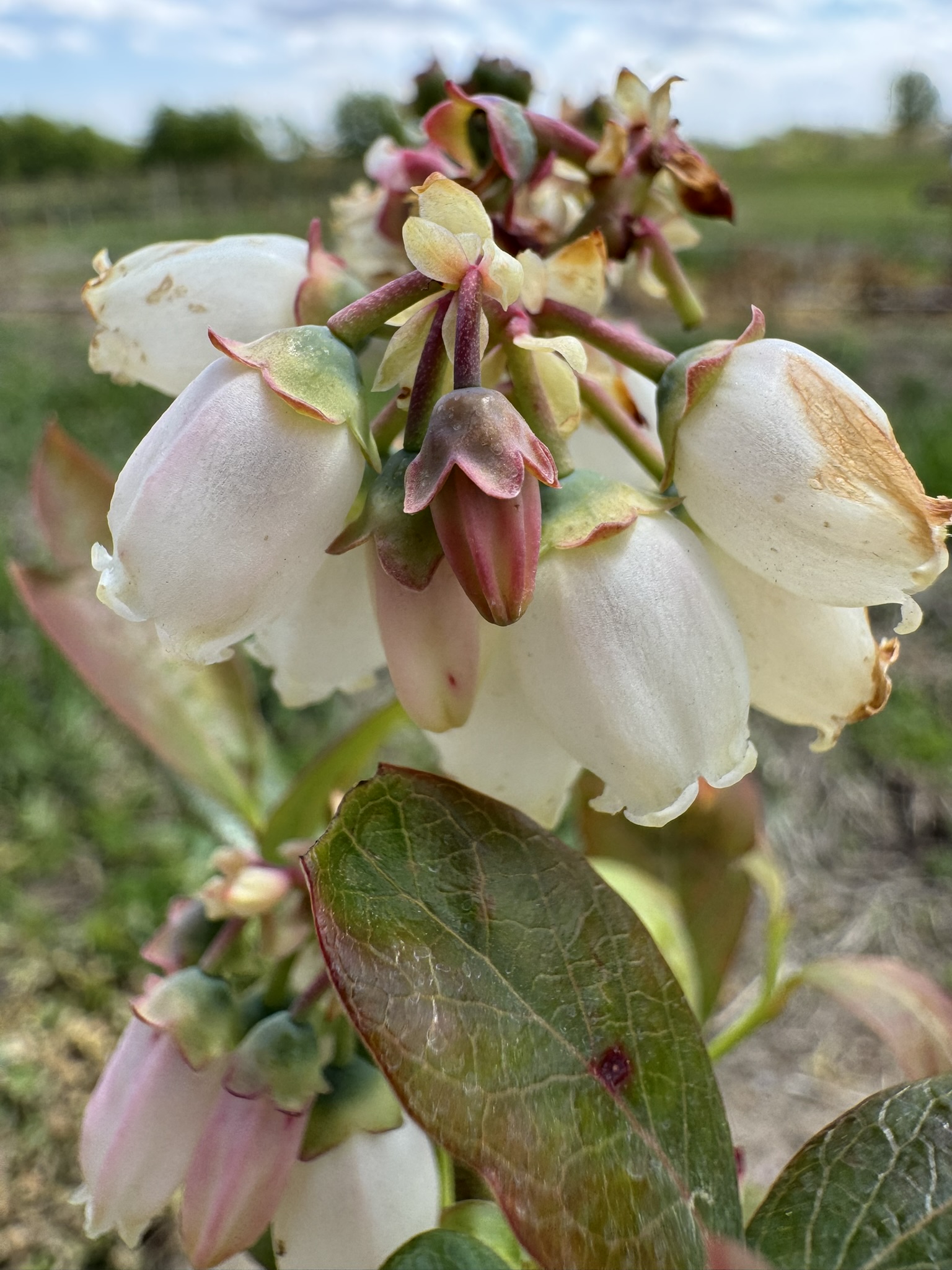
Blueberries: We are in bloom in early blueberry cultivars and in warmer parts of the region, while later cultivars and cooler areas are in late pink bud. This is the primary risk period for mummy berry and it is time to start paying attention to phomopsis. FRAC 3 fungicides are reported to be efficacious for both mummy berry and phomopsis. At late pink bud the critical temperature range is 24-27 F and at full bloom damage is seen at 28 F.
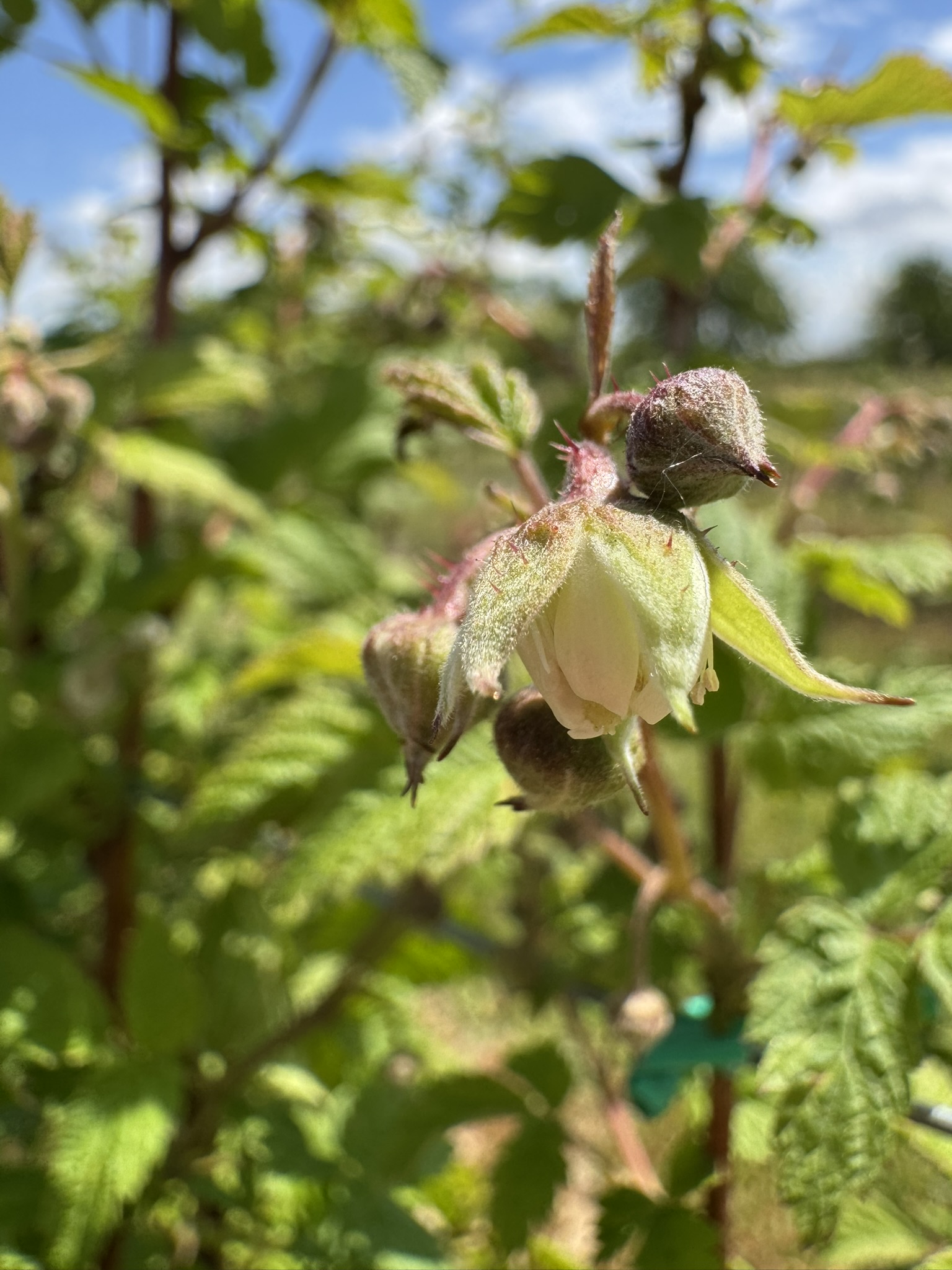
Brambles: We are seeing loose clusters and the first white of flowers in Prelude summer raspberries in Britton, new shoot growth in fall raspberries, and leafing out in blackberries.
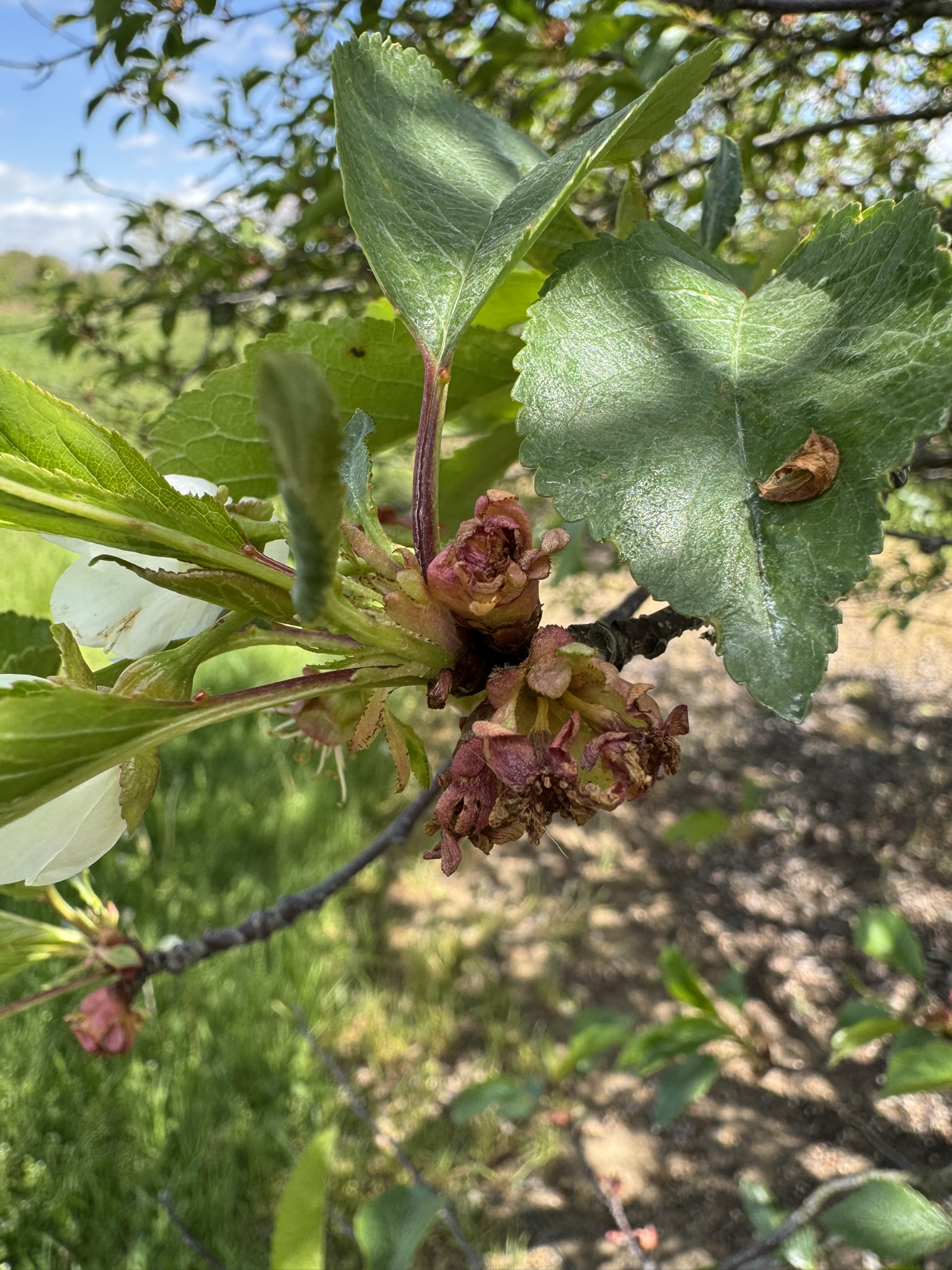
Cherries: We are seeing petal fall and fruit set in both tart and sweet cherries in most areas. Post bloom the critical temperatures for sweet cherries are 28 F for 10% kill and 25 F for 90% kill.
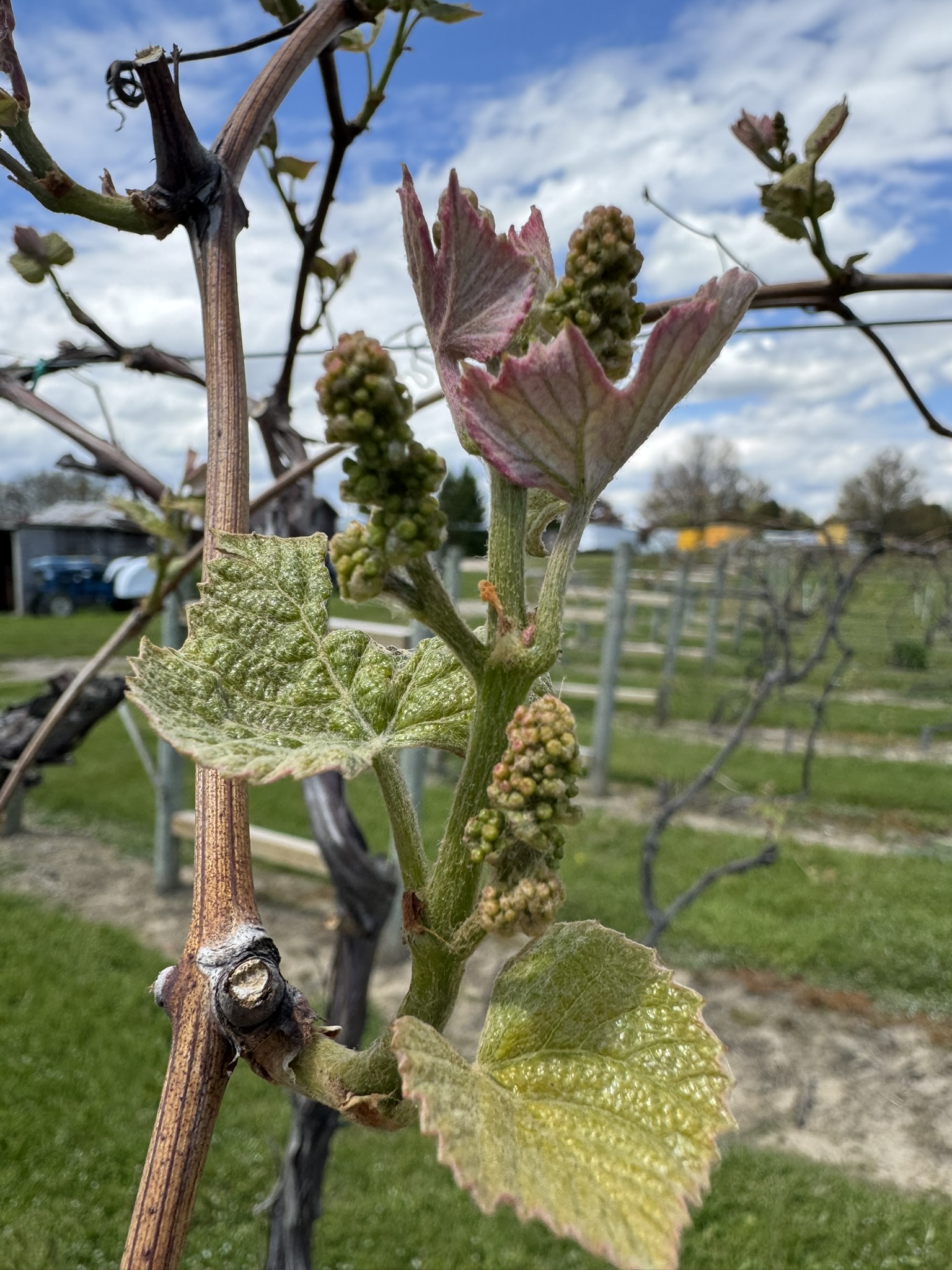
Grapes: We are seeing some first leaves in hybrid wine grapes like Marquette in Ray Township, and shoot growth and elongated inflorescences in Concord grapes in Britton. At first leaf the critical temperatures are 27 F for 10% kill and 21 F for 90% kill.
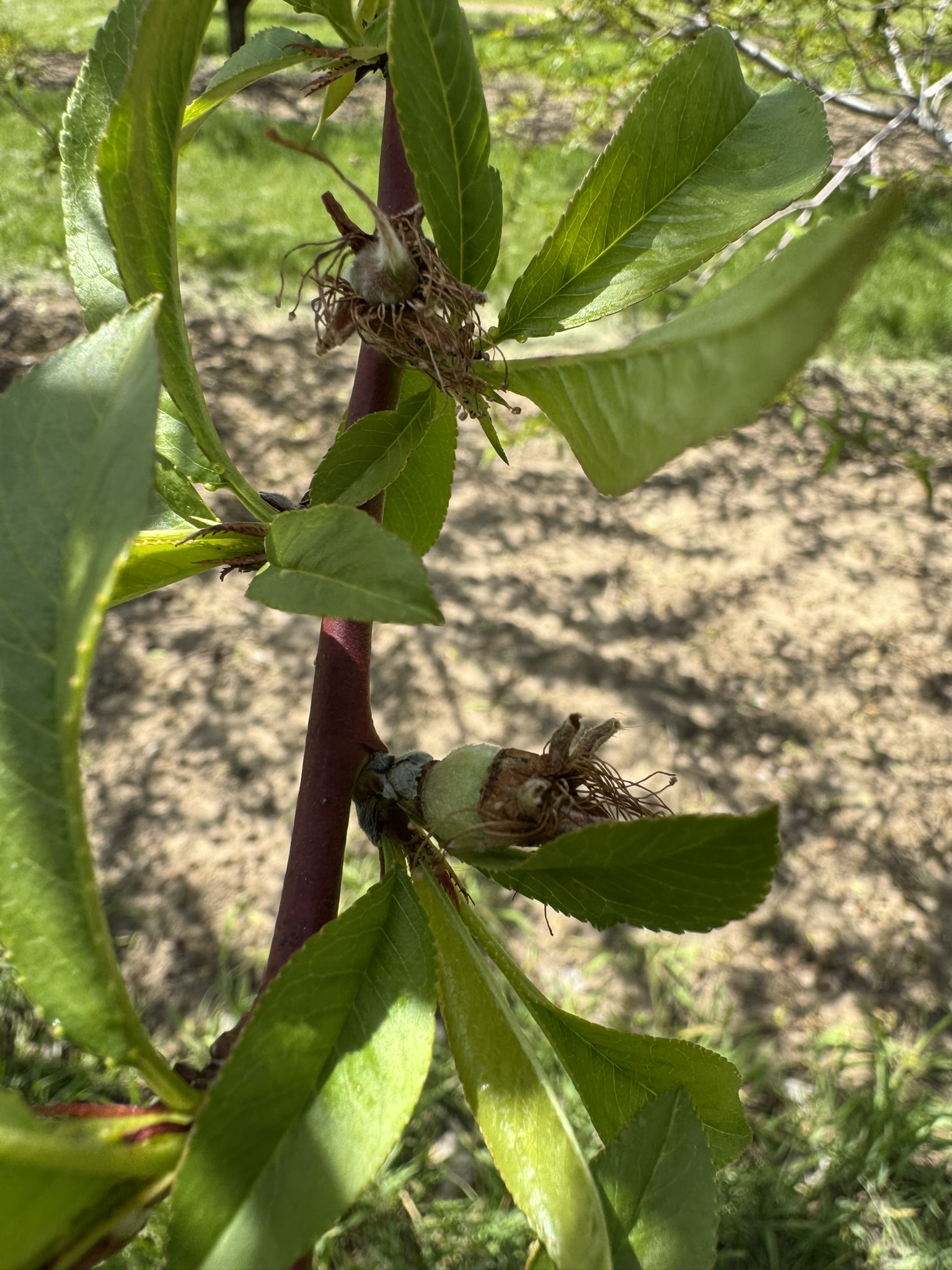
Peaches and nectarines: Peaches in warmer parts of the region are at fruit set in the shuck while in cooler parts they are at petal fall. At some sites, we are seeing secondary buds bloom in orchards where primary buds were lost. This is a good opportunity to look at trees that have slower-developing buds to see where winter damage may have occurred. Post bloom the critical temperatures are 28 F for 10% kill and 25 F for 90% kill.
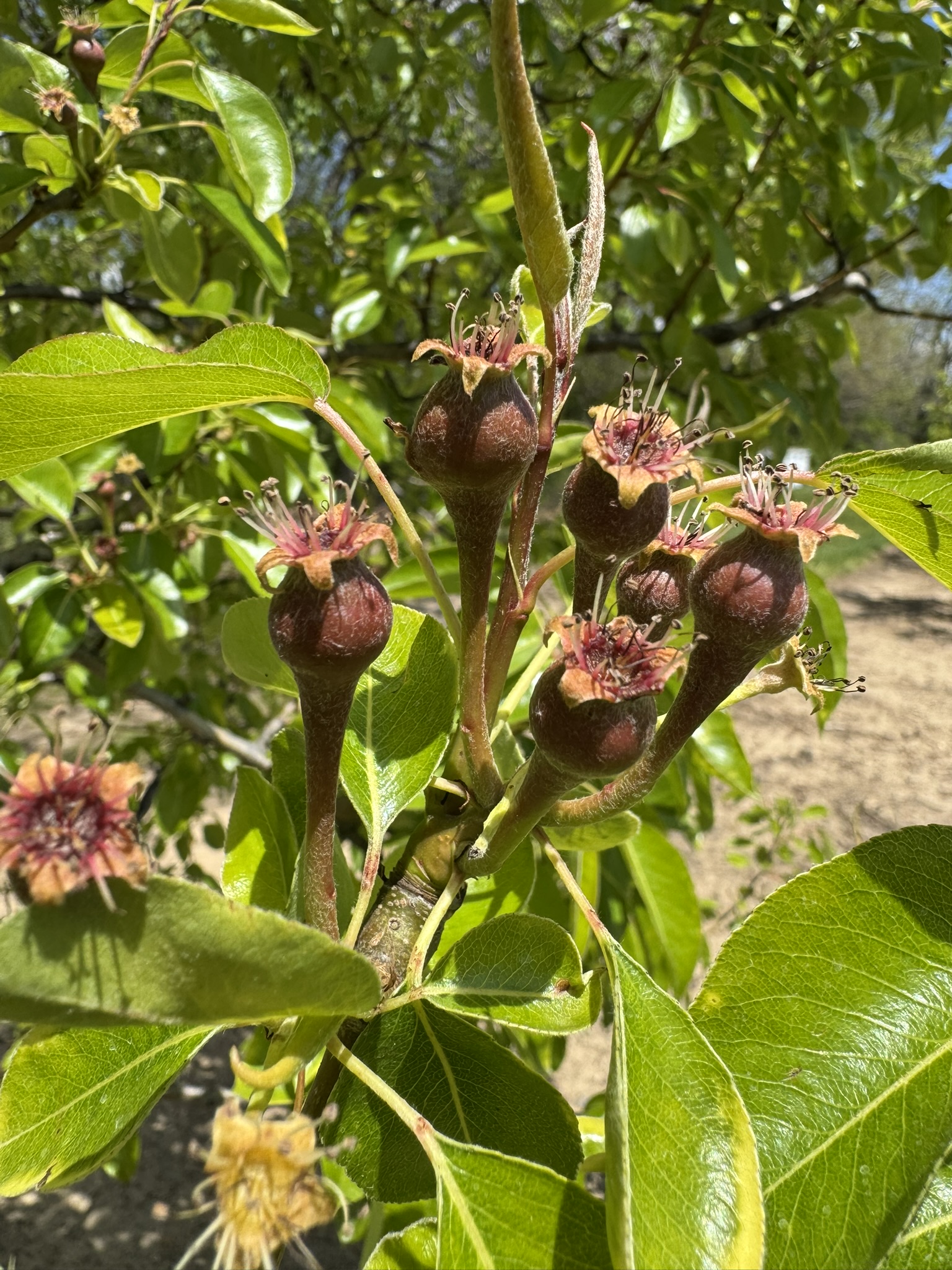
Pears: Pears observed in Britton were at fruit set with Bartlett at 11 mm, while cooler parts are getting to petal fall. There seems to be a wide variation in bloom patterns depending on cultivar and the specific locations of farms. At first bloom the critical temperatures are 27 F for 10% kill and 23 F for 90% kill. From full bloom to petal fall the critical temperatures are 28 F for 10% kill and 24 F for 90% kill.
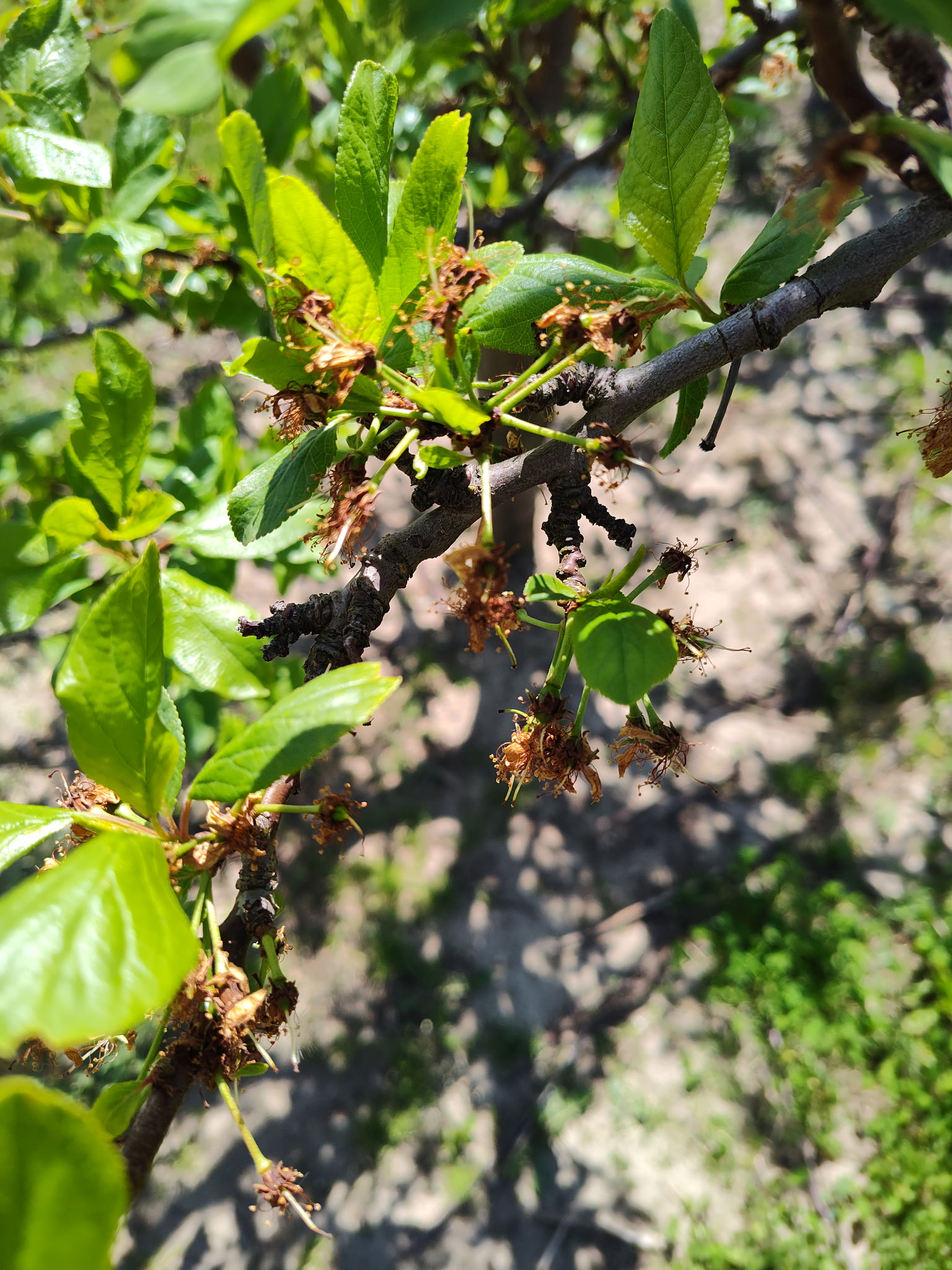
Plums: Japanese style plums are starting to size up while European style plums are at fruit set in the shuck.
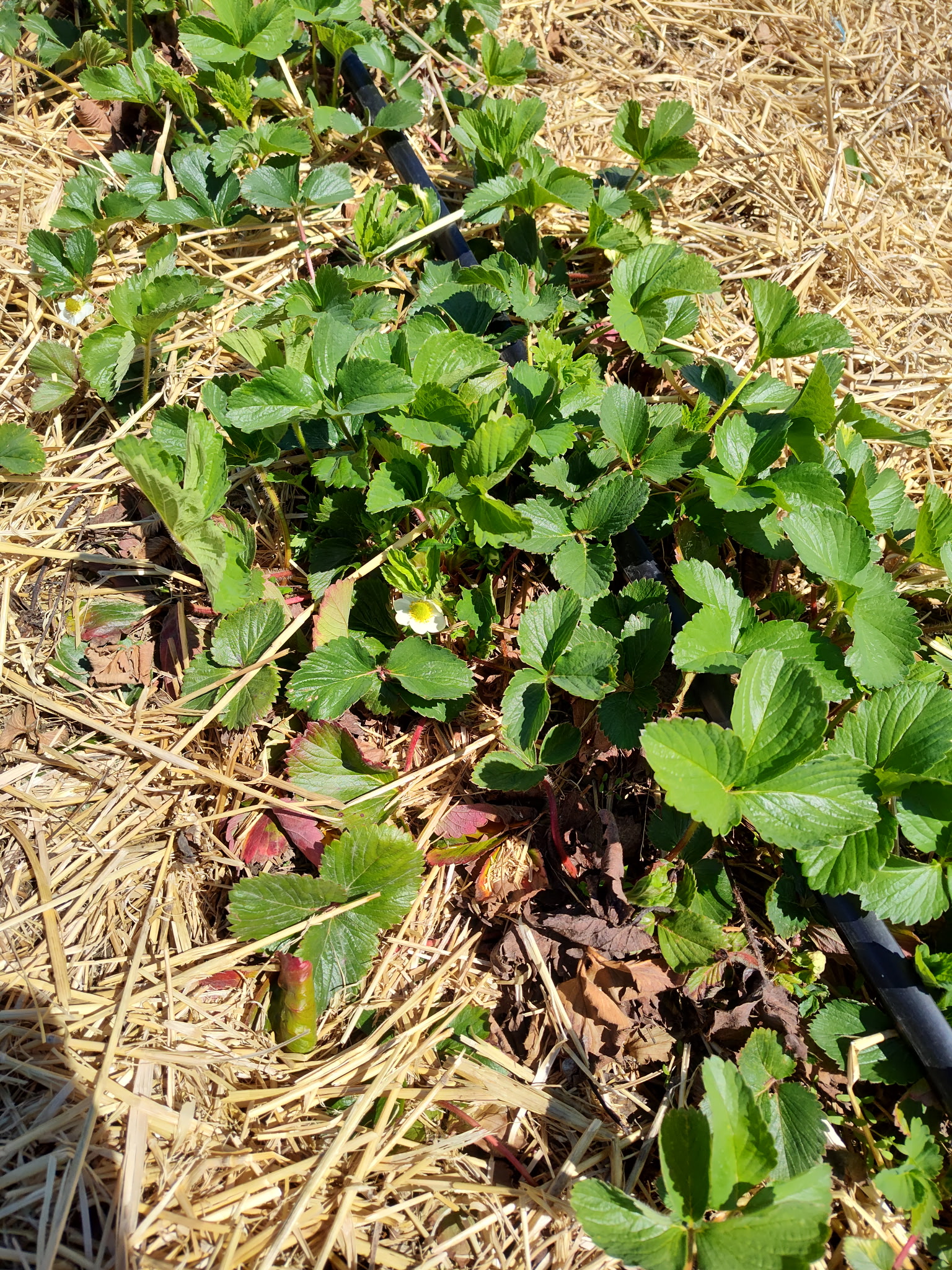
Strawberries: We are seeing first blooms in strawberries in the region, with some new leaf development.
Insect conditions
More in-depth information can be found by watching the latest weekly fruit meetings on MSU’s Kaltura Media Space (these may take a few days to upload after the meetings).
Codling moth: First catches have been reported in southeast Michigan and northern Ohio as of April 29, as well as at the Trevor Nichols Research Center in Fennville, Michigan. Catches in consecutive weeks at the same site are required to establish biofix.
European apple sawfly: Catches have been reported in southeast Michigan with numbers climbing. This is a pest that wasn’t an issue for many years, but growers have been reporting damage the last few seasons.
Grape berry moth: Numbers increased at Fennville but remain relatively low.
Green fruitworm: Catches are dropping in Fennville and southeast Michigan. These can be controlled with insecticides post-bloom.
Oriental fruit moth: Biofix was set for April 22 in Romeo and April 13 in Fennville. Numbers are down, but if you have high catches, you can use ovicidal or larvicidal products (see the Enviroweather model with biofix).
Pear psylla: Eggs continue hatching and some nymphs have been caught in southeast Michigan.
Plum curculio: Some were caught two weeks ago at the Trevor Nichols Research Center, but last week there were still very few detected, likely because the low temperatures reduced migration. This is the timing for Avaunt in tart cherry and we will hit that timing in apple soon. Warm temperatures over the weekend should increase their migration.
San Jose scale: Some males have been caught in southeast Michigan. The next time to control is when crawlers emerge in early summer.
Disease conditions
Apple scab: Biofix is set at green tip in McIntosh, which happened March 31. Early control of scab is important for reducing secondary scab infections that can affect fruit. We are not expecting high risk this week, though we are still in primary scab season and rain events may cause spores to eject.
Brown rot: Bloom in stone fruit is mostly over, so the control window for brown rot has passed. Read this article about brown rot control options.
Cherry leaf spot: We are not expecting high cherry leaf spot risk in the next week, though conditions could become favorable for its proliferation. See this 2024 article on cherry leaf spot management.
Fire blight: Since we are moving out of bloom, there is low fire blight risk in apples and pears this week. Cooler regions where crops are still blooming may see risk over the weekend as temperatures climb.
Grape black rot: Control for grape black rot usually begins at 1-inch shoot length, and we are there in our warmest areas. See this 2014 article on grape black rot management options and consult E-154. Risk is expected to be low this week.
Mummy berry: We are in the primary season for mummy berry infections. See E2846 for control methods.
Phomopsis: In blueberries, the Phomopsis fungus is active from bud swell until after harvest.
Powdery mildew of apple and pear: You can start to include products labeled for powdery mildew in sprays starting at tight cluster. We are expecting some risk from May 18-19.
Seasonal weather update
In the last week, southeast Michigan has seen on average about 3.1 hours of rain accumulating to roughly 0.1 inch of precipitation.
| Liquid Precipitation Accumulation Mar. 1- May 12, 2026, issued May 12, 2026 | ||||
|---|---|---|---|---|
| Station (County) | Rainfall Total (in.) Current | Hours with Rainfall Current | Rainfall Total Average (5 Yr.) | Hours with Rainfall Average (5 Yr.) |
| Commerce (Oakland) | 9.3 | 138 | 6.2 | 136 |
| Deerfield (Monroe) | 10.2 | 153 | 6.5 | 137 |
| East Lansing MSU Hort (Ingham) | 10.6 | 142 | 6.7 | 137 |
| Emmett (St. Clair) | 9.1 | 143 | 5.7 | 126 |
| Flint (Genesee) | 10.2 | 143 | 6.3 | 136 |
| Freeland (Saginaw) | 10.0 | 132 | . | . |
| Hudson (Lenawee) | 10.3 | 150 | 6.6 | 136 |
| Ithaca (Gratiot) | 12.1 | 145 | 5.8 | 127 |
| Lapeer (Lapeer) | 10.5 | 149 | 5.3 | 136 |
| Linwood (Bay) | 10.8 | 152 | 5.6 | 123 |
| Pigeon (Huron) | 9.0 | 150 | 5.1 | 131 |
| Richville/Frankenmuth (Tuscola) | 10.7 | 142 | 5.8 | 123 |
| Romeo (Macomb) | 8.4 | 121 | 6.0 | 127 |
| Sandusky (Sanilac) | 8.9 | 130 | 5.4 | 123 |
| Average of stations in this region: | 10.0 | 142.1 | 5.9 | 130.6 |
| Difference in Liquid Precipitation Accumulation from Mar. 1 observed May 5 and May 12, 2026; issued May 12, 2026 | ||||||
|---|---|---|---|---|---|---|
| Rainfall Total (in.) | Rainfall Total (in.) | Hours with Rainfall | Hours with Rainfall | |||
| Station (County) | 5-May | 12-May | Difference | 5-May | 12-May | Difference |
| Commerce (Oakland) | 9.3 | 9.3 | 0.1 | 134 | 138 | 4.0 |
| Deerfield (Monroe) | 10.0 | 10.2 | 0.2 | 142 | 153 | 11.0 |
| East Lansing MSU Hort (Ingham) | 10.5 | 10.6 | 0.1 | 140 | 142 | 2.0 |
| Emmett (St. Clair) | 9.0 | 9.1 | 0.1 | 139 | 143 | 4.0 |
| Flint (Genesee) | 9.8 | 10.2 | 0.4 | 140 | 143 | 3.0 |
| Freeland (Saginaw) | 10.0 | 10.0 | 0.0 | 132 | 132 | 0.0 |
| Hudson (Lenawee) | 10.2 | 10.3 | 0.1 | 146 | 150 | 4.0 |
| Ithaca (Gratiot) | 12.1 | 12.1 | 0.0 | 143 | 145 | 2.0 |
| Lapeer (Lapeer) | 10.3 | 10.5 | 0.2 | 144 | 149 | 5.0 |
| Linwood (Bay) | 10.8 | 10.8 | 0.0 | 151 | 152 | 1.0 |
| Pigeon (Huron) | 9.0 | 9.0 | 0.0 | 147 | 150 | 3.0 |
| Richville/Frankenmuth (Tuscola) | 10.7 | 10.7 | 0.0 | 142 | 142 | 0.0 |
| Romeo (Macomb) | 8.3 | 8.4 | 0.1 | 117 | 121 | 4.0 |
| Sandusky (Sanilac) | 8.9 | 8.9 | 0.0 | 129 | 130 | 1.0 |
| Average of stations in this region: | 9.9 | 10.0 | 0.1 | 139.0 | 142.1 | 3.1 |
In the short term we are expecting a warm-up with some storms over the weekend. Highs will be in the high 70s to low 80s. Lows will go between the 40s and 50s for most of the next week but we don’t expect risk for frost. Our minimum temperatures the morning of May 12 may have been low enough in certain areas to cause some damage.
| Overnight Minimum Temperatures in Southeast Michigan | |
|---|---|
| Overnight Lows May11-May 12 (°F) | |
| Commerce (Oakland) | 31.5 |
| Deerfield (Monroe) | 34.8 |
| East Lansing MSU Hort (Ingham) | 37.2 |
| Emmett (St. Clair) | 29.4 |
| Flint (Genesee) | 35.5 |
| Freeland (Saginaw) | 33.7 |
| Hudson (Lenawee) | 32.5 |
| Ithaca (Gratiot) | 36.0 |
| Lapeer (Lapeer) | 28.9 |
| Linwood (Bay) | 34.0 |
| Pigeon (Huron) | 30.6 |
| Richville/Frankenmuth (Tuscola) | 31.8 |
| Romeo (Macomb) | 33.4 |
| Sandusky (Sanilac) | 28.9 |
In the medium term, we are expecting temperatures to be near to above normal and precipitation totals to be normal to above normal. The long lead outlooks are calling for both temperature and precipitation to be near normal.
Our regional average growing degree day accumulation for the season is about 10 days ahead of the long-term normals and about a week ahead of the five-year average. In the last week, we accumulated on average 58 GDD at 48 F, 42 GDD at 45 F, and 24 GDD at 50 F (see table below). Read this Michigan State University Extension article to learn more about degree days: Understanding growing degree-days.
| Degree Day Accumulation Mar. 1-May 12, 2026 Forecast from May 13- May 19, 2026; issued May 12, 2026 | |||||||||
|---|---|---|---|---|---|---|---|---|---|
| Station (County) | Degree Days Base 42°F Current | Degree Days Base 42°F Average (5 Yr.) | Degree Days Base 42°F Forecast | Degree Days Base 45°F Current | Degree Days Base 45°F Average (5 Yr.) | Degree Days Base 45°F Forecast | Degree Days Base 50°F Current | Degree Days Base 50°F Average (5 Yr.) | Degree Days Base 50°F Forecast |
| Commerce (Oakland) | 535 | 459 | 650 | 421 | 355 | 517 | 269 | 220 | 337 |
| Deerfield (Monroe) | 690 | 565 | 818 | 554 | 444 | 664 | 365 | 284 | 444 |
| East Lansing MSU Hort (Ingham) | 594 | 500 | 714 | 474 | 389 | 575 | 310 | 245 | 381 |
| Emmett (St. Clair) | 458 | 433 | 561 | 355 | 332 | 440 | 219 | 202 | 276 |
| Flint (Genesee) | 570 | 511 | 686 | 455 | 400 | 552 | 298 | 254 | 366 |
| Freeland (Saginaw) | 455 | 441 | 559 | 355 | 340 | 440 | 219 | 210 | 278 |
| Hudson (Lenawee) | 631 | 501 | 755 | 508 | 392 | 613 | 337 | 251 | 413 |
| Ithaca (Gratiot) | 528 | 479 | 643 | 419 | 372 | 515 | 271 | 233 | 339 |
| Lapeer (Lapeer) | 545 | 479 | 655 | 436 | 374 | 527 | 288 | 237 | 351 |
| Linwood (Bay) | 375 | 375 | 471 | 282 | 283 | 360 | 164 | 169 | 217 |
| Pigeon (Huron) | 392 | 380 | 490 | 300 | 287 | 379 | 179 | 173 | 231 |
| Richville/Frankenmuth (Tuscola) | 505 | 470 | 614 | 399 | 364 | 490 | 259 | 225 | 322 |
| Romeo (Macomb) | 526 | 459 | 638 | 413 | 352 | 506 | 262 | 216 | 327 |
| Sandusky (Sanilac) | 438 | 412 | 532 | 339 | 315 | 416 | 208 | 192 | 257 |
| Average of stations in this region: | 517 | 462 | 628 | 408 | 357 | 500 | 261 | 222 | 324 |
| Difference in Degree Day Accumulation from Mar. 1, 2026 observed May 5 and May 12, 2026; issued May 12, 2026 | |||||||||
|---|---|---|---|---|---|---|---|---|---|
| Station (County) | Degree Days Base 42°F | Degree Days Base 42°F | Degree Days Base 42°F | Degree Days Base 45°F | Degree Days Base 45°F | Degree Days Base 45°F | Degree Days Base 50°F | Degree Days Base 50°F | Degree Days Base 50°F |
| 5-May | 12-May | Difference | 5-May | 12-May | Difference | 5-May | 12-May | Difference | |
| Commerce (Oakland) | 477 | 535 | 58.0 | 377 | 421 | 44.0 | 246 | 269 | 23.0 |
| Deerfield (Monroe) | 615 | 690 | 75.0 | 497 | 554 | 57.0 | 331 | 365 | 34.0 |
| East Lansing MSU Hort (Ingham) | 535 | 594 | 59.0 | 429 | 474 | 45.0 | 284 | 310 | 26.0 |
| Emmett (St. Clair) | 406 | 458 | 52.0 | 316 | 355 | 39.0 | 199 | 219 | 20.0 |
| Flint (Genesee) | 510 | 570 | 60.0 | 409 | 455 | 46.0 | 272 | 298 | 26.0 |
| Freeland (Saginaw) | 397 | 455 | 58.0 | 311 | 355 | 44.0 | 194 | 219 | 25.0 |
| Hudson (Lenawee) | 566 | 631 | 65.0 | 458 | 508 | 50.0 | 307 | 337 | 30.0 |
| Ithaca (Gratiot) | 467 | 528 | 61.0 | 372 | 419 | 47.0 | 246 | 271 | 25.0 |
| Lapeer (Lapeer) | 487 | 545 | 58.0 | 392 | 436 | 44.0 | 263 | 288 | 25.0 |
| Linwood (Bay) | 327 | 375 | 48.0 | 247 | 282 | 35.0 | 146 | 164 | 18.0 |
| Pigeon (Huron) | 341 | 392 | 51.0 | 263 | 300 | 37.0 | 160 | 179 | 19.0 |
| Richville/Frankenmuth (Tuscola) | 447 | 505 | 58.0 | 357 | 399 | 42.0 | 236 | 259 | 23.0 |
| Romeo (Macomb) | 465 | 526 | 61.0 | 366 | 413 | 47.0 | 236 | 262 | 26.0 |
| Sandusky (Sanilac) | 386 | 438 | 52.0 | 301 | 339 | 38.0 | 187 | 208 | 21.0 |
| Average of stations in this region: | 459 | 517 | 58 | 364 | 408 | 44 | 236 | 261 | 24 |
Watch Jeff Andresen's weekly agricultural weather forecast reports
More information and reports on normal weather conditions and departures from normal can be found on the NOAA Climate Prediction Center website, NOAA U.S. Climate Normals website, NOAA Climate Normals Quick Access Page (which may be searched by region), and Midwest Regional Climate Center website.
This work is supported by the Crop Protection and Pest Management Program [grant no 2024-70006-43569] from the USDA National Institute of Food and Agriculture. Any opinions, findings, conclusions, or recommendations expressed in this publication are those of the author(s) and do not necessarily reflect the view of the U.S. Department of Agriculture.