Southwest Michigan fruit update – July 1, 2026
 Print
Print Email
EmailHeat, harvest and summer cover sprays take center stage.
High temperature notice
Heat stress should be taken seriously this week, both for people working outside and plants carrying fruit. High temperatures, high humidity and direct sun can make orchard and field work dangerous, especially during spraying, hand work, harvest preparation and other physically demanding tasks. Plan strenuous work for early morning or evening where possible, provide frequent water and shaded rest breaks, and check in on workers throughout the day. New, returning or unacclimated workers are at higher risk and may need lighter workloads and more frequent breaks. Stop work and respond quickly if someone shows signs of heat illness, including dizziness, weakness, headache, nausea, confusion or heavy sweating followed by worsening symptoms.
More information on preventing heat stress can be found in “Heat stress prevention among farmers heading into Michigan’s summer from Michigan State University Extension.
Plants are also under added stress during hot weather, especially where soil moisture is limited, crop load is high or foliage has been weakened by winter injury, disease, insects or herbicide stress. Maintain adequate irrigation where available, particularly in young blocks, sandy sites and blocks carrying a marketable crop. Avoid unnecessary stress during the hottest part of the day, including aggressive summer pruning, excessive leaf removal or other practices that suddenly expose shaded fruit to full sun.
Sunburn risk is greatest on exposed fruit during periods of high temperature and strong sunlight. Where sunburn has been a recurring problem, consider practices such as maintaining good canopy cover, using shade or particle film products where appropriate, and using evaporative cooling only where irrigation systems are designed and managed for that purpose. Washington State University has a summary of sunburn protection options.
Spray decisions should also account for heat. Avoid applying materials during the hottest part of the day when possible and be cautious with combinations that may increase phytotoxicity risk under high temperature or rapid drying conditions. During extreme heat, the best orchard management is often protective rather than aggressive: keep people safe, maintain tree water status, preserve healthy foliage and avoid adding unnecessary stress until conditions moderate.
Tree fruit
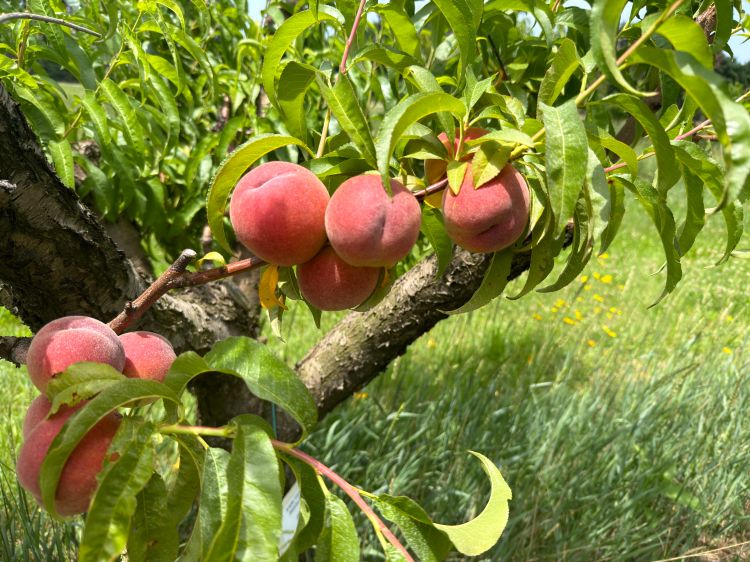
Peaches and nectarines. The peach harvest prediction model on Enviroweather indicates that the earliest cultivars at the Southwest Michigan Research and Extension Center (SWMREC), including Desiree, Harbinger and PF-1, are at the projected beginning of harvest around July 1. These cultivars typically mature about one month before Redhaven, placing the projected beginning of Redhaven harvest near Aug. 1. Use these model outputs as planning estimates and confirm timing with field observations, especially fruit background color, firmness, crop load and block history.
For cultivars approaching harvest over the next several weeks, managing brown rot can be moved to the foreground. Brown rot risk increases as fruit soften and become more susceptible to infection, especially during warm, wet weather. Risk is also higher when mature fruit are left hanging on the tree for extended periods, or when fruit have wounds from split pits, bird injury, insect entries, limb rubs or storm damage. Use harvest prediction tools, recent weather conditions and cultivar maturity timing to plan harvest windows and preharvest fungicide programs well ahead of picking. Pay close attention to preharvest intervals as early cultivars begin to come off.
Peach blocks are now moving into the part of the season where management decisions should be separated by crop load and harvest timing. Blocks with a marketable crop should be managed around fruit finish, disease protection, insect injury and harvest logistics. Blocks with little or no crop still deserve attention, but the emphasis shifts toward maintaining healthy foliage, protecting scaffolds and trunks, minimizing bacterial canker and borer stress, and supporting strong flower bud development for next season.
Continue scouting peach and nectarine blocks for oriental fruit moth shoot flagging, bacterial spot symptoms, rusty spot or powdery mildew on susceptible cultivars, and trunk or scaffold gumming from peachtree borer activity. In blocks approaching harvest, pay close attention to fruit injury, split pits, bird damage, insect entries and any wounded or overripe fruit, since these can become entry points for brown rot. Removing damaged or overripe fruit where practical, maintaining good spray coverage and tightening harvest intervals can reduce inoculum buildup in the block as fruit soften.
Oriental fruit moth damage in fruit is beginning to show up in some peach blocks, indicating that second-generation activity is underway. Continue monitoring fruit for entries, gum, flagging shoots and edge-related injury. Control of this generation should be timed to the beginning of second-generation egg hatch, using the local biofix and Enviroweather degree-day model. At SWMREC, second-generation oriental fruit moth emergence has reached the treatment window, and protection may be needed in blocks with a marketable crop, especially where fruit injury is already present or harvest is still several weeks away. In blocks approaching harvest, product choice should account for preharvest interval, expected residual activity and compatibility with the brown rot program.
Plums are in the cover-spray period, with the first harvest still a few weeks out. Bacterial spot is showing up on leaves and fruit.
Tart cherries are in the tail end of harvest. Sweet cherry cultivars have one or two more weeks of harvest.
After harvest, continue evaluating cherry leaf spot pressure, especially in tart cherry blocks with visible lesions or a history of early defoliation. The postharvest period is still important for maintaining leaf area, supporting carbohydrate recovery, and setting up next year’s crop.
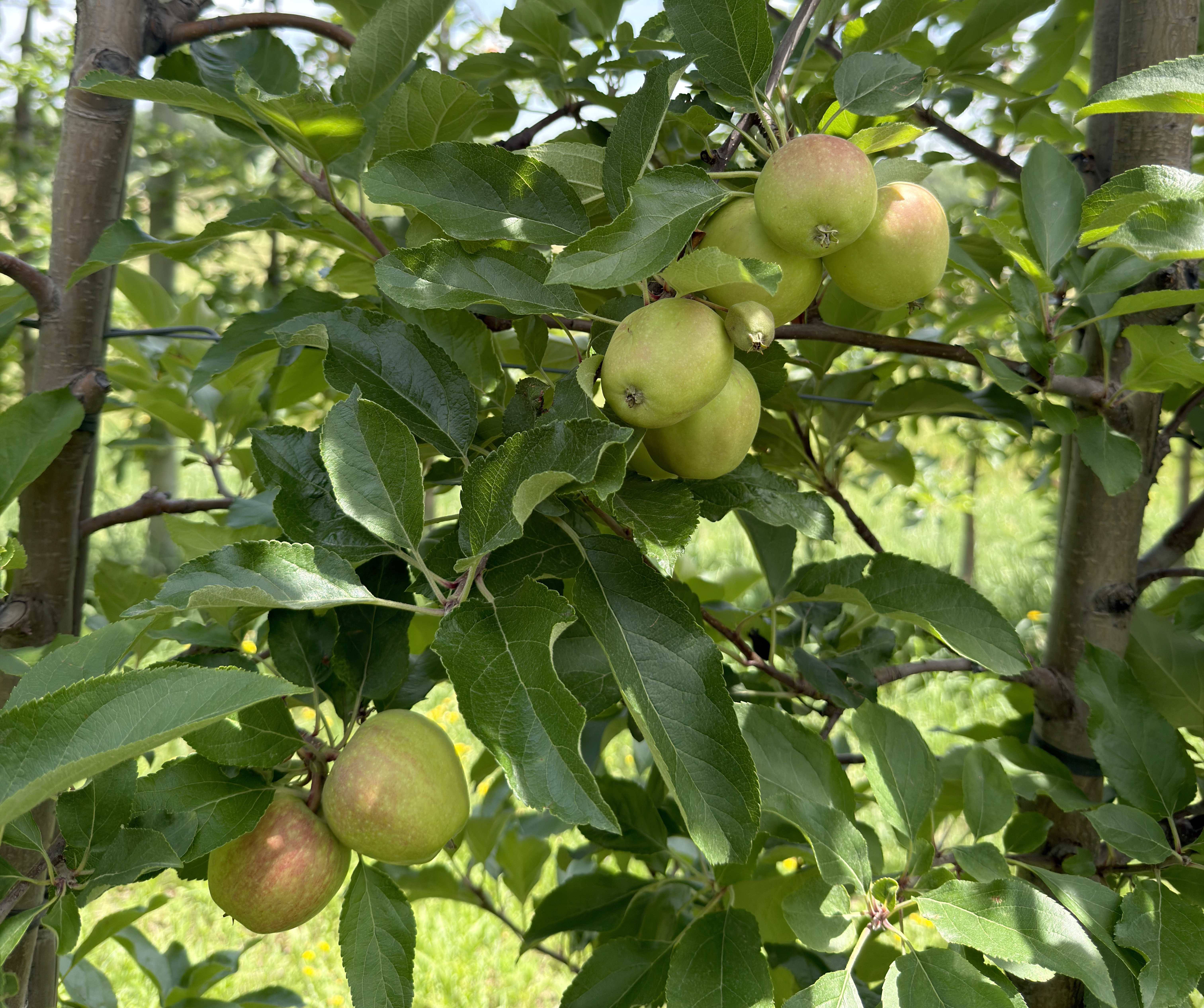
Apple blocks are now in the summer cover spray period. Primary apple scab is finished, so clean blocks can move into a lower-risk maintenance program focused on keeping fruit protected through wetting events. Blocks with visible scab lesions should continue to be managed for secondary scab, especially during warm rain or extended leaf wetness.
Codling moth catch is decreasing at SWMREC, but moths are still active. Most blocks are near the tail end of first-generation larvicidal timing, depending on local biofix, trap catch and previous applications. Continue checking traps rather than relying only on the regional model. After a codling moth treatment is applied, reset cumulative trap counts so follow-up decisions reflect new moth activity.
During cover sprays, product choice should be based on what is present in the block. Captan remains a common cover material, but it does not provide powdery mildew control. Susceptible cultivars or blocks with active mildew may still need stronger mildew activity. As summer cover programs continue, rotate modes of action, maintain good coverage as fruit size increases, and avoid unnecessary broad-spectrum disruption where mite and beneficial insect balance is holding.
Pears. Plum curculio activity has largely wound down, and primary pear scab is moving out of its main risk window. Clean blocks can ease into a maintenance program, while blocks with visible scab lesions should remain protected during wetting events because secondary scab can still spread on fruit and foliage.
Pear psylla should be the main insect focus this week. Scout new shoot growth for adults, eggs, young nymphs and early honeydew. Summer psylla problems are much easier to prevent than clean up after colonies are established. Avoid unnecessary broad-spectrum disruption where possible, since conserving predators can help slow psylla buildup through the summer.
Small fruit
Grape bloom is over in southwest Michigan. Juice grapes and early hybrids are at berry touch. Some tight clustered varieties are beginning bunch closure. Many vinifera are near pea berry size. Rose chafer and Japanese beetle are emerging soon.
Blueberries are being harvested. Damage from flower thrips has been observed in various fields across the region. Cranberry fruitworm have been caught at the Trevor Nichols Research Center, slightly less than last year. Blueberry maggot is up from last week, as are thrips. Spotted wing drosophila are being caught at the Trevor Nichols Research Center, the catch count decreased from last week. Japanese beetle has been caught in the Fennville, Michigan, area.
Make sure your irrigation systems are up and running, especially if you primarily rely on drip. It is going to be HOT.
Strawberry season is closing and growers are thinking about renovation. Check out this article about renovation.
Upcoming meetings
The Blueberry Pre-Harvest Meeting is Monday, July 6, at the Southwest Michigan Research and Extension Center in Benton Harbor. Register to attend.
The Strawberry Field Day is July 8 in Three Rivers, Michigan. Register to attend.
Save the date for the Blueberry Field Day on Sept. 9 at the Trevor Nichols Research Center in Fennville, Michigan.
Thank you to everyone who participated in this year’s Tuesday Night Fruit IPM meetings. We appreciate the growers, scouts, industry partners and Extension colleagues who joined us in person at the Southwest Michigan Research and Extension Center in Benton Harbor or online through Zoom.
This year’s meetings covered crop phenology, insect and disease progression, pest management updates and selected topics from Extension experts. The meetings included small fruit updates for southwest Michigan and tree fruit updates for southwest and southeast Michigan. Past meeting recordings are available online through MSU Mediaspace for those who would like to review previous sessions.
This work is supported by the Crop Protection and Pest Management Program (grant no 2024-70006-43569) from the USDA National Institute of Food and Agriculture. Any opinions, findings, conclusions, or recommendations expressed in this publication are those of the author(s) and do not necessarily reflect the view of the U.S. Department of Agriculture.