Taste of the Tropics: Cacao
 Print
Print Email
EmailCacao, the primary ingredient of chocolate, is grown in countries surrounding the equator where there are warm temperatures and steady rainfall year-round.
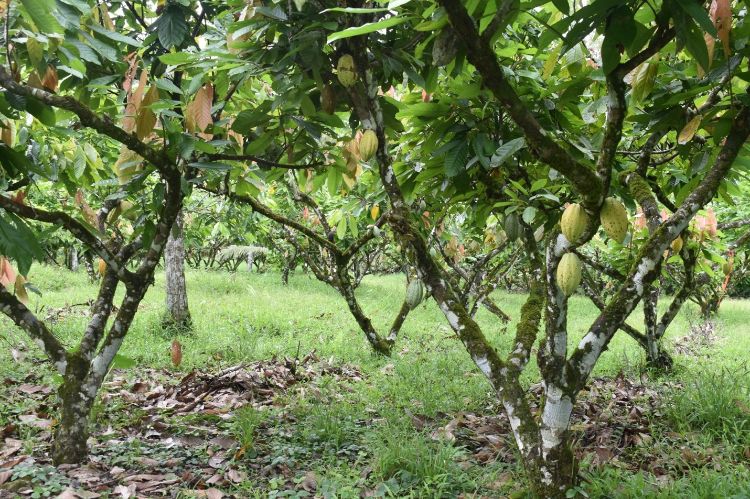
Cocoa and chocolate come from the pods of the cacao (Theobroma cacao) tree (Photo 1). The Latin name is derived from Theos (God) and Broma (food), literally meaning “food of the Gods.” The cacao tree is a small evergreen tree native to Central and South America. The early Mesoamerican societies (Mayans and Aztecs) used the beans of the cacao tree as money and to make a bitter drink, often adding other ingredients like chili powder, for ceremonies and rituals.
The first European encounter with cacao was when the Spanish conquistador Hernán Cortés brought back the first shipment of cacao beans, or what the Aztecs called xocolatl, to Spain in 1524. As Europeans experimented with cacao, they added sugar, cinnamon, vanilla and nutmeg and it was reserved as a drink for high society and royalty. Later, chocolate became a sweet treat that it is today for the masses by European innovations in processing.
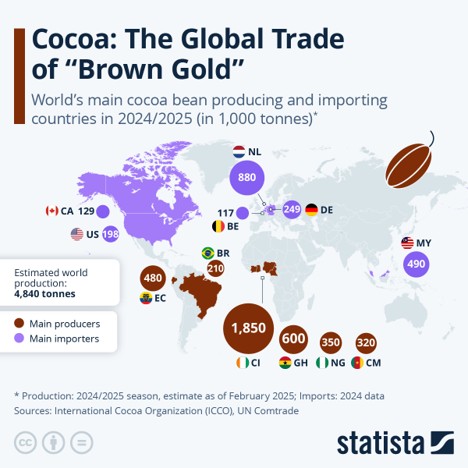
Today cacao is grown in countries with tropical climates, close the equator, with annually warm temperatures and substantial rainfall. The estimated world production of cacao is 4.84 million tons (Photo 2). The dominant production country is the Côte d'Ivoire (Ivory Coast) which accounted for 1.85 million tons of cacao in 2024/2025. Overall, 70% of the world’s production is in western Africa. The largest importers are the Netherlands, Malaysia, Germany, United States, Belgium and Canada. These countries aren’t necessarily those that consume the most chocolate but those that have large processing facilities to make cocoa powder, cocoa butter or chocolate products. By volume, the Swiss eat the most chocolate per capita in the world.
To learn more about cacao production, Michigan State University’s study abroad course, “Tropical Horticulture of Costa Rica,” visited Costa Rica Best Chocolate in Sarapiqui, Costa Rica, providing a demonstration of organic production and the traditional processing of cacao.
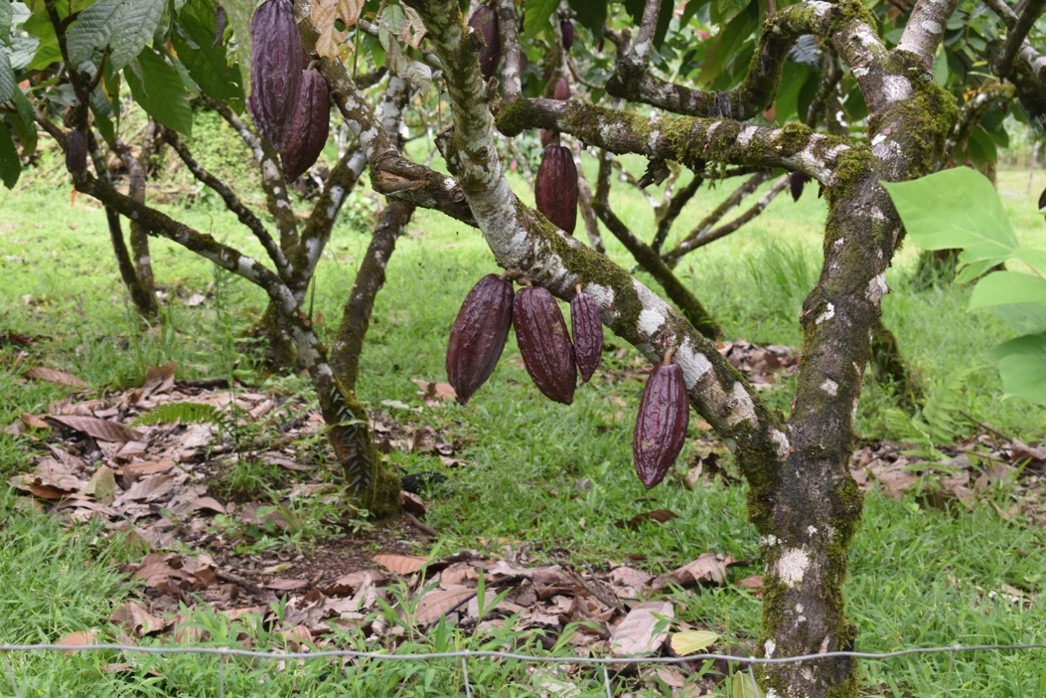
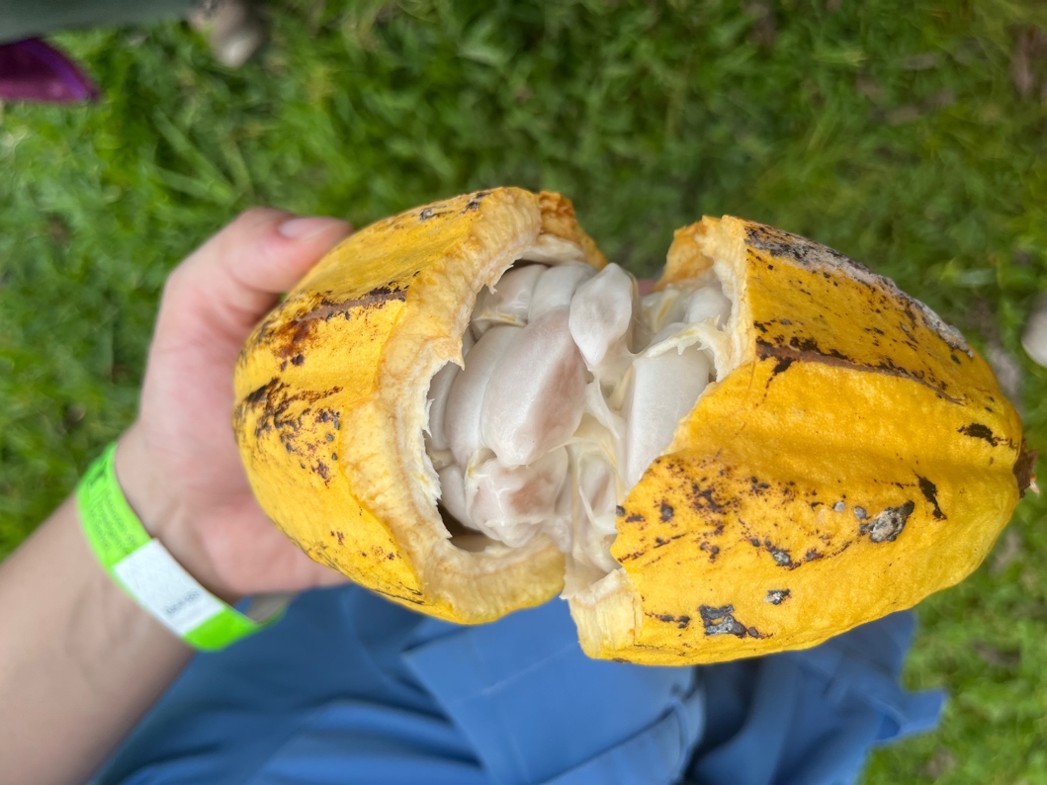
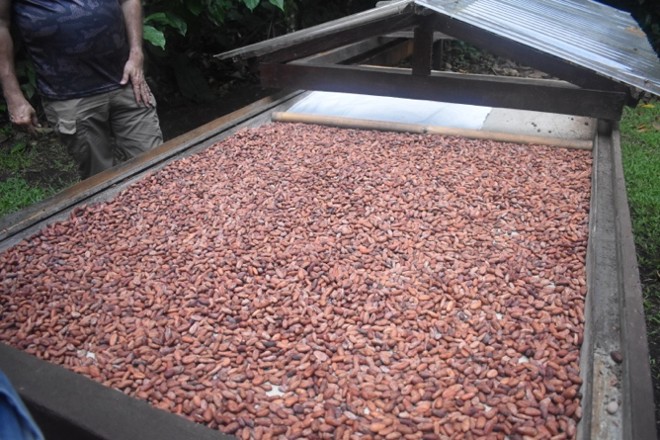
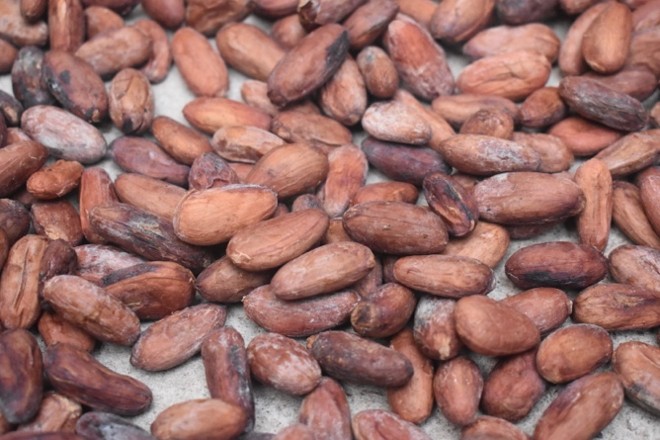
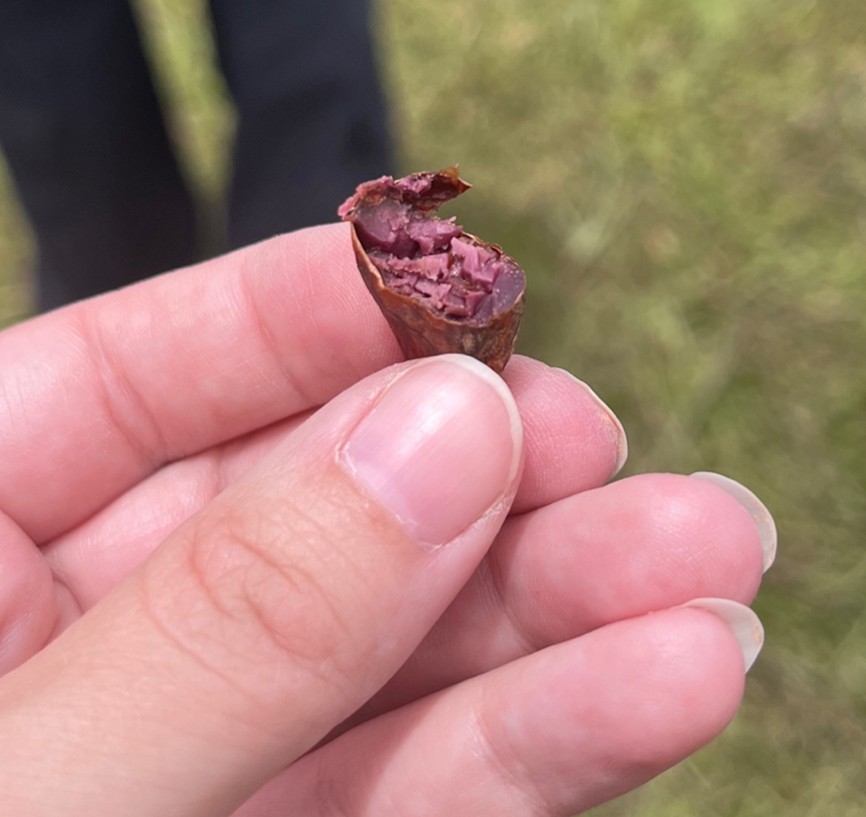
The pods grow directly on the branches (Photo 3) of the cacao tree and are harvested when they reach the ripe color for the specific variety. Inside the pod are the pulp-covered seeds/beans. The pulp itself is edible, tangy and lemony. Each pulp-covered seed is fermented in a box or tarp-covered surface, which allows the pulp to dry and chemical reactions to occur, making the beans less bitter and acidic. The beans are then solar dried (or oven dried in other production settings) (Photos 5, 6). We tasted the cacao nibs, or dried beans, which had the essence of chocolate but were still bitter and not sweet (Photo 7).
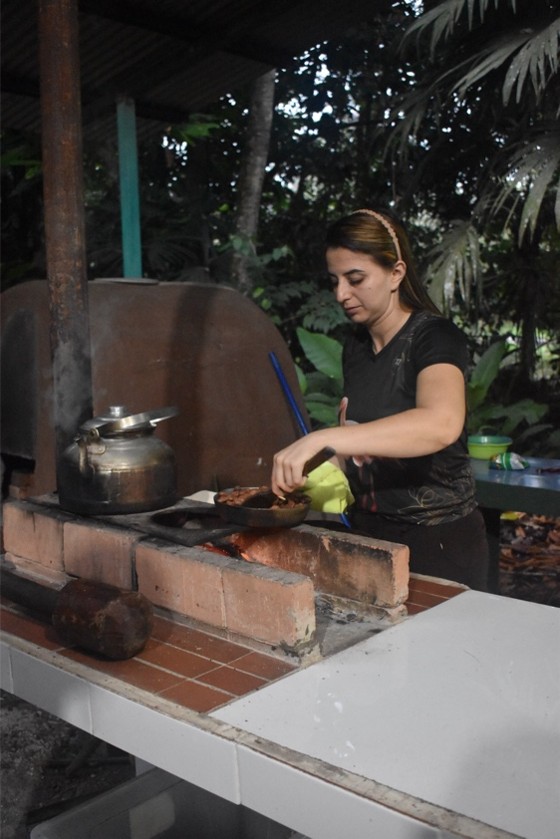
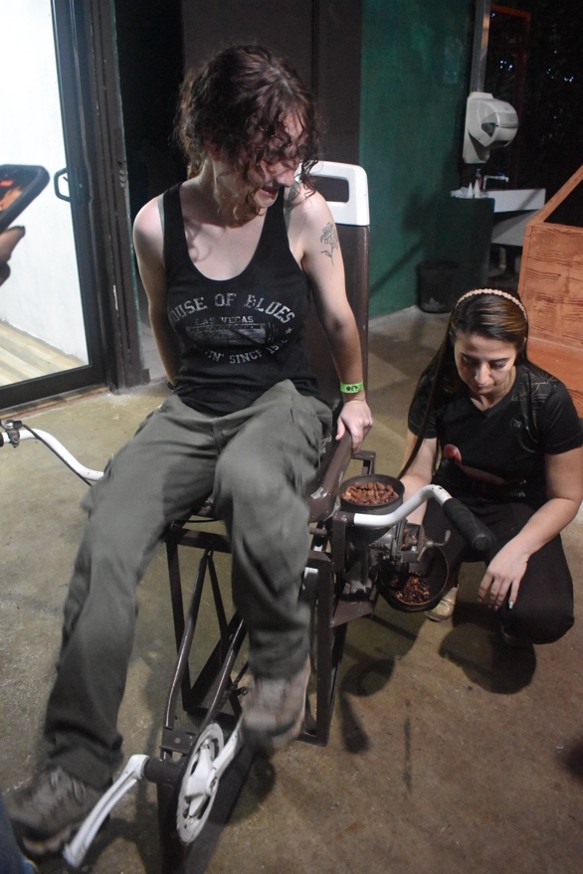
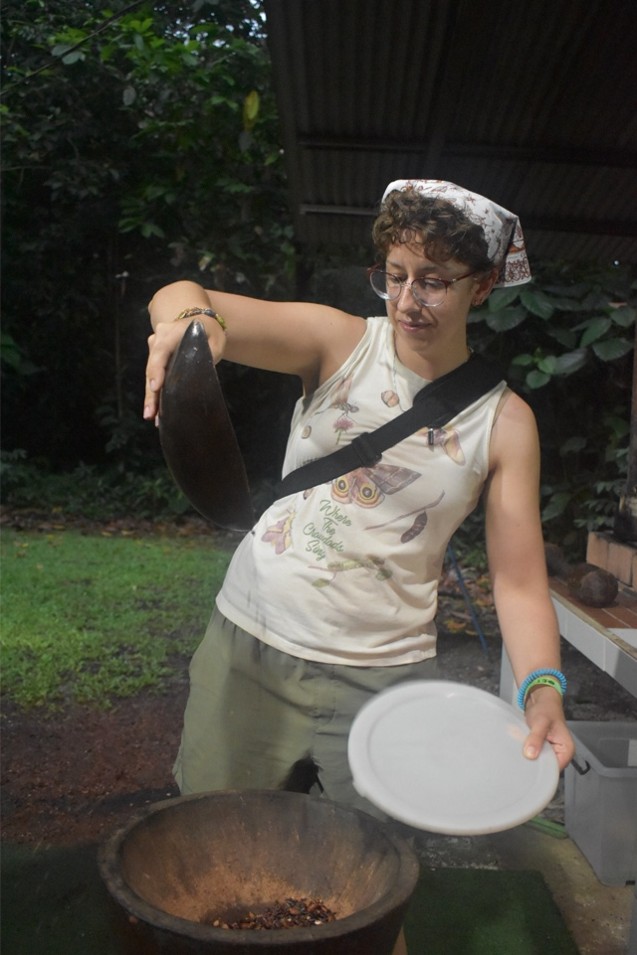
The beans are traditionally roasted over an open fire (Photo 8) and de-shelled (Photos 9, 10). In historic production, they were shelled by using a bicycle with a grinding attachment. To remove the shells from the mixture, a person pours the batch of beans into a bowl while fanning and blowing away the lightweight shells (Photo 11).
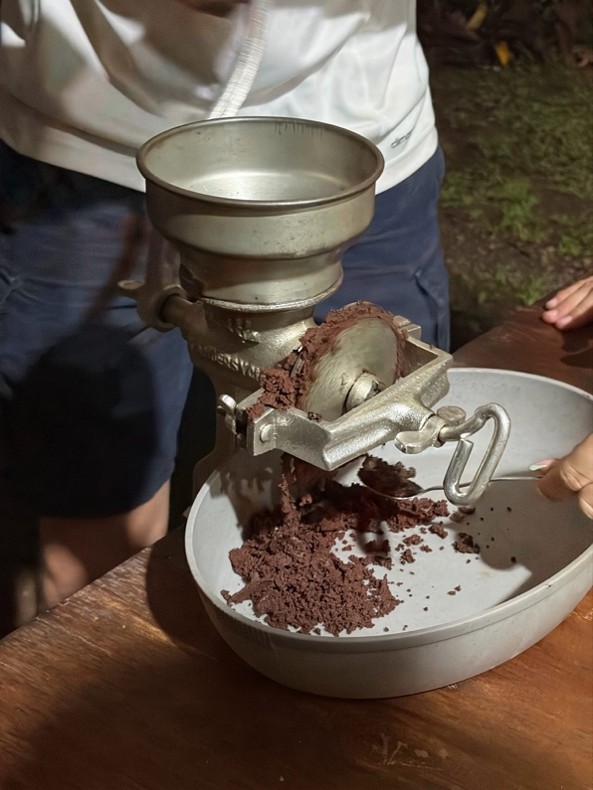
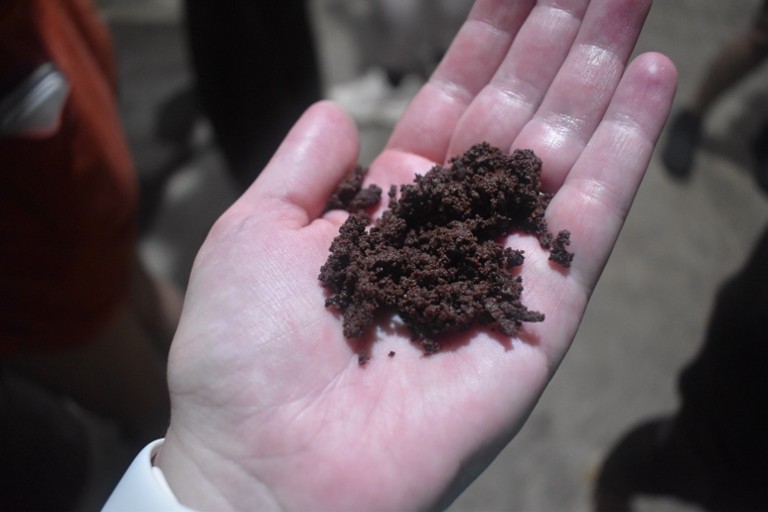
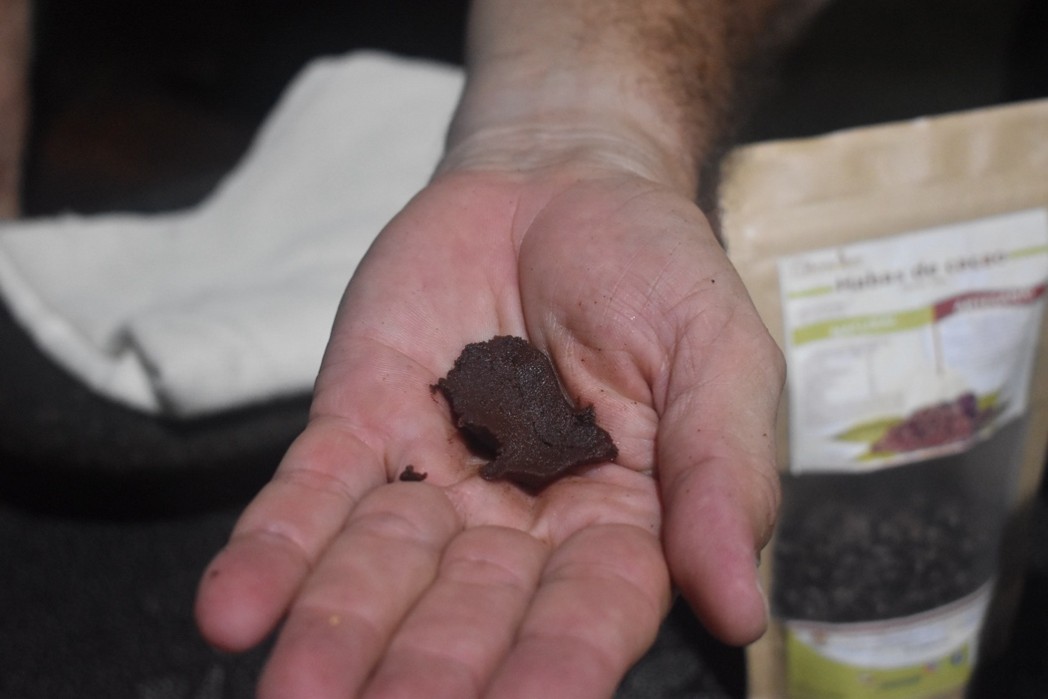
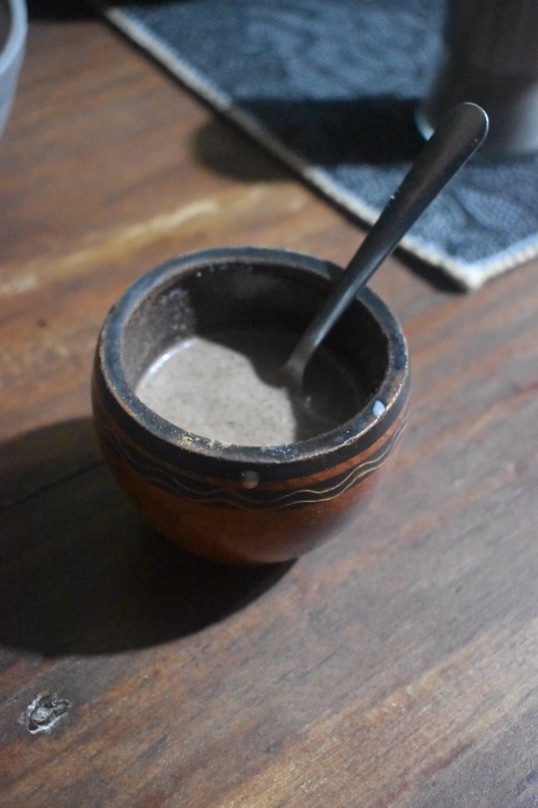
The beans were then ground with scoops of sugar using a hand-cranked grinding machine (Photos 12, 13). Upon squeezing the paste, it appeared shiny like a traditional candy bar (Photo 14). We tasted the cacao at every stage. The final portion of the chocolate tour was making a delicious hot chocolate. By adding boiling water to the paste, adding additional powdered milk, sugar, and optional spices (cinnamon, chili, nutmeg) we made a custom hot chocolate (Photo 15). I have to say it was the richest and not overly sweet (unlike commercial mixes) hot chocolate I have ever tasted!
For more on the history, production, and industrial process of cacao, check out this Science Channel YouTube Video: