The Gardener’s Detective: Meet MSU Extension Educator David Lowenstein
 Print
Print Email
EmailFrom diagnosing garden mysteries and identifying insects to preserving Mackinac Island's historic lilacs and sharing gardening advice, David Lowenstein is on the case to helping Michiganders find practical, science-based solutions.
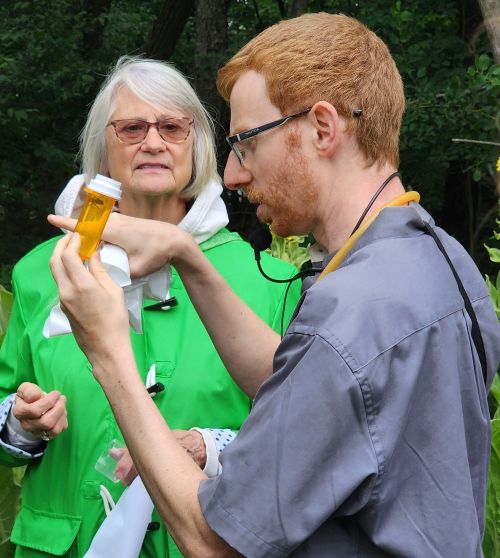
Whether he's identifying an insect brought into the office, answering a gardener's question through Ask Extension or teaching a class on trees, lawns or pollinators, David Lowenstein enjoys helping people solve problems.
As a consumer horticulture educator with Michigan State University Extension, Lowenstein spends much of his time helping Michigan residents better understand the plants and insects around them. His work ranges from diagnosing problems in home landscapes to supporting Extension Master Gardener volunteers, contributing to research on invasive species and leading educational programs. In 2025 he developed Insects in the Garden, a six-part email course on insect identification and beneficial insects that attracted more than 1,050 participants in its first two months.
“I enjoy the detective work in finding solutions to the issues that people experience in their home or community gardens,” Lowenstein said.
That passion for helping others didn't begin with a lifelong love of gardening. Growing up in an apartment in the Bronx, New York, Lowenstein says gardening wasn't part of his family's background. It wasn't until after college that he began growing more than a tomato plant in a pot.
Instead, it was insects that first captured his attention. During a summer undergraduate research internship, he worked on a project studying beneficial insects. The experience introduced him to both entomology and Extension, setting him on a career path that would eventually bring him to Michigan State University (MSU) Extension.
Today, Lowenstein combines his interests in gardening, insects and education to help communities across southeast Michigan — and even Mackinac Island — while encouraging people to see nature with a little more curiosity.
Learn more about Lowenstein and his work with MSU Extension in the following interview.
What sparked your interest in gardening and insects, and how did that lead to your current career with MSU Extension?
I was always interested in nature and the outdoors. I grew up in an apartment, and gardening was at least two generations removed from my family. I was a late bloomer to gardening, not growing anything beyond a tomato in a pot until after college.
My first meaningful experience with insects was during my undergraduate years when I participated in a summer research internship in Madison, Wisconsin. I was paired with a mentor, Ben Werling (who's now also an MSU Extension educator!), and worked on a project studying beneficial insects that could control Colorado potato beetle. This was the first time I heard about Extension, and it was also my first exposure to entomology. I was excited by all the ways insects are involved in our food system and thought they would be an easier group to work with compared to mammals or fish.
When I returned to New York after that summer, I was motivated to find opportunities to work with insects and spent two years in a lab studying aquatic insects in the Bronx River. I later returned to the University of Wisconsin to earn a master's degree in a vegetable entomology lab with an Extension faculty member, gained experience in urban agriculture during my doctorate, and worked with biological control in hazelnut orchards with another Extension group.
I appreciated Extension's work helping communities and individuals and was looking for a career opportunity where I could be involved with that work. Since I grew up in a large city, I focused my job search on bigger metropolitan areas and was fortunate to be hired by MSU Extension in 2019 on the consumer horticulture team.
What are some of the ways you help Michigan residents?
Much of my work is focused on helping people with issues involving lawns, insects, trees and plants. People come with questions by phone, email, bringing plant samples or insects to my office, or through MSU Extension's Lawn and Garden Hotline and Ask Extension.
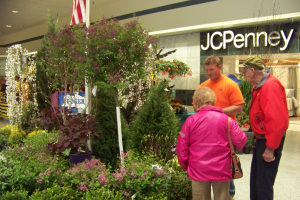
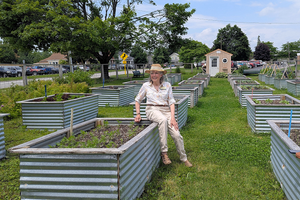
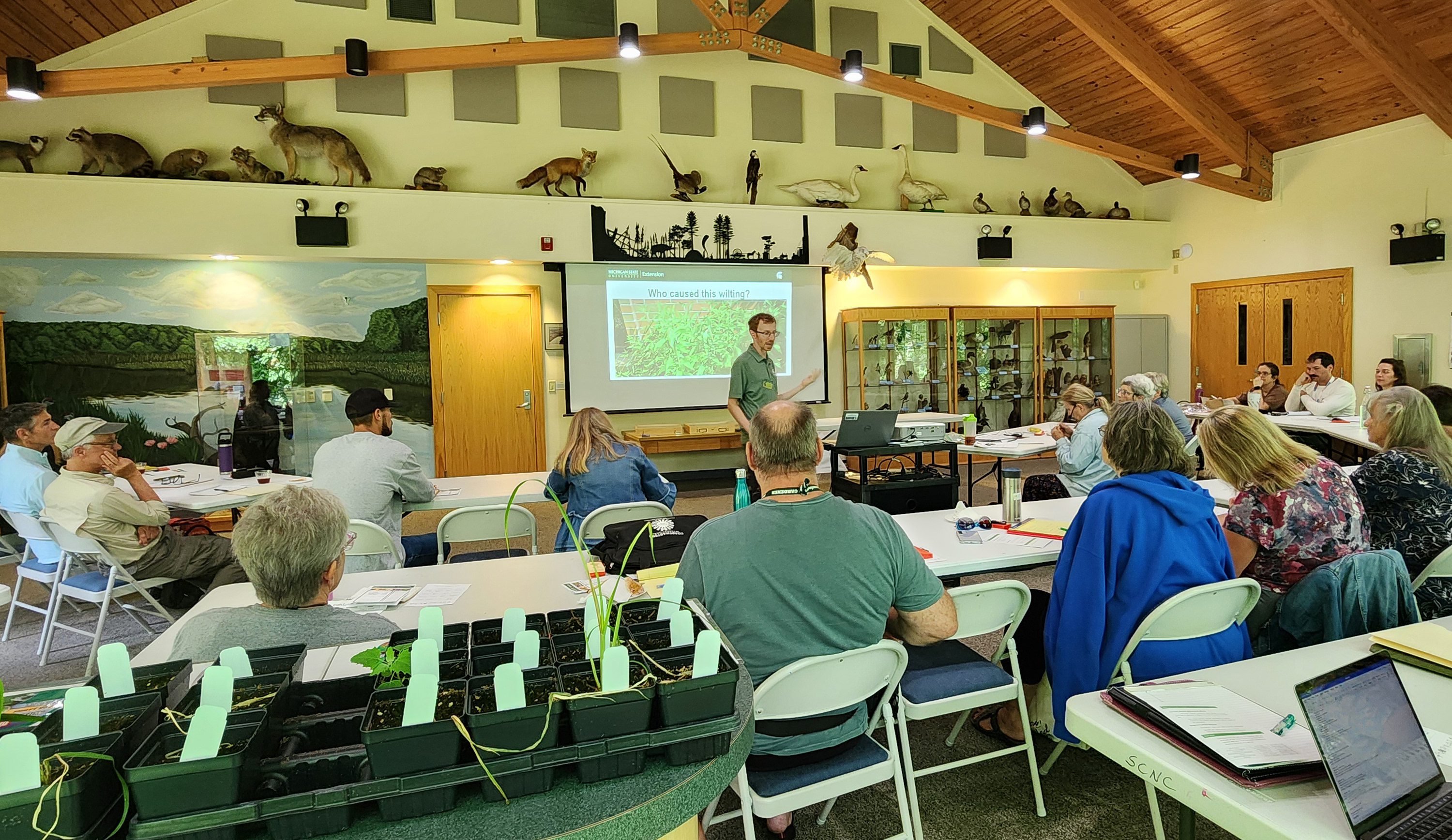
I also lead classes on various horticulture and insect topics in southeast Michigan. My role provides leadership for approximately 275 Extension Master Gardener volunteers. I support them in projects involving community beautification, environmental stewardship and growing produce for donation.
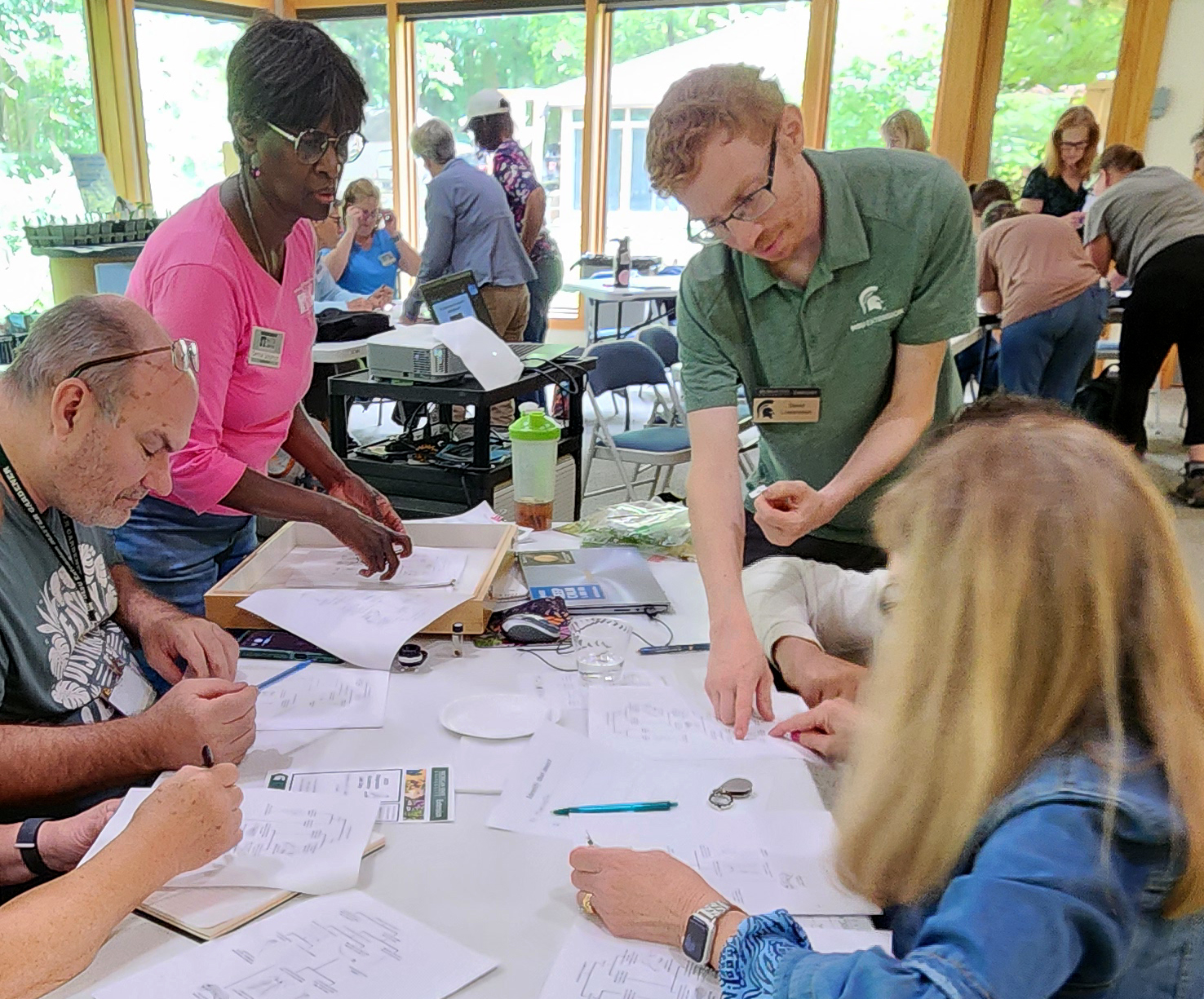
I've also been involved in applied research to better understand the spread of invasive species such as box tree moth and lily leaf beetle and have partnered with MSU faculty on biological control projects that may provide long-term relief from certain invasive insects.
Can you talk about the work you've done to help preserve the lilacs on Mackinac Island?
The lilacs on Mackinac Island are more than 100 years old and are an important cultural and economic driver for the island. The Mackinac Island Tourism Bureau had previously partnered with a horticulture professor from another institution, but that individual had retired, and they were looking for more local support to manage the decline of some of their lilacs.
An Extension Master Gardener volunteer had worked with the Mackinac Island Tourism Bureau on lilac care and helped establish the connection between the Tourism Bureau and Extension in 2022. They wanted someone from MSU to visit the island and help identify possible causes for the decline in plant health.
A few people within MSU were unavailable, and I decided this would be an interesting partnership. I set up a monitoring plan to sample for lilac borer, a pest known to bore into mature lilacs and weaken the wood. I visited the island in spring 2023 and taught Tourism Bureau staff and an Extension Master Gardener volunteer how to set up traps, inspect them and replace the lures.
I've communicated with them since then about strategies for keeping the lilacs productive, such as renewal pruning, and on other issues, including a fungus that appeared on the leaves one summer. A team of Extension Master Gardener volunteers now visits the island after the lilacs finish blooming to help with pruning.
Watch "A Second Bloom: Preserving Mackinac Island's Lilacs" to see how Lowenstein and Extension Master Gardener volunteers are helping care for one of Michigan's most iconic landscapes.
More recently, you've become known online as the "Tick Doctor" thanks to your Tick Talks. How did that get started?
In Extension, we get asked all sorts of questions, and it's common for educators to develop new skill sets. My specialty is bees and wasps. However, the explosion of tick populations statewide has meant that I often get contacted about tick identification and reducing the risk of tick exposure.
I'm fortunate that MSU has amazing faculty experts, including Jean Tsao, PhD, whose research specializes in tick pathology, and I can consult with experts such as Dr. Tsao on questions. Chelsea Dickens, the MSU Extension social media manager, suggested I film a series of "Tick Talks" to share more about why Michigan residents encounter so many ticks and what they can do about it.
Watch one of Lowenstein's popular "Tick Talks" below.
@msu_extension In this episode of “Tick Talks” with Dr. Lowenstein, you'll learn how to properly remove a tick if one bites you. If you want to learn more about Michigan's ticks, visit our website and search for "What You Need to Know About Michigan's Ticks."
♬ original sound - msu_extension
What's an underrated or misunderstood insect that deserves more appreciation?
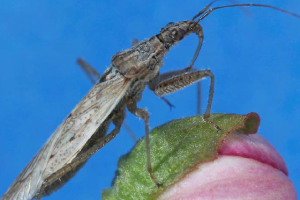
Parasitoid wasps. There are thousands of species that provide free pest control. Most are microscopic, and people don't realize they are wasps.
Aggressive social wasps such as yellow jackets and bald-faced hornets give wasps a bad reputation. However, most wasps are beneficial and want nothing to do with stinging people.
What's your favorite gardening tip?
Gardening is not always about having the neatest design or the most productive vegetable garden. Plant what you enjoy eating or looking at.