Wheat Watchers Week of June 1, 2026
 Print
Print Email
EmailSee how the wheat crop is progressing across the state this week.
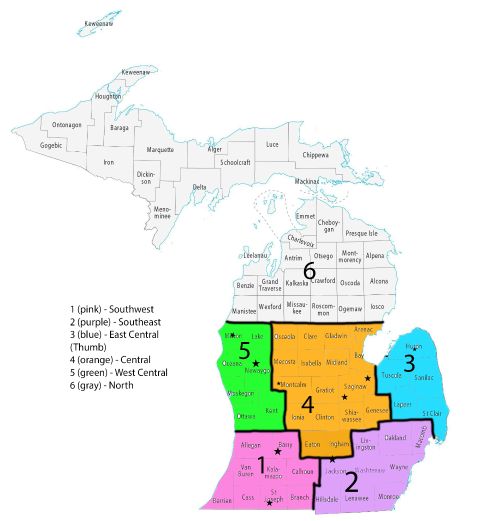
Welcome to the seventh edition of this season’s Wheat Watchers! This report will come out weekly until most of the state hits flower and then will switch to bi-weekly until most of the state has harvested. This report is only possible because of our agribusiness and farmers who participate as Wheat Watchers. If you are interested in being a wheat watcher, especially if you see your area isn’t represented, please reach out to Michigan State University Extension field crops educator Jenna Falor at falorjen@msu.edu.
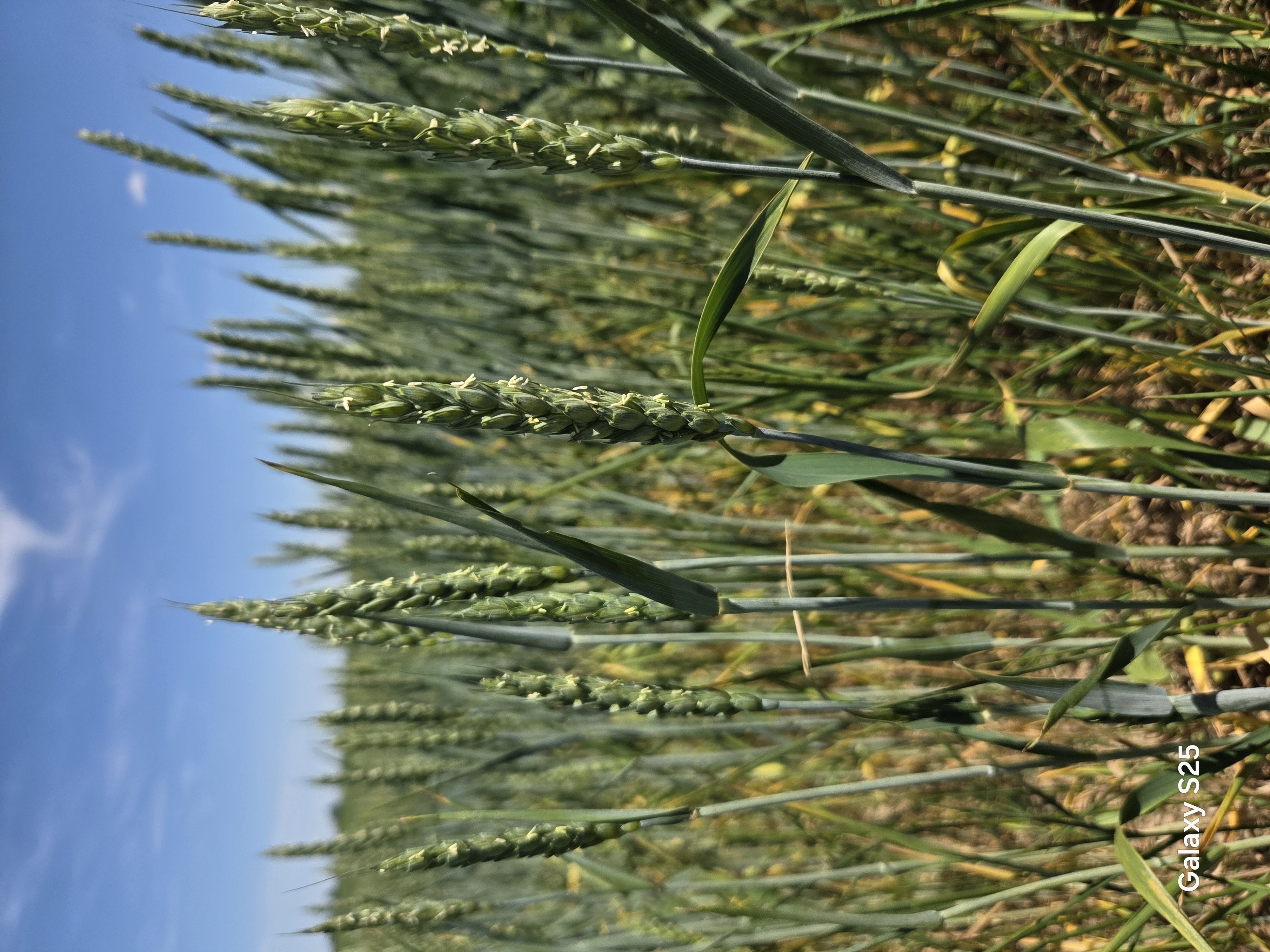
Overall, this week reporters are seeing wheat ranging from Feekes 9-10.5.4. This means that northern Michigan has hit flag leaf (Feekes 9) while southern Michigan has a watery ripe kernel (Feekes 10.5.4). Overall, most of the wheat across the state could do with a shot of rain, which if the forecast holds, we stand a chance for the end of this week.
Southwest Michigan
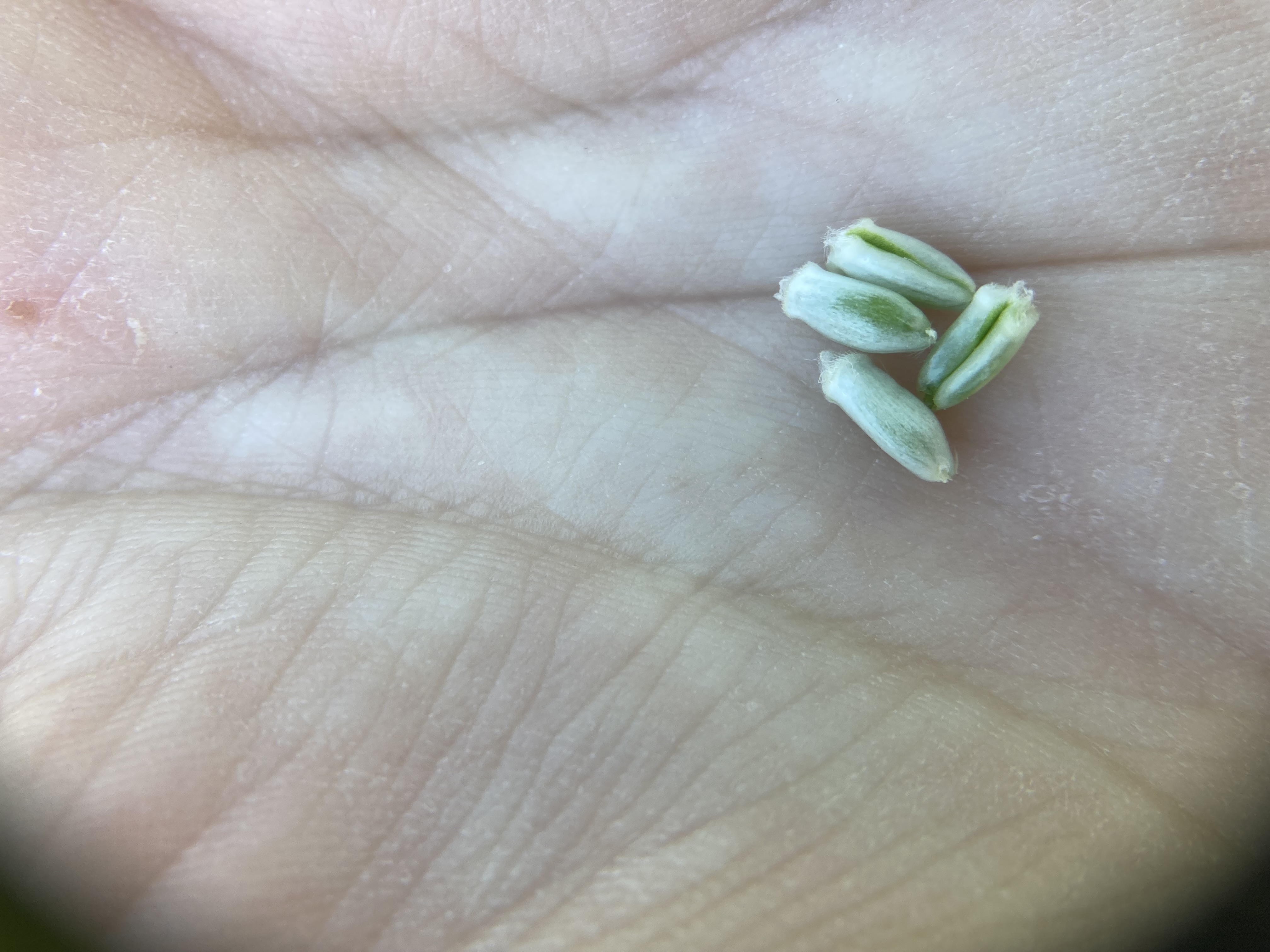
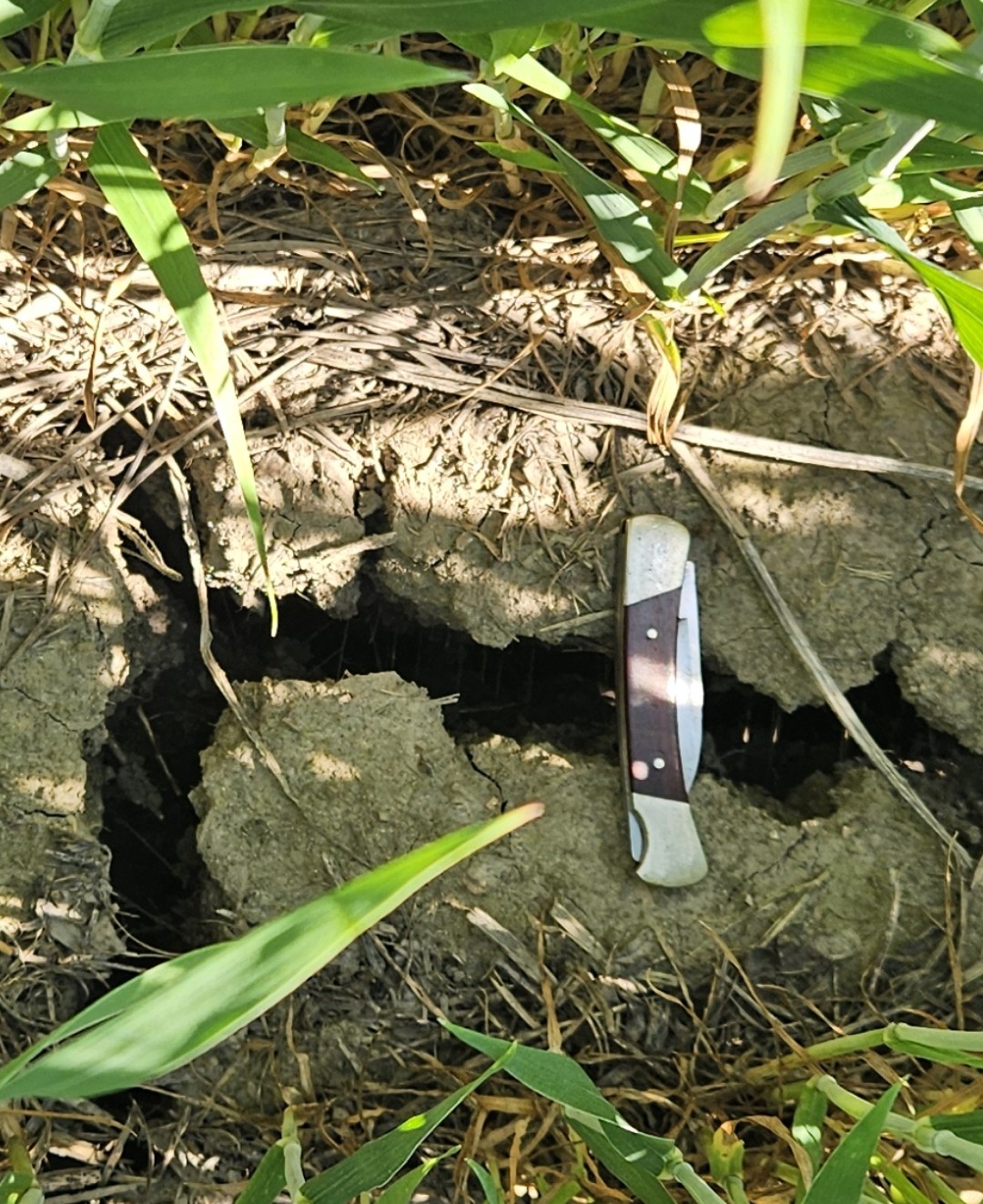
We had one wheat watcher reporting from the southwest region in St. Joseph County near Centreville. Wheat has reached Feekes 10.5.4 and is moving quickly to Feekes 11.1 (milk stage). It’s very dry and warm in the area; some of the wheat on sandier soil is showing drought stress.
Southeast Michigan
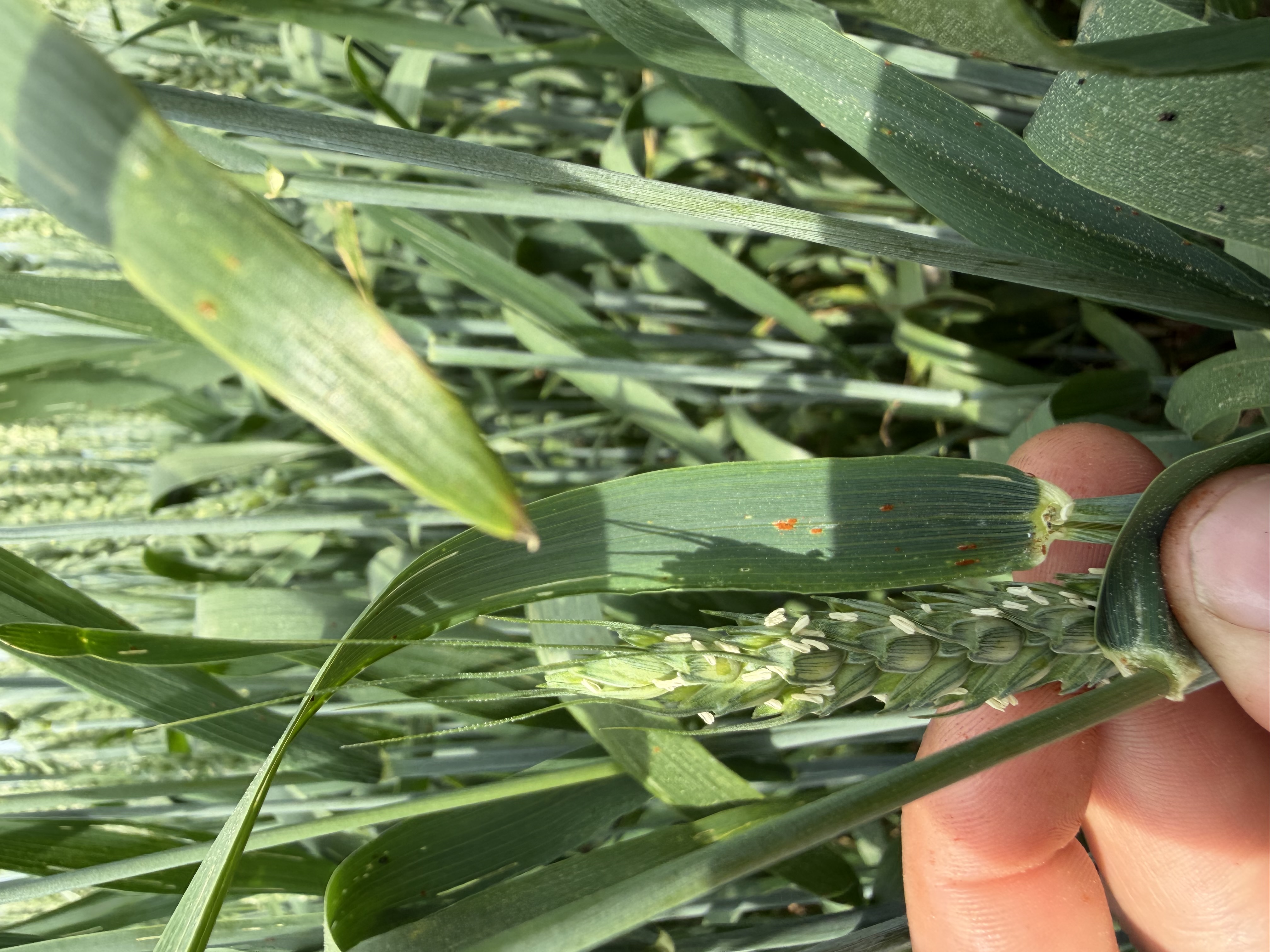
We had one wheat watcher reporting from the southeast region in Jackson County near Jackson. Wheat has reached Feekes 10.5.1-10.5.4. The fungicide applications in this area are wrapping up as flowering progresses. Leaf rust is starting to develop in the area. Insect pressure (cereal leaf and aphids) remains low. The region could use some rain for grain fill; growers are hopeful for rain this weekend.
East central (Thumb) Michigan
We had one wheat watcher reporting from the Thumb in Huron County near Ubly. Wheat is at Feekes 10.5. Stripe rust has been confirmed in Tuscola, Lapeer and St. Clair counties. For more information on stripe rust, scroll down to the “Wheat disease management update” section of this article to see notes from Marty Chilvers, PhD, MSU field crops plant pathologist.
Central Michigan
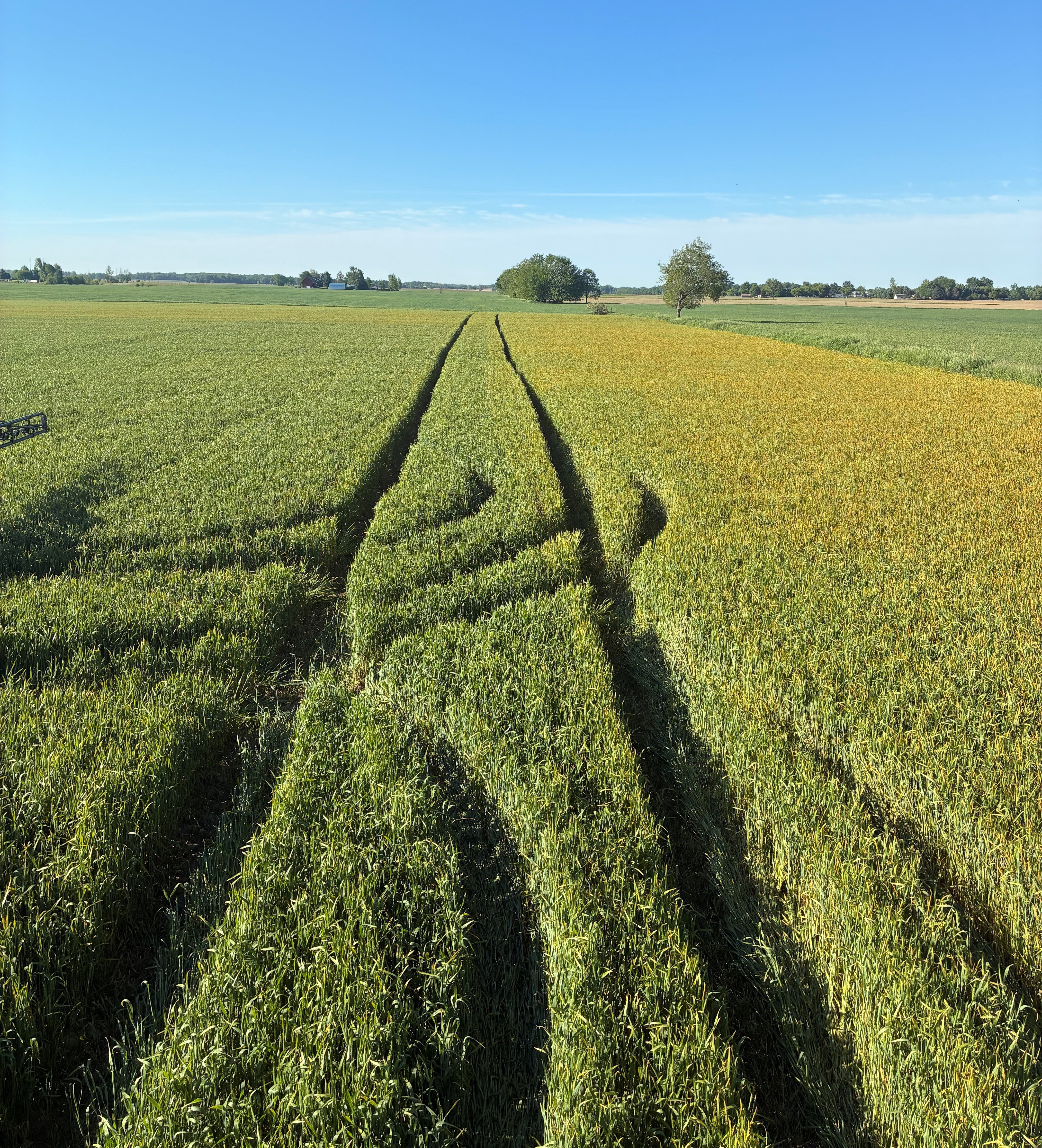
We had five wheat watchers reporting from the central region: one from Isabella County near Mt. Pleasant, one from Bay County near Auburn, one in Saginaw County near Richville, one in Montcalm County near Entrican, and one from Saginaw County near Chesaning. The watcher in Chesaning is reporting wheat is at Feekes 10.5.1-10.5.3 with head scab fungicide applications in full swing. The watcher near Richville reports much of the same but they are seeing a wider range of maturities with wheat ranging from Feekes 9 (flag leaf) to 10.5.3 (flowering complete). Both watchers report a nice rain is needed!
The watcher in Bay County is reporting wheat is at Feekes 10.0-10.5. They are thinking that with the dry weather they will not be making a fungicide application for fusarium head blight, though some growers in the area are opting to apply it. Overall, they say wheat is looking good and while the dry weather has been nice for disease pressure, it could hinder grain fill.
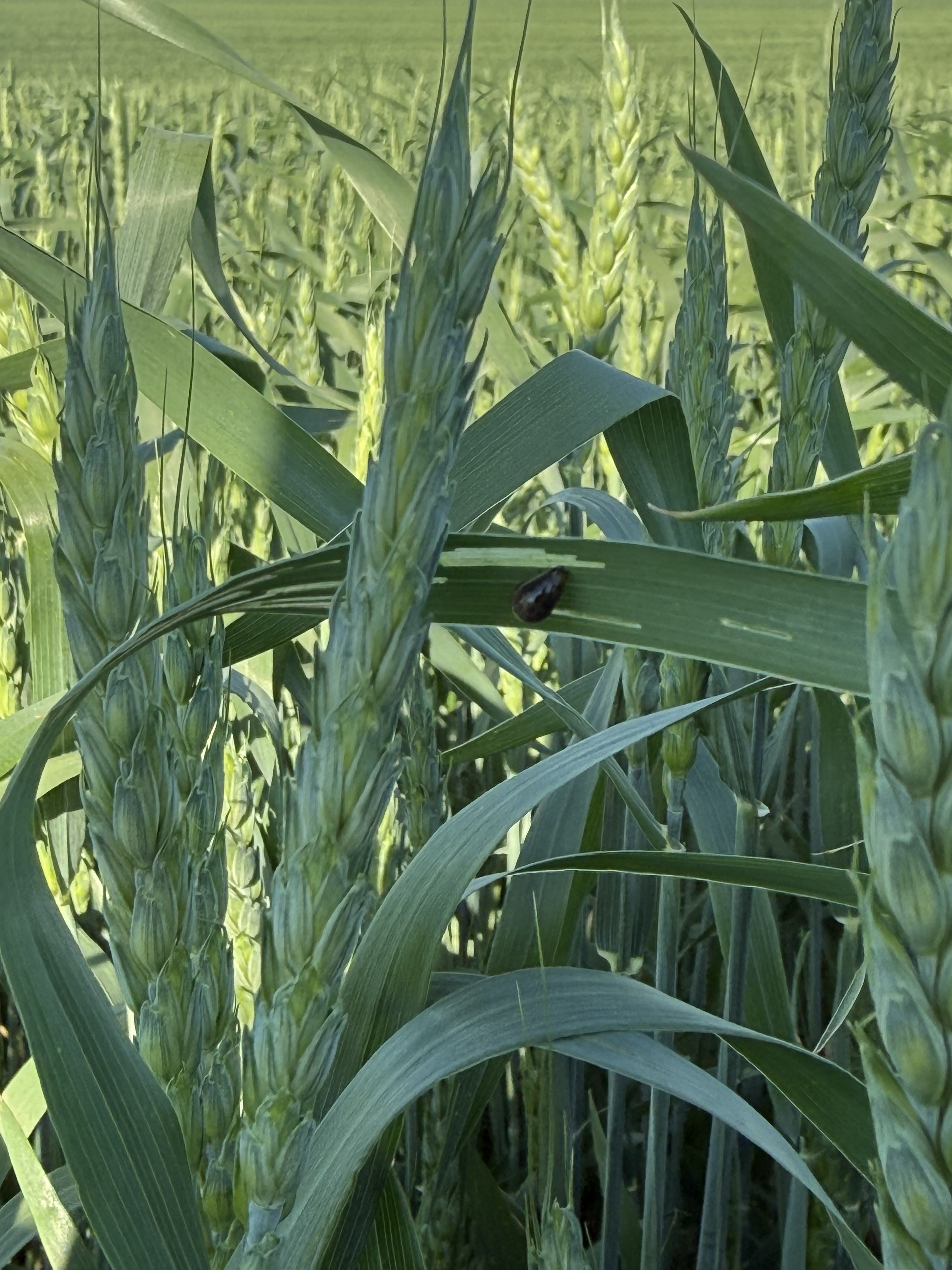
The watcher in Isabella County reports wheat is at Feekes 10.1-10.5.2 and fungicide applications are either going on or will be soon. They are also seeing cereal leaf beetle in fields. The watcher near Entrican reports wheat is at Feekes 10.5.3 and that there is little disease pressure. Similar to many others in this region, a nice rain is needed.
West central Michigan
We had no wheat watchers reporting from the west central area this week.
North Michigan
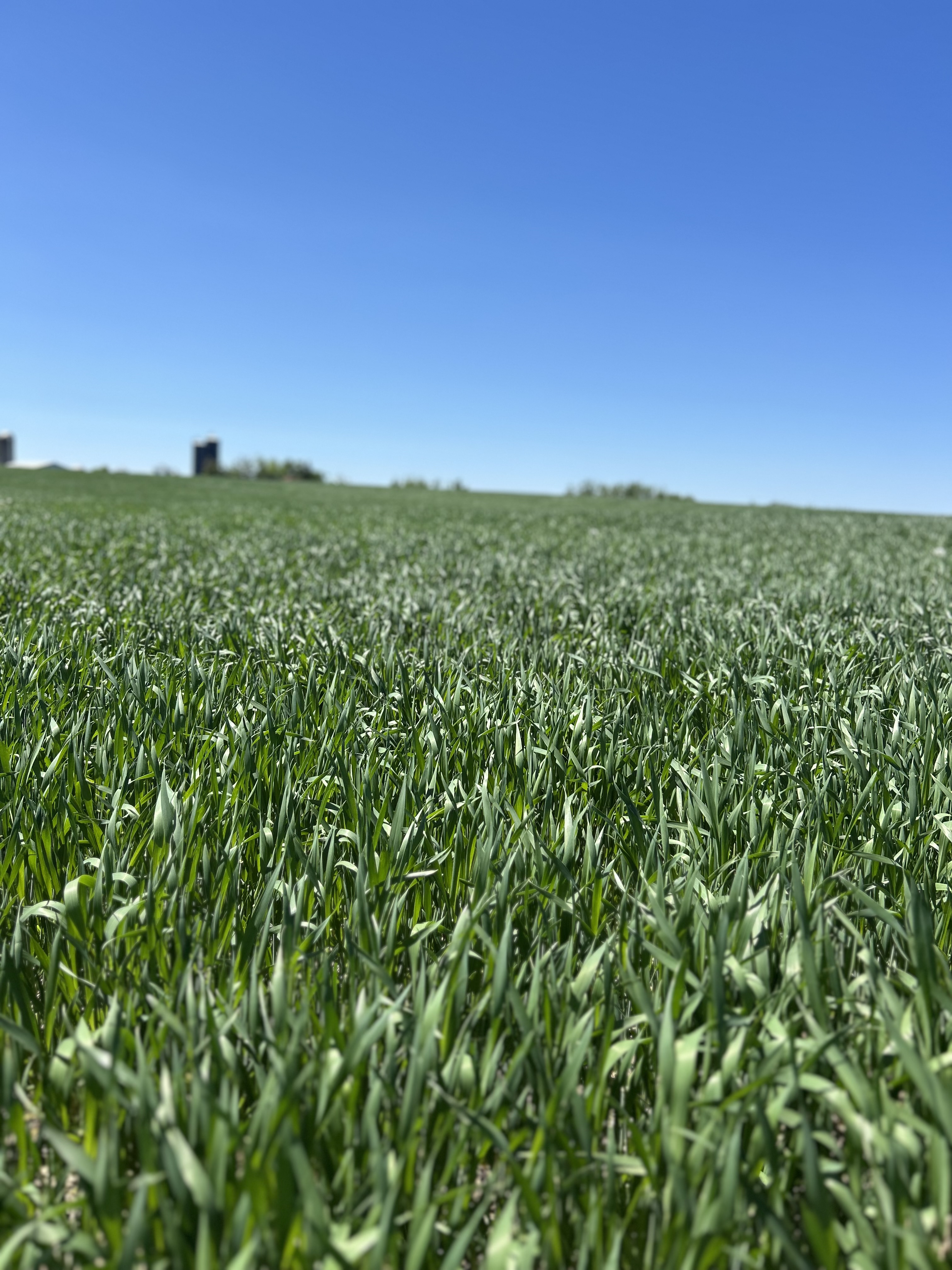
We had one wheat watcher reporting from the north region this week in Montmorency County near Hillman. Wheat has reached Feekes 9. Fungicide and last passes of nitrogen have been completed. There has been warm weather this past week and fields are starting to dry up a little, but there is a chance of rain this weekend.
Wheat disease management update – stripe rust confirmed!
Stripe rust was confirmed June 1 in Tuscola, Lapeer and St. Clair counties. Severity of the disease indicates that it has likely been present for a couple of weeks.
What does this mean?
Well, compared to 2024, stripe rust started later this year, so losses will not be as great. However, if you have not yet made a fusarium head blight (head scab) fungicide application, you may want to consider an application, especially if stripe rust is confirmed in your area or farm. If your wheat has not flowered yet but stripe rust is present, it may be prudent to pull the trigger even if the application is slightly early. If you just made an application at flowering, that will provide suppression of stripe rust.
Variety susceptibility is another key. Varieties that are highly susceptible are more critical to protect. Get out and scout as scouting is essential to making an informed decision.
New predictive tools are being developed, such as the stripe rust prediction model which is powered by the National Predictive Modeling Tool Initiative. To locate the stripe rust tool, pull down the menu in the top left corner to select the appropriate map. These prediction maps are in early stages of testing, but we hope to bring automated alerts in the future.
The current head scab risk model is calling for moderate risk across most of the state with high risk down the east side of the state. This risk changes with the weather, with warm and wet conditions increasing risk. For optimal head scab and DON suppression, fungicides should be applied from the beginning of flowering up to seven days post the beginning of flowering. It is important to ensure coverage of the head using either alternating forward and backward nozzles or some other configuration to maximize coverage of the wheat head.
Although the actual reductions can be variable, fungicides such as Miravis Ace, Prosaro, Prosaro Pro and Sphaerex often reduce the severity of fusarium head blight by 50 to 60% and DON levels by 30 to 50%. Fungicides applied for head scab management will also provide protection of the flag leaf from foliar diseases.
We are currently monitoring fungicide resistance and would like your help in identifying fields to sample. Nationally, there are a few efforts that have demonstrated resistance in some pathogens to fungicide classes such as the strobilurin (FRAC 11) group. If you have a field that you would like us to sample, please get in touch (chilvers@msu.edu or 517-898-3049). Or submit a sample through the plant and pest diagnostic clinic.
For more information on disease management, we recorded a recent MSU Extension Field Crops Virtual Breakfast on May 7 that covers some of the basics of wheat disease management. We also have many resources that are posted to the Crop Protection Network, including the wheat fungicide efficacy charts that list products and their efficacy for disease management.
This work is supported by the Crop Protection and Pest Management Program [grant no 2024-70006-43569] from the USDA National Institute of Food and Agriculture. Any opinions, findings, conclusions, or recommendations expressed in this publication are those of the author(s) and do not necessarily reflect the view of the U.S. Department of Agriculture.