


Health Impacts
Health Impacts of PFAS
Per- and polyfluoroalkyl substances (PFAS) are a large group of human-made chemicals found in many consumer products to make commonly used items resistant to water, grease, fire and heat. Common uses of PFAS include carpeting, waterproof clothing, food wrappers and personal care products.
The most common way PFAS can enter your body is by swallowing them. This can happen when you drink water or eat food with PFAS in them, such as eating fish from PFAS- contaminated waterbodies, plants grown in PFAS contaminated soil, or animal products from animals inadvertently fed contaminated feed.
Another pathway for human exposure to PFAS is inhalation. People who work in industries that make or process PFAS, or people living near facilities that incinerate PFAS, are more at risk of breathing them in. Other occupations that may be exposed to higher levels of PFAS are ski wax technicians and firefighters. However, for the general public, inhalation is believed to play a smaller role in overall exposure, although PFAS found in indoor air and dust can still be a contributor. Dermal exposure through contaminated water used for bathing, showering, cleaning the house and washing dishes or clothes should not represent a health concern because the amount of PFAS that can enter the body through the skin is very low.
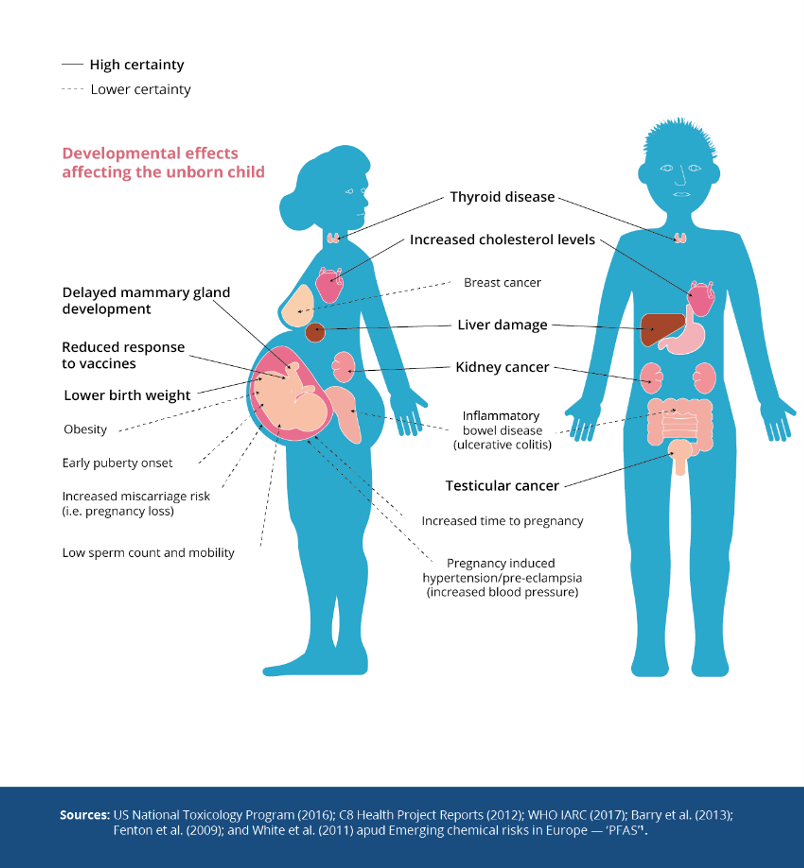
Research is ongoing to understand the health impacts of PFAS. Being exposed to PFAS does not mean you will have an immediate health problem. Usually, health effects show up after long term exposure. PFAS is considered a systemic toxicant as it affects multiple physiological systems. Some epidemiological studies suggest that PFAS exposure is linked to the following health effects:
- Increasing the chance of cancer, especially kidney and testicular cancers
- Lowering a woman’s chance of getting pregnant
- Increasing the chance of high blood pressure in pregnant women
- Increasing the chance of thyroid disease
- Increasing cholesterol levels
- Changing the body’s immune response
Talk to your doctor about any health concerns. It is always good to have regular check-ups for possible health problems.
Although some PFAS have been phased out, they are still present in the environment because they do not break down easily and there are still thousands more of these chemicals being used globally. Everyone has been exposed to PFAS. PFAS are found all over, and small amounts of these chemicals enter most peoples’ bodies each day. If you are concerned and choose to have your blood tested, results will tell you the concentrations of various PFAS compounds in your blood. Currently, we do not know what PFAS levels will trigger health effects, but research is ongoing. Most people will have measurable amounts of PFAS in their blood. As a result, interpretation of measured PFAS concentrations in individuals is limited in its use but you can compare against the data published on the general population.
Treatment options are limited for those with high levels of PFAS in their blood, but research from Denmark has shown significant decreases in serum PFAS concentrations are possible from taking Cholestyramine, a drug typically used for high cholesterol patients. This treatment is now available in the State of Maine for people whose blood serum is greater than 53 ng/mL for the sum of 7 PFAS.
Michigan is currently conducting a large, long-term study designed to examine the health of Michiganders with past exposure to PFAS in their drinking water. The Michigan PFAS Exposure and Health Study (MiPEHS) is one of the most comprehensive and cutting-edge investigations into the health effects of PFAS exposure being conducted in the country.
For more information on human health from the EPA, visit the EPA website.
 Print
Print Email
Email