


Alternaria
 Print
Print Email
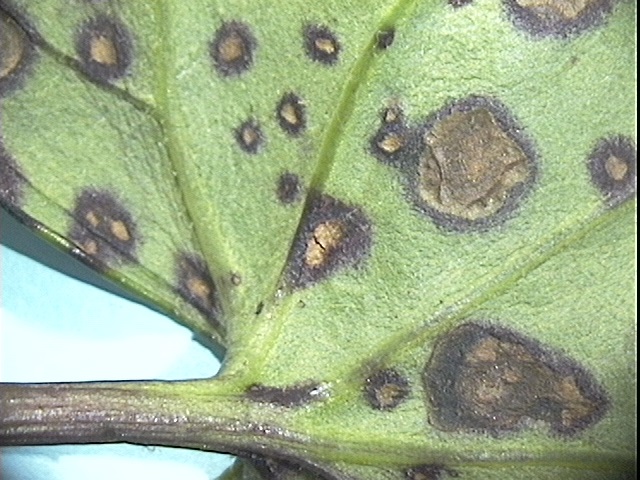
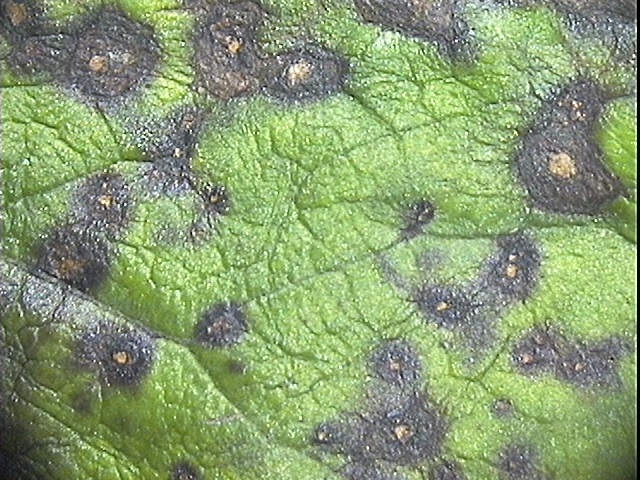
EmailPathogen: Alternaria spp.
Hosts: There are several species of Alternaria that are pathogenic on perennials. Together they have a wide host range including Aster, Calendula, Coreopsis, Dianthus, Gypsophila, Helianthus, Iris, Ligularia, Pelargonium, Platycodon, Shasta, and Stokesia.
Symptoms: Dark colored leaf spots, lesions may have concentric rings within the lesion. Spots may coalesce, resulting in blighting of foliage. Petals of some plants may be infected. Flower buds of Dianthus can be rotted.
Spread: Spores are produced on the plant surface and are spread by splashing water, air movement or by moving infected plant material.
Management: Maintain adequate plant spacing to allow for good aeration to reduce humidity levels around plants. Alternaria spp. require leaf wetness for germination and infection; reduce durations of leaf wetness periods with good timing of overhead irrigation. Regular fungicide applications will likely be necessary to reduce losses on especially susceptible hosts.
Other Documents in this Series
You Might Also Be Interested In
-
Reciprocal Research: A Guidebook to Centering Community in Partnerships with Indigenous Nations
Published on April 22, 2021
-
MSU Forestry online master’s program producing productive graduates
Published on September 20, 2024
-
CANR meets academic needs to prepare students for their futures
Published on February 1, 2020
-
MSU students partner with Michigan communities to improve trail access
Published on May 30, 2025
-
How to support children after one year of virtual learning
Published on March 17, 2021



Accessibility Questions:
For questions about accessibility and/or if you need additional accommodations for a specific document, please send an email to ANR Communications & Marketing at anrcommunications@anr.msu.edu.