Connecting Communities Through Vegetable Production Education
DOWNLOADAugust 27, 2026 - Michigan State University Extension
 Print
Print Email
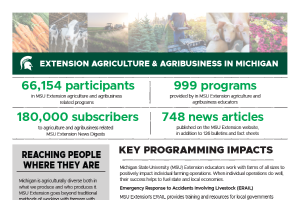
Email- 47,734 people were reached by mixed media outputs including podcasts, articles, newsletters and bulletins
- 7,748 participants attended educational programs in person and virtually
- 6,032 questions were answered through Ask Extension
- 1,412 one-on-one consultations were held with stakeholders across Michigan
Priority Areas
Michigan growers farm over 100,000 acres of vegetables across over 3,000
farms, producing a uniquely diverse set of crops. Michigan is among the top five states in producing asparagus, beets, celery, cucumbers, parsnips, radishes, snap beans, squash, tomatoes and turnips (USDA NASS, 2022). Our team consists of strategically placed educators who work with local vegetable growers in key regions and on-campus vegetable researchers.
Michigan State University (MSU) Extension helps vegetable growers learn about and incorporate new practices to help them reduce the risk posed by pests, improve their efficiency through new horticultural practices and increase revenue through improved product quality and marketing.
Great Lakes Fruit, Vegetable, and Farm Market Expo
MSU Extension vegetable educators and specialists organized 21 educational sessions for the 2025 Great Lakes Fruit, Vegetable and Farm Market Expo and Michigan Greenhouse Growers Expo (GLEXPO). Attendees hailed from six countries, four Canadian provinces, 40 states and the District of Columbia, and 66 Michigan counties, and saw value in our educational offerings:
- 3,282 attendees came from across the U.S. and world
- 702 attendees reported that they grew vegetables
- 95% of surveyed vegetable session participants reported learning something useful
GLEXPO also provided a unique, one-stop shop opportunity for professional recertification. The show offered 128 continuing education credits for pesticide applicators in Michigan and Ohio, and certified crop consultants. Since 2023, MSU
has collaborated with the Michigan Department of Agriculture and Rural Development to provide an in-person pesticide exam review and test at the show.
"I cannot say enough good things about this conference. The presence of university information and education [that's] understandable for growers, combined with the industry resources, is unmatched for the horticulture industry anywhere else." Past GLEXPO participant
Vegetable Extension across Michigan
A multi-part team effort in 2025 demonstrated how high-intensity collaboration can bridge cultures, experience levels, and languages. Twenty Ukrainian agribusiness leaders visited Michigan growers, researchers and industry partners to learn about sorting systems, packing efficiency and storage design through live interpretation and observation in their war to maintain domestic vegetable production.
That same adaptive, participant-driven approach carried into Spanish-language workshops, where 30 Latina/o farmers shaped real-time lessons on irrigation, fertility, pest management and crop cycles—moving fluidly between whiteboard planning and in-field demonstrations at the Southwest Michigan Research and Extension Center.
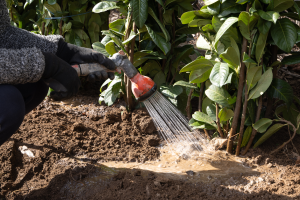
Complementing these efforts, seed-starting programs with community groups, tribal partners and large public audiences created hands-on learning environments where 133 participants worked side-by-side mixing soil, seeding and managing transplants, regardless of prior experience.
On the farm, an Amish no-till pumpkin field day brought together 44 producers to evaluate cover crop systems for weed control and soil health through replicated demonstrations and peer learning. A beginning farmer field day convened 53 new and aspiring producers with Extension, conservation and industry partners to build foundational skills in production, business planning, environmental stewardship and regulatory compliance.
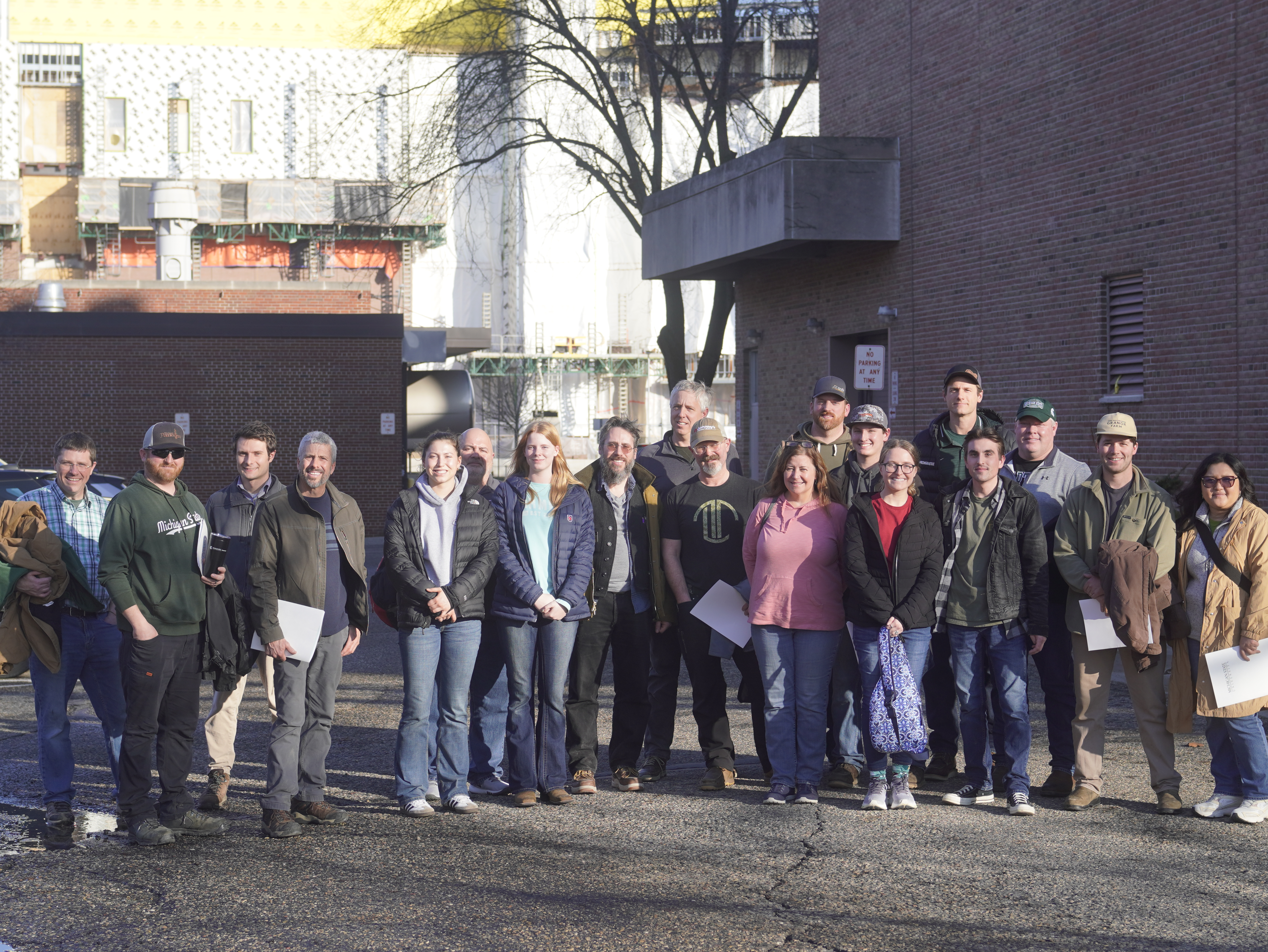
A capstone “Veg on the Go” campus program further connected 19 growers with university researchers through a fast-paced series of lab visits, fostering relationships that increased participants’ willingness to collaborate with specialists and strengthening pathways for the next generation of farm decision-makers.
Extending reach further, the Ag Ideas to Grow With webinar series engaged over 1,300 participants in a single week, drawing a more gender-balanced and racially diverse audience than typical in-person events.
Across all formats—on the road, in the field, in the classroom, on campus and online—participants ranged from war-impacted producers to Plain community growers, small-scale market farmers, multi-generational farm families, beginning farmers and first-time gardeners. Through real-time interpretation, tightly coordinated logistics, hands-on learning and shared problem-solving, these efforts aligned diverse groups around practical skills and common goals, demonstrating that collaborative learning at scale can accelerate knowledge transfer, strengthen agricultural networks and support resilient, economically viable food systems.