


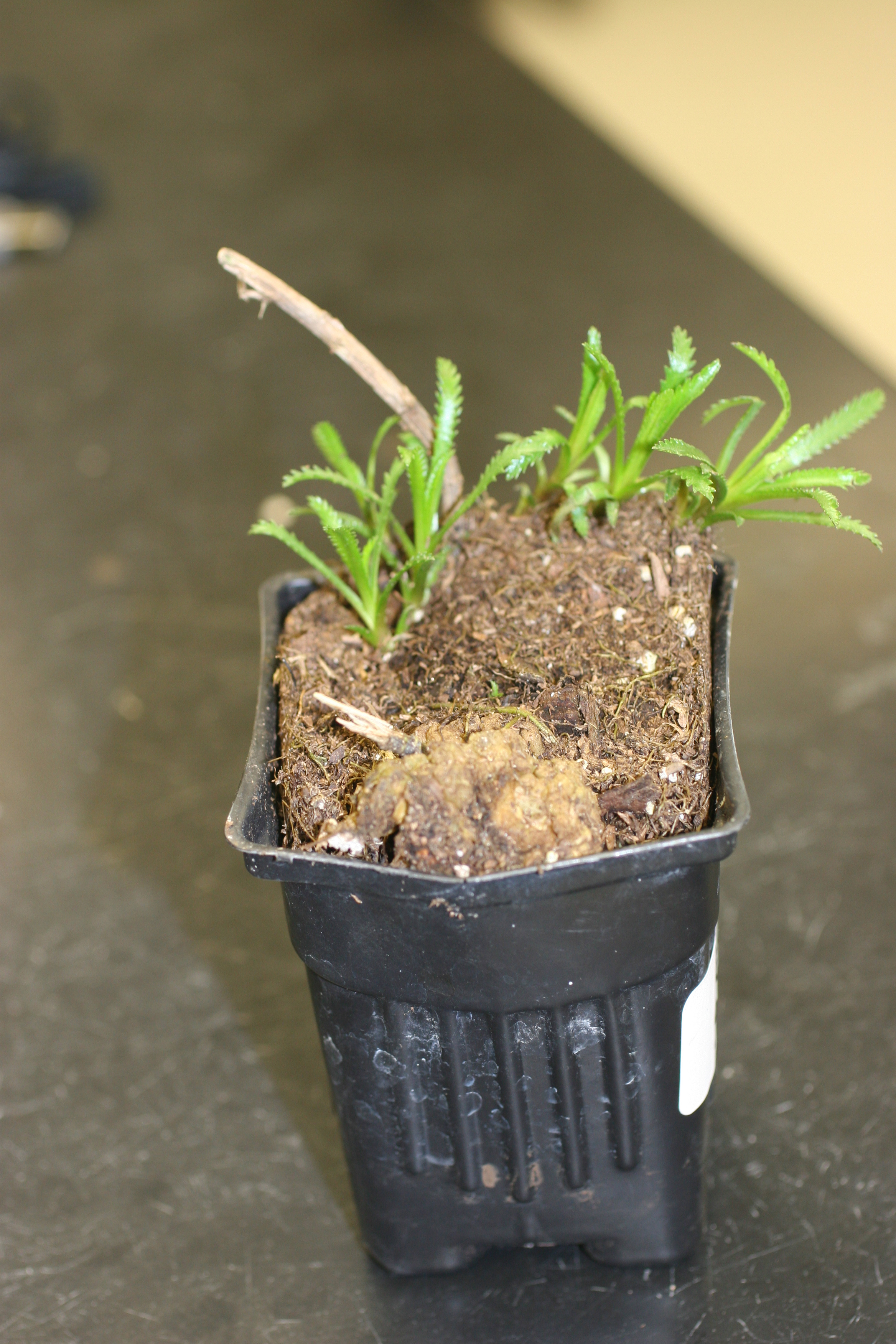
Crown gall – Agrobacterium tumefaciens
 Print
Print Email
EmailPathogen: Agrobacterium tumefaciens
Hosts Include: Achillea, Anemone, Artemisia, Aster, Campanula, Coreopsis, Delphinium, Dianthus, Gaillardia, Geranium, Gypsophilia, Helianthus, Heuchera, Lathyrus, Nepeta, Oenothera, Penstemon, Phlox, Platycodon, Primula, Rudbeckia, Salvia, Scabiosa, Sedum, and Stachys.
Symptoms: Galls form on stems and roots, restricting shoot or root growth.
Spread: This bacterium persists in soil; use of infested field soil can spread the disease. Movement of infested plants also spreads disease. Cuttings taken from infected plants are likely to become infected.
Management: Plants with galls should be removed and destroyed; they can not be successfully treated.
Infection usually occurs through wounds. Good sanitation is important during vegetative propagation. Effective biological control products are available and can be used to protect especially susceptible plants.
Other Documents in this Series
You Might Also Be Interested In
-
Vaccine Outreach on Beaver Island
Published on July 10, 2023
-
My Vaccine Story: Veteran Chris Imler
Published on July 11, 2024
-
My Vaccine Story: Marquetta Frost
Published on June 17, 2024
-
Randy Rice: One farmer's vaccine story
Published on April 10, 2024
-
My vaccine story: Jim Maturen
Published on December 21, 2023
-
Jase's Story
Published on December 20, 2022
Accessibility Questions:
For questions about accessibility and/or if you need additional accommodations for a specific document, please send an email to ANR Communications & Marketing at anrcommunications@anr.msu.edu.