Exploring Food Systems with Young Children
DOWNLOADMay 5, 2026 - Leena Abouzahr, Michigan State University Extension
 Print
Print Email
EmailWhy use this guide
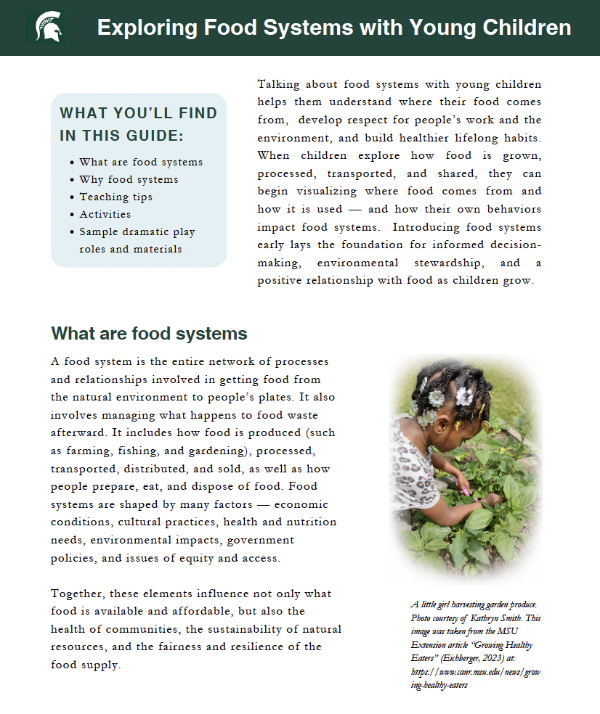
Talking about food systems with young children helps them understand where their food comes from, develop respect for people’s work and the environment, and build healthier lifelong habits. When children explore how food is grown, processed, transported, and shared, they can begin visualizing where food comes from and how it is used — and how their own behaviors impact food systems. Introducing food systems early lays the foundation for informed decision-making, environmental stewardship, and a positive relationship with food as children grow.
What you’ll find in this guide
- What are food systems
- Why food systems
- Teaching tips
- Activities
- Sample dramatic play roles and materials
What are food systems
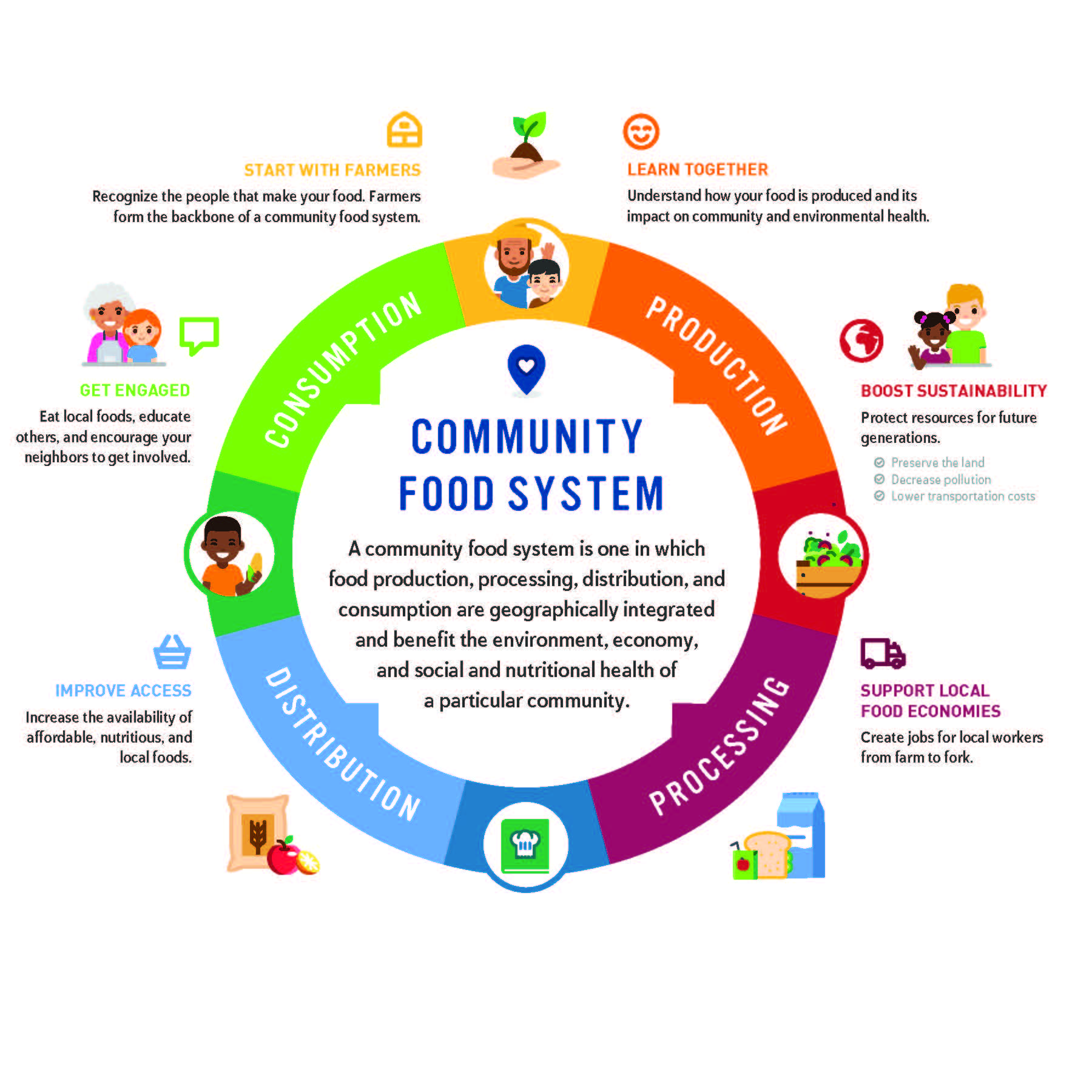
A food system is the entire network of processes and relationships involved in getting food from the natural environment to people’s plates. It also involves managing what happens to food waste afterward. It includes how food is produced (such as farming, fishing, and gardening), processed, transported, distributed, and sold, as well as how people prepare, eat, and dispose of food. Food systems are shaped by many factors — economic conditions, cultural practices, health and nutrition needs, environmental impacts, government policies, and issues of equity and access.
Together, these elements influence not only what food is available and affordable, but also the health of communities, the sustainability of natural resources, and the fairness and resilience of the food supply.
Why food systems
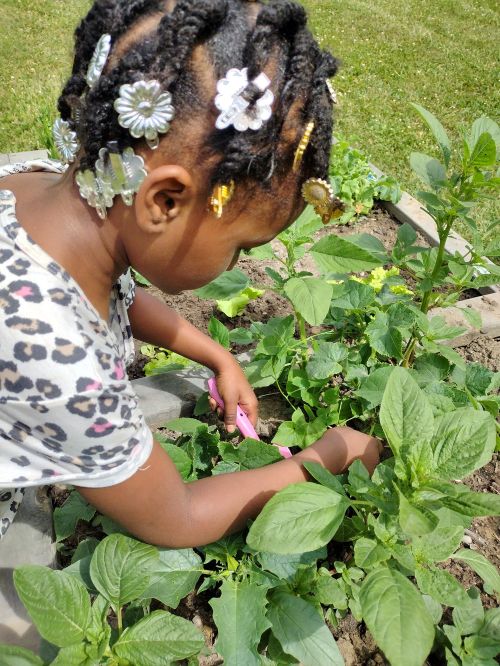
Learning about food systems is an important part of early childhood nutrition education. As people work to reduce obesity rates and improve overall health outcomes, helping young children understand where food comes from, how it is prepared, and why certain foods help their bodies grow can build a meaningful connection to fruits, vegetables, and whole foods. This makes children more curious and willing to try a variety of nutritious foods. Exploring gardens, markets, simple food-prep, and other farm-to-table activities allow children to see the full journey of food from soil to plate and give them hands-on learning that link healthy foods to positive experiences. Learning about helpers in the food system like farmers, pollinators, grocery workers, and cooks also reinforces that food and the environment in which it is grown are valuable and worth respecting rather than wasting.
Teaching tips
Food systems can be complex, but they are part of our everyday lives. Children ages 2-5 learn best through exploration, stories, hands-on activities, and simple cause-and-effect ideas. When teaching them about food systems, keep these tips in mind:
- Keep concepts concrete and observable: Talk about what children can see and touch such as soil, seeds, plants, fruits, vegetables, grocery stores, and food waste.
- Connect ideas to familiar routines: Use mealtimes, snack times, and gardening time as natural learning opportunities.
- Use simple language: Instead of “distribution,” say “How food travels from the farm to the store.”
- Focus on relationships rather than facts: Children can understand that many people help us get food, plants need care, and food comes from nature.
- Incorporate play and storytelling: Pretending to be farmers, delivery drivers, or shopkeepers helps children build understanding through imagination.
Activities to explore food systems
Food systems are all around us — and so are opportunities to learn about them. Try some of these ideas for fun, age-appropriate activities for 2-to-5-year-old children.
Grow edible food
- Talk about where food comes from, the needs of plants, and patience and responsibility.
- Use fast-growing seeds like radish or lettuce.
- Children can draw weekly growth pictures.
Story time
- Read books about farming, gardening, or food journeys.
- Discuss where food in the stories came from, where it went, and who helped it on its journey.
Dramatic play
- Talk about roles in the food system
- Pretend play food system roles or shopping at farmers markets or grocery stores.
- Children can be farmers, shoppers, cashiers, restaurant servers, etc.
- Provide props such as costumes, reusable bags, produce, baskets, and play money.
Simple cooking or food prep
- Learn about food processing (washing, cutting, mixing) and healthy eating while practicing fine motor skills.
- Try simple recipes such as fruit salads, veggie wraps, and mini-bagel pizzas, or more complex foods like herb breads and smoothies.
Art projects
- Guide children on individual/group projects such as diagrams of plants’ life cycles or a “food journey map” using pictures to represent a farm, truck, store, home, and plate.
- Review projects together and discuss.
Meet the helpers
- Take children on field trips to farms or farmers’ markets.
- Invite farmers to visit program sites to talk about their work and read a story.
- Talk about helpers in the natural world, like pollinators and insects that eat harmful bugs.
Sorting games
- Talk about different food categories (healthy vs. occasional treats or food that grows on trees vs. underground vs. vines vs. from animals).
- Provide picture cards of different produce for children to sort.
Songs and movement games
- Use music and physical activity to reinforce food systems learning.
- Try songs like “The Farmer Plants the Seeds” (to the tune of The Farmer in the Dell)
- Try a game like walking through the food system (“Pick corn…Drive a truck...Put food in a cart...Wash...Chop...Cook…”)
Sample dramatic play roles and materials
Dramatic play is a powerful way for young children to learn about food systems. It turns big, abstract ideas like farming, transporting food, or shopping into concrete, hands-on experiences that children can relate to real life.
You can try these examples of food system roles and materials in your own program:
Farmer/Grower
- Typically considered the person at the start of the food system, famers plant, care for, and harvest our food.
- Consider props like a gardening apron, hat, tools, and gloves.
Transporter
- Takes food from farms to factories for processing.
- Consider props like a vest and hat in traditional deliveryman colors. Include a satchel, bag, or box for delivering produce in.
Processor
- Processes produce by washing, chopping, butchering and/or packaging.
- Note: May not be culturally appropriate for all young children to learn about this role in the context of animals.
- Consider props like a butcher’s apron, hat, and pretend cleaver.
Produce seller
- Sells fresh, canned, or frozen food items to families or food service.
- Consider props like a green apron and hat, produce stand, fake produce, cash register, and reusable grocery bags.
Chef
- At homes, schools, restaurants, etc., chefs prepare the food so it is ready to eat.
- Consider props like a chef jacket and hat, pots and pans, and cooking utensils.
Server
- Takes the food from the kitchen and serves it to someone for eating.
- Consider props like a waiter/waitress shirt, half apron, tray, menu, and pretend money.
Waste Manager
- Decides if uneaten food from stores, food service, or homes can be donated or composted instead of placed in landfills.
- Consider props like a green vest, name badge, disposal truck, and bins for food waste or other types of waste.