Bulletin E3548
Good Gardening Practices for Fresh Produce Donations from Home and Community Gardens
DOWNLOAD
June 8, 2026 - Mary Donaldson and Barbara Gregerson, Michigan State University Extension
 Print
Print Email
Email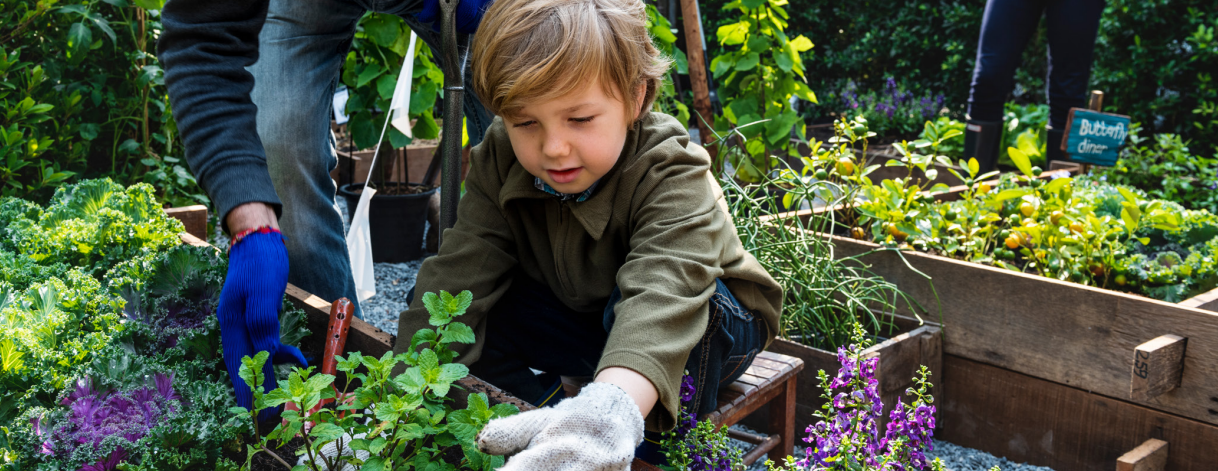
Donating fresh fruits and vegetables to a food pantry is a great way to share a home or community garden harvest.
General Good Gardening Practices
Using Good Gardening Practices is essential for growing produce that is safe, nutritious, and suitable for donation. Fresh produce is more likely than many other foods to become contaminated and cause foodborne illness if it is not handled correctly. The Bill Emerson Good Samaritan Food Donation Act protects gardeners who donate food in good faith. Gardeners are only legally responsible if harm occurs due to "intentional misconduct" or "gross negligence".
Gardeners should follow these basic practices when growing and harvesting produce for donation:
- Wash hands before and after gardening or harvesting
- Do not harvest produce if you are sick
- Follow all directions for soil amendments, fertilizers, and pesticides
- Clean and sanitize harvest tools such as knives, scissors, and pruners
- Use foodgrade bags or containters
- Harvest produce in the morning after the dew has dried
Personal hygiene
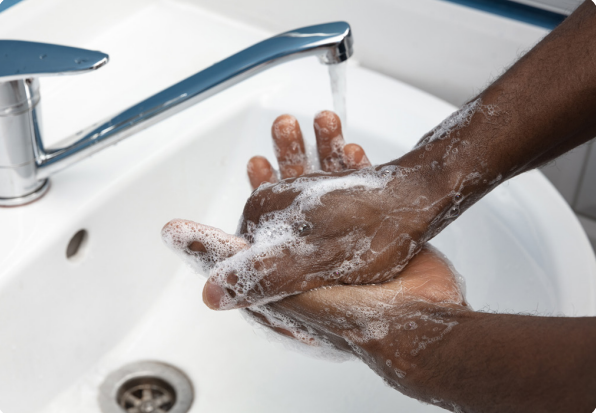
Handwashing is one of the most important steps to prevent contamination. Hands should be washed before and after working in the garden, especially before harvesting fruits and vegetables (Center for Food Safety and Applied Nutrition, 2024).
Clothing and shoes that touch manure, fertilizer, or pesticides should be cleaned before being worn again in the garden. This helps reduce the spread of harmful microorganisms (Center for Food Safety and Applied Nutrition, 2024).
Gardeners should not harvest produce if they are sick. Coughing, sneezing, vomiting, or diarrhea can spread bacteria and viruses that cause foodborne illness.
Tools and containers
Garden tools such as pruners, shears, knives, saws, and hose nozzles can spread germs between plants and produce. Tools should be kept clean and free from manure, compost, soil, and diseased plants. Sharp tools will make clean cuts, reduce damage to plants, and lower the risk of infection. Tools should be cleaned and sanitized before and after each use, especially if they have contact with soil, animal droppings, or diseased plants. Microorganisms such as Escherichia coli, Listeria monocytogenes, and Salmonella spp., cam cause foodborne illnesses. (Leaman et.al., 2023).
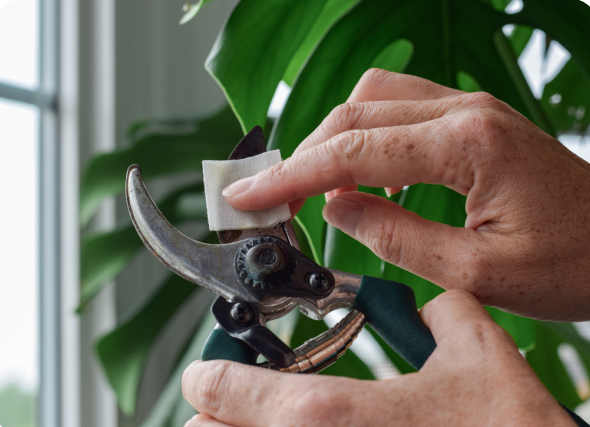
After harvesting, visible dirt and plant residue should be removed so sanitizers can reach all surfaces. Use sanitizers safe for food contact surfaces such as rubbing alcohol, bleach solutions, or approved household disinfectants (The University of Arizona Cooperative Extension, 2023; Weisenhorn et al., 2026).
Tools stored outdoors may become contaminated by dust or pests and should be sanitized again before use.
Reusable harvest containers should be easy to clean and regularly sanitized. Bleach solutions can be made according to product directions. Produce should never be stored in containers that previously held chemicals (Hultberg, 2018).
Raised beds and containers should be made from nontoxic materials. Avoid using tires, railroad ties, and certain treated wood and pallets as these materials can release harmful chemicals into the soil https://efotg.sc.egov.usda.gov/api/CPSFile/39704/812_MD_ICPS_Raised_Beds_2022 (Natural Resources Conservation Service, 2022).
Soil and amendments
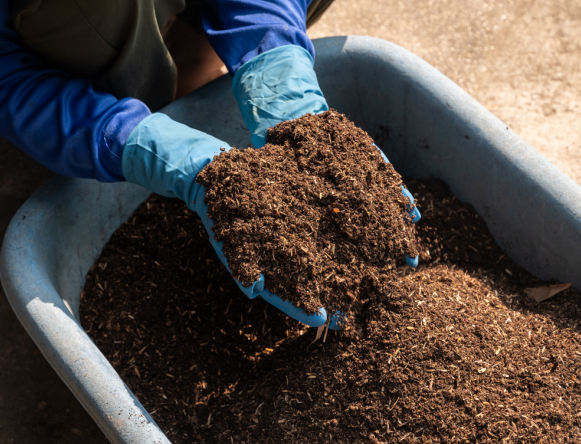
Soil amendments improve soil quality by adding nutrients, improving drainage, or increasing waterholding ability. Common amendments include compost, manure, and fertilizers.
Each amendment must be used according to directions to prevent chemical or microbial contamination. A soil test (www.canr.msu.edu/resources/dont_guess_soil_test_get_your_home_lawn_and_garden_soil_test_kit_today) should be completed before applying any amendments. Soil test results show nutrient levels, organic matter, and soil pH, and provide recommendations for fertilizer use. The MSU Soil test Mailer (https://homesoiltest.msu.edu/) is available at most county extension offices and online.
Compost
Compost can be purchased or made at home from food and yard waste. Composting fruit, vegetable, and grain scraps reduces food waste and provides a low-cost soil amendment.
Acceptable compost materials include fruits, vegetables, grains, leaves, and grass clippings. Diseased plant material should be avoided. Meat, poultry, fish, dairy products, and eggs should not be composted, although eggshells are acceptable (EPA, 2025).
Keep the compost moist and periodically use a shovel or pitchfork to blend the contents of the pile. This creates heat to help destroy harmful pathogens, making it safe to use after several months. The cold compost method does not require turning or blending and takes about one year for a compost pile to decompose and become safe to add to garden soil (Harris et al., 2026).
Vermiculture
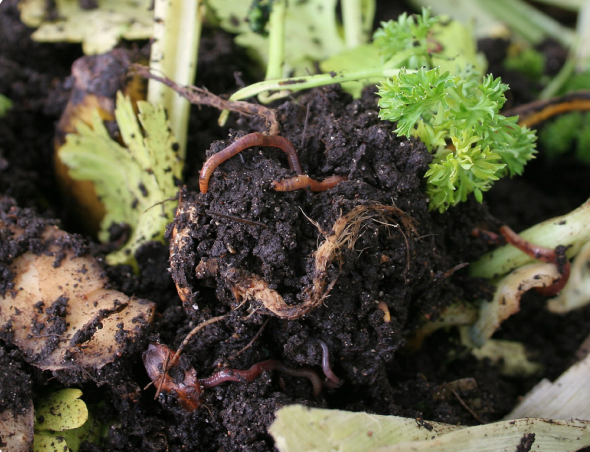
Vermiculture uses worms to break down food scraps into compost (EPA, 2025). The USDA, the EPA, and many cooperative extension programs provide instructions for starting and maintaining a worm bin. Worm bins can be kept indoors or outdoors using durable containers. Fruit, vegetable, grain scraps, and egg shells can be added. As with traditional composting, meat, dairy, fish, and eggs should be avoided. Hands should be washed before and after working with a worm bin.
Manure
Sterilized manure from chickens, cows, horses, and sheep is used to add organic matter and nutrients to the soil. However, fresh manure may contain bacteria that can contaminate produce with E. coli or Salmonella (Mahr, n.d.). Certain types of bacteria can cause foodborne illness in humans. Fresh manure should not be used in gardens growing food. Manure from pigs, pets, or unknown sources should never be used. Sterilized manure can be purchased from a reputable supplier or garden center.
Fertilizers
Fertilizers help plants grow when soil nutrients are low. Soil test results should be used to identify which nutrients are needed.
Using too much fertilizer can damage plants and cause nutrients to leach into groundwater. The MSU Soil Test Calculator (homesoiltest.msu.edu/tools/fertilizer-calculator/) can be used to determine the amounts of nitrogen, potassium, and phosphorus (N-K-P) to apply.
Follow product directions carefully and apply fertilizers at the recommended time and rate (Traunfeld, 2026). Washing hands after handling fertilizer will lower the risk of skin irritation or accidental ingestion.
Human waste
Human waste should never be applied to garden soil (Center for Food Safety and Applied Nutrition, 2024). Using human waste is a serious health risk. Commercial biosolid products that follow the EPA Class A-Exceptional Quality Biosolids regulations may be used with fruit and vegetable plants (U.S. Environmental Protection Agency, 2026).
Integrated Pest Management
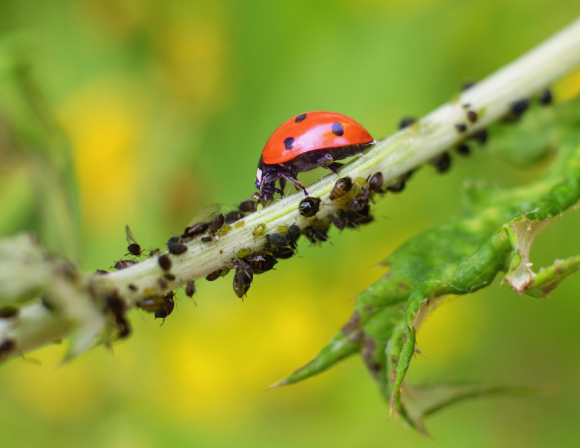
Integrated pest management (IPM) is a set of best practices for managing pests and diseases in the garden. IPM activities do not necessarily eliminate pests and diseases, but are designed to control damage to garden plants. Activities include preventative measures, treating pests and diseases at the most effective point in the lifecycle, and using pesticides in a cost-effective manner while minimizing hazards (Branstrom, 2020). Before using a pesticide, identify the insect or disease first. Some insects are beneficial to the garden by pollinating fruit and vegetable plants or by attacking unwanted pests (Sanchez & Stoven, 2025). For example, the parasitoid wasp (Cotesia congregata) attacks tomato hornworms (Manduca quinquemaculata), and ladybugs (Coccinellidae) control aphids (Aphidoidea).
When applying a pesticide, always read the label and follow the directions. The product's instructions will specify which pests or diseases it controls and how it should be used. Not all insecticides are intended for vegetables. Some products require a time interval between application and harvest. Pesticides, whether synthetic or organic, can cause harm if used incorrectly.
While general-use pesticides available to consumers do not require certification for use, homeowners must follow label instructions when using garden chemicals, even if they are labeled organic. Failure to adhere to label directions can result in civil penalties. (7
U.S.C. § 136l, n.d.).
Misusing pesticides can result in liability for personal injury or property damage claims. The Federal Insecticide, Fungicide, and Rodenticide Act (www.epa.gov/enforcement/federal-insecticide-fungicide-and-rodenticideact-fifra-and-federal-facilities) states it is unlawful “to use any registered pesticide in a manner inconsistent with its labeling.” Misuse includes, but is not limited to, overapplication, using it in an unintended way, or not disposing of it in a safe way. Pesticides are not effective against plant viruses, such as Cucumber Mosaic Virus (Moorman, 2023). Tobacco products should not be used in or near the garden to protect plants from the Tobacco Mosaic Virus. Diseased plants should be removed, and crops should be rotated yearly.
Irrigation and water quality
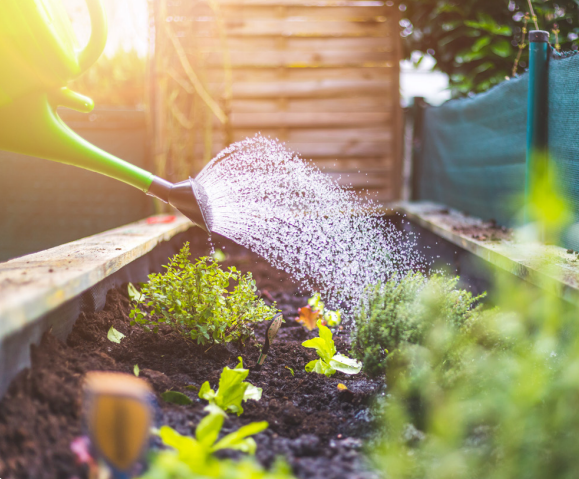
Water the garden early in the day to allow the soil to absorb the moisture and the foliage to dry. Watering in the evening or prolonged moisture on plant foliage can increase the risk of disease (Finneran, 2016). Drip irrigation or soaker hoses are better options than overhead watering (Gregson & Galbraith, 2025). MSU Extension provides detailed information on watering the garden (https://www.canr.msu.edu/resources/smart_watering_in_the_vegetable_garden).
Avoid gardening near areas where domesticated animals are kept or where wild animals have access. Soil in these areas can be contaminated by runoff from rain or manual watering. Rain barrel water may be used for irrigation, but should not come into contact with the edible parts of plants. Rainwater can contain bacteria or heavy metals (Bakacs et al., 2013).
Harvest
Early morning is the best time to harvest, after the dew has dried. Harvesting when plants are wet can spread fungal diseases. Fruits and vegetables such as tomatoes, peppers, apples, or raspberries have a higher risk of contamination if harvested from the ground (Center for Food Safety and Applied Nutrition, 2024). Squash, melons, and root vegetables can be harvested from the ground.
Inspect produce for bruises, nicks, and small holes. Bacteria can enter through these openings. Discard any produce showing signs of pest damage or disease, including any fecal matter on it, whether from birds, wildlife, pets, or livestock.
Excess soil can be brushed off when harvesting. Produce should not be rinsed with water before donating. Most fruits and vegetables have a natural waxy coating called the cuticle (Glenn et al., 2004). If removed, the produce will lose moisture. The added moisture from rinsing will encourage bacterial and fungal growth.
Conclusion
This guide to fresh produce donations from home and community gardens offers a brief overview of Good Gardening Practices. Home gardeners who donate fresh produce to food donation sites are providing a great benefit to the community. Home gardeners can also share that they practice good gardening habits to build trust with the donation site.
MSU Extension provides several resources on food donations (www.canr.msu.edu/fooddonations/index). To find a local food pantry that accepts fresh produce donations, visit Ample Harvest (ampleharvest.org/). Using Good Gardening Practices supports the production of safe, nutritious produce for donation and distribution. Learn more from the MSU Extension Smart Gardening series (www.canr.msu.edu/home_gardening/tip_sheets/). To learn about Good Agricultural Practices, the Produce Safety Alliance Growing Training (www.canr.msu.edu/produce_safety_rule_training_and_cer/) is available through MSU Extension.
Resources
7 U.S.C. § 136l, U.S. Code of Federal Regulations. Retrieved April 23, 2026, from https://federal-regs.com/uscode/title-7/136l/
Bakacs, M., Haberland, M., & Yergeau, S. (2013). Rain barrels part IV: Testing and applying harvested water to irrigate a vegetable garden. Rutgers New Jersey Agricultural Experiment Station. https://njaes.rutgers.edu/fs1218/
Natural Resources Conservation Service. (2022). Conservation practice standard raised beds (Code 812). https://efotg.sc.egov.usda.gov/api/CPSFile/39704/812_MD_ICPS_Raised_Beds_2022
Branstrom, I. (2020). Smart gardening: Integrated pest management in vegetable gardens. MSU Extension Gardening in Michigan. https://www.canr.msu.edu/resources/ipm_smart_pest_management_for_the_vegetable_garden
Center for Food Safety and Applied Nutrition. (2024). Standards for the growing, harvesting, packing, and holding of produce for human consumption: What you need to know about the FDA regulation: Guidance for industry, small entity compliance guide. https://www.fda.gov/media/107298/download
The University of Arizona Cooperative Extension(2023). Sanitizing Pruning Tools. https://extension.arizona.edu/sites/extension.arizona.edu/files/attachment/SanitizingTools.pdf
Finneran, R. (2016). Smart watering in the vegetable garden. MSU Extension Gardening in Michigan. https://www.canr.msu.edu/resources/smart_watering_in_the_vegetable_garden
Glenn, G.M., Chiou, B., Imam, S.H., Wood, D.F., & Orts, W.J. (2004). Role of cuticles in produce quality and preservation. In O. Lamikanra, S. H. Imam, & D. O. Ukuku (Eds.), Produce degradation: pathways and prevention (p. 19-53). CRC Press. LLC. https://www.ars.usda.gov/research/publications/publication/?seqNo115=161268
Gregerson, B., & Galbraith, C. (2025). Michigan fresh: Tomato diseases in the home garden. MSU Extension Gardening in Michigan. https://www.canr.msu.edu/resources/michigan_fresh_tomato_diseases_in_the_home_garden
Harris, B.A., Kirk-Ballard, H., Cassity-Duffey, K., Ottinger, W., & Braman, R. (2026). Turning waste into wealth: Composting for better soil and stronger plants. University of Georgia Center for Urban Agriculture. https://urbanag.uga.edu/turning-waste-into-wealth-composting-for-better-soil-and-stronger-plants/
Hultberg, A. (2018). Cleaning and sanitizing tools, harvest containers and surfaces. University of Minnesota Extension. https://extension.umn.edu/growing-safe-food/cleaning-and-sanitizing-tools-harvest-containers-and-surfaces
Leaman, S. M., Kerr, J., Salas, S., Malik, A., Suslow, T. V., Wiedmann, M., & Davis, D. A. (2023). Fresh produce harvesting equipment – A review of cleaning and sanitizing practices and related science. Food Protection Trends, 43(2), 126–143. https://doi.org/10.4315/FPT-22-023
Mahr, S. (n.d.). Using manure in the home garden. Retrieved April 10, 2026, from https://hort.extension.wisc.edu/articles/using-manure-in-the-home-garden/
Moorman, G. (2023). Tobacco Mosaic Virus (TMV). PennState Extension. https://extension.psu.edu/tobacco-mosaic-virus-tmv
Sanchez, N., & Stoven, H. (2025). Encouraging beneficial insects in the garden. Oregon State University Extension Service. Retrieved April 10, 2026, from https://extension.oregonstate.edu/catalog/pub/pnw550
Traunfeld, J. (2026). Fertilizing vegetable gardens. University of Maryland Extension. https://extension.umd.edu/resource/fertilizing-vegetables/
U.S. Environmental Protection Agency. (2025). Composting at home. https://www.epa.gov/recycle/composting-home
U.S. Environmental Protection Agency. (2026). Land Application of Biosolids. https://www.epa.gov/biosolids/land-application-biosolids
Weisenhorn, J., Hoidal, N., & Hultberg, A. (2026). Clean and disinfect gardening tools and containers. University of Minnesota Extension. https://extension.umn.edu/planting-and-growing-guides/clean-and-disinfect-gardening-tools