Swine Showmanship Guide
DOWNLOADApril 30, 2026 - Autumn Converse Williams, Michigan State University Extension
 Print
Print Email
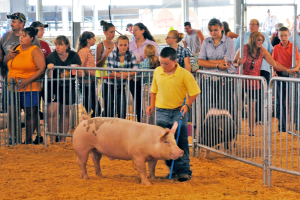
EmailSwine showmanship focuses on how well the exhibitor presents and handles their pig. The main objective is to demonstrate skill, control, and knowledge by confidently guiding the pig, keeping it visible to the judge, maintaining good posture, and showing respect for the animal. Good showmanship highlights the exhibitor’s ability to work calmly and effectively with their pig to present it at its best. To learn more about the swine project and how to show a pig, find a swine project leader or another 4-H member enrolled in the project and ask them for advice!
Before the Show
- Make sure your animal is clean
- Make sure your animal is fed and watered
- If you are not in the first class, watch a class or two so you know how the ring works, where to go, what the judge is expecting, etc.
- Remember: good showmanship starts at home with your with persistence with whip training and regular showmanship practice so you can show your animal effectively. Before the show or fair, practice regularly so your pig is comfortable with the whip and responds well to cues. Wash your pigs often. Be prepared to answer questions about your animal and its care during a showmanship class to demonstrate your knowledge and preparedness.
Recommended Attire
The main goal of presenting yourself during showmanship is to look as professional as possible.
Attire and appearance suggestions:
- Button down shirt that is tucked in.
- Clean dark jeans without holes and a belt.
- Jeans should go over the top of your boots.
- Boots or other sturdy closed-toe shoes.
- Number harness.
- If you have longer hair, pull it back so it is out of your face.
Swine Showmanship Rules of Thumb
- Always keep the pig between you and the judge
- Think of it as making a ham sandwich, with you and the judge being “bread” and your pig being the ham.
- Maintain good posture, keep your eyes on the judge as much as possible, and handle the pig with purpose and intensity.
- Do not touch the pig with your hand, only with the brush from your back pocket if it gets dirty.
- Be courteous to others in the ring by not blocking them or their pig and avoid stopping or bunching up with other pigs.
- When the judge asks questions, leave your pig but keep an eye on it while you’re having a conversation with the judge.
Tools You'll Need
- Whip – neutral color, properly fitted to the exhibitor
- Pipes, canes, sorting poles, hog bats, and other utensils should not be used.
- Hard bristle brush
- Number harness or clip – preferred but not required
- If you choose not to use a number harness or clip, make sure you have safety pins in your show box.
- Pump sprayer with water in it
Showing Hogs
- Pigs are shown in a different way than most large animal species; rather than using a halter, you will drive your pig using a whip.
- All exhibitors in a class will start in a holding pen and will enter the arena one-by-one.
- When it is your turn to enter the main arena, this is your chance to make a good first impression.
- Sometimes, ring may close your holding pen gate for you. If they do not, it is your responsibility to close the gate before proceeding to driving your pig.
- Use light, controlled taps with the whip to guide the pig at a controlled, natural pace, tapping under the jowl to keep its head high.
- Think of the jowl as your steering wheel and the pig’s sides as the gas pedal (but only use the “gas pedal” if the pig stops).
- It is important to tap your pig in the proper area making sure not to bruise your animal or cause damage to the retail products.
- Do not ever hit your animal with the whip, as the welfare of your animal is a top priority.
- Avoid overusing your whip.
- Stay aware of the judge’s position and make smooth turns to keep the animal between the two of you.
- Maintain six feet from the judge when possible and keep good spacing from other exhibitors.
- Drive your pig at the judge so they can see all sides and angles of the pig, including walking the pig towards the judge for a front view, away from the judge for a rear view, and parallel to the judge to show the profile.
- An effective showman will continuously find “holes” in the arena away from other pigs where they can easily be seen by the judge.
- When the judge moves, it is important to drive your pig back in front of them, especially if their back is turned to you.
- If the judge sends you into an empty holding pen during the class, it can mean a few different things. They may be awarding you a placing or indicating they want you to return for the final drive from that heat. When signaled by the judge, promptly make your way to the holding pen.
- While in the holding pen, you can mist your pig with water to cool them down and brush them to keep them looking show-ready.
Swine Showmanship Sample Questions and Answers
Many judges will ask questions about your project and animal during showmanship.
To set yourself apart, be prepared to answer questions regarding the following topics:
- What breed your hog is
- Parts of the hog
- How much your hog eats (in pounds)
- What your hog eats
- Percent protein
- Percent fat
- Avoid naming show feed brands in your answers
- Meat science
- Understand quality and yield grades
- How much backfat is ideal on a finished market hog
- Expected dressing percentage
- What is the current average market price on pork?
- What types of phenotypic or genetic characteristics you like about your animal, what you might want to change about it, how you highlight the best pieces and hide the least desirable features.